

Sandburs ruin barefoot summers faster than almost any other lawn weed, and pulling mature plants only spreads more seed for next year. The smart play is stopping the seed before it germinates with a pre-emergent timed to soil temperature, and the ten options below cover the active ingredients, formulations, and coverage sizes that actually work on sandburs. Use this guide to match a herbicide to your lawn size, grass type, and spring or fall timing window.
The Leading Options At A Glance

Prodiamine 65 WDG 5lb Pre-Emergent (Generic Barricade)

Agrisel Sulfentrazone 4F Weed Killer Pre-Emergent 8oz
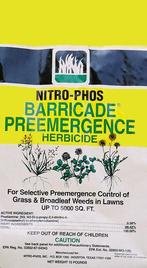
Nitro-Phos Barricade Pre-Emergence 10 lb

Airmax Shoreline Defense Emergent Weed Control 1 qt

Yard Mastery 0-0-7 Dimension Pre-Emergent 18 lb
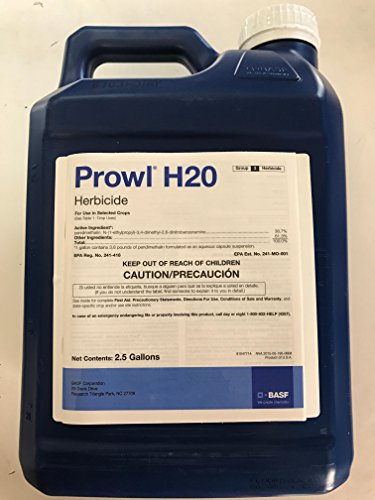
Prowl H2O Herbicide 2.5 Gallon

The Andersons 18-0-4 Barricade Fertilizer with Pre-Emergent

The Andersons Barricade Professional-Grade Granular Pre-Emergent 18 lb

Scotts Halts Crabgrass & Grassy Weed Preventer 10.06 lb
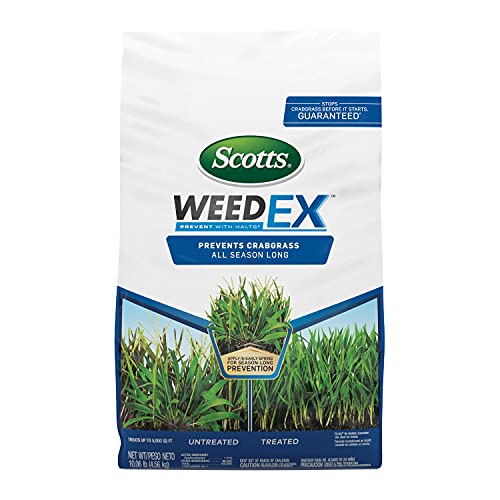
Scotts WeedEx Prevent with Halts 10.06 lb
Why These Options Stand Out
Prodiamine, the same active ingredient that drives the well-known Barricade brand, is what most lawn-care pros reach for when sandbur seed starts waking up in the soil. The Quali-Pro 65 WDG formulation delivers that pro-grade chemistry in a 5-pound jug of water-dispersible granules, which mix cleanly into a tank sprayer for even coverage across a large yard.
Because prodiamine works by forming a chemical barrier at the soil surface, you apply it before sandbur seeds germinate and water it in within a couple of weeks. Spring timing depends on soil temperature rather than the calendar, and the same chemistry can be split into spring and fall windows for season-long control on warm-season turf.
A Strong Showing
- Pro-grade prodiamine at a noticeably lower cost than branded Barricade.
- WDG granules dissolve into a smooth spray slurry without constant agitation.
- Flexible spring or fall timing suits warm- and cool-season turf programs.
- A 5-pound jug covers a meaningful slice of mid-size to large lawns per fill.
Worth Noting
- You need a separate pump or backpack sprayer, which adds setup time.
- Mixing and calibration take a learning curve for first-time homeowners.
- Staining can occur on concrete and hardscape if spray drifts.
Key Specs
Who It Suits Best
Homeowners with established warm-season turf who already own a sprayer and want pro-grade sandbur and crabgrass prevention without paying the brand premium.
Where Another Pick Suits Better
The Yard Mastery 0-0-7 Dimension is a more forgiving option for suburban homeowners without spray gear.
Sulfentrazone works differently from prodiamine by attacking weed seedlings right at germination, and the Agrisel 4F bottle concentrates that chemistry into an 8-ounce liquid jug. For a homeowner with a small yard or a stubborn sandbur patch along a sidewalk, the small bottle makes sense because you measure it by the ounce and mix only what you need.
This is one of the few picks on the list that swings both ways, working pre-emergent on freshly seeded soil and post-emergent on young broadleaf escapes. That dual action gives you a fallback the same season if your timing window slips.
Real-World Strengths
- Tiny 8-ounce bottle fits on a shelf without dominating the garage.
- Dual pre- and post-emergent action forgives a mistimed application.
- Targets stubborn broadleaf weeds alongside grassy types like sandburs.
Honest Caveats
- An 8-ounce bottle covers far less ground than the granular alternatives.
- Requires accurate sprayer calibration to avoid skips and overlaps.
- Not suited for large acreage without multiple refills.
Made For
Homeowners dealing with a single sandbur hot spot or small lawn who want flexible chemistry in a shelf-friendly bottle.
Consider Something Else When
You manage a half-acre or larger lawn, where a granular option like the Nitro-Phos Barricade covers more per pass.
Nitro-Phos packages prodiamine at a 0.58% granular strength and labels it for the widest range of non-crop sites, including established turfgrass, sod nurseries, container ornamentals, rights of way, parking areas, and even christmas tree farms. That flexibility is exactly why a property owner with mixed terrain reaches for it.
Application rate sits at 10 pounds per 5,000 square feet through a broadcast spreader, which is friendlier than mixing spray tanks. For larger properties where you want granular ease without giving up pro-grade chemistry, this 10-pound bag covers a meaningful slice of acreage in a single walk.
Reasons It Performs
- Granular format spreads evenly with a standard broadcast spreader.
- Labeled for an unusually broad mix of turf and non-crop sites.
- Lower active concentration reduces staining risk on driveways.
Points To Note
- Granules need watering in within a window to activate the barrier.
- Spreader calibration matters for an even barrier without striping.
- Bulk 10-pound bag is awkward to store in a small garden shed.
Quick Facts
Best Suited To
Ranch and acreage owners who want granular convenience over mixing spray tanks.
Look Elsewhere When
You only need to treat a small city lawn, where the smaller Yard Mastery 18-pound bag handles 6,000 square feet more tidily.
Shoreline Defense sits in a different lane from the rest of this list because it’s actually an emergent herbicide for aquatic sites, not a traditional lawn pre-emergent. The label covers cattails, phragmites, grasses, brush, and weeds in fresh and brackish water, so it belongs on properties with a pond edge where sandburs and other grassy weeds creep in from the bank.
If your sandbur problem lives where the lawn meets a shoreline, pulling them by hand never ends and a standard lawn pre-emergent is illegal near open water. This quart jug gives pond owners a labeled path to reclaim that margin without harming the water body.
What Pays Off
- Labeled for fresh and brackish water use around ponds.
- Targets persistent emergent weeds and their root systems.
- Quart bottle treats meaningful shoreline without a bulk jug.
Trade Offs To Consider
- Not a standard lawn pre-emergent and serves a narrow use case.
- Aquatic labeling adds permit and timing complexity in some regions.
- Quart format is more involved than a granular lawn spread.
Who Will Love This
Pond and lake-property owners fighting sandburs along the water’s edge where lawn products are off-limits.
Not Your Match When
You need pre-emergent coverage on a normal residential lawn, where Quali-Pro’s Prodiamine 65 WDG handles standard turf far better.
Yard Mastery puts dithiopyr, the active ingredient in Dimension, into an 18-pound granular bag that also carries a 0-0-7 fertilizer ratio. The zero nitrogen and zero phosphorus numbers tell you the bag feeds potassium only, which supports root development without pushing the flush of top growth that spring fertilizer normally triggers.
Coverage runs up to 6,000 square feet, which lines up nicely with a typical suburban lot. Crabgrass, sandburs, and several common broadleaf weeds all fall inside the dithiopyr activity window, so a single spring pass protects the lawn through early summer.
Standout Benefits
- Dithiopyr chemistry covers sandburs and crabgrass in one product.
- 0-0-7 ratio feeds roots without forcing top growth during pre-emerge timing.
- One 18 lb bag covers a typical suburban lawn in a single pass.
Small Caveats
- Dithiopyr timing windows are tighter than prodiamine for late applications.
- Granular spread pattern depends on a well-calibrated broadcast spreader.
- Potassium-only feed means you’ll still need nitrogen later in the season.
Feature Snapshot
Perfect Match For
Suburban homeowners with mid-size lawns who want a single spring product that stops sandburs while quietly feeding the root system.
A Better Fit Elsewhere
You prefer a true two-in-one fertilizer-plus-pre-emerge, where The Andersons 18-0-4 Barricade Fertilizer does both jobs with nitrogen included.
Prowl H2O is a liquid pre-emergent carrying pendimethalin in a 2.5-gallon jug, and the manufacturer has registered it for use across more than 100 crops. That breadth matters when your sandbur problem bleeds into vegetable beds, fruit plantings, or a small pasture where you want one product that handles several sites.
The 2.5-gallon size is overkill for a single lawn, but for a homestead or a community garden it spreads the cost across many uses. You apply it through a sprayer before weed seeds germinate, then water it in to lock the active ingredient into the topsoil layer.
Useful Highlights
- Registered across 100+ crops for broad versatility on the property.
- Liquid format mixes readily into standard farm or garden sprayers.
- Economical cost per acre when treating large mixed-use areas.
Practical Considerations
- 2.5-gallon jug is heavy and awkward for small-lawn owners.
- Requires a sprayer and accurate calibration for safe application.
- Crop-label diversity means you must confirm turfgrass approval locally.
Right Fit For
Homesteaders and gardeners who treat food plots, beds, and pasture margins with one versatile jug.
Swap It Out When
You only treat a suburban lawn, where a granular like The Andersons Barricade keeps setup simple.
The Andersons combines an 18-0-4 fertilizer with 0.426% prodiamine, which means a single spring pass feeds the lawn with nitrogen while laying down the same pre-emergent barrier trusted on golf courses. An 18-pound bag covers about 5,000 square feet, which fits most suburban lots with a little left over for a follow-up application.
The trade-off is timing: because the bag carries nitrogen, you cannot apply it as early as a standalone pre-emergent without risking waste or runoff. Wait until soil temperatures are reliably in the germination window, and you’ll get a thicker lawn and fewer sandburs at the same time.
Strong Points
- Feeds nitrogen while preventing weeds in a single spring pass.
- Prodiamine-based barrier covers crabgrass and 30 grassy weeds.
- Dispersible granule tech dissolves cleanly into the turf canopy.
A Few Limitations
- Nitrogen content forces a later application window than standalone products.
- Cannot be used on lawns you plan to overseed that same spring.
- Bag weight requires a sturdy broadcast spreader for even coverage.
Quick Technical Notes
Who Should Grab It
Homeowners who want a single spring product that greens up the lawn and blocks sandburs in one pass.
Reach For A Different Pick When
You plan to overseed the lawn that spring, where a standalone prodiamine like Quali-Pro’s 65 WDG is safer for new grass.
The Andersons’ standalone granular Barricade carries 0.48% prodiamine without any fertilizer mixed in, which gives you more flexibility on application timing. The bag covers up to 5,800 square feet, slightly more than the company’s fertilizer-blended version, and uses the same dispersible granule technology so the particles melt into the turf after watering.
Without nitrogen in the mix, you can apply this earlier in spring or stack it with a separate fertilizer program that better matches your turf type. For warm-season grass owners who want pure pre-emergent chemistry, this is the cleaner choice.
What Stands Out
- Pure pre-emergent with no nitrogen allows earlier spring timing.
- Dispersible granule particles dissolve cleanly with irrigation.
- Covers up to 5,800 sq ft per 18 lb bag.
Things To Weigh
- You’ll still need a separate fertilizer to feed the lawn.
- Granular application requires a calibrated broadcast spreader.
- Prodiamine stains concrete if granules spill on hardscape.
Built With In Mind
Warm-season turf owners who already follow a separate fertilizer schedule and want a clean pre-emergent add-on.
Skip It When
You’d rather feed and prevent in one pass, where The Andersons 18-0-4 Barricade Fertilizer handles both jobs.
Scotts Halts is the bag most homeowners reach for first, partly because the brand is familiar and partly because the timing instructions on the label are written for beginners. The active ingredient targets crabgrass, foxtail, spurge, barnyardgrass, fall panicum, goosegrass, and oxalis, which covers a meaningful slice of grassy weeds that show up alongside sandburs in many regions.
Apply the granules to a dry lawn in early spring, water them in, and you have a season-long barrier without mixing anything. For someone applying their first pre-emergent ever, the predictable schedule and broad availability make this a low-anxiety starting point.
Everyday Wins
- Beginner-friendly label instructions reduce timing guesswork.
- Widely stocked at most garden centers and big-box stores.
- Granular format requires only a basic broadcast spreader.
Soft Spots
- Goosegrass requires a second application 8 weeks later for full control.
- Not as concentrated as the pro-grade prodiamine options.
- Coverage runs smaller per bag than the 18 lb picks.
Whose Shelf It Belongs On
First-time lawn owners who want a forgiving, widely available pre-emergent to learn the timing basics.
Another Choice May Suit
You want stronger, longer-lasting sandbur control, where Quali-Pro’s Prodiamine 65 WDG gives a tougher barrier.
Scotts WeedEx Prevent with Halts uses the same active ingredient as Scotts Halts but the label leans more toward lawn-weed prevention with crabgrass and broadleaf targets. Apply it in early spring when the lawn is dry, water it in, and a second fall pass extends the prevention window through cool-season weed germination.
The 10.06-pound bag covers a typical residential lawn with the same easy granular spread the Scotts line is known for. For homeowners who already trust the brand and want one product that handles spring and fall timing, WeedEx fits the brief without introducing a new chemistry.
Useful Touches
- Spring and fall timing flexibility built into the same bag.
- Beginner-friendly granular application with no mixing.
- Broad-spectrum pre-emergent covers grassy and broadleaf weeds.
Where It May Fall Short
- Goosegrass still requires a follow-up application for full control.
- Less concentrated than the dedicated prodiamine products.
- Bag size covers slightly less ground than the 18 lb alternatives.
Who Should Grab It
Homeowners on a two-season schedule who already use Scotts products and want a familiar brand for spring and fall passes.
Where A Sibling Pick Shines
You want a stronger single-application barrier, where Quali-Pro’s Prodiamine 65 WDG delivers a heavier chemistry load.
How To Time And Apply Pre-Emergents For Sandburs
Sandburs germinate when soil temperatures climb into the upper 50s and low 60s Fahrenheit for several days in a row, so timing beats everything else on this list. A cheap soil thermometer removes the guesswork and tells you when to pull the trigger, because the calendar varies year to year by a few weeks depending on your zone.
Pick a chemistry that matches your grass type. Prodiamine and dithiopyr are the two safest bets for established cool- and warm-season turf, while pendimethalin opens up garden and crop flexibility. Sulfentrazone adds a useful post-emergent fallback for escapes, and aquatic-labeled products like Shoreline Defense solve problems where the lawn meets a pond.
Application method shapes the experience. Granular products spread with a broadcast spreader and need watering in within a window to activate. Liquid concentrates mix into a sprayer, give even coverage on slopes and odd shapes, and require accurate calibration but skip the fertilizer crossover. For a first-timer, granular stays simpler. For an experienced lawn-care routine, liquid concentrates often produce cleaner results.
Watch your overseeding plans. Most pre-emergents block grass seed germination for 3 to 6 months after application, so any spring seeding has to wait until fall or skip pre-emergent entirely that season. Reading the label for the reseeding interval prevents the frustrating experience of bare spots that never fill in.
Key Considerations Across These Picks
Mistakes Worth Dodging
The most common mistake is applying pre-emergent too late, after sandbur seedlings have already emerged and the barrier no longer works. Watch soil temperature and target the upper-50s threshold rather than waiting for the calendar to suggest “mid-spring.” The second slip-up is forgetting to water in granular products within the activation window, which leaves the active ingredient sitting on top of the thatch instead of forming the soil barrier you actually need.
When Paying More Pays Off
The higher-tier picks earn their keep through concentration, coverage, and added flexibility. Pro-grade prodiamine products like Quali-Pro’s 65 WDG deliver more active ingredient per dollar for large lawns, while combination fertilizer-pre-emergent blends from The Andersons cut a separate feeding trip out of your schedule. For a small lawn, the extra cost often isn’t worth it. For a half-acre or larger property, the upgrade pays back in fewer applications and better sandbur control through the season.
Frequently Asked Questions
When should you apply pre-emergents for sandburs?
Apply when soil temperatures hold in the upper 50s to low 60s Fahrenheit for several consecutive days, typically several weeks before sandburs would naturally sprout. Spring timing varies by region and year, so a soil thermometer is more reliable than the calendar.
Can you use pre-emergents and still seed your lawn?
Most pre-emergents block grass seed germination for 3 to 6 months after application, so spring seeding usually requires skipping the pre-emergent that season. If seeding is part of the plan, switch the pre-emergent to a fall application window.
How long does sandbur pre-emergent control last?
A single application typically protects the lawn for about 3 to 4 months, which covers the primary sandbur germination window. A follow-up application in late spring or early summer extends control through the secondary flush in many regions.
Are granular or liquid pre-emergents better for sandburs?
Granular products spread easily with a broadcast spreader and suit first-time users, while liquid concentrates mix into a sprayer and give more even coverage on slopes and irregular lawn shapes. Both work when applied and watered in correctly, so the choice is mostly about your equipment and comfort level.
Will pre-emergents kill existing sandbur plants?
No. Pre-emergents form a barrier that stops seeds from germinating, but they do not eliminate mature sandbur plants that are already growing. Established weeds need post-emergent treatment or hand removal alongside the pre-emergent program.
Closing Remarks
Stopping sandburs before they sprout takes the right chemistry, the right timing, and a product that matches your lawn size and turf type. Match a pre-emergent from this list to your soil temperature window, water it in on schedule, and the burr-filled summer you remember from last year becomes a non-event this year. A little spring effort saves a lot of barefoot pain later.
