

Weed control splits into two camps, and this roundup covers the practical half most homeowners actually use. Preemergent herbicides stop weed seeds before they sprout, and pairing one with the right postemergent backup covers the rest of the season. The picks below balance lawn-safe formulas, brush-strength concentrates, and the small tank accessories that make application cleaner and less wasteful.
The Lineup, Simplified

Roundup Pro Concentrate Herbicide (2.5 gal.)

Gly-Star Plus Glyphosate Concentrate (2.5 gal.)

Ranger Pro Glyphosate Concentrate 2.5 gal. (Pack of 2)

Liquid Harvest Lazer Blue Spray Pattern Indicator (1 gal.)

No Foam Anti-Foam Defoamer Quart

Liquid Harvest Blazer Spray Tank Cleaner (16 oz)

Sunday Dandelion Doom Iron-Based Weed Killer (32 oz 2-Pack)
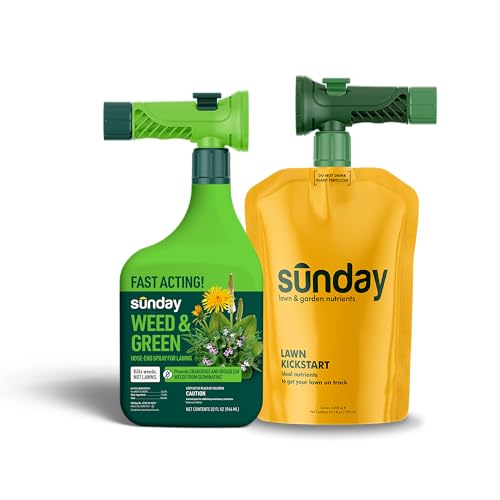
Sunday Liquid Weed & Feed Kit (5,000 sq ft)

Honcho K6 Glyphosate Herbicide 48.7%
More Details On Our Top Picks
Roundup Pro Concentrate lives at the commercial end of the category, which is exactly why serious homeowners reach for it. The 2.5-gallon jug treats large driveways, fence lines, and the edges of gravel pads where a string trimmer would be pointless.
It is a non-selective systemic herbicide, meaning it travels through the plant to the roots rather than only burning leaf tissue. For spot clearing along a property edge or tackling volunteer saplings, that systemic reach matters. Compared with the ready-to-use sprays, you mix this concentrate yourself and the per-acre cost drops fast.
Points In Its Favor
- Concentrate format stretches a single jug across many applications
- Systemic action reaches roots, useful for perennial weeds that re-sprout
- Trusted by landscapers for general property maintenance
- Mixes easily with water for backpack or tank sprayers
Worth Noting
- Non-selective, so any green tissue it contacts will brown
- Not available for shipment to Wisconsin or New Jersey
- Requires separate surfactant depending on water hardness
- Storage space matters: a 2.5-gallon jug needs a cool, dry corner
Who It Suits Best
Landowners managing large non-lawn areas, gravel driveways, fence rows, and brush who already own or are willing to buy a pump sprayer.
Where Another Pick Suits Better
Homeowners with mostly cool-season turf and a few dandelions should reach for Sunday Dandelion Doom instead, since it leaves the surrounding grass unharmed.
Gly-Star Plus brings a 41% glyphosate load plus an included surfactant, which removes a small step most concentrates leave to you. For applicators who mix dozens of gallons in a season, that built-in surfactant saves real time.
It performs as a post-emergent, meaning weeds must already be growing for it to work, so it pairs naturally with a spring preemergent. In side-by-side use with the Roundup Pro above, the difference comes down to convenience: Gly-Star Plus skips a measuring step on the surfactant side, while Roundup leans on a slightly different surfactant package.
What It Does Well
- 41% glyphosate concentration covers broad-spectrum weed and brush control
- Surfactant included, so no extra adjuvant purchase for most users
- Water-soluble liquid mixes cleanly with standard sprayer setups
- No soil residual activity, so replanting is straightforward after the label interval
Honest Caveats
- 2.5 gallons is overkill for a single small yard
- Annual weeds take roughly 2-4 days to show damage, longer for perennials
- Drift onto desirable plants can scar leaves quickly
Quick Facts
Made For
Farmers, ranchers, and acreage owners who want a single concentrate jug to cover most of the season’s spot work.
Skip It When
Pick Sunday Liquid Weed & Feed instead, since you want a lawn-safe two-step program rather than a total vegetation killer.
Ranger Pro is the workhorse pick for multi-acre treatment plans. The pack of two 2.5-gallon jugs gives a homeowner with several adjoining lots enough concentrate to handle spring, summer, and fall passes without reordering.
It is a water-soluble postemergent herbicide, and the label recommends against adding extra surfactant since the formula already carries one. Compared with Gly-Star Plus above, the glyphosate profile is similar, so the real distinction is packaging: more volume per order, fewer shipments to track.
What Works In Its Favor
- Two-jug pack reduces per-unit cost at the listing
- Pre-mixed surfactant cuts mixing errors
- Broad-spectrum control across annuals, perennials, and brush
Trade Offs
- Five gallons of concentrate needs serious storage planning
- Non-selective, so it requires careful spot work near lawn edges
Best Suited To
Property owners managing pastures, large lots, or community common areas who already trust a glyphosate routine.
Reach For A Different Pick When
Switch to Honcho K6 if you want the higher-load 48.7% formulation for tougher brush and vine jobs on the same property.
Lazer Blue is a spray pattern indicator, which is a fancy way of saying it tints your tank mix bright blue so you can see exactly where the spray has landed. The 1-gallon jug is enough for a long season of applications across a typical suburban property.
You mix a small amount into your herbicide, fungicide, or fertilizer solution, and the color fades as the product dries. The honest upside: skips and double-coverage are the two most common homeowner errors, and a blue tint eliminates both. It only mixes with water-based solutions, so oil carriers are out.
Where It Helps
- Makes overlaps and skips instantly visible on turf
- Compatible with most water-based herbicide and fertilizer mixes
- Non-permanent tint, so it fades as the application dries
- Useful on driveways and gravel where weeds are hard to spot
Room For Improvement
- Will not mix with oil-based carriers
- One gallon of concentrate goes a long way, and you may have leftover supply
Perfect Match For
First-time applicators who want to confirm even coverage without guessing where the nozzle has already passed.
A Better Fit Elsewhere
Pick No Foam Anti-Foam Defoamer if your main annoyance is foaming in a recirculating sprayer rather than marking the pattern.
No Foam solves one of the more annoying parts of herbicide mixing, which is foam cascading over the tank rim when you agitate the solution. A quart bottle treats a lot of mix, since the recommended rate is roughly 1-2 ounces per 100 gallons of spray mixture.
It pairs naturally with the concentrates above: drop the defoamer in first, then add the herbicide. The point is preventing a mess, and the catch is that defoamer has to be in the tank before agitation gets going. For backpack sprayers you may not need it, but for any tank with a paddle or recirculating pump, foam is the real headache.
Benefits That Matter
- Small dose per tank keeps cost-per-application low
- Works in hand pump and recirculating sprayer setups
- Prevents overflow that wastes concentrated herbicide
Some Limits To Know
- A quart jug is generous; small-scale users may not finish the bottle before the season ends
Who Should Grab It
Anyone running a tank sprayer with mechanical agitation who has watched foam overflow the rim more than once.
Consider Something Else When
Choose Liquid Harvest Blazer Spray Tank Cleaner if your bigger concern is residue left behind from the previous mix, not foam from the current one.
Blazer is a tank cleaner, not a herbicide, which is exactly why it earns a spot in a herbicide roundup. The 16-ounce pint handles residue from the concentrates above, which matters more than most homeowners realize. Cross-contamination from a poorly rinsed tank can damage the next plant you treat.
It also helps limit corrosion in metal tank components, which adds life to a pump sprayer that gets used hard each season. In practice, you dilute it in the tank, swirl, and rinse. The honest read is that a 16-ounce bottle runs a long time, even for someone mixing every other weekend.
The Value In It
- Removes residue that causes cross-contamination between products
- Reduces metal corrosion in pump and tank components
- Compact 16-ounce bottle stores easily in a chemical cabinet
Practical Considerations
- Adds a cleaning step that some homeowners skip, so it is most useful for multi-product routines
Built With In Mind
Applicators who switch between broadleaf herbicides, surfactants, and fertilizers in the same tank across a single season.
Look Elsewhere When
Pick No Foam Anti-Foam Defoamer if your daily frustration is foaming during mix rather than residue from the last product.
Dandelion Doom sits on the opposite end of the spectrum from the glyphosate concentrates above. It uses chelated iron (a form of iron that plants absorb efficiently) to target broadleaf weeds, moss, and algae while leaving cool-season turfgrass alone.
The 32-ounce two-pack covers repeated spot treatments through the growing season without forcing a re-purchase. The trade-off: it is not a broadcast product, so you walk the lawn and treat each weed individually. For dandelions dotting a fescue or Kentucky bluegrass yard, that targeted approach is the whole point.
Positive Points
- Iron-based formula spares surrounding grass when applied as a spot treatment
- Handles dandelions, moss, algae, and lichen in one product
- Two 32-ounce bottles cover a season of touch-up work
Worth Bearing In Mind
- Spot-treat only: not suited for broadcast application across the whole lawn
- Iron can leave temporary darkening on hard surfaces if over-sprayed
Feature Snapshot
Right Fit For
Homeowners with a cool-season lawn and visible dandelions who refuse to brown out the surrounding grass with a non-selective herbicide.
Swap It Out When
Switch to Sunday Liquid Weed & Feed if you want both weed control and spring feeding covered in one coordinated plan.
Sunday’s Liquid Weed & Feed splits the work into two steps: the Weed & Green product handles the broadleaf control, then Lawn Kickstart feeds the lawn after the weeds are managed. The 5,000-square-foot coverage suits a typical suburban yard, though the listing notes a 4,000-square-foot working capacity under normal use.
The premise differs from classic weed-and-feed granules, which mix herbicide and fertilizer into one application. Separating the steps is a deliberate choice: you treat visible weeds first, then feed recovering turf without piling pesticide on every square foot. Compared with the Sunday Dandelion Doom above, this kit goes broader and adds a feeding step.
What Stands Out
- Two-step program treats weeds, then feeds recovering grass
- Targets dandelion and crabgrass in one seasonal plan
- Coverage sized for a typical suburban lot
A Few Limitations
- Real working coverage may run closer to 4,000 sq ft depending on overlap and waste
- Requires a hose-end or pump sprayer for liquid application
Whose Shelf It Belongs On
Homeowners planning a spring lawn renovation who want coordinated weed control and feeding in a single purchase.
Where A Sibling Pick Shines
Reach for Sunday Dandelion Doom if you only have a handful of weeds and prefer to skip the feeding step entirely.
Honcho K6 is the heavy hitter in the lineup, carrying a 48.7% potassium glyphosate load that earns its place on brushy, vine-choked edges and farmstead lanes. The potassium salt form is the same active chemistry trusted in agricultural settings, so the absorption profile is consistent.
It is a systemic post-emergent, so it must reach actively growing foliage to do its work. The surfactant technology is built in, so adding extra adjuvant is unnecessary for most mixes. The catch: this is a 2.5-gallon jug of concentrate, so plan storage and a quality sprayer before you check out.
Standout Benefits
- 48.7% high-load formulation reduces per-acre mix volume
- Built-in surfactant simplifies tank mixing
- Suitable for brush, vines, and woody plants around farmsteads
- Compatible with standard field and industrial sprayers
Details To Watch
- Overkill for typical residential lawns with a few dandelions
- Non-selective herbicide, so any desirable plant in the spray path is at risk
Technical Reference
Built With In Mind
Farmers, ranchers, and acreage owners clearing fence rows, vineyard edges, and brush lines where lower-load concentrates come up short.
Reach For A Different Pick When
Pick Gly-Star Plus instead, since its 41% load is plenty for general broadleaf and grass control on smaller properties.
Matching The Right Formula To Your Yard
The first thing to sort out is whether you need prevention or cleanup. Preemergent herbicides stop weed seeds from germinating, so timing matters more than concentration: apply in early spring before soil warms, or in fall for winter annuals. Post-emergent products like the concentrates here only work on weeds that have already emerged, which is why many homeowners run a preemergent in spring and keep a post-emergent on hand for escapes.
Next, look at the target. Selective formulas such as the iron-based Sunday Dandelion Doom spare turfgrass while knocking out broadleaf weeds. Non-selective concentrates (Roundup Pro, Gly-Star Plus, Ranger Pro, Honcho K6) kill whatever they touch, which is the right tool for driveways, fence lines, and brush but a quick way to brown out the lawn if you drift. Always match the chemistry to the plant, not the other way around.
Reading The Concentration
Higher glyphosate percentages mean you mix less concentrate per gallon of water, which lowers shipping and storage weight per acre treated. The trade-off is that a small measuring error has bigger consequences, so a marked measuring cup matters.
Considering Spray Equipment
A backpack or hand pump sprayer covers most homeowner plots, but anything past a half-acre benefits from a wheeled tank. If you go with a recirculating setup, plan on a defoamer and a tank cleaner to keep the system healthy across the season.
Key Considerations Across These Picks
Wrong Turns To Avoid
The most common slip is buying a non-selective concentrate for a lawn full of dandelions, then watching the surrounding grass brown out within days. Preemergent timing is the second pitfall: applying too late means seeds have already sprouted, and the product has nothing to stop. The third is skipping surfactant needs on hard water, which quietly reduces how much herbicide the leaves actually absorb.
What The Higher Tier Buys
Moving from a 41% glyphosate concentrate to a 48.7% load like Honcho K6 mostly buys you smaller mix volumes and stronger brush performance. For brush and woody vines, the extra concentration is the difference between partial dieback and full root kill. For thin grass and broadleaf weeds in a residential setting, the lower-load options do the same job at a friendlier price per jug.
