

A good backyard feeding station runs on more than enthusiasm. It runs on the right mix for your climate, your feeder style, and the species you actually want to invite. Skip the wrong bag and you end up with wasted seed, empty perches, and a patio covered in husks. The picks below cover everything from shelled peanuts and cylinder blocks to mess-free sunflower hearts and pure safflower, so you can match the bag to your yard instead of buying blind.
Your Options, Compared

TRAILMARK Raw Shelled Peanuts 20 lb for Squirrels and Birds

CountryMax Backyard Seeds 50 lb Peanuts in Shell

Kaytee Western Regional Wild Bird Seed 7 lb (Pack of 2)

Cole’s BR20 Blue Ribbon Blend Bird Seed 20 lb

JCs Wildlife Bugs Nuts and Berries Large Bird Seed Cylinder 3.8 lb

Valley Farms Whole Sunflower Hearts for Birds 4 lb

Nature Anywhere Bird Banquet Wild Bird Seed Blend

No Mess Wild Bird Seed Sunflower Hearts Blend 5 lb

Very Berry Wild Bird Seed Fruit Nut Mix 5 lb
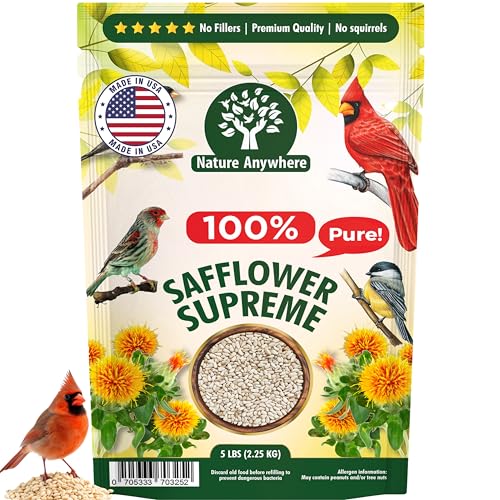
Safflower Bird Seed for Outside Feeders 5 lb
More On The Choices That Made The List
Raw shelled peanuts earn their place in a backyard lineup because they serve two feeders at once, and TRAILMARK Naturals leans into that with a 20-pound sack grown in the USA. Blue jays, woodpeckers, and squirrels all gravitate to the unsalted kernels, which means one bag covers the flying crowd and the ground crew without a second purchase.
For most backyards the protein hit is the real draw, since peanuts carry more fat and protein per scoop than millet or cracked corn. The trade-off is shelf care: in warm weather, shelled nuts can turn rancid quickly, so storing the bag in a metal bin out of direct sun is the difference between fresh feed and a pile birds ignore.
Points In Its Favor
- Doubles as squirrel and bird food in one bag
- High protein content fuels active feeders year-round
- Unroasted and unsalted, with no chemical fillers
- Shelled form means no hull mess under the feeder
- Domestic sourcing for traceable quality
Worth Noting
- Whole nuts can attract larger mammals like raccoons
- Needs dry, sealed containment in summer
- Not a complete diet on its own for finch-heavy yards
Key Specs
Made For
Backyard hosts who want one bag to feed jays, woodpeckers, and squirrels without juggling two products.
Consider Something Else When
Cole’s BR20 Blue Ribbon Blend suits mixed perch and ground feeders who want a wider species draw on a single perch.
CountryMax’s 50-pound bag of in-shell peanuts flips the script from Item 1 by giving wildlife the shells and all. That matters because cracking open a whole peanut is a foraging behavior, which keeps jays, squirrels, and crows engaged far longer than a shelled scoop. The natural, unsalted sourcing keeps the feed clean.
You can scatter piles on the ground or pour them into platform feeders, so the bag doubles as both a feeder and a wildlife enrichment activity. The trade-off shows up at cleanup time, since in-shell peanuts leave a small debris layer under busy feeding stations that needs a weekly rake.
Benefits That Matter
- Whole-shell format encourages natural foraging
- Large 50 lb format suits farms and rural properties
- Attracts larger species like crows and blue jays
- No additives or artificial fillers
Trade Offs
- Cracked shells collect under the feeding area
- Smaller songbirds may be outcompeted by larger visitors
- Heavy bag requires a sealed storage container
Whose Shelf It Belongs On
Rural property owners and small-acreage wildlife enthusiasts who want one bulk bag to anchor the feeding station.
Look Elsewhere When
Valley Farms Whole Sunflower Hearts suits patio setups where hull mess under the feeder is the main concern.
Where the TRAILMARK peanuts go broad, Kaytee’s Western Regional blend goes specific. The mix is tuned to the seed preferences and visual cues of birds common across the Western US, which is a meaningful distinction for anyone whose yard hosts different species than a Midwest or East Coast blend targets. Two 7-pound packs give a manageable starting volume.
It pours well into tube and hopper feeders, and the formulation leans into grains Western songbirds actually select. For most suburban backyards west of the Rockies, the regional fit reduces the amount of leftover seed that ends up scattered under the feeder uneaten.
What Earns Its Place
- Seed profile tuned to Western US songbird preferences
- Two-pack format spreads storage across smaller containers
- Works in standard tube and hopper setups
- Reduces waste from birds sorting through filler
Honest Caveats
- Less useful for Eastern or Southern US bird populations
- Smaller 7 lb size means more frequent repurchase
- Some grain debris is normal with any mixed seed
Right Fit For
Western US backyard hosts who want a regional mix matched to the songbirds they actually see at the feeder.
Skip It When
Cole’s BR20 Blue Ribbon Blend suits nationwide yards where the regional profile is less relevant than species variety.
Blue Ribbon Blend is the traditional mix reimagined for any feeder type, and the species list on the label reads like a backyard checklist. Cardinals, titmice, chickadees, goldfinches, juncos, indigo buntings, wrens, grosbeaks, woodpeckers, and towhees all show up for the sunflower-heavy formula, with millet and cracked grains for the ground feeders below the perch.
The honest read is that no synthetics or chemicals make it through the bag, which keeps the feeding area cleaner for the birds. Depending on your feeder setup, pairing it with Cole’s tube, mesh, or bowl feeders (called out on the product page) tends to bring the best draw, since the mix has both perch and scatter components.
Notable Upsides
- Targets both perch and ground feeding species
- No added synthetics, chemicals, or artificial flavors
- Compatible with tube, mesh, and bowl feeders
- Wide regional use across most US backyards
Points To Note
- Hulled grains mean some debris under the feeder
- 20 lb size needs dry storage between refills
- Heavier birds may dominate the perch at busy times
Quick Facts
Best Suited To
Backyard hosts who want one bag to cover perch feeders and ground scatter zones without buying two separate blends.
Reach For A Different Pick When
JCs Wildlife Bugs Nuts and Berries Cylinder fits bluebird-heavy yards that need mealworms to bring insect-eaters in.
Most backyard cylinders rely on grain fillers to hold the block together, but this one skips corn, milo, and millet entirely. The result is a 3.8-pound compressed cylinder of sunflower chips, diced tree nuts, split peanuts, dried mealworms, cranberries, papaya, and juniper berries, with a built-in mounting hole for hanging.
For most yards the mealworm content is the real differentiator, since bluebirds, woodpeckers, and wrens that ignore standard seed will land on a cylinder stacked with insects. The cylinder format does mean slower consumption than loose seed, which suits low-traffic yards but frustrates setups with heavy daily traffic.
What It Does Well
- Zero filler grains like corn or millet
- Dried mealworms attract insect-eating species
- Cranberries and berries add color variety
- Pre-formed shape cuts refill frequency
Factors To Consider
- Slower consumption than loose seed mixes
- Requires a compatible cylinder feeder for the center hole
- Heavier price-per-pound than loose blends
Who Should Grab It
Yards that host bluebirds, woodpeckers, and wrens and want a block that pulls insect-eaters without scattering loose mealworms.
Swap It Out When
Very Berry Wild Bird Seed fits hosts who want loose berry-rich mix for tube feeders rather than a cylinder block.
Sunflower hearts (the inner kernel of black oil sunflower, with the husk removed) are the gold standard for low-mess feeding, and Valley Farms leans hard into the cleanliness angle. The 4-pound bag is vacuum cleaned during packing, which keeps dust and broken bits out of your feeder.
You trade the husk layer on the patio for a feed that birds finish to the bottom of the feeder, since there is nothing to discard. The trade-off shows up at refill frequency, because kernel-only bags tend to empty faster in yards with active finches and cardinals.
Good Reasons To Consider
- Whole, intact hearts with no dust or broken pieces
- No shells means no patio cleanup under the feeder
- High oil content attracts finches and cardinals alike
- Suitable for tube, tray, and platform feeders
Things To Consider
- Higher cost per pound than in-shell sunflower
- Smaller bag requires more frequent repurchase
- Can spoil faster in damp weather without a covered feeder
At A Glance
Perfect Match For
Apartment patios and small decks where hull debris would stain the surface or bother downstairs neighbors.
Another Choice May Suit
TRAILMARK Raw Shelled Peanuts works for yards that want both birds and squirrels fed from one bag.
Nature Anywhere’s Bird Banquet is built around the “no fillers” claim that runs through their lineup, so the bag skips cheap grain padding and focuses on seeds birds actively eat. For most yards that translates to less swept-up debris at the end of the week and more actual feeding activity at the perch.
The blend is positioned as a daily staple for common backyard setups, and pours cleanly into tube, hopper, and platform feeders. Depending on your climate, the domestically grown sourcing tends to hold quality through humid summers better than imports that pass through more handling stages.
Strong Points
- No filler grains means birds eat more, waste less
- Domestically grown ingredients for traceable sourcing
- Works across tube, hopper, and platform feeders
- Reasonable starter size for first-time feeders
Room For Improvement
- Less specialized than region-specific blends
- Some hull debris is normal with mixed seed
- Smaller species may get crowded out at busy perches
Who It Suits Best
First-time backyard hosts who want a general-purpose blend before narrowing down to specialty mixes later.
A Better Fit Elsewhere
Kaytee Western Regional Wild Bird Seed suits Western US hosts who want a region-tuned profile over a general blend.
Nature Anywhere’s no-mess blend takes the same hull-free approach as Item 6 and expands it into a multi-component mix: shelled sunflower hearts, kernel peanuts, and hulled millet, with no milo or wheat filler. The result is a bag birds finish to the bottom rather than sorting through and tossing aside.
You may find the cleanup savings are biggest on open platform feeders over a deck or walkway, since droppings are typically the only thing left behind. The mix attracts finches, cardinals, chickadees, robins, and blue jays according to the brand, which covers most of the species suburban yards hope to host.
Real-World Strengths
- Hull-free mix keeps the area below the feeder clean
- Multi-component blend pulls varied species
- No milo or wheat filler grains
- Suitable for hanging, tube, tray, and platform feeders
Where It Is Less Suited
- Premium composition drives a higher cost per pound
- Smaller 5 lb bag empties fast in heavy-traffic yards
- Requires dry storage to prevent the hearts from clumping
Feature Snapshot
Built With In Mind
Suburban yards with hanging feeders over a deck or patio where shell mess would otherwise pile up between cleanings.
Not Your Match When
Cole’s BR20 Blue Ribbon Blend is a stronger fit for yards that want ground-feeding birds included in the draw.
Very Berry is the fruit-forward sibling of the Nature Anywhere lineup, and the mix swaps grain filler for safflower, peanuts, assorted dried fruits, and berries alongside sunflower kernels. That matters because robins, bluebirds, and many thrushes actively prefer fruit over seed when given the choice.
For most yards the visual signal is part of the appeal, since the berry and fruit pieces brighten up a tube feeder and pull in species that ignore plain seed. The bag pairs well with hanging or platform setups, and the sunflower-led base keeps cardinals and blue jays showing up too.
What Helps Most
- Fruit and berry pieces pull in thrushes and robins
- Safflower and peanut base keeps cardinals coming back
- No milo or wheat filler grains
- Compatible with hanging, tube, tray, and platform feeders
Some Limits To Know
- Higher price point than grain-heavy blends
- Dried fruit can darken or harden in humid weather
- 5 lb bag empties fast at busy feeding stations
The Right Fit
Yards that host robins, bluebirds, and other fruit-loving species and want a mix that goes beyond plain sunflower.
Where A Sibling Pick Shines
JCs Wildlife Bugs Nuts and Berries Cylinder is a stronger fit for yards that want insect-eating species drawn in.
Safflower is the specialist’s pick, and this bag leans into a 100% pure single-seed format with no dust, twigs, or mixed grains layered in. Safflower has a long reputation for pulling cardinals while leaving squirrels and grackles uninterested, which makes it a quiet workhorse for yards dealing with rodent competition.
For most suburban yards the seed’s bitter profile is the differentiator, since squirrels commonly walk away from a safflower feeder once they figure it out. The honest read is that not every songbird takes to safflower, so it works best as a second feeder rather than a sole food source.
Everyday Advantages
- Pure single-seed bag with no filler grains
- Strong draw for cardinals and house finches
- Bitter taste discourages squirrels at the feeder
- Domestically grown and packed in the USA
Worth Bearing In Mind
- Some songbirds ignore safflower entirely
- Harder outer shell can challenge smaller-beaked species
- Best used alongside another feeder, not alone
Tech Sheet
Who Will Love This
Cardinal-focused hosts who want to reduce squirrel pressure without giving up a quality feeder blend.
A Better Fit Elsewhere
TRAILMARK Raw Shelled Peanuts suits yards that want to actively feed squirrels rather than discourage them.
What To Weigh Before Choosing Your Backyard Bird Seed
Start with the species list, not the bag. A yard that hosts primarily finches and cardinals runs on sunflower hearts and safflower, while a yard that wants bluebirds and woodpeckers needs mealworms or fruit in the mix. Mismatched seed is the most common reason a feeder sits empty, so matching the bag to the birds you actually see matters more than chasing the cheapest option.
Next, weigh the form. Hulled seeds cost more per pound but eliminate the shell mess that builds up under platform feeders, while in-shell peanuts and whole grains give wildlife a natural foraging behavior but require weekly raking. A patio over a deck needs no-mess blends, while a yard with open ground can handle traditional mixes.
Climate and storage round out the decision. Raw peanuts and shelled seeds spoil faster in humid summers, so a sealed metal bin is non-negotiable for those bags. Cylinder blocks and pure safflower hold quality longer in open-air conditions, which makes them easier for occasional hosts who refill weekly rather than daily.
Key Considerations Across These Picks
Common Shopping Slip Ups
The most frequent mistake is buying the cheapest bag without checking the species profile, since cheap mixes often lean on filler grains like milo and red millet that birds toss aside. Another slip is ignoring feeder compatibility, since a cylinder block needs a cylinder feeder and a hulled blend performs poorly in a tube designed for in-shell sunflower. Match the seed shape to the feeder type before the bag arrives.
Where The Extra Money Goes
Premium blends cost more because the formula replaces filler grains with ingredients birds actively eat, which means less waste under the feeder and faster emptying in the hopper. Region-specific mixes add research and sourcing costs, while domestic production keeps ingredient traceability tighter. The upgrade typically pays off in cleaner feeding areas and a steadier bird draw over the season.
Frequently Asked Questions
How long does a bag of bird seed stay fresh?
Most bags stay fresh for several months in a cool, dry, sealed container. Raw peanuts and shelled sunflower hearts spoil faster in humid weather, so airtight storage matters more than the printed date.
Should I feed birds year-round?
Yes, consistent feeding helps local populations through nesting, migration, and winter. Clean feeders monthly with diluted bleach and rinse thoroughly, since buildup can harbor bacteria.
Why do birds throw seed on the ground?
Birds sort through mixes to find their preferred seed and discard filler grains like milo. Choosing a no-filler blend cuts the debris pile under the feeder and the rats and mice it attracts.
Will squirrels eat all my seed?
Squirrels are persistent, but pure safflower, hot pepper-treated seed, and squirrel-proof feeders reduce loss significantly. Some hosts accept squirrel feeding and switch to peanut-heavy blends to satisfy both visitors.
Do I need more than one feeder?
Two feeders handle most yards: one for hulled blends over a patio and one for traditional mixes or cylinders elsewhere. Multiple feeding zones reduce crowding and let shyer species feed without competition.
The Takeaway
Your backyard feeding station earns its reputation one bag at a time, so match the seed to the species, the feeder, and the climate before you commit. Whether you go hulled for tidy patios, mixed for variety, or specialized for cardinals, the right bag makes the difference between an empty perch and a steady parade. Start with one blend that fits your yard, watch who shows up, and adjust from there.
