

A dull pair of pruning clippers turns a quick garden tidy into an arm-wrenching chore, crushing stems instead of slicing them and leaving plants vulnerable to disease. Whether you maintain a backyard vegetable patch, shape ornamental roses, or run a small nursery, the right hand pruner makes every cut cleaner, faster, and easier on your wrist. The ten picks below cover compact snips for detail work, heavy-duty bypass pruners for thick branches, and a spare blade to keep a favorite tool alive for decades.
A Quick View Of The Lineup

Dramm ColorPoint Compact Pruning Shears (Yellow)

Dramm ColorPoint Compact Pruning Shears (Green)
Fiskars Bypass Pruning Shears 5/8″ Cut

Fiskars 7″ Micro-Tip Pruning Snips

TONMA 8.2″ Japanese Pruning Shears TP-2

Fiskars Forged Steel Bypass Pruners 1″ Cut
Fiskars SoftGrip Bypass Pruners 5/8″ Cut

Felco F2 9.25″ Swiss-Made Pruning Shears

Wablade 7.9″ Japanese Bypass Pruner

Felco Replacement Blade for F2, F4, F11
A Deeper Look At The Lineup
Small hands and tight stems meet their match with the Dramm ColorPoint in cheerful yellow. The compact frame keeps control high during flower arranging or light deadheading, and a corrosion-resistant stainless steel head shrugs off damp soil and morning dew. Gardeners who lose tools in the grass will appreciate how this bright handle turns up at a glance between the hostas.
Compared to the chunkier Fiskars bypass pruner further down the list, this ColorPoint trades raw cutting power for finesse. You may find it less suited to woody rose canes, but for snipping herbs, trimming back annuals, and shaping small ornamentals it feels light and deliberate in the palm. The integrated blade lock also keeps storage safe in a kitchen drawer or apron pocket.
Where It Delivers
- Fine-point tip handles detailed trimming of flower stems and herbs without crushing tissue
- Corrosion-resistant stainless head holds up through wet soil and humid climates
- Compact frame reduces hand fatigue during long, repetitive snipping sessions
- Bright yellow finish makes the tool easy to spot in dense planting beds
- Closed blade lock prevents accidental nicks during transport or drawer storage
Things To Consider
- Compact blade gap is less suited to woody branches thicker than a pencil
- Plastic handle color may fade with prolonged sun exposure over several seasons
- Lacks a replaceable blade, so a nick means the whole tool retires
Key Specs
Who Should Grab It
Container gardeners and flower bed tenders who want a lightweight pruner for soft, green growth.
A Better Fit Elsewhere
Reach for the Felco F2 Swiss-Made Pruning Shears if you spend hours daily on woody orchard wood and want a tool built for professional workloads.
The green variant of the Dramm ColorPoint brings the same compact stainless head to a different crowd: hydroponic growers and indoor plant collectors. Marketed for tight trimming around tomato towers and herb walls, the slim profile slips into dense foliage where a full-size bypass pruner would knock leaves loose. A bright green handle blends into leafy setups yet stays visible against soil and gravel.
Side by side with the yellow ColorPoint above, the mechanics are identical, so the only real question is color preference. Indoor growers with shared toolboxes often assign each color to a different crop to avoid cross-contamination. For most kitchen windowsills and grow tents, the stainless blade holds an edge well through damp conditions.
The Good Stuff
- Stainless steel head resists rust in high-humidity grow tents and greenhouses
- Narrow profile reaches between stakes, ties, and dense foliage without snagging
- Color-coding helps separate tools between herbs, vegetables, and ornamentals
- Closed lock keeps the blade safe around curious kids and pets
Trade Offs
- Same compact blade gap as the yellow model, so woody growth is a struggle
- Smaller handle may feel cramped during long outdoor pruning days
Right Fit For
Hydroponic growers and indoor gardeners who trim soft growth in tight spaces on a near-daily basis.
Where Another Pick Suits Better
Pick the Fiskars SoftGrip Bypass Pruners instead for long outdoor sessions where a fuller handle reduces wrist strain.
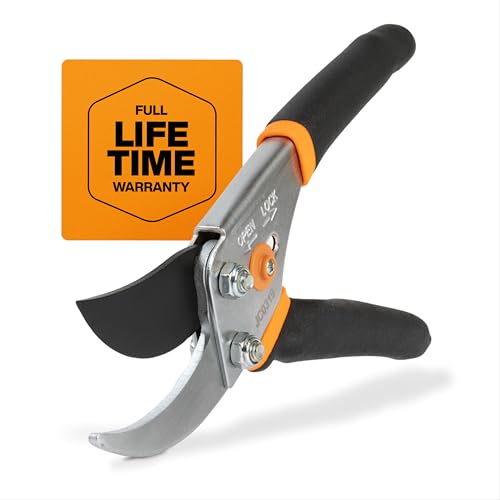
The classic orange-handled Fiskars bypass pruner has earned its place in sheds across the country. A bypass design means two curved blades pass each other like scissors, slicing live wood cleanly without crushing the vascular tissue that carries water and nutrients. Hardened, precision-ground steel stays sharp through seasons of regular use on roses, fruit trees, and ornamental shrubs up to five-eighths of an inch across.
Compared to the compact Dramm ColorPoint earlier, this Fiskars trades a small footprint for a more substantial cut capacity. Most homeowners handling mixed yard work will find the spring action smooth and the grip comfortable for an hour of steady pruning. The trade-off is a bulkier head that is less nimble around tight floral work, where the Fiskars Micro-Tip snips later in this list pull ahead.
Everyday Perks
- Fully hardened steel blade retains a sharp edge through repeated home use
- Bypass action delivers clean cuts that heal faster on live stems
- Five-eighths inch capacity handles the bulk of typical backyard pruning tasks
- Light enough to reduce fatigue during weekend cleanup sessions
Worth Noting
- Plastic handle is durable but lacks the cushioning of the SoftGrip variant below
- Spring tension can loosen over years of heavy use and may need a replacement
Whose Shelf It Belongs On
First-time pruner owners and generalist gardeners who want one reliable tool for mixed outdoor trimming.
Not Your Match When
Choose the TONMA TP-2 Japanese Pruning Shears if you regularly tackle branches approaching a full inch in diameter.
Detail work lives and dies by the tip, and Fiskars narrows theirs down to a fine point on these 7-inch micro-tip snips. The non-stick blade coating helps sap and resin slide off rather than gum up the action, while the SoftGrip loop handle reduces squeeze pressure during long shaping sessions. Anyone who has tried to deadhead petunias with a chunky bypass pruner will recognize the upgrade immediately.
Where the Fiskars Bypass Pruner above chews through rose canes, this micro-tip tool focuses on accuracy over reach. Herbs, topiary, flower arranging, and even vegetable trimming benefit from blades that can slip into tight clusters. The loop handle takes a moment to get used to but rewards careful gardeners with a relaxed grip.
A Few Highlights
- Micro-tip blades reach into dense flower clusters without collateral damage
- Non-stick coating keeps sap from gumming the cutting action
- SoftGrip loop handle lowers hand fatigue during repetitive shaping
Points To Keep In Mind
- Not built for woody stems beyond a quarter inch in diameter
- Loop handle ergonomics feel unusual to anyone used to traditional grips
Feature Snapshot
Made For
Herb gardeners, floral arrangers, and anyone shaping topiary or bonsai on a regular basis.
Skip It When
Reach for the Fiskars Forged Steel Bypass Pruners if your typical day involves thick woody canes rather than fine foliage.
Japanese SK5 steel is a high-carbon alloy prized for edge retention, and TONMA presses it into a one-inch-capacity pruner made in Japan. That puts the TP-2 in heavier territory than most Fiskars bypass models earlier in this list, capable of crunching through grape vines, blueberry canes, and young fruit tree branches without complaint. The improved safety lock holds tight in either open or closed position, addressing a common weak spot on imported pruners.
For gardeners used to lighter household pruners, the heft may feel like overkill on soft annuals, but it pays off on neglected shrubs. The cutting geometry is built for clean slices rather than crushing force, which matters for plant health on thicker cuts. Expect a tool that rewards regular cleaning and the occasional sharpening stone.
Everyday Advantages
- SK5 high-carbon steel blade keeps a sharp working edge through heavy use
- One-inch cutting capacity handles most backyard woody growth
- Improved safety lock stays put during storage or transport
- Made in Japan with attention to traditional pruner geometry
Soft Spots
- Higher carbon steel benefits from drying after use to prevent surface oxidation
- Heft may tire smaller hands during long shaping sessions
Key Product Details
Best Suited To
Backyard orchardists and serious gardeners who regularly cut woody growth up to an inch thick.
Consider Something Else When
Pick the Wablade Japanese Bypass Pruner for ornamental shaping where a lighter 7.9-inch frame is more comfortable.
Forged steel handles separate this Fiskars pruner from the company’s lighter orange-handled classic. Forging compresses the metal grain structure, producing a stronger arm that resists bending when you lean into a stubborn one-inch branch. Combined with a fully hardened, precision-ground blade, the result is a pruner built for the kind of work that would loosen or twist a stamped-steel competitor.
Where the original Fiskars Bypass pruner handles five-eighths of an inch comfortably, this forged model pushes toward the limit of what a handheld pruner can manage. It is the natural step up for gardeners who find themselves forcing their current tool through thicker wood. The trade-off is added weight that may slow down fine detail work compared to the Micro-Tip snips earlier.
Useful Touches
- Forged steel handles resist bending under heavy cutting leverage
- One-inch cut capacity tackles mature shrubs and small tree limbs
- Hardened steel blade holds a working edge through demanding seasons
Honest Caveats
- Heavier frame may feel unwieldy for delicate topiary and flower work
- Stiffer action out of the package usually loosens after a few uses
Perfect Match For
Homeowners restoring overgrown shrubs and gardeners maintaining established landscape plantings.
Look Elsewhere When
Grab the Fiskars SoftGrip Bypass Pruners instead for long sessions where cushioning and lighter weight reduce fatigue.
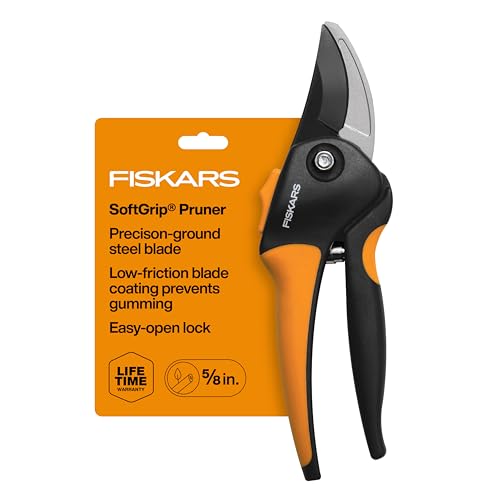
Long pruning sessions punish bare plastic grips, and Fiskars answers with a SoftGrip handle that cushions each squeeze. A self-cleaning sap groove channels sticky residue away from the blade path, reducing the interruptions common during spring rose work. The five-eighths inch cutting capacity matches the classic Fiskars Bypass pruner, so this is really a comfort upgrade rather than a power upgrade.
Compared to the standard Fiskars Bypass Pruner earlier, the SoftGrip version trades a touch of firmness for noticeably less hand cramping on multi-hour jobs. Gardeners with arthritis or smaller grip strength tend to find this the friendlier daily carry. The blades still demand respect on woody growth above their capacity, so you may want the forged Fiskars model for heavy cleanup.
Positive Takeaways
- SoftGrip handle reduces pressure and fatigue during extended use
- Sap groove keeps blades cutting smoothly through sticky spring growth
- Non-slip grip surface improves control in damp or dewy conditions
Practical Considerations
- Same five-eighths inch capacity as the standard bypass, not a step up in power
- Cushioned grip collects dirt over time and benefits from occasional cleaning
Who It Suits Best
Pruners with arthritis, smaller hands, or anyone tackling long Saturday sessions across a sizable yard.
Reach For A Different Pick When
Choose the Fiskars Forged Steel Bypass Pruners if you need one-inch capacity for thick, woody branches.
Felco has anchored the Swiss pruner market for decades, and the F2 is the model most professionals reach for first. Forged aluminum handles keep the weight low while a hardened steel blade delivers clean cuts on branches up to about an inch thick. The real magic sits beneath the surface: every part, from the blade to the spring to the smallest screw, is replaceable, which means a Felco F2 owned carefully can outlive a stack of cheaper pruners.
Compared to the Fiskars forged steel pruner, the Felco F2 carries a higher up-front cost but rewards with serviceability. Vineyards, orchards, and landscape crews treat them almost as a long-term tool investment rather than a purchase. For a homeowner who prunes a few times a year, the value equation shifts and a Fiskars may make more sense, but anyone logging serious hours will appreciate the balance and durability.
What Pays Off
- Replaceable parts extend tool life across decades of regular service
- Forged aluminum handles stay light during full workdays
- Hardened steel blade delivers the clean cuts professionals expect
- Swiss manufacturing reflects long-standing quality control standards
Some Limits To Know
- Premium price makes the F2 a tougher sell for casual weekend gardeners
- Smaller hands may find the 9.25-inch frame a stretch during long reaches
Spec Overview
Built With In Mind
Vineyard and orchard professionals, landscape contractors, and serious hobbyists who prune frequently.
Swap It Out When
Pick the Fiskars Bypass Pruning Shears if a casual homeowner budget and lighter pruning needs top your list.
Wablade leans into Japanese cutlery tradition with a 7.9-inch bypass pruner designed for controlled cutting on live branches, stems, and ornamental growth up to roughly 0.59 inches (15 mm) in diameter. The compact frame lands between the micro-tip snips and full-size bypass pruners earlier in this list, hitting a sweet spot for bonsai work, rose deadheading, and tidy shrub shaping.
Where the TONMA TP-2 earlier pushes toward maximum cutting power, this Wablade stays in the finesse lane. The bypass geometry lets the upper blade glide past the lower anvil-style edge, slicing rather than crushing. For most indoor and patio gardeners, the 15 mm capacity covers day-to-day trimming comfortably without the weight of a professional tool.
A Favorable Mix
- Bypass blade geometry slices cleanly through live growth
- 15 mm capacity covers the bulk of ornamental and floral pruning
- Lightweight 7.9-inch frame reduces fatigue during detailed shaping
- Made in Japan with traditional cutlery craftsmanship
Possible Compromises
- Capacity tops out at roughly 15 mm, limiting heavier woody work
- Smaller handle may not suit gardeners used to longer full-size pruners
The Right Fit
Bonsai enthusiasts, rose gardeners, and ornamental plant collectors who want precise control in a mid-size frame.
A Better Fit Elsewhere
Choose the TONMA TP-2 for branches approaching a full inch in diameter on tougher landscape material.
The Felco Replacement Blade (2/3) is the part that keeps a beloved pruner alive. Designed for the F2, F4, and F11 models, this hardened steel blade slots in once the original loses its edge, chips on a hidden nail, or stops closing all the way to the tip. It is the most practical accessory on this list because it transforms a worn tool back into something that cuts like new.
Owners commonly find that swapping a Felco blade takes only a few minutes with basic tools, and the included packaging directions walk through the steps. Pair this with a fresh spring and a touch of lubricant during install, and the pruner is ready for another season. Anyone who already owns a compatible Felco will see this as a no-brainer maintenance purchase.
Where It Helps
- Hardened steel construction matches the durability of the original Felco blade
- Direct fit for the F2, F4, and F11 hand pruner models
- Restores clean cutting without replacing the entire tool
A Few Limitations
- Only fits the listed Felco models, so check compatibility before ordering
- Replacement still requires a moment of disassembly with basic tools
Who Will Love This
Existing Felco owners whose daily pruners have finally lost their edge after years of faithful service.
Where Another Pick Suits Better
Pick the Fiskars Bypass Pruning Shears if you do not yet own a pruner and need a complete tool rather than a spare part.
What To Weigh Before Choosing Pruning Clippers
Match The Cutting Action To Your Plants
Bypass pruners use two curved blades that pass each other like scissors, making them the right choice for live green wood because they slice rather than crush. Anvil pruners bring a single blade down onto a flat plate and excel at dead, dry wood where a cleaner slice matters less. Most home gardeners benefit from owning at least one bypass pruner, since roses, fruit trees, and ornamental shrubs all qualify as living tissue that heals better with a clean cut.
Right-Size The Cut Capacity
Cut capacity, listed in inches or millimeters, tells you the thickest branch a pruner can handle without forcing. A five-eighths inch pruner covers the bulk of residential pruning, while one-inch models like the Fiskars Forged Steel or TONMA TP-2 reach into mature shrub and small tree territory. Choosing more capacity than you need adds weight, so match the tool to your typical branch size rather than the occasional outlier.
Consider Handle Comfort And Grip Style
SoftGrip, contoured, and loop-handle designs each reduce hand fatigue in different ways. Gardeners with arthritis or smaller grip strength often prefer cushioned handles, while detail-oriented pruners like the Fiskars Micro-Tip lean into a loop design for fingertip control. Trying a few grip styles in person, or reading closely about ergonomics, helps avoid hand cramping during long sessions.
Plan For Maintenance And Replacement Parts
Stainless steel resists rust in damp climates, while high-carbon SK5 steel holds an edge longer but benefits from drying after use. Replaceable blades, like the Felco spare reviewed above, transform a long-term investment into a tool that lasts decades. A quick wipe-down after each session, occasional sharpening, and a drop of oil on the spring keep nearly any pruner cutting smoothly.
Things Worth Knowing Before You Pick
Common Shopping Slip Ups
The most common slip is choosing a pruner based on maximum cut capacity alone, which usually leads to a heavier tool than your daily work requires. Another trap is overlooking handle ergonomics, since a beautiful blade in a punishing grip becomes a chore by the second hour. Finally, shoppers often skip the question of replacement parts, which matters more for high-end tools like the Felco F2 than for budget picks.
Where The Extra Money Goes
Higher-tier pruners earn their price through harder steel, forged handles, and replaceable components. SK5 Japanese steel holds an edge far longer than basic stainless, and forged aluminum handles like those on the Felco F2 resist bending under heavy leverage. For casual weekend gardeners, those upgrades are nice to have, but daily users and professionals recover the cost quickly through years of reliable service.
Frequently Asked Questions
What Is The Difference Between Bypass And Anvil Pruning Clippers?
Bypass clippers use two curved blades that pass each other to slice live wood cleanly, while anvil clippers bring one blade down onto a flat surface for cutting dead wood. Most gardeners need a bypass pruner for roses, fruit trees, and ornamentals because the cleaner cut heals faster and reduces disease risk on living tissue.
How Often Should I Sharpen My Pruning Clippers?
Sharpen your pruners whenever you notice crushing instead of slicing, or roughly every few months during active growing seasons. A few passes with a fine diamond file along the original bevel is usually enough, followed by a light oiling to prevent rust.
Can Pruning Clippers Spread Disease Between Plants?
Yes, sap and debris on blades can carry fungal spores and bacteria from one plant to the next. Wiping the blade with a cloth dipped in rubbing alcohol or a mild bleach solution between plants, especially when moving between diseased and healthy specimens, dramatically reduces the risk of spreading problems.
What Cut Capacity Do I Need For Most Home Pruning?
Five-eighths of an inch covers the majority of residential pruning, including rose canes, small fruit tree branches, and ornamental shrubs. If you maintain mature landscape plants or small trees, stepping up to a one-inch capacity pruner prevents forcing the tool and improves cut quality on thicker wood.
Are Expensive Pruning Clippers Worth The Investment?
Expensive pruners like the Felco F2 pay off for daily users and professionals through replaceable parts, longer-lasting edges, and better ergonomics. For occasional weekend gardeners, a mid-range Fiskars or Wablade often delivers plenty of performance, with the premium tier becoming worthwhile only as pruning frequency climbs.
Closing Remarks
The best pruning clippers are the ones that match your garden’s typical branch size, fit comfortably in your hand, and stay sharp through the seasons. A compact bypass pruner handles most backyard work, a micro-tip snip earns its place for detail shaping, and a heavier one-inch model stands ready for the occasional thick cane. Choose based on what you actually cut, keep the blade clean and lightly oiled, and your pruners will reward you with cleaner cuts and healthier plants for years.
