

Picking the right pruning shears changes everything on a fruit tree: clean cuts heal faster, disease pressure drops, and your hand isn’t throbbing after a long afternoon. The wrong pair crushes stems, leaves ragged wounds, and turns a quick summer trim into an aching chore. This lineup covers cordless power, ergonomic hand relief, and precision for tight work, so you can match a tool to your trees and your hands.
The Main Contenders

DEWALT 20V MAX Pruning Shears Garden Tool (DCPR320B)

DECERK Bypass Pruning Shears for Arthritic Hands

DECERK Bypass Pruning Shears & Garden Snips Set
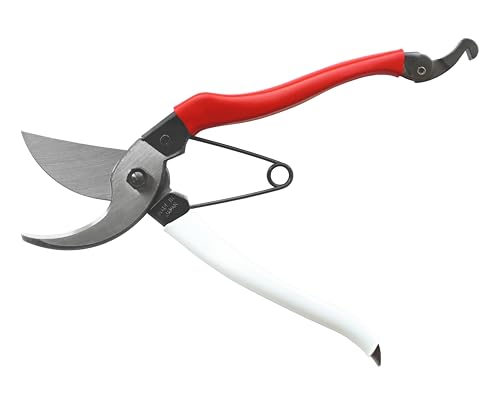
Okatsune No. 104 Pruning Shears 8.3 inches

Fiskars 7″ Loop Micro-Tip Pruning Shears

TONMA 8.2″ Garden Shears TP-2

DECERK 8.5″ Professional Pruning Shears

DECERK 8.5″ Bypass Pruning Shears for Women

DECERK 8.5″ Premium Bypass Pruning Shears Wood-Grain

Felco F2 Pruning Shears 9.25″ Swiss-Made
A Deeper Look At The Lineup
If your orchard has a backlog of thick, neglected branches, the DEWALT DCPR320B changes the math. A 1-1/2 inch cut capacity handles wood that would make a hand pruner groan, and at around three pounds (tool only) it stays manageable during long sessions. The 20V MAX battery platform is the real draw for anyone already running DEWALT tools in the garage or shed.
For homeowners with a few dwarf fruit trees, this is overkill. For someone stewarding a half-acre of apples, pears, or stone fruit, the cordless cut is a genuine upgrade. Compared to the manual picks lower in this lineup, you trade quiet simplicity for raw power.
Strengths Worth Knowing
- 1-1/2 inch cut capacity handles thick, established branches
- Non-stick coated blade glides through sap-prone fruit wood
- On-board LED light helps when you’re cutting into shaded canopy
- Quick blade change with the included change tool
- Battery compatibility with the broader 20V MAX ecosystem
Trade-Offs Worth Considering
- Tool only, so the battery and charger are a separate investment
- Heavier and bulkier than any hand pruner on this list
Feature Snapshot
Right Fit For
Orchardists managing mature trees who already own 20V MAX batteries and want fast, low-effort cuts on thick wood.
Look Elsewhere When
The Felco F2 is a better match for traditionalists who want a quiet, serviceable hand pruner they can sharpen at home.
DECERK built these for hands that need a softer handshake. The 5mm cushioned foam grips spread pressure across the palm instead of letting it concentrate on a few fingertips, and a bypass design (where two curved blades pass each other like scissors) keeps cuts clean on live green wood. For older gardeners or anyone with grip fatigue, that foam layer is the whole point.
The cutting capacity tops out around 3/4 inch, so this lives in the hand-pruner lane rather than the orchard-revival lane. Think of it as the right size for thinning, heading back, and routine fruit tree maintenance, not for taking out old limbs. Compared to the Okatsune further down, the grip here is the headline feature, not the steel.
The Practical Payoff
- 5mm foam grips absorb pressure on arthritic or tired hands
- Optimized leverage makes clean cuts up to 3/4 inch easier
- Light enough to use overhead without wrist strain
Honest Caveats
- Not designed for thick, woody branches beyond 3/4 inch
- Foam grips can wear and may need occasional replacement
Built With In Mind
Gardeners with arthritis, carpal tunnel, or simply aching hands who still want to keep their fruit trees in shape.
Swap It Out When
The DECERK 8.5″ Professional Pruning Shears suit someone who wants the same bypass feel but with a tougher blade for everyday heavy use.
Some pruning sessions jump between thick branches and tender new growth, and that’s exactly where a two-tool kit earns its keep. The DECERK set pairs an 8.5 inch bypass pruner for branches up to an inch with a 6.5 inch precision snip for deadheading, harvesting herbs, and shaping the inside of the canopy. The shorter snip reaches into tight crotches that a full-size pruner can’t navigate.
For fruit tree work, you’ll use the bigger pruner for the heavy lifting and the snip for thinning out clusters and cleaning up water sprouts. If you only ever cut one size of wood, you’d save money with a single tool. But anyone with mixed garden chores will appreciate having both on the bench.
Notable Gains
- Covers both thick branch work and fine detail trimming
- Two coordinated tools instead of mismatched leftovers
- Useful across fruit trees, vegetables, herbs, and ornamentals
Trade Offs To Consider
- Bulkier to store than a single pruner
- Each tool does one job; no single tool handles every task
Whose Shelf It Belongs On
Multi-task gardeners who bounce between fruit trees, raised beds, and houseplants on the same afternoon.
Another Choice May Suit
The Fiskars Micro-Tip Pruning Shears are a better fit if you mostly do fine detail trimming and rarely tackle full branches.
Okatsune has a quiet reputation among orchardists for one reason: the steel. The No. 104 uses a high-grade knife steel blade, which holds a clean edge through hundreds of cuts on live wood. The handle is carbon steel (not aluminum), giving the tool a slightly heavier, anchored feel in the hand. This is a traditional bypass pruner built for repeat work, not novelty.
Fruit tree pruning is a satisfying match for this shears. The bypass action slices cleanly, which helps wounds callus over faster, and the 8.3 inch length lands in the sweet spot for most backyard trees. If you have never used a Japanese-made hand pruner, the difference shows up in the way the blade glides rather than crushes.
The Good Stuff
- High-grade knife steel holds a sharp, slicing edge
- Bypass geometry leaves clean wounds for faster healing
- Compact 8.3 inch length reaches into dense canopies
Soft Spots Worth Knowing
- Carbon steel handle can develop surface patina if not wiped dry
- Less cushioned grip than ergonomic-focused competitors
Quick Facts
Best Suited To
Traditional hand-pruner fans who care about edge retention and don’t mind a more minimal grip design.
Reach For A Different Pick When
The DECERK Bypass Pruning Shears for Arthritic Hands make more sense if you need cushioned grips for sore or stiff hands.
Sometimes pruning a fruit tree isn’t about the big cuts at all. The Fiskars 7″ Loop Micro-Tip Pruning Shears are made for the small stuff: thinning spurs, snipping water sprouts, and clipping clusters down to one fruit. The micro-tip blade is shaped to slide into tight spots, and the non-stick coating keeps sap from gumming up your work mid-session.
You wouldn’t take a thick limb down with these, and that’s not the point. Pair them with a heavier pruner for the full job, and they pay for themselves in cleaner detail work. The SoftGrip handle also helps on long, repetitive jobs like thinning apples or peaches where the same motion happens hundreds of times.
Strong Points
- Micro-tip design reaches between stems and into tight crotches
- Non-stick steel blade resists sap buildup
- SoftGrip handle reduces fatigue on long detail sessions
Things To Weigh Up
- Not built for branches, only for green wood and small stems
- Smaller blade means more cuts per branch on heavier work
Technical Highlights
Who Should Grab It
Detail-oriented fruit growers who want precision for thinning, shaping, and cluster cleanup.
A Better Fit Elsewhere
The DECERK Bypass Pruning Shears & Garden Snips Set is a stronger match if you want a full-size pruner bundled with a detail tool.
TONMA leans into its Japanese manufacturing with a blade forged from SK5 steel, a high-carbon tool steel known for toughness and edge retention. On the fruit tree, that means cuts that stay clean rather than tear as the blade dulls after an hour. The redesigned safety lock is a small but useful detail: it stays put whether the shears are open, closed, or in between, so the tool doesn’t drift open in your tote.
The 8.2 inch length sits comfortably in the middle of the lineup, and the 1 inch cutting capacity handles most of what a backyard fruit tree throws at you, with the cordless DEWALT being the only tool here that goes noticeably thicker. For gardeners who specifically want Japanese steel but want a slightly different feel than the Okatsune, TONMA is worth a look.
What It Does Well
- SK5 high-carbon steel holds an edge on woody cuts
- Improved safety lock stays tight in any position
- Cuts through branches up to 1 inch cleanly
Points To Keep In Mind
- Safety lock design takes a moment to learn the first time
- Heavier than all-aluminum ergonomic options
Who Will Love This
Gardeners who appreciate Japanese steel and want a reliable mid-size pruner for typical fruit tree maintenance.
Skip It When
The DECERK 8.5″ Premium Bypass Pruning Shears are a better fit if you want a coated low-friction blade for sap-prone stone fruit.
This is the workhorse in the DECERK lineup. A Japanese SK5 bypass blade gets a titanium coating, which keeps sap from clinging and helps the edge last through thousands of cuts. The anodized aluminum handles and high-hardness screws reinforce the joints, and the 8.5 inch body gives you a bit more reach for higher branches on dwarf and semi-dwarf fruit trees.
For routine orchard work, the 3/4 inch capacity covers the bulk of cuts you’ll make, from heading back last year’s growth to opening up the canopy. The blade coating shows up most during sticky summer pruning, when an untreated blade can gum up fast. If you maintain a small home orchard, this is a sensible step up from a basic pruner.
Reasons It Performs
- Titanium-coated SK5 blade resists sap and corrosion
- Anodized aluminum handles stay light yet strong
- High-hardness screws reinforce the pivot under load
- 3/4 inch capacity covers most fruit tree maintenance
Some Limits To Know
- Coated blade needs gentle cleaning to keep the titanium layer intact
- Not built for branches over 3/4 inch; that calls for a saw or the DEWALT
Right Fit For
Home orchardists pruning multiple fruit trees on a regular schedule and wanting a coated blade that holds up.
Look Elsewhere When
The Felco F2 suits someone who wants a fully serviceable, replaceable-blade pruner for multi-decade ownership.
At 8.1 ounces, these are noticeably lighter than most of the picks on this list. The pink-handled, anodized aluminum body is about 15 percent lighter than comparable steel-handled pruners, which sounds small on paper but matters after an hour of overhead cuts. The non-slip cushioned grips absorb pressure, making them friendly to hands that tire quickly or deal with occasional joint stiffness.
The marketing points to women specifically, but the real story is about anyone with smaller hands or anyone who just wants a lighter pruner for long sessions. On a fruit tree, the lighter weight reduces the forearm fatigue that creeps in during summer pruning marathons. You give up a bit of mass behind the cut, so thicker branches feel more work than with the heavier pro-grade options.
Useful Strengths
- Lightweight 8.1 oz body reduces arm fatigue
- Non-slip cushioned grips stay secure when hands sweat
- Anodized aluminum resists rust and wear
Honest Caveats
- Less cutting momentum than heavier pro-grade pruners
- Bright color may not appeal to every gardener’s taste
Best Suited To
Gardeners with smaller hands, less upper-body strength, or anyone who values low weight for long pruning sessions.
Consider Something Else When
The Felco F2 is a better match for orchardists who want a heavier, fully serviceable pruner they’ll keep for decades.
The wood-grain handle is what catches your eye first, but the real upgrade is the gold titanium coating over the SK5 blade. That coating is engineered to reduce cutting friction, which translates to a smoother slice through green wood and noticeably less sap sticking to the blade. On stone fruit, where sap flow gets heavy in late winter, the difference shows up fast.
Underneath the finish, this is the same heavy-duty 8.5 inch bypass platform as the pro model, with anodized aluminum handles and high-hardness screws reinforcing the pivot. So you get the same functional strength plus a more refined look. For gardeners who care about how their tools look on the shed wall, that wood-grain detail isn’t trivial.
The Helpful Details
- Gold titanium coating reduces friction and sap buildup
- SK5 high-carbon steel holds its edge through heavy use
- Wood-grain handle finish adds a more refined look
- Same reinforced pivot and anodized aluminum body as the pro model
Points To Note
- Premium finish sits at a higher price than basic pruners
- Coated blade benefits from gentle cleaning, not abrasive scrubbing
Right Fit For
Style-conscious gardeners who want a serious bypass pruner that looks the part and resists sap during long sessions.
Where Another Pick Suits Better
The Okatsune No. 104 is a stronger match if you’d rather have a traditional Japanese steel design without coatings.
The Felco F2 is the long-haul choice. Forged aluminum handles, a hardened steel bypass blade, and a design built around replaceable parts mean this isn’t a pruner you replace; it’s one you maintain. Blades, springs, and bolts are all serviceable, which is why orchards and serious home growers keep a pair for decades. On a fruit tree, the 9.25 inch body gives you noticeable reach for higher cuts without losing control.
The Swiss-made build costs more up front than most picks on this list, and the spend only makes sense if you actually use the tool season after season. If your pruning amounts to a few snips a year, the Felco is hard to justify. If you steward a small orchard and want one tool that grows with you, this is the one that tends to outlast everything else on the shed wall.
Where It Delivers
- Hardened steel bypass blade cuts cleanly up to 1 inch
- Forged aluminum handles balance strength and weight
- Replaceable blade, spring, and bolts extend tool life
- Ergonomic shape suits long, repeated use
Small Caveats
- Higher up-front cost than most hand pruners here
- Worth sharpening and maintaining rather than replacing
Spec Overview
Made For
Long-term orchard owners who want a serviceable, professional-grade hand pruner they can sharpen and maintain.
Not Your Match When
The DEWALT 20V MAX Pruning Shears fit better for someone with many thick, established branches to clear and a battery platform already in use.
What To Weigh Before Choosing Pruning Shears For Fruit Trees
Cut Capacity And Branch Type
Bypass pruners (two curved blades that pass each other like scissors) are the right choice for live green wood, because they slice rather than crush. The cut capacity you need depends on what grows in your yard. A 3/4 inch rating covers most thinning and heading cuts on dwarf and semi-dwarf fruit trees, while a 1 inch or larger capacity handles older, more established wood. For branches above that, a pruning saw or a cordless pruner is the smarter tool.
Blade Material And Edge Retention
High-carbon tool steels like SK5 hold a sharp edge through long sessions and resist nicks on harder wood. Titanium coatings reduce friction and help sap slide off rather than gum up the blade, which matters most on stone fruit with heavy sap flow. A coated blade still needs gentle cleaning; abrasive scrubbing wears the coating down faster than you might expect.
Grip Comfort And Hand Fit
Pruning a single fruit tree takes minutes; pruning a backyard orchard takes hours. Foam or cushioned grips spread pressure across the palm and help anyone with arthritis, carpal tunnel, or just tired hands. Lighter aluminum bodies (around 8 ounces) reduce forearm fatigue during overhead cuts. Heavier pruners carry more momentum behind the cut, but they tire you out faster on long jobs.
Maintenance And Long-Term Serviceability
A pruner you can sharpen, take apart, and rebuild is a pruner you keep for years. Replaceable blades, springs, and pivot bolts (the small parts that wear first) matter more than initial finish quality. For organic gardeners, wiping the blade with a light oil after use helps prevent rust and keeps cuts clean through the next season.
Key Considerations Across These Picks
Where Shoppers Go Wrong
The most common slip-up is matching a pruner to the wrong job. A micro-tip snip can’t take out a thick limb, and a heavy bypass pruner slows you down on detail thinning. The other trap is ignoring hand fit. A pruner that feels awkward in the first five minutes will feel brutal in the first hour, so grip size, weight, and handle shape deserve a real test before you commit. Buying the cheapest option rarely pays off; cheap blades dull fast and crush stems, leaving wounds that invite disease.
When Paying More Pays Off
Higher-tier pruners tend to earn their cost in three places: edge retention, build quality, and replaceable parts. A coated SK5 or hardened steel blade stays sharp through a full pruning day, which means cleaner cuts and faster healing on the tree. Forged aluminum or reinforced pivot hardware holds up to repeated heavy use without loosening. Replaceable parts turn a one-time purchase into a long-term tool. For gardeners who prune every year across multiple trees, the upgrade usually returns the difference in saved effort and longer tool life.
