

A neglected pasture, a sapling-choked orchard lane, a hillside that swallowed the riding mower years ago. These are real problems for owners of larger properties, and a walk-behind mower simply won’t survive the kind of growth that turns a Saturday into a wrestling match. The right heavy-duty cutting tool clears tall brush, saplings, and dense weeds in a fraction of the time. This lineup covers tow-behind, 3-point hitch, walk-behind, and battery options across a range of property sizes.
A Quick View Of The Lineup

MechMaxx 3 Point PTO 72” Finish Mower Attachment, FM180

Pxolerig 49CC Gas Walk Behind Brush Cutter 2-Stroke
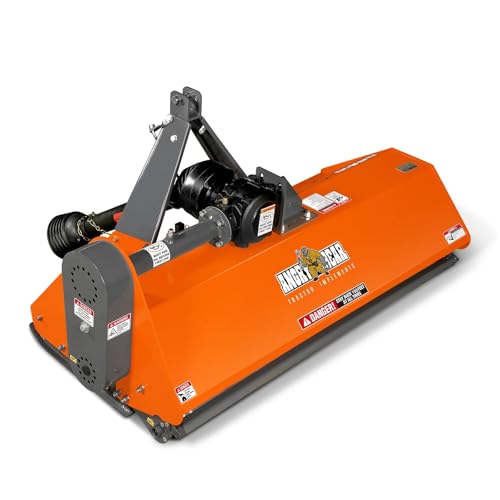
MechMaxx 3 Point 60” PTO Flail Mower, NAM60

Honda HRX-BE 21-Inch Walk Behind Battery Mower

GIYI 47.24″ Tow-Behind ATV Offset Flail Mower 15HP
Taking A Closer Look At The Options
The MechMaxx FM180 is built for property owners who already own a compact or utility tractor in the 18 to 50 horsepower range and want a mowing attachment that handles a wide path in a single pass. The 72-inch working width covers serious ground quickly, and the Category 1 three-point hitch makes hookup familiar to anyone who has run a rear implement before.
Four solid tires support the deck across uneven terrain, and the cutting height adjusts from roughly 0.4 to 4.5 inches, giving you room to scalp a pasture or leave a bit of leaf for tougher grass. Power comes through the PTO driveshaft from your tractor, so you don’t carry a separate engine. Compare that to the GIYI tow-behind unit further down the list, which carries its own 15HP engine instead of drawing power from a tow vehicle.
The Good Stuff
- 72-inch swath finishes large fields in fewer passes, cutting your seat time noticeably.
- Four-tire support keeps the deck stable on rutted ground and helps avoid scalping.
- Cutting height range from 0.4 to 4.5 inches handles everything from short turf to tall weedy growth.
- Heat-treated steel blades hold up against repeated contact with brush and stems.
- Draws power directly from the tractor PTO, so there’s no secondary engine to maintain.
Things To Consider
- Tractor must fall in the 18 to 50 HP window; smaller or larger machines won’t match the recommended operating range.
- Owners commonly report needing to check belt tension and blade hardware regularly after the first few hours of use.
Who It Suits Best
Owners of Category 1 compact tractors with pastures, large lawns, or open acreage who want a finish-mower-quality cut without buying a dedicated wide-area machine.
Where Another Pick Suits Better
Property owners without a compatible tractor should look at the Pxolerig 49CC Gas Walk Behind Brush Cutter, which is self-powered and works without a tow vehicle.
The Pxolerig 49CC brush cutter sits at the opposite end of the spectrum from the tractor-pulled FM180: it’s a hand-pushed machine for homeowners who don’t own a tractor and still need to clear overgrown sections. The 49cc two-stroke engine spins up to 7000 RPM, and the air-cooled system keeps it running through long sessions in warm weather.
The spray-molded iron deck takes knocks without deforming, and the high-speed blade chews through weed-infested patches that would clog a regular mower. For a one-acre lot with sections that have gone wild, this is a more accessible tool than hitching up a 3-point attachment, though the cutting width is much narrower than any of the tow-behind or tractor-mounted options.
The Practical Payoff
- Self-contained 49cc engine means no tractor, ATV, or tow vehicle required.
- Iron deck with molded finish resists deformation under repeated impact.
- High blade speed handles dense weeds faster than a standard rotary mower.
- Light enough for one person to maneuver around garden beds and fence lines.
Worth Noting
- Two-stroke engines require fuel-oil mixing and produce more exhaust smell than four-stroke alternatives.
- Cutting width is significantly smaller than the MechMaxx FM180 or GIYI tow-behind, so large properties take much longer.
- Push-style design means you walk into the cut material, which gets noisy and dusty on dry days.
Made For
Homeowners tackling neglected garden patches, fence-line weeds, or small overgrown lots where a riding mower is overkill but hand tools are too slow.
Consider Something Else When
Anyone clearing multi-acre pastures should reach for the GIYI Tow-Behind ATV Offset Flail Mower instead, since a push cutter becomes exhausting at that scale.
The MechMaxx NAM60 trades the finish-mower blades of the FM180 for forged flail hammers, which is a different tool for a different job. A flail mower uses dozens of small hinged blades (called flails) that swing on a horizontal rotor, shredding brush and saplings into fine mulch rather than cutting clean swaths. For dense, woody growth, that hammer-style action keeps pushing instead of bogging down.
The 60-inch width paired with the recommended 30 to 60 horsepower tractor gives you enough mass to keep the rotor spinning through thick material. The included PTO driveshaft connects to your tractor, and a belt drive transfers power to the rotor. For hedgerows, abandoned fence lines, or orchard floor management, this flail design outperforms the finish mower reviewed above.
Where It Excels
- Forged flail hammers chew through woody stems and brush that would stall rotary finish blades.
- Belt drive cushions shock loads when the rotor hits something solid.
- Offset Category 1 three-point hitch lets the deck reach past tire tracks.
- Cuts material into fine mulch that breaks down faster than long clippings.
Trade-Offs
- Requires a 30 to 60 HP tractor, a step up from the FM180’s 18 HP minimum.
- Flail finish is rougher than a rotary finish mower, leaving a less manicured look on maintained grass.
- Belt drive components typically need periodic tension checks after heavy use.
Quick Facts
Best Suited To
Owners with mid-size utility tractors clearing overgrown pastures, brushy hedgerows, or orchard floors where saplings and woody weeds dominate.
A Better Fit Elsewhere
Homeowners maintaining a tidy lawn should consider the Honda HRX-BE 21-Inch Walk Behind Battery Mower, which delivers a far cleaner cut on turf grass.
The Honda HRX217YXBEXA6 sits in this lineup as a contrast piece rather than a direct competitor. It is a 21-inch walk-behind battery mower built for maintained lawns, not brush. The Honda brushless motor delivers torque comparable to the brand’s gas GCV engines, which matters when tall, thick grass would stall a weaker electric unit.
Versamow switching lets you mulch, bag, discharge, or shred leaves without swapping attachments. For a suburban lot with tidy turf, this delivers a noticeably cleaner cut than any flail or finish mower in the list. Compared to the GIYI tow-behind reviewed next, you trade raw clearing power for quiet operation and a polished finish.
The Upside
- Battery power means no gas, no oil changes, and quieter neighborhood operation.
- Versamow system switches between mulching, bagging, discharging, and leaf shredding on the fly.
- 21-inch deck handles typical residential lawns efficiently without feeling oversized.
- Honda motor holds RPM under load, so thick grass patches don’t bog it down.
Honest Caveats
- Not designed for brush, saplings, or overgrown fields; it is a finish mower, not a clearing tool.
- Battery runtime limits how much ground you can cover on a single charge, depending on grass thickness and mode.
Who Will Love This
Homeowners with maintained lawn areas who want quiet, low-maintenance mowing and don’t need to clear tall brush or woody growth.
Reach For A Different Pick When
Anyone with overgrown pasture or sapling-choked acreage should look at the MechMaxx NAM60 Flail Mower, which is built for that workload.
The GIYI tow-behind flail mower is the closest match to the article keyword in this lineup: a self-powered cutting unit you pull behind an ATV or utility vehicle. The 47.24-inch cutting swath paired with a 15HP 420cc engine lets it clear serious acreage. Owners report covering over 2,000 square meters per hour in a single pass on heavy weeds.
The offset design lets the deck reach past the tow vehicle’s wheels, so you can cut right up against fence lines and orchard edges. Electric start eliminates the pull-cord struggle common on older brush equipment. Compared to the MechMaxx NAM60 reviewed earlier, this one carries its own engine, so you don’t need a tractor at all.
A Favorable Mix
- Self-contained 15HP engine means an ATV or UTV can tow, no tractor required.
- Wide 47-inch swath handles large fields quickly with reasonable tow-vehicle maneuverability.
- Electric start saves the shoulder strain of pull-starting a heavy gas engine.
- Flail design chews through heavy grass, weeds, and light brush without bogging.
Points To Keep In Mind
- Total weight and length make storage in a standard garage or shed tight; plan for dedicated space.
- On steep terrain, the offset deck can swing outside the tow vehicle’s stability line, so hillside work deserves caution.
- A 420cc engine adds fuel and maintenance demands that the Honda battery mower in this list avoids entirely.
At A Glance
Right Fit For
Owners of ATV-compatible acreage with orchards, food plots, woodland edges, or hillside grass who need a self-powered clearing tool.
Skip It When
Anyone working small suburban lawns should choose the Honda HRX-BE, which delivers a cleaner cut on maintained turf without the storage footprint.
Matching Your Property To The Right Cutter
Before picking a pull-behind or walk-behind unit, think honestly about three things: the equipment you already own, the growth you face, and the terrain you’ll cross.
Tractor or no tractor? The MechMaxx FM180 and NAM60 both need a 30 to 50+ HP Category 1 tractor with a three-point hitch. Without one, neither will work for you. The GIYI tow-behind only requires an ATV or UTV, while the Pxolerig walk-behind and Honda HRX-BE need nothing beyond your own legs.
What are you actually cutting? A finish mower like the FM180 is built for grass and weeds under about 0.5-inch stem thickness. Flail mowers like the NAM60 and GIYI shred woody brush and saplings, but they leave a rougher surface. For maintained turf, the Honda HRX-BE delivers the cleanest cut in the group. Match the cutting element to your typical growth, not the worst-case patch you cleared once.
Terrain and access. Four solid tires on the FM180 help on flat, rutted ground. Offset decks on the NAM60 and GIYI reach past tire lines for cleaner edges. On slopes, a tow-behind unit’s center of gravity can pull unexpectedly, so hillside work demands extra caution regardless of model.
Key Considerations Across These Picks
Where Shoppers Go Wrong Many shoppers pick the widest deck they can afford without checking their tow vehicle’s towing rating or brake capability. A heavy flail mower behind an underpowered ATV creates a serious handling problem, especially on slopes. Others assume any 3-point hitch fits any tractor, only to discover their machine falls outside the recommended horsepower window. Measure your tractor’s category, confirm your horsepower, and check your tow rating before you commit.
What Separates Premium From Basic In this category, the jump from a basic brush cutter to a heavier flail or finish mower usually buys you cutting width, deck durability, and power transfer design. A forged flail hammer rotor, a belt drive that cushions shock loads, and four-tire support all add up to a tool that survives multi-acre clearing rather than just one-time fixes. The upgrade is worth it for anyone managing several acres on a recurring basis, but a homeowner clearing a single neglected lot may not need that capacity.
Frequently Asked Questions
What horsepower tractor do I need for a 3-point brush mower? Most Category 1 attachments in this list recommend tractors between 18 and 60 HP. Always check the specific model’s rated range, because undersizing the tractor stalls the rotor, and oversizing it risks driveline damage.
Can a tow-behind mower handle saplings? Flail-style tow-behind units with forged hammers can chew through small saplings and woody stems. Finish mowers with rotary blades are not built for that workload and will dull or chip quickly.
How wide should the cutting swath be? For multi-acre properties, 47 to 72 inches dramatically reduces total clearing time. For lots under one acre, narrower decks are easier to maneuver and store, even if they require more passes.
Is an offset deck important? An offset deck reaches past the tow vehicle’s tire line, which is helpful along orchard edges, fence rows, and roadside ditches. Center-mounted decks leave a strip of uncut growth on one side.
How do I maintain a flail mower? Belt tension, blade or hammer condition, and PTO shaft lubrication are the routine checkpoints. Owners commonly inspect these after the first few hours of use, then again at regular intervals depending on workload.
The Takeaway
The right pull-behind or heavy-duty mower comes down to matching your tow vehicle, your typical growth, and the ground you’ll cross. Compact tractor owners get the most flexibility with the MechMaxx FM180 or NAM60, ATV owners get true self-powered clearing with the GIYI, and homeowners with smaller overgrown patches can handle the work with the Pxolerig walk-behind. Start with your equipment, then pick the cutting element that matches the brush you actually face.
