

Fall cleanup eats a Saturday if you’re stuck with a rake. A tow-behind yard sweeper hooks to your riding mower and turns hours of bending and scooping into a slow, satisfying loop around the lawn. This roundup looks at nine sweepers, push-style floor models, and turf brushes that handle different yard sizes, debris types, and storage realities.
The Essentials At A Glance
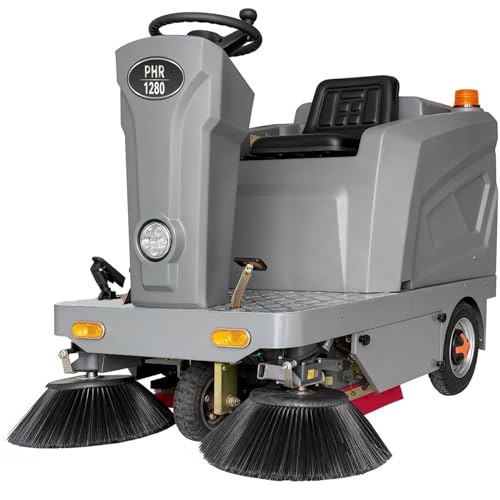
KARHDIR 51″ Ride-on Industrial Floor Sweeper Gray

SWIPESMITH Artificial Turf Sweeper Yard Power Brush

KARHDIR 43″ Walk-Behind Push Floor Sweeper Green

KARHDIR 43″ Walk-Behind Push Floor Sweeper Red

KARHDIR 51″ Ride-on Industrial Floor Sweeper Blue

YITAMOTOR 48″ Tow Behind Lawn Aerator, 32 Steel Tines

ZEGJAW 15″ Artificial Turf Sweeper

YITAMOTOR 48″ Tow Behind Lawn Sweeper, 20 cu. ft.

YITAMOTOR 40″ Tow Behind Pine Needles Rake, 20 Tines
Taking A Closer Look At The Options
Floor care on a serious scale is what the KARHDIR 51″ Ride-on Industrial Floor Sweeper is built for. Where a walk-behind push sweeper relies on your legs, this ride-on lets you sit down and let the 51-inch path do the work. The Gray finish version targets warehouses, large garages, and any paved surface where dust and debris pile up faster than a broom can keep up.
Coverage lands at roughly 92,600 square feet per hour, a number that makes sense once you picture a distribution center or a multi-bay workshop. Owners with long, wide driveways or paved commercial lots should find the ride-on format saves serious labor, though you’ll want a flat, sealed surface to get the full speed benefit.
The Upside
- Ride-on design cuts fatigue on long sessions
- 51-inch path covers wide aisles quickly
- Throughput of about 92,600 sq ft per hour suits commercial pacing
- Gray finish blends with most industrial equipment
- Hopper volume supports extended runs before dumping
Worth Noting
- Oversized for typical suburban driveways
- Requires ample storage space when not in use
- Best suited to flat, hard surfaces rather than rough terrain
Key Product Details
Whose Yard It Belongs On
Property managers and large-lot owners with paved expanses benefit most from this ride-on platform.
Look Elsewhere When
The KARHDIR 43″ Walk-Behind Push Floor Sweeper Green makes more sense for tight driveways and indoor shop floors.
Synthetic lawns have their own debris problem: leaves sit on top of the fibers instead of sinking into soil. The SWIPESMITH Artificial Turf Sweeper handles that with a powered brush head that lifts material off the blades. A 15-amp motor drives the cleaning action, paired with a 16-inch wide brush that covers meaningful ground per pass.
This is a walk-behind unit, so you’re guiding it yourself rather than towing it. A 12-gallon removable collection bag catches what the brush kicks up, which means fewer stops than dragging a tarp around the yard.
Where It Helps
- 15-amp motor brushes debris out of turf fibers
- 16-inch width covers ground at a steady clip
- Removable 12-gallon bag simplifies dumping
Trade Offs
- Not designed for dethatching natural grass
- Power cord limits reach unless you use an outdoor extension
Feature Snapshot
Made For
Homeowners with medium synthetic lawns who want a powered alternative to manual turf rakes.
Skip It When
The ZEGJAW 15″ Artificial Turf Sweeper fits tighter patio spaces and budgets better.
No motor, no battery, no fuel: the KARHDIR 43″ Walk-Behind Push Floor Sweeper Green runs on elbow grease and gravity-fed brushes. The 43-inch sweeping path translates to about 46,000 square feet per hour under steady pushing, a real step up from carrying a wide push broom across the same floor.
The Green finish version suits warehouses, stables, parking lots, and shops where you want quiet operation during early-morning shifts. Owners commonly note how much easier it feels on the back compared with a standard broom, though pushing for an hour still adds up.
Where It Excels
- Manual operation means zero fuel or charging costs
- Sealed brush design keeps dust down on the sweep
- 15-gallon hopper with tool-free dumping
Honest Caveats
- Pace depends entirely on how hard you push
- Not built for thick turf or grassy debris
Quick Facts
Who It Suits Best
Shop owners, stable hands, and warehouse crews wanting a quiet, fuel-free sweeping routine.
Not Your Match When
The KARHDIR 51″ Ride-on Industrial Floor Sweeper Gray is the better call for very large paved areas where riding saves time.
Same platform as the Green variant, different color: the KARHDIR 43″ Walk-Behind Push Floor Sweeper Red delivers identical specs in a finish that stands out on a job site. The red color helps visibility in cluttered garages and parking lots, useful when the sweeper sits between other equipment.
The 43-inch sweeping path and 15-gallon hopper match the Green unit exactly. You get the same dust-sealed brush design and tool-free hopper dump, so the choice between colors usually comes down to aesthetics rather than performance.
Benefits That Matter
- Highly visible red finish on busy work sites
- Manual push design with no fuel dependency
- Sealed brushes reduce airborne dust during sweeping
Points To Note
- No performance edge over the Green variant
- Push effort climbs on uneven surfaces
Best Suited To
Contractors and shop owners who want their equipment easy to spot in a crowded bay.
Where Another Pick Suits Better
The YITAMOTOR 48″ Tow Behind Lawn Sweeper is the better match for natural lawns where towing behind a mower is realistic.
The Blue finish gives the KARHDIR 51″ Ride-on Industrial Floor Sweeper a different look on the warehouse floor without changing the underlying performance. Three large solid tires handle the ride over uneven concrete and expansion joints, and the hydraulic disc brakes help the operator settle the unit quickly when a pedestrian steps into the aisle.
The 26.4-gallon hopper swallows long sessions without forcing constant dumping stops. Compared with the Gray version, the choice really comes down to fleet color preferences or shop branding.
What Stands Out
- Hydraulic disc brakes offer solid stopping control
- Solid tires resist flats on debris-strewn floors
- 26.4-gallon hopper handles extended shifts
Smaller Caveats
- Requires wide doors and turning radius
- Cleaning brush maintenance takes planning on tight schedules
The Numbers That Matter
Right Fit For
Operations with standardized equipment colors who want a coordinated fleet across multiple bays.
Consider Something Else When
The KARHDIR 43″ Walk-Behind Push Floor Sweeper Green is friendlier for tight shop layouts where a ride-on can’t maneuver.
Aeration is the half of lawn care that usually gets skipped because spike aerators and plug tools are tedious at scale. The YITAMOTOR 48″ Tow Behind Lawn Aerator solves that with 32 steel tines that pull cores as your riding mower drags it across the grass. You set the depth based on soil type rather than fighting a one-size setting.
A weight tray on top accepts up to 150 pounds of additional ballast, which matters on hard clay where the tines need help penetrating. The locking mechanism keeps that tray in place over uneven terrain, though you may find yourself tightening it between passes during the first few uses.
Why It Works Well
- Adjustable weight tray reaches up to 150 pounds
- 32 steel tines cover a 48-inch path per pass
- Locking tray mechanism holds ballast over bumps
Less Ideal Details
- Requires a riding mower or ATV to pull
- Hard-packed soil may demand maximum ballast to penetrate
Perfect Match For
Homeowners with compacted clay soil who want to aerate while mowing without renting a machine.
A Better Fit Elsewhere
The YITAMOTOR 40″ Tow Behind Pine Needles Rake makes more sense if thatch and pine straw are your bigger headache than compaction.
Smaller synthetic lawns don’t need a wide industrial brush. The ZEGJAW 15″ Artificial Turf Sweeper is a wired walk-behind unit with a 1600-watt motor that drives the brush at high speed through compacted debris. The 15-inch cleaning path is narrow, but it slips along fence lines and tight patio borders where wider heads can’t reach.
It’s a push-style machine, so you’re guiding it directly across the turf. Owners with pets tend to find the brush speed particularly useful for lifting embedded pet hair from the fibers.
Practical Pluses
- 1600-watt motor handles heavy leaf loads
- 15-inch path reaches narrow patio borders
- Push design gives direct feedback on brush contact
Points To Keep In Mind
- Corded power limits range without extension
- Small width means more passes on bigger lawns
Who Should Grab It
Synthetic-lawn households with narrow passages, fenced yards, or modest square footage.
Reach For A Different Pick When
The SWIPESMITH Artificial Turf Sweeper covers more ground per pass if your turf area runs over a few thousand square feet.
Tow-behind leaf pickup is the use case the YITAMOTOR 48″ Tow Behind Lawn Sweeper was designed for. The 20 cubic foot hopper swallows leaves, twigs, and grass clippings without forcing you to stop every few minutes, and the universal hitch accepts most lawn tractors, zero-turn mowers, and ATVs.
Adjustable sweeping height lets you match conditions from dormant winter grass to actively growing spring turf. Compared with the 40-inch pine needle rake, this unit covers wider paths and holds significantly more debris per pass.
The Value In It
- 20 cu ft hopper handles large leaf volumes
- Universal hitch fits tractors and zero-turns
- Height adjustment matches varied turf conditions
Some Limits To Know
- Brushes work best on dry debris; wet leaves clog the housing
- Hopper dumping is easier on level ground
Feature Rundown
Built With In Mind
Suburban homeowners with mature trees and a riding mower already in the garage.
Swap It Out When
The YITAMOTOR 40″ Tow Behind Pine Needles Rake is the better tool under pine trees where fine needles dominate.
Pine needles are the cleanup problem that defeats wide leaf sweepers. The YITAMOTOR 40″ Tow Behind Pine Needles Rake uses 20 heat-treated spring steel tines that comb needles out of the turf without dragging them. The tines also scratch the surface lightly, performing a shallow aeration that helps water and nutrients reach the roots.
At 40 inches wide, the rake is narrower than the 48-inch leaf sweeper but built for the kind of debris that defeats broader brushes. Under heavy pine canopies, owners commonly find this tool clears what the leaf sweeper leaves behind.
Noteworthy Benefits
- Spring steel tines flex rather than break on contact
- 40-inch width suits narrower lawn sections
- Light surface scratch doubles as shallow aeration
What To Weigh
- Rake tines don’t bag debris; a follow-up pass is required
- Less effective on broadleaf debris versus pine straw
Spec Overview
The Right Fit
Homeowners with several pine trees and a riding mower who want rake-grade cleanup without manual labor.
Another Choice May Suit
The YITAMOTOR 48″ Tow Behind Lawn Sweeper is the better choice on lots without pine where leaves and twigs dominate.
Matching A Sweeper To Your Yard And Mower
Tow-behind sweepers all share a hitch and a hopper, but the differences between models matter more than the labels suggest. Think about what you’re actually dragging the sweeper through before measuring anything else.
Yard size drives the platform choice. A half-acre suburban lawn rarely justifies a ride-on sweeper, while a paved lot over 10,000 square feet punishes anyone trying to push a manual unit. The YITAMOTOR 48″ Tow Behind Lawn Sweeper handles typical suburban acreage comfortably; the KARHDIR ride-on models target commercial-scale paved surfaces. Walk-behind push sweepers like the KARHDIR 43″ models shine in workshops and stables, where quiet operation matters more than raw throughput.
Debris type dictates brush and tine design. Pine needles, broad leaves, twigs, and synthetic turf fibers each demand different contact. Spring steel tines comb pine straw without dragging it; stiff brushes lift leaves from artificial turf; sealed brush systems keep dust contained on warehouse floors. Choosing by debris type beats choosing by hopper size alone.
Tractor compatibility saves headaches later. Universal hitches cover most riding mowers and zero-turns, but pin-style hitches need verification against your specific model. The towing mower also needs enough torque to pull a loaded hopper uphill; a small engine on a hill will bog down with a full 20 cubic foot hopper behind it.
Storage footprint shapes daily use. Tow-behind units fold or stand vertically in many cases, but ride-on sweepers need dedicated bay space. Measure your shed door before assuming any sweeper will fit, especially the 51-inch ride-on models.
Key Considerations Across These Picks
Mistakes Worth Dodging
Picking a sweeper by hopper size alone is the most common slip-up. A 26-gallon hopper on a ride-on that can’t fit through your garage door is useless. Measure doorways, turning radius, and storage footprint before falling in love with capacity numbers. Another trap is assuming all tow-behind sweepers handle wet leaves; most clog badly on damp debris, so scheduling your cleanup for dry days saves hours of frustration.
Where The Extra Money Goes
Higher-tier tow-behind sweepers tend to buy you universal hitches, larger diameter wheels for uneven ground, and sealed bearings that survive years of storage. On ride-on industrial units, the upgrade path covers hydraulic brakes, solid tires, and bigger hoppers. Whether those features pay off depends on how often you sweep and how rough your surface is. For a once-a-fall cleanup on a flat suburban lawn, mid-tier offers the best return; for daily commercial use, premium platforms earn their keep quickly.
Frequently Asked Questions
What size sweeper do you need for an acre?
A 48-inch tow-behind sweeper covers an acre in roughly 30 to 45 minutes at a normal mowing pace, depending on debris density. Smaller push units require considerably more time, while ride-on industrial sweepers handle the same area in a fraction of the time on paved surfaces.
Can a tow-behind sweeper pick up wet leaves?
Most tow-behind sweepers struggle on damp debris because wet leaves cling to the brushes and clog the hopper intake. Drier conditions produce significantly better results, which is why most owners schedule major cleanup for a dry day after the rain stops.
Do you need a riding mower to use a tow-behind sweeper?
Yes, tow-behind sweepers require a powered towing vehicle, typically a lawn tractor, zero-turn mower, or ATV. The hopper weight alone makes manual pulling impractical once the unit fills up.
Are artificial turf sweepers safe for natural grass?
Powered turf sweepers with stiff brushes can scalp natural grass if the brush height sits too low. Most models are designed specifically for synthetic lawns, so using them on natural turf risks damaging the grass blades.
How do you store a tow-behind sweeper off-season?
Most tow-behind units store upright on their tongues to save floor space, ideally under cover to keep the brushes and bearings out of weather. A quick brush-clean and a light oil on the hitch before storage extends service life noticeably.
Closing Remarks
The right pulls behind yard sweeper depends on what you’re towing it with and what you’re sweeping up. Suburban homeowners with riding mowers will find the YITAMOTOR 48″ Tow Behind Lawn Sweeper or the 40-inch pine needle rake cover most seasonal cleanup without drama. Workshop owners and turf households have strong specialty picks in this list too. Match the platform to your debris, your tow vehicle, and your storage space, and the fall cleanup stops being a battle.
