

Growing vegetables in a raised bed changes the whole season. You control the soil, you skip the worst of the clay or sand underneath, drainage behaves itself, and your back gets a break at harvest time. The trade-off is that not every bed on the market is built the same way, so the right pick depends on your space, your soil, and how deep the roots of what you’re growing actually run.
We pulled together ten raised bed options covering everything from jumbo modular steel plots to small wheeled planters for a patio corner, plus one drip irrigation add-on that pairs well with the larger kits. A few minutes with this list should save you from buying a bed that warps, rusts, or simply doesn’t fit where you wanted to put it.
A Side-By-Side Look

Vego Garden 17″ Tall 10-in-1 Modular Raised Bed Kit

Vego Garden 17″ Tall 9-in-1 Raised Planter Bed

Vego Garden Drip Irrigation Kit (Large)
Vego Garden 17″ Tall 6-in-1 Modular Planter Bed

Vego Garden 32″ Extra Tall Modular Raised Bed Kit
Outland Living 6-Ft Vertical Garden with 4 Bins

WTFGO Elevated Garden Bed with Trellis and Wheels
WTFGO Resin Raised Bed on Wheels with Drain Gauge

WTFGO 33.7″ Elevated Bed on Wheels (Ashen)

WTFGO Resin Raised Bed on Wheels (Gray)
The Details Behind The Selections
This kit earns the top slot because of what the modular panels can actually become. You start with the same set of coated steel panels and finish with one of ten possible layouts, which is a rare amount of flexibility for a single SKU.
The 17-inch wall height is the same sweet spot the other Vego kits use here, and for most backyard vegetable plots that depth is enough for tomatoes, peppers, lettuces, herbs, and bush beans without forcing you to fill a deeper box. For a family plot that needs to fit an awkward corner or expand over a couple of seasons, the layout choice alone makes this kit worth a long look.
Strong Points
- Ten possible configurations from a single panel set let you reshape the bed as plans change
- Coated steel construction handles weather exposure far better than basic galvanized sheet
- 17-inch depth supports most common vegetables while keeping soil volume manageable
- Rounded corner design with rubber edge capping reduces the chance of scraped shins during harvest
Things To Consider
- Filling ten layouts’ worth of bed takes a meaningful amount of soil and compost on day one
- Larger configurations need two people to position panels during assembly
Made For
Home growers with a real backyard footprint who want one bed kit that can grow and reshape with their plans across several seasons.
Skip It When
A small patio or balcony is your only option, in which case the WTFGO wheeled planters further down this list are a better fit.
This is the long, narrow option in the Vego line. The 8-by-2-foot footprint is what makes it useful: it slips along a fence line, down the side of a house, or across the back of a driveway without dominating the yard.
The 9-in-1 modular kit still gives you a few layout options beyond the classic rectangle, but the real reason to choose it over the 10-in-1 above is that you specifically want a single long row. Tomatoes, climbing peas, and trellised cucumbers all benefit from a long, straight run where airflow stays even and you can reach the middle from either side.
Where It Helps
- Long, slim footprint suits side yards and fence lines where wider beds won’t fit
- Coated steel panels match the durability profile of the wider Vego kits
- 17-inch depth keeps root systems comfortable for most vegetable staples
- Modular assembly means you can still resize if your first layout doesn’t work
Trade Offs
- The narrow shape limits how many plants you can pack side by side per row
- Soil volume is smaller than wider beds, so moisture can drop faster in midsummer heat
Right Fit For
Suburban gardeners working with a strip of side yard or a fence-side strip who want a clean, single-row vegetable bed.
Look Elsewhere When
You need a wider planting area for mixed crops, in which case the Vego Garden 17″ Tall 6-in-1 Modular Planter Bed offers more usable square footage per panel.
This is the only item on the list that isn’t a bed itself. It’s a drip irrigation add-on designed to thread water directly into the root zone of the Vego kits, which matters more than people expect once a bed is full of thirsty tomatoes and leafy greens.
Drip irrigation delivers water slowly at the soil line instead of spraying from above, which keeps foliage drier and reduces evaporation. For raised beds in sunny spots, that difference adds up to fewer waterlogged evenings and more consistent growth across the bed.
Well-Handled Touches
- Built to match the Vego bed footprint, so tubing lines up without improvised fittings
- Targeted root-zone delivery reduces the water wasted on pathways and bed walls
- DIY install means no special tools or professional plumbing required
- Larger kit size covers the bigger Vego layouts without needing a second kit
Points To Note
- You still need a hose bib or rain barrel with reasonable water pressure to feed the lines
- Emitter clogging is a common long-term issue with any drip system, so occasional flushing helps
Feature Snapshot
Best Suited To
Growers who already own a Vego bed and want a hands-off watering routine through the hottest stretch of summer.
Where Another Pick Suits Better
Anyone without a Vego bed should look at a different irrigation option matched to their specific planter, since this kit is tuned for Vego dimensions.
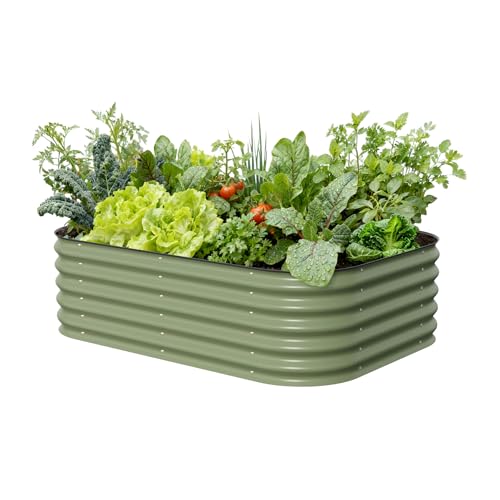
This kit lands in the middle of the Vego lineup with six possible configurations, which is fewer layouts than the 10-in-1 above but enough to handle most backyard shapes. The same VZ 2.0 coated steel panel system shows up here, which is the main reason the bed survives multiple winters without flaking or rusting through.
For a mid-size yard where you want one solid bed rather than a sprawling setup, this is a sensible middle ground. The 17-inch wall depth gives vegetable roots real room to spread, and the rubber edge capping means you’re not constantly bumping into sharp metal corners while you weed.
Useful Touches
- Six layouts from one panel set covers most common yard shapes
- 17-inch depth supports healthy root systems for most vegetables
- Rounded corners and rubber edging make the bed safer to lean into while working
- Coated steel panels hold up to weather exposure better than basic galvanized sheet metal
Worth Noting
- Fewer layout options than the 10-in-1 kit if your space is unusually shaped
- Soil volume adds up fast once you commit to a larger layout
Key Specs
Perfect Match For
Home growers with a single defined garden area who want one durable bed they can leave in place for many seasons.
Not Your Match When
The growing space is unusually shaped and you need the 10 layout choices from the Vego Garden 17″ Tall 10-in-1 kit to make it work.
The 32-inch wall height is the headline feature, and it’s not just marketing. Carrots, parsnips, and daikon radishes need real depth to develop properly, and most 17-inch beds force you to grow stubbier versions. This kit exists for growers who care about that difference.
The 9-in-1 modular system means the bed can still shift shape if you move or decide to redesign the yard. For anyone with back pain or limited mobility, the taller wall also reduces how far you lean and bend during weeding, which is one of the underrated benefits of going higher.
Practical Advantages
- 32-inch depth supports long root vegetables like carrots and parsnips
- Taller wall reduces bending during planting, weeding, and harvest
- 9-in-1 modular assembly gives flexibility for unusual yard shapes
- Coated steel panels resist corrosion across many seasons of outdoor exposure
Honest Caveats
- Filling a 32-inch bed requires significantly more soil and compost than the 17-inch kits
- Higher walls can dry out faster at the top while staying moist deeper down, so watering takes attention
Quick Facts
Who Should Grab It
Vegetable growers who specifically want to grow carrots, parsnips, or other deep-rooted crops that struggle in shallower beds.
Consider Something Else When
You’re only growing shallow-rooted crops like lettuce and herbs, since the extra soil cost doesn’t earn its keep.
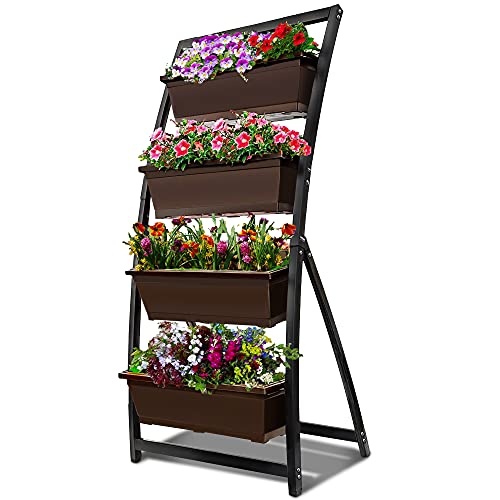
Where everything else on this list grows outward, this one grows upward. The freestanding frame holds four planter boxes stacked vertically, giving you a useful strip of growing space in roughly six square feet of floor area. For renters and balcony gardeners, that footprint is everything.
The vertical layout means each tier catches a different amount of sun and wind, which actually works in your favor for herbs and salad greens that prefer a bit of shade in the afternoon. You may find, though, that the lower bins dry out slower than the top ones, so watering order matters.
A Favorable Mix
- Vertical stacking fits where ground-level beds cannot, like apartment patios
- Freestanding design means no mounting or permanent installation needed
- Four separate bins let you group herbs, salad greens, and flowers without mixing them
- Elevated height keeps the bed out of reach of small pets and most rodents
Room For Improvement
- Each bin is shallower than a typical raised bed, so deep-root crops struggle here
- Wood frame owners commonly report needing to refinish or seal it within a couple of seasons
Whose Shelf It Belongs On
Apartment and condo gardeners who want fresh herbs and greens within arm’s reach of the kitchen door.
A Better Fit Elsewhere
Anyone growing tomatoes or root vegetables should pick the Vego Garden 32″ Extra Tall Modular Raised Bed Kit, which actually supports those crops.
The 61-inch overall height is the striking spec on this one. Most of the height is the integrated trellis, which gives climbing crops like cucumbers, pole beans, and small flowering vines something to grab onto without you rigging a separate structure.
The lockable wheels at the base solve the most common patio-bed problem: the bed sits where you put it in spring, but the sun shifts by midsummer. Rolling the whole unit a few feet to chase light is far easier than emptying and repositioning a stationary bed.
A Few Highlights
- Integrated trellis supports climbing crops without a separate frame or ties
- Lockable wheels let you reposition the bed to follow changing sun exposure
- Elevated height keeps the planting area at a back-friendly working level
- Combined footprint works for porches, patios, and balcony corners
Some Limits To Know
- Planting area is narrower than a traditional bed, so spacing is tight for larger crops
- Tall units can catch wind, so adding weight at the base helps stability on open balconies
Feature Snapshot
Who It Suits Best
Patio growers focused on climbing vegetables and flowering vines who want one self-contained unit instead of separate bed and trellis pieces.
Reach For A Different Pick When
You’re growing low crops like lettuce and bush beans, since the WTFGO Resin Raised Bed on Wheels has a wider planting area without the tall trellis overhead.
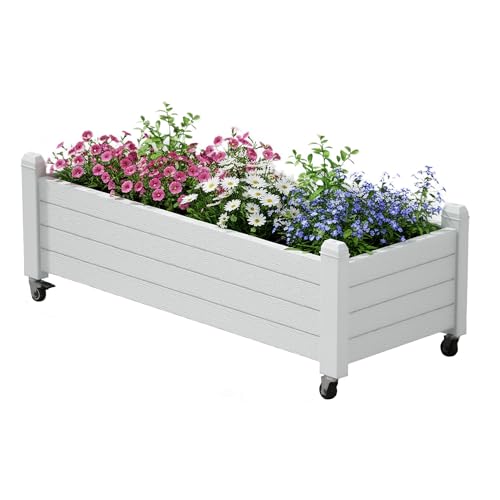
Resin is the practical call here. It shrugs off rain and UV exposure far better than wood, and unlike metal, it doesn’t heat up enough to scald roots during a heat wave. For a planter that lives on a sunny patio, that combination is hard to beat.
The water level detector is the small feature that changes daily use, especially for new gardeners. Instead of guessing when to water, you glance at the gauge and know. That removes the single most common cause of herb failure: either too much or too little water.
Everyday Perks
- Resin construction resists weather without sealing or staining
- Built-in water level gauge simplifies the most error-prone part of container gardening
- 360-degree rotating wheels make repositioning genuinely easy
- Drainage hole design prevents the root rot that plagues solid-sided planters
Smaller Trade-Offs
- 13-inch height limits how deep root systems can grow
- Resin can flex slightly when moved fully loaded, so two-handed moving helps
Right Fit For
Herb gardeners and beginners who want a low-maintenance, mobile planter that won’t punish the occasional overwater or missed watering.
Swap It Out When
You want to grow deep-root crops, since the WTFGO 33.7″ Elevated Bed on Wheels gives you much more usable depth in a similar footprint.
The 33.7-inch height puts the soil surface at a comfortable level for most adults, which is the main reason gardeners with back or knee pain gravitate toward this style. You weed and harvest without bending to the ground, and the wheels underneath let you reposition for sun without dragging the whole thing.
The lockable wheels are the part that makes the height practical. A tall planter without wheels is essentially trapped wherever you set it up, and patio sun shifts more than most people expect between spring and late summer.
Noteworthy Benefits
- 33.7-inch working height reduces bending during regular garden tasks
- Lockable 360-degree swivel wheels roll smoothly on flat patio surfaces
- Elevated design protects the bed from ground-level pests and some weeds
- Compact footprint suits apartment balconies where ground beds are impossible
Factors To Consider
- Soil volume is finite, so watering frequency increases compared with in-ground beds
- Wheels work best on flat, hard surfaces and can catch on rough ground
Perfect Match For
Apartment and condo growers who want a meaningful planting area without bending all the way to the ground.
Where A Sibling Pick Shines
Anyone growing climbing crops like cucumbers should pick the WTFGO Elevated Garden Bed with Trellis and Wheels, which has the integrated climbing frame.
This is the gray-tone twin to item eight on this list, and the practical differences come down to color and shared-space aesthetics. Gray tends to disappear into modern patio furniture and balcony decor better than warm tones, which matters on rental balconies where visual discretion is part of staying in your landlord’s good graces.
Everything that makes the Ashen version work applies here too: resin body, swivel wheels, water level detector, drainage design. You’re picking this one when the color matters more than any functional difference.
The Helpful Details
- Neutral gray color blends with most patio and balcony furniture palettes
- Resin body weathers sun and rain without sealing or staining
- Water level detector takes the guesswork out of daily watering
- Rotating wheels make repositioning a one-person job
Worth Bearing In Mind
- Same 13.3-inch height limitation as its sibling means shallow-root crops only
- Resin finishes can show mineral deposits from hard water over time, so periodic cleaning helps
Quick Technical Notes
Built With In Mind
Renters and shared-space gardeners who need a planter that fits the existing decor without becoming an eyesore on the patio.
Another Choice May Suit
Anyone who wants a deeper planting area for real vegetables should pick the WTFGO 33.7″ Elevated Bed on Wheels instead.
What Matters Most Before Choosing Raised Beds For Vegetables
The first decision is depth. Most leafy greens, herbs, and bush-style vegetables grow happily in 12 to 17 inches of soil, but root crops like carrots, parsnips, and longer beets want 24 inches or more. Picking a bed that’s too shallow is the most common regret, because it limits what you can grow for the entire life of the bed.
Material is the second decision. Coated steel handles weather and resists corrosion, wood looks natural but needs sealing, and resin stays light and rot-proof but doesn’t suit deep-root crops. For permanent backyard beds, the Vego modular steel kits tend to outlast their wood counterparts by several seasons.
Finally, think about layout flexibility. A bed that arrives as one fixed rectangle either fits your space or doesn’t. A modular kit can adjust to a fence line, a corner, or a wider strip the year after you install it, which is useful if your garden plans tend to evolve.
For renters and small patios, mobility matters more than size. A wheeled planter you can roll into the sun or tuck against the wall during a storm will outlast a larger stationary bed that fights the space instead of working with it.
Key Considerations Across These Picks
Common Shopping Slip Ups
The biggest mistake is choosing a bed that’s too small for what you actually want to grow. Tomatoes alone need roughly two square feet each, so a single 4-by-4 bed fits two plants and not much else. Sketch your crop list first, count the spacing each one needs, then size the bed to that number.
Another trap is ignoring weight, especially for balconies and rooftop gardens. Soil is heavy once it’s wet, and a fully filled raised bed can weigh several hundred pounds. Confirm the load rating before placing a bed anywhere off the ground floor, and consider the WTFGO wheeled planters for places where weight is a real concern.
When Paying More Pays Off
The premium in this category usually buys modularity, better coatings, and longer service life. A coated steel kit with a verified finish will outlive a basic galvanized bed by years, especially in wet or coastal climates. If you plan to keep the bed in place through many seasons, the higher upfront cost tends to pay back in avoided replacements and steady soil containment.
Frequently Asked Questions
How deep does a raised bed need to be for vegetables?
Most common vegetables grow well in 12 to 17 inches of soil, which is why so many kits settle on that depth. Root crops like carrots and parsnips need 24 inches or more to develop fully, so a deeper bed like the Vego Garden 32″ Extra Tall Modular kit makes sense if those are on your list.
What is the best material for a raised vegetable bed?
Coated steel is the most weather-resistant option and works in nearly any climate with minimal upkeep. Cedar and other rot-resistant woods look natural but need sealing every couple of years. Resin works well for small, mobile planters on patios but isn’t usually built deep enough for full vegetable gardens.
Can you put a raised bed on grass or soil directly?
Yes, and most raised beds are designed to sit on top of existing ground. Placing cardboard or landscape fabric at the base helps block grass and weeds from growing up into the bed during the first season.
How often should you water a raised vegetable bed?
Watering frequency depends on bed depth, weather, and crop, but most raised beds need water every one to three days during the growing season. A drip irrigation kit or a planter with a built-in water level detector reduces the guesswork considerably.
Do raised beds need to be replaced every few years?
A well-built coated steel bed can last well over a decade with basic care. Wood beds may need board replacement after five to ten years depending on the species and how well they’ve been sealed.
Closing Remarks
The right raised bed is mostly about matching the bed to your space and your crop list. A small patio and a few herbs call for a wheeled resin planter, a backyard with room to grow rewards a modular steel kit, and a deep-root crop plan demands the taller bed. Once those three things line up, the rest is just soil, sun, and a regular watering routine.
