

A spongy, matted lawn is rarely a watering problem. Thatch, the tightly woven layer of dead roots, stems, and grass clippings, blocks water, fertilizer, and air before they reach the soil, so most yards need a mechanical lift before anything else can take hold. Anyone serious about getting grass to breathe again usually reaches for a rake built specifically to slice and lift that layer.
The eight picks below cover every common thatch scenario. Compact claw tools handle flower beds, while wheeled dethatchers and adjustable full-size rakes take on the open turf.
The Lineup, Simplified

Garden Guru Hand Rake Soil Tiller with Ergonomic Handle

MECHEER Hand Rake Garden Tool, Heavy Duty Hand Cultivator
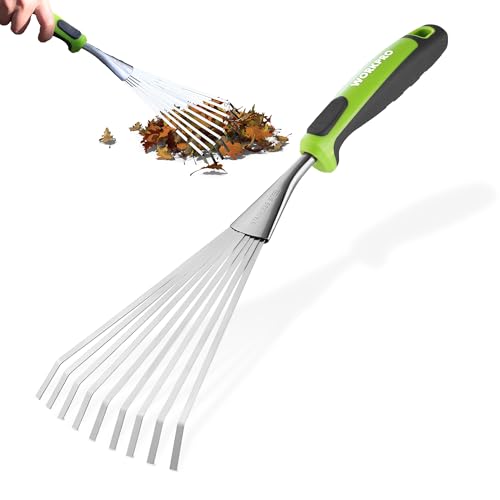
WORKPRO 16″ Hand Rake with Soft Handle
JouZYA 15-Inch Dethatcher Rake Adjustable 0-15°

YEELOR Heavy Duty 16-Tine Bow Rake

JouZYA 15-Inch Dethatcher Rake in Coral

YEELOR Thatch Rake with 66-Inch Adjustable Handle

YEELOR Artificial Turf Rake with Long Handle
Taking A Closer Look At The Options
Compact enough to slip between perennials and stiff enough to pull up spring thatch, this five-tine hand tool slots into the kind of tight work a full-size bow rake cannot touch. The carbon steel head is built to resist rust, so it can sit in a damp garden shed between uses without picking up the orange bloom that ruins cheaper tools.
For gardeners working raised beds or small flower borders, the short handle keeps the wrist closer to the work and reduces fatigue during longer sessions. The shape also lets you steer around young seedlings without snapping stems, a real plus during spring cleanup. Larger lawns will want a wider rake, but for bed work it earns its keep.
The Value In It
- Five strong tines reach around delicate plants in flower beds
- Carbon steel construction resists rust in wet sheds
- Compact head fits in tight spots a bow rake cannot enter
- Loosens soil before planting without dragging seedlings
- Light enough to use one-handed for longer sessions
Worth Noting
- Too small for open-lawn thatch removal
- Handle length may feel short for taller users
Who It Suits Best
Bed-focused gardeners working raised plots and borders where precision matters more than reach.
Where Another Pick Suits Better
Anyone tackling a full-size lawn should reach for the JouZYA 15-Inch Dethatcher Rake Adjustable 0-15° instead, since its wheeled head covers ground far faster.
Three thick claws instead of five fine tines set this tool apart from typical hand cultivators, and that shape is the point. The deeper curve sinks into compacted ground and lifts heavy thatch mats in fewer pulls than a standard claw. Made from aluminum alloy at roughly 0.28 inches thick, it stays rigid even when prying up old sod.
Compared to the lighter Garden Guru above, this one trades a touch of finesse for raw digging power. Gardeners wrestling with clay-heavy soil or neglected beds will appreciate the leverage the thick claws provide. Expect your wrist to feel the work after a long session, though, so pacing helps.
Everyday Perks
- Three deep claws penetrate hard-packed soil quickly
- Aluminum alloy body resists bending under load
- Lifts thatch and weeds in a single motion
- Aerates compacted beds while clearing debris
Trade Offs
- Less precise than five-tine rakes around seedlings
- Heavier head can tire wrists during long sessions
- Not ideal for shallow mulch spreading
Made For
Gardeners reclaiming neglected or compacted beds where brute digging force matters more than delicate maneuvering.
Consider Something Else When
Those with roomy open turf and minimal compaction will get more mileage from the YEELOR Heavy Duty 16-Tine Bow Rake, which spreads and levels far faster.
A polished stainless steel head sets a different tone from the carbon steel tools earlier in this list. The finish shrugs off rust and wipes clean after a muddy session, so the tool stays presentable in the long run. Flexible tines bend slightly on impact, which helps them work around rocks and roots instead of snapping.
The soft-grip handle is a real upgrade during longer cleanup sessions, since the cushion spreads pressure across the palm. In a small garden with mixed surfaces, this rake moves easily from leaf pickup to light thatch work. For deeply matted lawns, a dedicated dethatcher like the JouZYA will do heavier lifting.
Points In Its Favor
- Stainless steel head resists rust and corrosion
- Soft grip handle reduces palm fatigue
- Flexible tines work around rocks without snapping
- Slim profile reaches cracks and crevices
Minor Gripes
- Not aggressive enough for thick thatch layers
- Smaller head means more passes per square foot
Best Suited To
Gardeners who want a tidy, comfortable hand rake for light cleanup and detail work around established plants.
A Better Fit Elsewhere
Homeowners staring down a thick spring thatch layer will find the YEELOR Thatch Rake with 66-Inch Adjustable Handle far more effective at deep lifting.
Wheels on a thatch rake change the experience entirely, and this 15-inch dethatcher leans into that. The rollers carry the head across the turf so the user pushes instead of dragging, which noticeably reduces arm strain during long passes. Adjusting the head angle from flat to a 15-degree tilt lets you match aggression to thatch depth.
For most mid-size yards, this tool threads the needle between the lighter hand rakes earlier in the list and the heavier full-size models. The double-sided head handles both curving and slicing action, so one pass can clear and lift at the same time. Pulling it backward across wet, matted turf is the most effective approach.
Notable Gains
- Wheels reduce fatigue during long passes
- Adjustable angle from 0 to 15 degrees for varied thatch
- Double-sided head cuts and lifts in one motion
- 15-inch width covers ground quickly
Points To Keep In Mind
- Less effective on very thin or patchy thatch
- Takes practice to find the right angle
- Bulkier to store than a basic hand rake
Quick Facts
Who Will Love This
Homeowners with mid-size lawns who want real dethatching power without renting a machine.
Skip It When
Synthetic grass owners will get more use from the YEELOR Artificial Turf Rake, which uses nylon bristles designed for that surface.
A traditional bow rake earns its place by doing the unglamorous work of leveling, spreading, and clearing in one tool. This 16-tine head combines carbon steel and stainless steel, with a screw-fastened connection that resists loosening during heavy raking. For most yards, that build means seasons of use without wobbly tines.
Where the JouZYA dethatcher above is tuned for lifting thatch, this bow rake shines at breaking clods, moving compost, and smoothing topsoil. After dethatching, it doubles as the tool that hauls debris into piles. The head’s weight adds momentum, so the user guides it rather than powers every stroke.
Real-World Strengths
- Sixteen tines clear debris and level soil fast
- Mixed carbon and stainless steel resists wear
- Screw-fastened head stays secure over time
- Doubles as a topsoil and compost spreader
- Handles mulch and gravel without bending
A Few Limitations
- Not designed to slice thatch like a dethatcher
- Long handle needs decent vertical clearance to store
The Right Fit
Homeowners who want one classic rake that handles soil prep, mulch, and post-dethatching cleanup.
Not Your Match When
For pure thatch removal in heavy growth, the JouZYA 15-Inch Dethatcher Rake Adjustable 0-15° cuts deeper with less effort.
The coral finish is the first thing anyone notices, and in a shared garage or shed it stops the tool from walking off. Functionally, this shares the same core as the other JouZYA dethatcher in this roundup, with the same 15-inch head, adjustable angle, and roller wheels for easier pushing.
For households where multiple people borrow the same lawn tools, a brightly colored tool is easier to track down and harder to mistake for someone else’s. The mechanics are identical to the standard model, so the trade-off is purely cosmetic. If storage space hides tools, a vivid finish earns its keep.
Noteworthy Benefits
- Bright coral color is easy to spot in a crowded shed
- Same wheeled design as the standard JouZYA dethatcher
- Adjustable head for varied thatch depth
- Reduces tool mix-ups in shared households
Practical Considerations
- Finish may scratch with heavy use over time
- Costs a touch more for the color option
- Same storage footprint as the standard model
Perfect Match For
Busy households with shared tool storage where visibility prevents lost or borrowed items.
Look Elsewhere When
Color matters less than raw coverage, and the YEELOR Heavy Duty 16-Tine Bow Rake handles larger lawn areas more efficiently.
This is the most dedicated thatch tool in the roundup, built around two sets of teeth: a curved row for lifting matted layers and an angled row for slicing deeper. The 66-inch adjustable handle lets taller users stand nearly upright, which matters when a yard demands long, repetitive strokes.
Construction leans on a reinforced PP body and manganese spring steel teeth, the kind of combo that resists both UV breakdown and tooth fatigue. For larger yards that need a real workout each spring, this tool has the reach and aggression to finish the job in a single afternoon. Storing the long handle requires a bit of wall space.
Useful Strengths
- Curved teeth lift thatch while angled teeth slice deeper
- Adjustable 66-inch handle fits taller users
- Manganese spring steel resists tooth fatigue
- Reinforced body holds up to repeated heavy strokes
- UV-resistant materials for outdoor storage
Where It Is Less Suited
- Long handle takes up more storage space
- Too aggressive for shallow, thin thatch
- Heavier than casual hand tools
Feature Snapshot
Built With In Mind
Owners of larger lawns who want a serious thatch tool built for sustained, repeated use rather than occasional touch-ups.
Reach For A Different Pick When
Small bed work calls for the Garden Guru Hand Rake Soil Tiller, which is far more maneuverable between perennials.
Synthetic grass has its own maintenance rhythm, and metal tines are the wrong tool for the job. This rake swaps steel teeth for high-strength PA nylon bristles that lift debris without tearing backing or pulling infill loose. The 3-section handle adjusts to 32.5, 46.5, or 61 inches, so shorter and taller users can both work comfortably.
For pet owners and households with kids, fluffing the blades back upright also helps the surface look less matted after heavy use. Stainless steel in the handle adds stiffness without making the tool heavy. Owners commonly report the bristle head is easy to rinse off after a session.
Where It Helps
- Nylon bristles clean without damaging turf backing
- Three handle lengths fit different user heights
- Lifts and fluffs matted synthetic blades
- Stainless steel shaft resists bending
- Lightweight for longer grooming sessions
Honest Caveats
- Not designed for natural grass thatch removal
- Bristles may wear faster than metal teeth
- Less effective on heavily compacted infill
Whose Shelf It Belongs On
Anyone caring for synthetic lawns, putting greens, or artificial play surfaces that need gentle, regular grooming.
Swap It Out When
Natural grass with real thatch buildup needs the JouZYA 15-Inch Dethatcher Rake Adjustable 0-15°, which is designed for organic matter.
What Matters Most Before Choosing Rakes For Thatch
Match The Tool To The Surface
A synthetic lawn and a thick Kentucky bluegrass yard are not the same problem. Nylon bristle rakes like the YEELOR Artificial Turf Rake clean without tearing backing, while metal-tined dethatchers and bow rakes are built to slice through organic thatch. Choosing the wrong category wastes effort and risks damaging the surface beneath.
Consider Working Width And Reach
Hand tools with five tines suit beds and borders, while 15-inch wheeled heads cover ground faster on open turf. Handle length changes posture, so taller users benefit from adjustable shafts that reach 60 inches or more. Working width and handle length together decide how long the job actually takes.
Look At Tooth Geometry
Curved teeth lift matted thatch, while angled teeth slice deeper into compacted layers. A dual-sided head, like the YEELOR 66-inch model, lets you alternate without switching tools. For lighter thatch, flexible tines clear without gouging soil.
Material And Build Quality
Carbon steel offers rigidity at the cost of rust resistance, while stainless steel handles weather better but can flex under heavy loads. Aluminum alloy sits in between, light and rust-resistant but prone to bending in compacted soil. Matching material to climate and storage matters as much as raw strength.
Key Considerations Across These Picks
Mistakes Worth Dodging
Many shoppers pick a classic bow rake and expect it to remove thatch, only to find the tines glide over the matted layer instead of slicing into it. A dedicated dethatcher head with curved or angled teeth is the right call for true thatch removal, while a bow rake handles the cleanup afterward. Mixing those roles usually ends with tired arms and a yard that looks only partly cleared.
Where The Extra Money Goes
Higher-tier thatch rakes tend to offer adjustable handles, dual-sided heads, and wheeled rollers that reduce fatigue during long passes. Cheaper models often rely on fixed handles and single-purpose heads, which work fine for occasional touch-ups but fall short on larger lawns. Paying more makes sense when the yard is big enough to justify the comfort upgrades, or when the tool will see regular seasonal use.
