

A tired irrigation timer can leave you with brown patches in August or a swampy mess after a spring rain. For homeowners managing anything beyond a single hose bib, a purpose-built residential controller makes the difference between a guessing game and a healthy landscape. Most properties sit in the four-to-eight-zone range, which fits the bulk of what’s on the market. Wi-Fi weather awareness has gone from luxury to expected, while modular expansion remains the friend of anyone planning a future landscape overhaul.
The Choices Worth Comparing
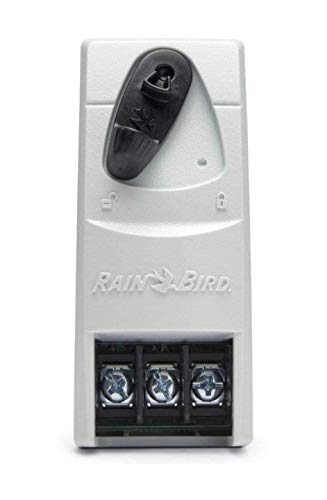
Rain Bird ESP-SM3 3-Station Expansion Module

Rachio 3 Smart Bundle: 8 Zone Controller

Rain Bird ESPSM6 6-Station Extension Module

Hunter X-Core XC600i Indoor Sprinkler Timer
Rain Bird ESPSM3 Expansion Module

Hunter Pro-C 4 Zone Sprinkler Timer
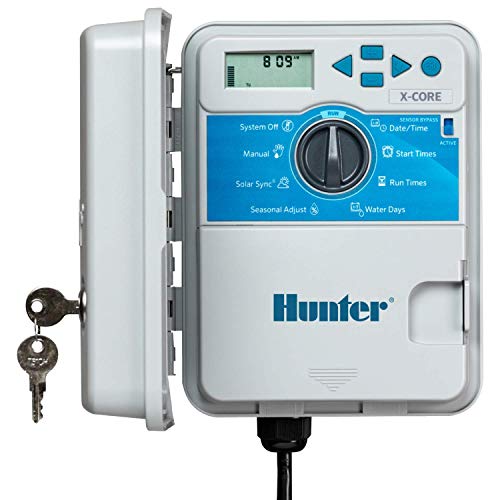
Hunter X-Core 4 Zone Sprinkler Timer
Hunter X-Core 6 Zone Sprinkler Timer
Hunter X-Core 8 Zone Sprinkler Timer

Hunter X2 14-Station Outdoor Sprinkler Controller
A Breakdown Of The Leading Choices
Owners of Rain Bird ESP series controllers hit a familiar wall: a working timer with too few stations. The ESP-SM3 solves that without replacing the box. It slides into an open slot on a compatible Rain Bird chassis and adds three zones in a single move, which is genuinely useful when a homeowner adds a drip line to the roses or runs new turf rotors out back.
The bigger story is hot-swappable installation. Power stays on, the system keeps running its schedule, and you pop the module into place. For a DIYer who already owns the parent controller, this is the path of least resistance. The expansion slot idea itself has been around for years in the Rain Bird ecosystem, so anyone migrating from an older ESP chassis to the current ESP-Me or ESP-SMT series will find the same workflow.
Strong Points
- Adds three zones per module without a power-down
- Compatible across ESP-M, ESP-Me, ESP-SMT, and ESP-SMTe parent controllers
- Drops into any open expansion slot on the chassis
- Keeps existing schedule intact during installation
- Modular path lets a yard grow zone-by-zone over seasons
Trade Offs
- Only useful if your existing controller is on the supported list
- Doing nothing on its own without a parent chassis to host it
- One module at a time caps how aggressively you can scale
Who It Suits Best
Homeowners already running a Rain Bird ESP modular controller who need a handful of extra zones without swapping the whole brain.
Skip It When
The Rachio 3 Smart Bundle makes more sense if you’d rather replace the controller entirely with a weather-aware unit.
Where the Rain Bird ESP-SM3 grows an existing setup, the Rachio 3 rewires the whole idea. This bundle pairs an eight-zone smart controller with a weatherproof outdoor enclosure, so the unit lives where the sprinkler valves are, not where the Wi-Fi router happens to sit. For tech-forward homeowners, that detail matters: fewer long wire runs and a cleaner install on the side of the garage.
The draw is hyperlocal weather intelligence. The controller pulls forecast data for your exact address, then skips a watering cycle when rain is on the way. Pair it with an Alexa routine or Apple HomeKit scene and the controller blends into the rest of the connected home. Compared with the dial-based Hunter X-Core lineup, the Rachio is a different animal: app-first, weather-aware, and built around the assumption you’ll tweak schedules from your phone.
Everyday Perks
- Skip cycles based on hyperlocal rainfall forecasts
- Compatible with Alexa and Apple HomeKit
- Weatherproof enclosure designed for outdoor mounting
- Eight zones covers most mid-to-large suburban lots
Worth Noting
- Requires Wi-Fi to access the headline weather features
- App dependency means the dial isn’t the primary interface
- Setup is friendlier with a smartphone than a screwdriver
Made For
Homeowners who want their irrigation to react to weather and who already keep their home automation in their pocket.
Look Elsewhere When
The Hunter X-Core XC600i Indoor Sprinkler Timer is a better match if you’d rather skip apps entirely and program a dial.
The 3-station ESP-SM3 reviewed earlier is the gentle option. This ESPSM6 is the bolder one. It delivers six additional stations to a Rain Bird ESP-Me or ESP-SMTe controller in a single swap, which is genuinely useful when you’re standing in front of an empty expansion slot and the yard still needs more zones than your current box can count.
Like the smaller sibling, the module installs hot, meaning no power-down. Compared with stacking two 3-station modules, one ESPSM6 leaves a slot free for whatever comes next. The trade-off shows up when you only need a few extra stations: a single 3-zone module may be the more proportionate answer.
Bright Spots
- Doubles zone capacity in one module
- Hot-swappable install keeps the schedule running
- Same Rain Bird build quality as the smaller module
- Frees a slot for future expansion
Honest Caveats
- Requires a compatible ESP-Me or ESP-SMTe parent unit
- Overkill if you only need one or two extra zones
Right Fit For
Homeowners planning a major landscape expansion who want one module to cover a big jump in zone count.
Not Your Match When
The Rain Bird ESP-SM3 module is a better fit when you only need three extra zones and want to preserve expansion slots.
The Hunter X-Core XC600i is for people who want a controller that just runs. It mounts indoors (a garage wall is the usual spot), uses a straightforward dial interface, and supports up to six zones. No app, no Wi-Fi, no weather feed to configure: you set the schedule on the dial and the timer does its job. For owners of small-to-medium residential properties, that approach has real charm.
Compare it with the Rachio 3 reviewed earlier, and the difference is clear. The Rachio reaches for a forecast and a smartphone; the XC600i stays planted on the wall. Both get the lawn watered. Where the Hunter pulls ahead is in environments where Wi-Fi is unreliable or where the homeowner genuinely prefers a tactile dial. The Hunter lineup also includes the outdoor-rated XC600, reviewed later in this list, for anyone needing a weatherproof housing.
The Case For It
- No Wi-Fi or app required for full operation
- Dial interface is fast to learn for first-timers
- Six zones suits typical small-to-medium lawns
- Trusted Hunter build quality for indoor mounting
Some Limits To Know
- Indoor-rated only, so it needs a protected mounting spot
- No weather-based scheduling without a separate accessory
Feature Snapshot
Best Suited To
Homeowners who want a reliable dial controller inside a garage and don’t need weather-aware scheduling.
A Better Fit Elsewhere
The Rachio 3 Smart Bundle suits you more if you want your irrigation to react to live weather forecasts and app control.
On paper this looks identical to the first pick, and that’s the point. The ESPSM3 is the same 3-station hot-swappable module reviewed earlier, but its broader compatibility claim covers ESP-M, ESP-Me, ESP-SMT, and ESP-SMTe parent controllers. For households that have rotated through more than one Rain Bird chassis over the years, that breadth of fit is the deciding factor.
On a property with multiple Rain Bird controllers mounted in different locations, this is the module to standardize on. It drops into any available expansion slot, the install is the same straightforward snap-in as the first pick, and it plays well with legacy and current Rain Bird hardware alike. The trade-off versus the Hunter X-Core line is modular philosophy: Hunter builds out station counts with chassis swaps, while Rain Bird adds zones one slot at a time.
Reasons It Performs
- Compatible with four Rain Bird controller series
- Hot-swappable install without powering down the system
- Slots into any available expansion position
- Standardizes across mixed-vintage Rain Bird hardware
Practical Considerations
- Adds only three zones per module
- Requires a compatible parent controller to function
Who Should Grab It
Homeowners with multiple Rain Bird controllers of varying ages who want a single module SKU to keep on the shelf.
Another Choice May Suit
The Hunter X-Core 8 Zone Sprinkler Timer is worth a look if you’d rather step up to a fresh, larger controller than expand an existing one.
Most of the items in this list are dial timers, but the Hunter Pro-C P2C400 brings a different feel. This is the controller your landscaper reaches for on new-build installations: a professional-grade chassis built around flexible expansion that climbs from four stations all the way to 23 with conventional wiring. For a homeowner planning ahead, that headroom matters.
The Pro-C is genuinely indoor/outdoor rated, so it lives where the work is: in a garage, on an exterior wall, or tucked into a weatherproof enclosure. Compared with the simpler Hunter X-Core XC400 reviewed next, the Pro-C trades simplicity for scalability. If your lot has more than six zones today or will soon, the Pro-C chassis is the foundation that won’t need replacing in two years.
Where It Excels
- Scales from 4 to 23 stations via conventional expansion modules
- Indoor/outdoor rated for flexible mounting
- Contractor-trusted Hunter platform
- Modular path that grows with the landscape
Worth Bearing In Mind
- More complex than a fixed-zone X-Core timer
- Requires conventional wiring for higher station counts
Feature Snapshot
Whose Shelf It Belongs On
Homeowners with a growing landscape who want a controller built for serious future expansion and a contractor-grade install.
Where A Sibling Pick Shines
The Hunter X-Core 4 Zone Sprinkler Timer is a more proportionate match for a small yard where expansion is unlikely.
Not every yard needs eight zones. The Hunter X-Core XC400 brings the same dial-driven Hunter interface as the larger XC600, but in a tighter four-zone footprint. For townhomes, side yards, and small lots where the irrigation runs cover modest turf and a few beds, this hits the sweet spot.
The X-Core XC400 is indoor/outdoor rated, so it handles an exterior mount as comfortably as a garage wall. Where it differs from the contractor-grade Hunter Pro-C reviewed earlier is scope: that one scales to 23 stations, this one stays compact. The trade-off is intentional, and for many homeowners it’s the right one. Compare that with the six-zone XC600 reviewed next, and the choice becomes a question of how much zone headroom your property actually needs.
The Helpful Details
- Four-zone capacity for compact residential lots
- Dial interface for fast, app-free programming
- Indoor/outdoor rated for flexible mounting
- Established Hunter X-Core platform
Things To Weigh
- Limited to four zones without expansion modules
- No built-in weather intelligence
Perfect Match For
Townhome owners and anyone managing a compact yard where four circuits comfortably cover the whole landscape.
Reach For A Different Pick When
The Hunter Pro-C 4 Zone Sprinkler Timer is a better fit if you want professional-grade expansion headroom beyond four zones.
For an average suburban lot, six zones is the comfortable middle. The Hunter XC600 picks up the same dial-driven platform as the XC400 reviewed earlier and adds two more stations, which is plenty for a front yard, back yard, side strip, and a couple of beds without forcing the homeowner into expansion territory.
The XC600 is weather-resistant and outdoor-friendly, so it mounts to an exterior wall without flinching. Where it differs from the indoor-only XC600i reviewed earlier is purely the housing. Both share the same dial-based programming experience. If your property is bigger than average, the eight-zone XC800 reviewed next is the natural step up.
Useful Strengths
- Six-zone capacity for typical residential layouts
- Dial interface that doesn’t require an app
- Indoor/outdoor rated construction
- Trusted X-Core platform for long service life
Points To Keep In Mind
- No weather-aware scheduling built in
- Tight fit on larger properties needing more zones
Feature Snapshot
Built With In Mind
Homeowners with an average suburban lot who want a sturdy, no-app controller with reliable six-zone capacity.
Swap It Out When
The Hunter X-Core 8 Zone Sprinkler Timer is a better match for larger landscaped properties that need more station headroom.
Eight zones is the threshold where a residential property stops feeling small and starts feeling landscaped. The Hunter XC800 answers that with the same dial-driven X-Core experience reviewed on the four and six-zone siblings, just with more stations on tap. The XC800 lands well for homeowners juggling a bigger turf area, multiple beds, drip zones, and a vegetable garden on the same schedule.
The XC800 is the workhorse of the X-Core family. It’s weather-resistant for outdoor mounting and built for long service life, which is why landscapers keep a few on the truck. Where it stops short of the Hunter X2 reviewed next is connectivity: there’s no Wi-Fi, no weather intelligence, no Hydrawise. If you want a smart controller, the X2 is the step up. If you want a no-nonsense dial that runs reliably, this is the dial.
What Works In Its Favor
- Eight-zone capacity for larger residential landscapes
- Dial-based programming that doesn’t rely on apps
- Indoor/outdoor rated housing
- Established Hunter platform for long-term reliability
Factors To Consider
- No Wi-Fi or weather-based scheduling without an add-on
- Larger than the four and six-zone X-Core siblings
Feature Snapshot
Who Will Love This
Homeowners with a generous yard who want ample zone headroom without moving into commercial-grade gear.
Consider Something Else When
The Hunter X2 14-Station Outdoor Sprinkler Controller is worth choosing when you want Wi-Fi and weather-aware scheduling in the same family.
The Hunter X2 is the dial-driven X-Core line grown up and connected. This is a 14-station outdoor controller that retains all the simplicity of its X-Core siblings, while adding the option to add Wi-Fi for full remote management through Hunter’s Hydrawise platform. For a connected whole-yard system, that combination is genuinely powerful: weather-based scheduling, app control, and 14 stations under one roof.
The X2 walks a clean line between a contractor-grade timer and a smart sprinkler hub. It’s not a dial-only unit like the XC800 reviewed earlier, and it isn’t a pure app product like the Rachio 3. The Hydrawise compatibility is the headline: when the optional Wi-Fi module is added, the system pulls local weather data and adjusts runs accordingly. The trade-off is complexity. Setup takes longer than a pure dial timer, and the smart features only earn their keep when the Wi-Fi is reliable.
Where It Helps
- 14-station capacity for larger or complex properties
- Hydrawise compatibility enables weather-based scheduling
- Wi-Fi capability is optional, not mandatory
- Outdoor-rated construction for direct exterior mounting
- Carries the X-Core dial legacy forward into smart features
Potential Sticking Points
- Wi-Fi module is typically a separate purchase
- Setup involves more configuration than a basic dial timer
- Smart features require a stable home network
Feature Snapshot
The Right Fit
Connected homeowners with large or complex properties who want dial simplicity today and smart features whenever they’re ready to add Wi-Fi.
Not Your Match When
The Hunter X-Core 8 Zone Sprinkler Timer is a better pick for someone who’d rather skip the smart features and keep it simple.
Choosing The Right Controller For Your Yard
Zone count is the obvious starting point. Count the actual irrigation circuits your property needs: front lawn, back lawn, side strip, drip zones, vegetable beds, and any isolated rotors. Add ten percent for future landscape tweaks, and that number is the floor for your controller’s station count. For most suburban lots, six to eight zones is the realistic range. Properties with extensive drip systems or multi-section turf benefit from twelve or fourteen stations.
Indoor versus outdoor mounting matters more than it sounds. A garage-mounted indoor timer keeps the electronics away from weather, but it forces longer wire runs from the controller to the valves. An outdoor-rated controller (or a smart controller with its own weatherproof enclosure) sits closer to the valves for cleaner wiring, though you’ll want to check that the housing handles your local UV and rain load. For property owners in hot-sun regions, the outdoor-rated chassis generally holds up well with routine visual inspection.
Smart features earn their keep where weather is unpredictable. Wi-Fi connected controllers with local forecast data skip watering cycles ahead of rain, which cuts waste in regions with volatile summer weather. In arid climates with rock-steady forecasts, a simple dial timer delivers nearly identical results with less setup overhead. Either way, the modular expansion option matters: a controller that grows with your yard saves a future replacement. Finally, prioritize compatibility with your existing valve wiring (most residential systems use standard 24VAC solenoids), and confirm that any expansion modules you plan to add are listed for your specific chassis before you buy.
