

Propagating succulents from leaves and stems can feel like a coin toss. You prep the callus, set the cutting on dry soil, and then wait, hoping roots show up before rot does. A targeted rooting hormone turns that gamble into a repeatable routine, especially when you scale up a collection or trade starts with friends.
The challenge: every bottle on the shelf promises faster roots, stronger plants, and better survival, but the formats vary wildly. Some arrive as powders, others as gels, and a few ship as concentrated drops you dilute in water. The picks below cover each style, with notes on which one matches your propagation habits.
Your Options, Compared

SUPERthrive Vitamin Solution with Kelp 4 fl oz

Clonex Rooting Gel 1 Gallon Commercial Size

Root Drops Liquid Rooting Hormone for Cuttings

Grow More Cactus Juice 1-7-6 16 oz

TPS Nutrients Succulent Fertilizer 8 oz
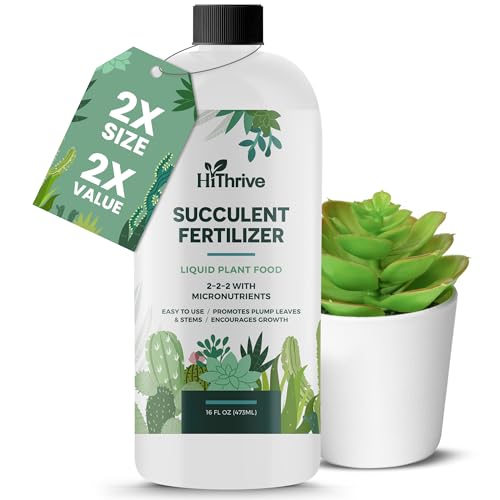
HiThrive Succulent Fertilizer 16 oz

Houseplant Resource Center Prop Drops 8 oz

Osmocote Smart-Release Plant Food Plus 2 lb

Clonex Rooting Gel 100ml 2 Pack

Mother Earth Subterra Root Booster 0-1-1 Pint
The Picks, Examined More Closely
SUPERthrive isn’t strictly a rooting hormone. It’s a vitamin-and-kelp concentrate you add to your regular watering routine, and the kelp component gives cuttings a gentle push during transplant or division. The 4 fl oz bottle is tiny, but a little goes a long way, and it pours easily into a watering can for whole-tray treatments.
Growers who propagate succulents mainly by separating offsets or by moving rooted pups into larger pots tend to reach for this kind of vitamin boost more than a traditional hormone. The non-toxic formula also appeals if you have curious pets near the plant shelf. It pairs well with anything else on this list if you want layered support.
Noteworthy Benefits
- Kelp base offers trace minerals beyond a standard hormone dose
- Non-toxic formulation feels safer around pets and kids
- Tiny bottle delivers dozens of applications at standard dilution
- Mixes easily into existing fertilizer routines without clashing
Trade-Offs Worth Noting
- Not a dedicated cutting hormone, so results on stubborn stems can be slow
- Strong smell when mixed at full strength, depending on your tolerance
- Small bottle means you’ll reorder often for larger collections
Right Fit For
Collectors who propagate mostly by division or transplant and want a vitamin sidekick rather than a pure hormone hit.
Skip It When
You mainly root leaf cuttings from echeveria or graptopetalum, where Clonex Rooting Gel 100ml 2 Pack’s gel-based dip tends to do the heavy lifting.
This is the gallon jug for growers who treat propagation like a small production line. The water-based gel clings to the cut stem instead of dripping off, sealing tissue while delivering indole-3-butyric acid (IBA), the synthetic auxin hormone most cuttings respond to. A pair of trimming scissors ships in the box, so you can start work the moment the package lands.
Succulent growers running a side business, running a school fundraiser, or just swapping heavily with neighbors will appreciate the volume. Compared with the smaller Clonex 100ml 2 Pack, this is overkill for a windowsill hobby, but it shines in a greenhouse or a multi-tray setup. The gel format also keeps the active ingredient in contact with the wound longer than a quick powder dip.
Reasons It Performs
- Gel stays put on the cut surface, extending hormone contact time
- One-gallon size covers hundreds of medium cuttings
- Includes trimming scissors so you can start immediately
- Made in the United States with a long industry track record
Practical Considerations
- Gallon container is bulky for a kitchen counter or studio apartment
- Overkill if you only root a handful of leaves per season
- Gel can dry out near the rim if the lid isn’t sealed tightly between sessions
Who Should Grab It
Serious propagators running greenhouses, classroom projects, or community plant swaps who cycle through dozens of cuttings each week.
Another Choice May Suit
Casual indoor hobbyists with a single windowsill tray will find the TPS Nutrients Succulent Fertilizer 8 oz a more manageable everyday alternative.
Root Drops is built for the way most modern hobbyists actually root plants: in a glass of water, a jar of LECA (lightweight expanded clay aggregate), or a moss pole. The liquid formula carries IBA plus a small nutrient package, so a cutting that hasn’t rooted yet still gets fed during the long wait. The dropper top makes accidental over-dose hard to do.
For succulent growers, the trade-off is that this is formulated primarily for soft-tissue tropicals like pothos and monstera. It still helps echeveria and sedum stem cuttings, but you may want to switch to a gel like Clonex for tougher, woody stems. Owners commonly report that the bottle lasts a long time because a few drops per jar is the standard dose.
Useful Strengths
- Dropper format removes measurement guesswork
- Works across water, LECA, sphagnum, and soil without re-dosing
- Reduces transplant shock when moving rooted cuttings into soil
- Compact bottle fits inside a small propagation kit
Honest Caveats
- Tuned for tropicals more than for hardy succulents
- Liquid format can stain porous surfaces if spilled
- Slower visible results on woody cactus and euphorbia cuttings
Best Suited To
Water-propagation devotees growing a mixed shelf of pothos, philodendrons, and softer succulents in glass jars.
Reach For A Different Pick When
You mainly work with thick-stemmed succulents like kalanchoe or aeonium, where Mother Earth Subterra Root Booster 0-1-1 Pint’s transplant blend suits the workflow better.
Cactus Juice is technically a fertilizer, not a hormone, but the 1-7-6 NPK ratio (nitrogen, phosphorus, potassium) lines up well with what succulents need to push out new roots once they’re already callused and potted. The calcium content also helps with the cell-wall strength that prevents mushy stems in crowded arrangements.
If your propagation routine spends more time in the maintenance phase than the actual cutting phase, this bottle pays for itself fast. You feed mature plants and freshly rooted starts with the same product, which simplifies the shelf. The 16 oz size suits a moderate indoor collection; for a single small pot, a smaller bottle may be more practical.
The Value In It
- NPK ratio tilted toward phosphorus, which supports root development
- Added calcium strengthens cell walls in new growth
- Single product covers feeding for both mature and juvenile plants
- Concentrate stretches further than ready-to-use sprays
Points To Keep In Mind
- Not a true cutting hormone, so it won’t help unrooted stems on its own
- Requires dilution before every application
- Bottle design lacks a measuring chamber, so you’ll want a separate syringe
Whose Shelf It Belongs On
Indoor growers tending an established succulent collection who want one product to feed both mature plants and freshly rooted starts.
Consider Something Else When
You’re still trying to coax roots out of fresh cuttings; pair this with Clonex Rooting Gel 100ml 2 Pack instead and save the Cactus Juice for after roots form.
TPS Nutrients targets a specific succulent headache: the leggy, stretched plant that reaches for light and loses its compact rosette shape. The 8 oz bottle is small enough to keep on a kitchen counter, and the formula is gentle enough to use on potted plants without root burn or mineral crust on the soil surface.
The compact format matters more than it sounds. Many succulent owners maintain only a handful of plants and want a feed that doesn’t demand measuring cups and gallon jugs. Compared with the larger HiThrive 16 oz below, this is the easier grab for a starter collection or a gift for a new hobbyist.
Points In Its Favor
- Compact 8 oz bottle fits a small shelf without clutter
- Gentle formula avoids the salt buildup that scorches sensitive roots
- Encourages firm leaves and tighter rosettes under lower light
- Works in standard cactus-and-succulent potting mixes
Small Caveats
- Not a cutting hormone, so it shines after roots exist
- Smaller bottle runs out faster for collectors with dozens of plants
- Needs regular application during the active growing season
Made For
Apartment dwellers and beginners with a small windowsill collection who want fuss-free feeding for already-rooted succulents.
Not Your Match When
You maintain a larger display with mixed-age plants; the HiThrive Succulent Fertilizer 16 oz offers more volume per dollar for that workload.
The headline feature on the HiThrive bottle is dilution yield: 16 oz of concentrate mixes into roughly 32 gallons of feed, which keeps refills out of the way for months at a time. The NPK lineup leans on nitrogen for leaf plumpness, phosphorus for root growth, and potassium for general resilience, a balanced spread for mixed succulent shelves.
For growers managing a greenhouse rack or a packed sun-room display, the math matters more than the label art. It’s a maintenance product rather than a hormone, so the best moment to start is right after roots have formed. Pair it with Clonex or Root Drops at the cutting stage for a full pipeline.
What Helps Most
- High dilution ratio stretches a single bottle across many feedings
- Balanced NPK suits mixed succulent and cactus shelves
- Liquid format blends easily into watering cans
- Works for both indoor pots and sheltered patio planters
A Few Limitations
- Not designed to root unrooted cuttings on its own
- Larger bottle takes up more cabinet space than a 4 oz option
- Needs consistent application to deliver visible results
The Right Fit
Collectors running a multi-shelf or patio display who want one bottle to last an entire growing season.
Look Elsewhere When
You mostly need something for the early rooting phase; Root Drops Liquid Rooting Hormone handles that side of the workflow.
Prop Drops leans on concentrated seaweed extract, which carries natural cytokinins and auxins that encourage new root cells to form. The formula is designed to reduce transplant shock and prevent rot in cuttings, two of the most common reasons succulent propagation fails. A small dose per jar of cuttings keeps the working solution gentle.
The brand positions this for houseplants broadly, so succulent growers get a product that handles a wide range of soft-stem starts. It plays well alongside a dedicated hormone like Clonex if you want to stack approaches. Owners commonly report that the seaweed smell fades quickly after each dose.
The Good Stuff
- Seaweed base offers natural rooting hormones plus trace minerals
- Helps cuttings transition from water to soil with less wilting
- Liquid drops blend into propagation jars without residue
- Works across many species beyond just succulents
Factors To Consider
- Gentle strength means slower visible results than synthetic gels
- Bottle size lands between casual and commercial, which can feel mismatched
- Mild marine scent during application, depending on your sensitivity
Who Will Love This
Indoor gardeners who propagate a mixed collection of succulents, pothos, and other tropicals and want one drop-based product for the whole shelf.
A Better Fit Elsewhere
Commercial growers running hundreds of cuttings per cycle should reach for Clonex Rooting Gel 1 Gallon Commercial Size for stronger synthetic hormone delivery.
Osmocote is the granular option for growers who’d rather not mix liquids at all. The polymer-coated prills release nutrients slowly over months, so a single application at potting time carries a succulent through most of its active season. It’s marketed across outdoor and indoor use, which makes it flexible if you move plants between shelves and patios.
The trade-off is that this isn’t a cutting hormone either. Its job is steady feeding, not rooting acceleration. For succulent growers who handle propagation in waves and want to set-and-forget the maintenance side, Osmocote covers the months-long gap between hormonal dips and visible new growth.
What It Does Well
- Slow-release prills simplify feeding for months at a time
- Works in both indoor and outdoor containers without re-formulating
- Granular format avoids measuring liquids or storing open bottles
- Covers a wide range of plant species in mixed beds
Less-Strong Areas
- Doesn’t directly stimulate root formation in fresh cuttings
- Slow release means a delayed response compared with liquids
- Granules can clump if stored in humid sheds or greenhouses
Perfect Match For
Outdoor succulent gardeners who top-dress patio pots or window boxes once a season and prefer low-maintenance feeding.
Swap It Out When
You’re focused on the active rooting window for cuttings; Mother Earth Subterra Root Booster 0-1-1 Pint addresses that exact stage instead.
The 100ml Clonex format is the hobbyist-friendly version of the commercial gallon above. Each tub delivers the same IBA-loaded gel, just in a manageable size that lives next to the propagation tray instead of on a workshop shelf. The two-pack gives you a backup container when the first runs dry mid-cycle.
Application is simple: dip a freshly cut stem, insert it into your substrate, and the gel seals the wound while feeding the cutting. Compared with liquid hormones, the gel stays where you put it, which reduces waste and gives slower-rooting succulents more contact time. For most home propagators, one 100ml tub covers an entire season.
Where It Excels
- Gel format clings to the cut surface instead of running off
- Two-pack means one tub stays sealed and fresh in storage
- Compact size stores easily in a propagation kit or drawer
- Reliable across many succulent, herb, and houseplant cuttings
Soft Spots
- Single 100ml tub won’t cover a greenhouse-scale operation
- Gel can dry at the rim if the lid isn’t cleaned between sessions
- Slightly higher cost per milliliter than the bulk gallon option
Built With In Mind
Home propagators running a steady stream of stem cuttings from echeveria, sedum, crassula, and similar succulents on a windowsill or shelf.
Where A Sibling Pick Shines
Large-scale or commercial propagators will save cost per cutting with the Clonex Rooting Gel 1 Gallon Commercial Size instead.
Subterra is a transplant supplement rather than a hormone, built around a 0-1-1 ratio that delivers phosphorus and potassium with no nitrogen push. The formula includes kelp, brewer’s yeast, and alfalfa meal, which sounds like a kitchen pantry but functions as a low-stress root support for cuttings, seedlings, and divisions.
For succulent growers, the appeal is the gentleness. There’s no risk of leggy stretching from over-feeding, and the pint size fits on a shelf next to your propagation tray. Owners commonly report using it on freshly potted pups and on divisions taken from mature mother plants during the active growing season.
The Case For It
- Phosphorus and potassium ratio supports root growth without leaf stretching
- Organic-leaning ingredient list feels approachable for natural gardeners
- Liquid format pours easily into transplant water
- Pint size handles dozens of small applications
Where It May Fall Short
- No actual IBA hormone, so very stubborn cuttings may still struggle
- Subtle scent from the organic ingredients during mixing
- Needs repeat applications during long establishment periods
Right Fit For
Natural-gardening succulent growers who prefer organic-leaning inputs for newly potted starts, divisions, and freshly transplanted pups.
Not Your Match When
You want the strongest synthetic hormone push available; Clonex Rooting Gel 100ml 2 Pack delivers a higher IBA dose per dip.
Matching The Right Format To Your Propagation Style
Picking a rooting product starts with how you actually multiply plants. The format matters as much as the active ingredient, because each delivery style suits a different kind of cut and a different kind of grower.
Gel-based hormones like Clonex cling to the stem and seal the wound, which helps when you’re working with tougher cuttings that take weeks to callus. Liquid drops and concentrates like Root Drops and Prop Drops blend into water jars, which suits soft-stemmed succulents and tropicals started in glass. Granular slow-release options like Osmocote handle the months after rooting, not the rooting itself. Supplements like Mother Earth Subterra and SUPERthrive bridge the gap between rooting and active feeding.
Then look at the active ingredient. IBA, short for indole-3-butyric acid, is the synthetic auxin (a plant hormone that triggers root cell division) most rooted in propagation research. Seaweed-based products rely on natural auxins and cytokinins at lower concentrations, which works gently but more slowly. Fertilizer-style products with phosphorus-forward NPK ratios support root development once roots already exist.
Match the bottle to your scale. A gallon of Clonex is right for a greenhouse or a classroom; an 8 oz bottle of Prop Drops is right for a kitchen window. Picking the wrong size leads to waste, dried-out lids, or a product that expires before you finish it.
Tradeoffs Worth Weighing Before You Buy
Where Shoppers Go Wrong
The most common slip is treating every succulent the same. Echeveria and graptopetalum leaves root with very little encouragement; thick-stemmed kalanchoe and euphorbia benefit from a stronger hormonal push. Reaching for a gentle fertilizer when you need a gel hormone, or vice versa, leads to disappointing results in either direction.
Another trap is using a hormone on a cutting that hasn’t callused (formed a protective scab over the cut surface). Synthetic auxins applied to a fresh, wet wound can rot the tissue instead of rooting it. Let leaves and stems dry for one to three days first, then dip.
Finally, don’t skip the substrate. Even the best hormone won’t rescue a cutting stuck into dense, waterlogged soil. A gritty cactus mix or propagation-grade perlite gives new roots oxygen and drainage to push into.
When Paying More Pays Off
Premium-tier gels like Clonex cost more per ounce than liquid concentrates, but the gel stays on the cut instead of running off, which means less waste and stronger contact. For growers rooting dozens of cuttings per month, the per-cutting cost actually drops.
Gallon-format commercial products only justify the price if you cycle through cuttings quickly. Hobbyists with a single windowsill tray will get more value from a smaller gel tub or a concentrated drop bottle, even at a higher unit cost. The upgrade is worth it when volume justifies the bulk, not as a default.
