

Starting seeds indoors changes the rhythm of a whole growing season. You get earlier tomatoes, sturdier basil, and the satisfaction of watching roots push through before the last frost. The catch: most seedlings need 12 to 16 hours of strong light each day, and a dim window rarely cuts it. A purpose-built kit with a quality grow light removes that guesswork and gives you a self-contained station that lives on a shelf, a countertop, or a side table.
This roundup focuses on kits where the light is integrated, not a separate purchase you have to figure out. You’ll find classic dome-and-tray setups for traditional soil starting, soilless plug systems for clean propagation, and app-controlled hydroponic gardens for year-round herbs and greens. Each pick below has its own personality, and the right one depends on how deep you want to go.
A Snapshot Of The Selections

2 Packs Large Seed Starter Tray, Adjustable Brightness, Timer, 48 Full Spectrum LEDs

3-Pack Seed Starter Trays with Heat Mat, Grow Lights, 36 Cells

LetPot LPH-Max Hydroponics Growing System, 21 Pods, 36W LED

LETPOT LPH-SE Hydroponics Growing System, 12 Pods, 24W LED

LetPot LPH-Air Hydroponics Growing System, 10 Pods, 24W LED

Grow Lights for Indoor Plants, 48 LEDs, Gooseneck, 2-Pack

Mr. Pen Seed Starter Tray Kits, 10 Sets, 120 Cells

Large Seed Starter Trays, 48 LEDs, 24 Cells, Heat Mat

VIVOSUN Seed Rooter, Plant Starter Plugs, 40 Cubes
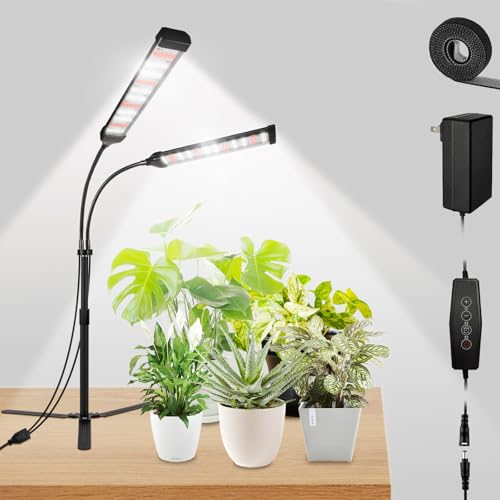
Full Spectrum LED Plant Light, Telescoping Rod, Gooseneck
A Closer Look At Each Pick
If you’re starting a large spring batch on a single shelf, two trays side by side with one shared canopy of full-spectrum light starts to feel like a proper nursery. The clear plastic dome traps humidity for the first few days after sowing, then you crack the vents and harden the seedlings off toward room air. Forty-eight LED beads spread light evenly across both trays, so seedlings on the far edges don’t stretch for the window the way they do under a single bulb.
The included drainage holes sit at the base of each cell, which keeps roots from sitting in standing water. You get plant labels and a small tool set, so a Saturday morning of sowing becomes a one-trip project. Compared with the Mr. Pen stack later in this list, this is a complete station rather than just a tray tower, which is why beginners tend to land here first.
Everyday Wins
- Two trays under one light doubles the seedling count without doubling the shelf space.
- Adjustable brightness lets you dim the canopy for tender sprouts that scorch easily under full power.
- The domes create a humid microclimate that helps stubborn seeds like peppers and basil break dormancy.
- Included labels and tools remove the usual scavenger-hunt for a marker and a dibbler.
Points To Note
- Domes need occasional wiping because mineral deposits cloud the plastic over time.
- Light height adjustment is fixed at a few set points, which can feel limiting for leggy seedlings.
Who It Suits Best
First-time seed starters who want a complete, no-extra-purchase station for a big spring sow of tomatoes, peppers, and herbs on one shelf.
A Better Fit Elsewhere
Choose the LETPOT LPH-SE instead if you’d rather skip soil entirely and grow kitchen herbs year-round without repotting seedlings at all.
Basements, garages, and spare bedrooms rarely stay warm enough in February to wake pepper seeds. A bottom heat mat (a flat electric pad that warms the root zone from below) fixes that problem without heating the whole room. This kit pairs three trays with that mat, plus adjustable humidity vents so you can crack the lid as sprouts emerge.
The integrated grow light runs 24 LEDs and five brightness steps, with a timer that can be set to 4, 8, 12, or 18 hours. That range matters because lettuce and herbs like shorter photoperiods (the total hours of light a plant receives per day) while fruiting crops want the full 16-hour stretch. Compared with the single-tray RODINTO large kit just above, this one trades cell count for the warming pad and the third tray.
Useful Strengths
- Bottom heat wakes cool-season seeds faster than ambient room temperature alone.
- Three trays give you room for succession planting without buying more gear.
- Five brightness levels help match light intensity to seedling stage.
- Adjustable humidity vents let you gradually harden off young sprouts.
Trade-Offs To Consider
- The heat mat adds a small draw on your outlet, which is worth knowing if you run a busy power strip.
- Cell size is on the smaller side, so seedlings may need transplanting into larger pots sooner than expected.
Built With In Mind
Backyard gardeners starting peppers, eggplants, and tomatoes in a chilly basement or garage where soil temperature alone won’t cut it.
Look Elsewhere When
Pick the RODINTO large heat mat kit below if you want fewer but bigger cells per tray for crops that need more root room.
Hydroponic systems skip soil entirely and feed roots directly with a nutrient solution in water. The LetPot Max carries 21 pods and a 36W LED bar, which is the largest canopy in this roundup. The companion app lets you dial in lighting schedules anywhere from 0 to 24 hours and pings you when the reservoir drops.
For a household that wants a year-round herb and leafy-green factory rather than a seasonal seed-starting station, this is the workhorse. The pump-driven drip irrigation cycles water through the root zone on a timer, so you don’t have to hand-water. Compared with the smaller LETPOT SE in the next slot, you get more grow space and more wattage, but the unit takes up more counter real estate.
The Upside
- 21 pods mean you can stagger basil, lettuce, and herbs without crowding.
- App control means you can adjust light timing from another room or while traveling.
- Auto water-level sensing cuts the risk of forgetting to refill.
- The 36W LED bar covers the full canopy without a hot spot in the middle.
Honest Caveats
- Nutrient solutions and replacement pods are an ongoing refill cost.
- The unit is wide and needs a sturdy, level surface away from splashing.
- WiFi setup can occasionally need a reboot after router changes.
Right Fit For
Tech-forward households who want a set-and-forget indoor garden for salad greens and herbs all year, not just during sowing season.
Consider Something Else When
The Mr. Pen 120-cell tray stack is a better fit if you want to start dozens of traditional soil transplants for an outdoor vegetable bed instead.
The 12-pod SE hits a sweet spot for a household that cooks with fresh herbs several nights a week. The 5.5L water tank holds enough reservoir volume to skip watering for stretches, and the 24W LED bar adjusts across a wide height range. App-based scheduling covers 0 to 24 hours of light, which is helpful when you want to mimic longer summer days for basil or shorten days for cilantro.
It sits more comfortably on a kitchen counter than the 21-pod Max, and you still get the same WiFi control and pump-driven feeding. For shoppers who like the LetPot idea but worry about size, this is the safer entry point. Compared with the bigger LetPot Air reviewed just after this one, the SE trades a slightly slimmer profile for a higher pod count.
Reasons It Performs
- Twelve pods cover most herb-and-greens households without crowding the counter.
- 5.5L tank means fewer fill-ups for busy weeks.
- The adjustable light post keeps the canopy at the right height as plants grow.
- The app reminder system nudges you before the tank runs dry.
Small Caveats
- Nutrient cost is recurring, and refills aren’t bundled.
- Larger fruiting plants like full-size tomato vines will outgrow the pod height.
Made For
Home cooks who want a low-effort kitchen herb garden with smart controls and enough capacity for daily cooking without refilling every other day.
Another Choice May Suit
The LetPot LPH-Max is the smarter pick if you want the same ecosystem with more pods and a stronger light bar for bigger leafy crops.
Tight kitchens and apartment counters reward a slim profile. The LPH-Air trims the depth without trimming the feature set. Ten pods handle a steady rotation of basil, parsley, and a few heads of lettuce, and the 24W full-spectrum light adjusts up and down so seedlings and mature plants share the same canopy.
The same LetPot app handles scheduling and reminders, so the day-to-day is consistent with the SE and Max. The trade-off for the smaller footprint is fewer pods and a smaller water reservoir, which means slightly more frequent topping up. Compared with the VIVOSUN plug cubes further down the list, this is a complete hydroponic station rather than just a propagation medium.
Real-World Strengths
- Slim shape fits on counters or windowsills where wider units won’t.
- Adjustable light height accommodates both sprouts and mature herbs.
- App control keeps the experience consistent with larger LetPot siblings.
Where It Is Less Suited
- Ten pods fill up quickly in households that cook with lots of fresh herbs.
- Reservoir is smaller, so plan on more frequent refills in warm rooms.
Whose Shelf It Belongs On
Apartment dwellers and small-kitchen cooks who want a clean, slim hydroponic garden that doesn’t dominate the counter.
Reach For A Different Pick When
The LETPOT LPH-SE is the better fit if you have the counter space and want more pods for a bigger herb rotation.
Already own trays and domes that you like? A pair of gooseneck floor lights lets you keep using them while adding the missing grow-light piece. Each head carries 48 LEDs across white and red wavelengths (the specific colors of light plants use most for photosynthesis and flowering), with 4, 8, or 12-hour timer steps and five dimming levels.
The flexible gooseneck aims light exactly where you need it, which is helpful when one shelf holds taller seedlings in the back and shorter sprouts in the front. The ground-plug design means no clamps or shelf mounts to fuss with. Compared with the integrated RODINTO tray kit at the top of this list, this one skips the tray and dome entirely.
Practical Pluses
- Gooseneck aiming works around crowded shelves with mixed plant heights.
- The two-pack covers a wider area than a single bar light.
- Built-in timer means you don’t need a separate outlet timer.
Practical Considerations
- The lights need their own floor space beside the shelf.
- Cords can tangle with other electronics on a busy power strip.
Best Suited To
Growers who already have trays or pots they trust and just need flexible supplemental lighting to round out their setup.
Swap It Out When
Choose the full-spectrum telescoping RODINTO standing light instead if you want a single tall unit that covers a multi-tier rack.
Big gardens need big numbers. Ten trays at twelve cells each gives you 120 planting slots, which is plenty for succession-sowing lettuce, marigolds, and a long row of brassicas (members of the cabbage family, including broccoli, kale, and cauliflower). The trays stack with transparent humidity domes, and each cell has a drainage hole to prevent soggy roots.
The trade-off here is that no light is included, so this is a tray-only buy. Pair it with one of the RODINTO lights earlier in the roundup and you have a full station. The plastic feels sturdy enough to reuse across a couple of seasons if you wash and dry the cells between rounds.
Strengths Worth Knowing
- 120 cells is enough for serious backyard vegetable and flower beds.
- Adjustable dome vents let you dial humidity as seedlings emerge.
- Stacking design saves space between sowings.
- Cells are a manageable size for transplants like tomatoes and peppers.
Possible Compromises
- No integrated light, so you’ll need to budget for one separately.
- Plastic can warp if trays are exposed to direct sunlight for long periods.
Who Should Grab It
Bulk sowers preparing dozens of soil-grown seedlings for an outdoor vegetable patch or flower border.
Where A Sibling Pick Shines
The RODINTO 2-pack tray kit at the top is the smarter pick if you want the trays and the lighting in a single box instead of buying separately.
Big cells matter when you’re growing tomatoes and peppers that hate being root-bound. This kit drops to 24 cells per tray but each cell is roomy enough to keep seedlings comfortable until transplant day. The 10 by 20-inch heat mat spreads warmth evenly across the whole tray base.
Forty-eight LEDs handle the canopy with five brightness levels and timer options of 4, 8, 12, or 18 hours. Compared with the three-pack kit reviewed earlier, this version prioritizes cell volume over total count. For warm-season crops, that often means stronger transplants.
Everyday Advantages
- Larger cells let seedlings develop a fuller root system before transplant.
- Full-width heat mat warms every cell uniformly.
- Brightness steps protect tender sprouts from light burn.
- Timer flexibility handles long-day crops and short-day crops alike.
Small Limitations
- Fewer total cells mean you may need multiple trays for big gardens.
- The heat mat adds another cord to route along the shelf.
Perfect Match For
Vegetable gardeners starting peppers, eggplants, and tomatoes who want each seedling to have generous root space from day one.
Skip It When
The 3-pack RODINTO heat mat kit is the better fit if you want smaller cells but more trays for succession sowing.
Soilless propagation has its place, especially for cuttings and hydroponic transfers. These 40 pre-buffered starter cubes come pH-balanced (adjusted to the right acidity level so nutrients stay available to the plant) between 5.5 and 6.5, which removes the usual pre-soak step for fresh seeds and cuttings. They hold moisture without waterlogging, so root oxygen stays steady.
You supply the tray and the light, but that’s also the appeal: this drops into any propagation workflow without forcing a specific format. Compared with the soil-based RODINTO tray earlier, the cube format keeps everything cleaner for indoor setups and transplant shock drops noticeably. The cubes break down when planted, so you don’t have to tease roots apart.
The Value In It
- Pre-buffered pH removes one prep step for cuttings and seeds.
- Clean cubes suit indoor propagation without soil mess.
- Cubes transplant directly into soil or hydroponic systems.
- Even moisture retention reduces the watering guesswork.
What To Weigh
- You supply your own tray, dome, and lighting separately.
- Cubes dry out faster than soil in warm, dry rooms.
Right Fit For
Propagators rooting cuttings and starting seeds for transplant into hydroponic systems or clean indoor setups.
Not Your Match When
The RODINTO 2-pack tray kit is the more complete buy if you want a self-contained station with tray, dome, and lighting all in one.
Multi-tier plant racks and tall shelves need a light that reaches up and aims accurately. This freestanding unit pairs a telescoping rod (extending from 9.8 to 25 inches) with a flexible gooseneck, so you can stretch it above a tall seedling and then angle the head down toward shorter sprouts on the same rack. The anti-tip metal base keeps it planted on the floor next to the shelf.
One hundred forty-four LEDs (48 red and 96 white) blanket a wide 120-degree arc with full-spectrum light, and the timer runs at 4, 8, or 12-hour intervals with five dimmer levels. For growers running a 3-tier or 4-tier rack with mixed crops at different heights, the head articulation solves a problem that fixed-height bar lights don’t.
Standout Benefits
- Telescoping rod handles tall racks without a ceiling mount.
- Gooseneck aims light precisely across uneven plant heights.
- Wide 120-degree coverage blankets a multi-shelf rack from one position.
- Anti-tip base keeps the unit stable beside busy aisles.
Factors To Consider
- Floorspace footprint is larger than clip-on lights.
- The stand assembly takes a few minutes out of the box.
Who Will Love This
Seed starters running tall multi-tier racks who need one tall light to cover plants at very different heights from a single base.
Where Another Pick Suits Better
The RODINTO gooseneck 2-pack is a smarter fit if you prefer pair-of-lights flexibility over a single tall standing unit.
Picking The Right Setup For Your Growing Style
Choosing a seed starter kit with grow light really comes down to three decisions: what you’re growing, where it lives, and how involved you want to be in the process. Match the kit to the answer and the season takes care of itself.
Tray And Light Or All-In-One Hydroponic
If your goal is starting tomatoes, peppers, and flowers for transplant outdoors, a traditional tray with an integrated LED bar stays the simplest path. You get drainage holes, humidity domes, and a light that raises with the seedlings. Hydroponic systems make more sense when you want herbs and greens year-round without repotting.
Lighting Strength And Spectrum
Seedlings need strong light in the blue range (one of the color bands of the visible spectrum, important for leafy vegetative growth) to stay compact rather than leggy. Full-spectrum LEDs cover both vegetative growth and flowering on one setting, and adjustable brightness lets you dial down for tender sprouts. A 24W to 36W panel typically covers a small starter station comfortably.
Tray Count And Cell Size
Big spring gardens benefit from more cells, but smaller cells force earlier transplanting. Larger cells give roots more time to develop, which matters for heavy feeders like peppers and tomatoes. Heat mats speed germination in cool rooms and are worth the extra outlet if your basement runs cold in February.
Common Slip Ups And When To Spend More
Mistakes Worth Dodging
A common trap is buying a tray-only kit and forgetting the light. Without enough lumens (a measure of how much visible light a source emits), seedlings stretch and weaken. Another mistake is leaving the humidity dome sealed after sprouts emerge, which invites damping-off (a fungal disease that kills seedlings at the soil line). Crack the vents the moment you see green.
Where The Extra Money Goes
Higher-tier kits add heat mats, app controls, and stronger LED bars. The heat mat pays off in cool basements, where it cuts germination time in half. App control matters less for casual growers than for travelers who can’t hand-water daily. The strongest upgrade case is bigger light wattage, since light is the single biggest variable in seedling quality.
Frequently Asked Questions
How Many Hours Per Day Should Seedlings Get Under A Grow Light?
Most vegetable and herb seedlings thrive with 14 to 16 hours of light per day. Setting a timer prevents you from forgetting, and many kits ship with built-in timer options.
Do I Really Need A Humidity Dome?
A dome helps seeds germinate and keeps the surface from drying out, but it should be vented or removed once seedlings emerge to prevent fungal issues.
Can I Use A Regular Desk Lamp Instead Of A Grow Light?
Regular bulbs don’t deliver the blue and red wavelengths seedlings need, so stems stretch and weaken. A purpose-built full-spectrum LED bar is the safer bet for stocky plants.
Is A Heat Mat Necessary?
A heat mat helps warm-season crops like peppers and basil germinate faster in cool rooms. In a warm space, you can usually skip it.
When Do I Move Seedlings Off The Starter Kit?
Move seedlings to individual pots once you see the first set of true leaves (the second pair of leaves that appear, which look like the mature plant’s foliage), usually two to three weeks after sprouting for most vegetables.
The Takeaway
The right seed starter kit removes the two biggest headaches of indoor sowing: light and humidity. Match the tray count, cell size, and lighting strength to the crops you actually grow, and the rest is patience. Any of these ten picks will get you from packet to sturdy transplant with far less fuss than a sunny windowsill alone.
