

Starting a hydroponic garden means pairing the right seed with the right starter medium, and the wrong match can stall germination before roots ever reach the nutrient solution. This roundup pulls together sprouting seeds, a vegetable seed vault, and seven rockwool starter cubes sized for everything from microgreens to longer vegetative runs. The Handy Pantry alfalfa handles direct sprouting without any medium at all. The Gardeners Basics vault covers soil-less seed starting for hobbyists who want heirloom variety. Halatool’s rockwool sheets cover the rest of the list with different cube sizes and plug counts for every hydroponic setup.
The Choices Worth Comparing

Handy Pantry Organic Alfalfa Seeds for Sprouting 1 lb

Halatool 1 Inch Rockwool Cubes 200 Plugs

Gardeners Basics Survival Seed Vault Kit
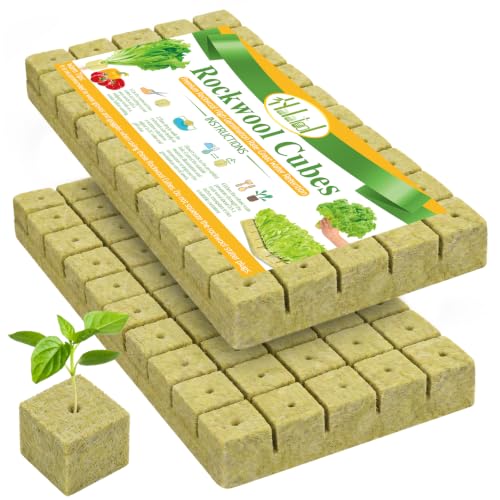
Halatool 1 Inch Rockwool Cubes 100 Plugs

Halatool 1 Inch Rockwool Cubes 300 Plugs

Halatool 1.2 Inch Rockwool Cubes 144 Plugs

Halatool 1.2 Inch Rockwool Cubes 72 Plugs

Halatool 1.5 Inch Rockwool Cubes 196 Plugs

Halatool 2 Inch Rockwool Cubes 96 Plugs

Halatool 1.5 Inch Rockwool Cubes 98 Plugs
Taking A Closer Look At The Options
Sprouting at home does not require a hydroponic tray at all, and Handy Pantry’s organic alfalfa proves it. The seeds ship in a resealable one-pound pouch, so a small countertop sprout jar handles the job. Unlike every other entry on this list, there is no growing medium to manage, just seeds, water, and a rinse cycle.
Alfalfa is a forgiving starter crop. You may find germination happens quickly under indirect light and twice-daily rinses, which keeps mold pressure low. This is the only item here aimed at direct human consumption rather than transplanting into a hydroponic system.
Useful Highlights
- One-pound resealable pouch keeps seed fresh between batches
- Sprouts in a jar, no rockwool or net cups required
- Forgiving germination rates make it beginner-friendly
- High-volume pack suited for repeated harvest cycles
Things To Consider
- Not a hydroponic starter medium, so it does not pair with rockwool trays
- Rinsing discipline matters, since missed cycles commonly invite mold
Feature Snapshot
Best Suited To
Countertop sprouters who want fresh greens without investing in trays, pumps, or nutrient solutions.
Consider Something Else When
You want to start seedlings for transplanting into a hydroponic system, in which case the Halatool 1 Inch Rockwool Cubes 200 Plugs serve that role better.
Rockwool is the workhorse starter medium in hydroponics, spun from basalt fibers into a spongy cube that holds moisture without drowning roots. Halatool’s 200-plug pack ships as four pre-scored sheets of one-inch cubes, so it drops into standard 10×20 propagation trays without trimming.
Compared with the Handy Pantry alfalfa in the previous pick, this one is built for growers who already have a hydroponic reservoir ready to receive transplants. The 200-count sits comfortably between Halatool’s 100 and 300 options, making it a sensible middle ground for a multi-tray setup.
The Helpful Details
- Pre-cut sheets fit common 10×20 trays without extra trimming
- Basalt fiber construction holds moisture evenly around roots
- 200 plugs support several propagation rounds before restocking
- Compatible with NFT, DWC, and Dutch bucket transplanting
Worth Noting
- Rockwool requires pH-conditioning before first use
- One-inch cubes are tight for larger crops like tomatoes or squash
- Fibrous dust during handling is commonly reported as mildly irritating
Quick Facts
Made For
Hobby growers running multi-tray propagation who want to start herbs, lettuce, and small greens in steady rotation.
A Better Fit Elsewhere
You need a smaller trial quantity before committing, in which case the Halatool 1 Inch Rockwool Cubes 100 Plugs offer a low-volume entry point.
The Gardeners Basics vault leans into heirloom diversity rather than a single crop. It covers thirty-five varieties of leafy greens, root vegetables, tomatoes, peppers, beans, peas, squash, and melons, which gives a hydroponic grower a broad tasting menu from a single purchase.
These are open-pollinated, non-hybrid seeds, meaning saved seed from this season can plant next season. For hydroponic hobbyists who also keep a soil garden, that continuity matters. Where Handy Pantry’s alfalfa targets a jar and Halatool’s cubes target a tray, this vault targets long-term seed storage with crops that transplant into either medium.
Real-World Strengths
- Thirty-five heirloom varieties in a single purchase
- Open-pollinated seeds can be saved and replanted
- Broad range from quick greens to longer-season melons
- Supports both soil beds and hydroponic transplanting
Trade Offs
- Smaller packet sizes per variety than single-crop packs
- Long-season crops like melons need more vertical space than typical hydroponic shelves allow
Right Fit For
Preppers and variety-hungry gardeners who want a single kit that covers many crops for years of planting.
Look Elsewhere When
You only need one leafy crop running in hydroponics, in which case the Halatool 1.2 Inch Rockwool Cubes 144 Plugs pair better with a single seed variety.
This is the trial-size sibling of Halatool’s 200 and 300-plug packs, arriving as two scored sheets of one-inch cubes. For a first-time hydroponic grower, that smaller count lowers the cost of testing germination without leaving most of a bag sitting in storage.
Compared with the 200-plug version reviewed earlier, this one offers the same basalt fiber and same cube dimensions, just with a smaller footprint. You may find this hits the sweet spot for kitchen-counter herb experiments before committing to bulk propagation.
What Earns Its Place
- Lower entry cost than the larger Halatool packs
- Same one-inch cube geometry fits standard trays
- Two sheets handle a small herb or lettuce trial
- Useful as a benchmark before scaling up
Points To Keep In Mind
- Limited plug count runs out quickly under steady propagation
- No advantage over the 200-plug pack if you need volume
Who Will Love This
First-time hydroponic growers testing germination rates on a small herb tray before scaling to a full system.
Skip It When
You already know your germination setup works, in which case the Halatool 1 Inch Rockwool Cubes 300 Plugs deliver more cubes per sheet for sustained runs.
Three hundred one-inch plugs across six sheets push this Halatool pack into classroom, community-garden, or microgreens-business territory. Same basalt fiber, same cube geometry as the 100 and 200-plug versions, just scaled up for steady propagation cycles.
For growers producing microgreens for market or running a school hydroponics program, the cube count per dollar matters more than the sheet count. Compared with the smaller Halatool options, this one trades some storage convenience for higher per-pack volume.
A Few Strong Suits
- Highest plug count in the one-inch Halatool line
- Suitable for microgreens at commercial scale
- Six sheets cover multiple propagation trays per cycle
- Same proven basalt fiber formula as smaller siblings
Honest Caveats
- Bulk format needs dry storage to prevent moisture creep before use
- Overkill for a single-tray home grower
Perfect Match For
Market growers and classroom programs producing microgreens in repeated cycles who need the highest cube count per pack.
Swap It Out When
You are a casual home grower, in which case the Halatool 1 Inch Rockwool Cubes 100 Plugs will not sit in storage as long.
Stepping up from one inch to 1.2 inches adds roughly twenty percent more rooting volume per cell, which matters for crops that need extra root mass before transplanting. Halatool ships 144 of these slightly larger cubes across four sheets, hitting a useful middle ground between the small and large ends of the line.
This is the cube size many growers settle on for leafy greens like romaine and lettuce. Compared with the one-inch packs reviewed earlier, you may find these give roots more runway without the bulk of a 1.5 or 2-inch cell.
Useful Strengths
- Larger root zone reduces premature transplant shock
- Same basalt fiber formula as the one-inch siblings
- Well matched to romaine, lettuce, and herb starts
- 144 plugs balance volume with manageable sheet count
Less Ideal Details
- Does not fit trays designed specifically for one-inch cells
- Cubes still need pH-conditioning before sowing
Feature Snapshot
Who Should Grab It
Leafy-green growers who want extra rooting depth without jumping to the largest cube sizes in the Halatool range.
Another Choice May Suit
You only need a small trial batch, in which case the Halatool 1.2 Inch Rockwool Cubes 72 Plugs deliver the same cube size at half the count.
Two sheets of 1.2-inch cubes totaling 72 plugs land this Halatool pack in genuine trial territory. It offers the same basalt construction as the 144-plug version reviewed earlier, just at a count that suits a single small tray run.
For a hobby grower running one leafy-green tray at a time, seventy-two plugs is enough for a meaningful cycle without a lot of leftover cube inventory. The honest read is that this is a low-fuss entry into the 1.2-inch cube size.
Useful Touches
- Lower-cost way to test 1.2-inch cubes before scaling
- Two-sheet format stores compactly
- Right-sized for one small propagation tray
Small Limitations
- Runs out fast under any steady propagation schedule
- Not the right choice for multi-tray growers
Built With In Mind
Hobby growers running a single leafy-green tray who want to evaluate 1.2-inch cube performance before committing to bulk.
Reach For A Different Pick When
You want volume for repeated cycles, in which case the Halatool 1.2 Inch Rockwool Cubes 144 Plugs deliver double the plug count in the same cube size.
Halatool’s 1.5-inch cube gives roots roughly three times the volume of the smallest one-inch plug, which is what fruiting crops need before they hit a hydroponic reservoir. The 196-plug pack ships as four sheets, sized for trays built around deeper cells.
This cube size is the point where most growers handling tomatoes, peppers, or larger herbs start. Compared with the 1.2-inch packs reviewed earlier, you may find the extra depth reduces the urgency of transplant timing.
Everyday Advantages
- Generous root volume supports fruiting crop starts
- Four-sheet format fits many deep-cell trays
- Retains moisture evenly across the larger cube profile
- Compatible with NFT, DWC, and bucket system transplants
Things To Weigh
- Bulkier cells may not fit standard 10×20 shallow trays
- Heavier cube count per sheet raises shipping weight
Whose Shelf It Belongs On
Growers starting tomatoes, peppers, or larger herbs who need deeper rooting volume before moving plants into a hydroponic reservoir.
Where A Sibling Pick Shines
You only need a small batch of larger cubes, in which case the Halatool 1.5 Inch Rockwool Cubes 98 Plugs provide the same cube size at half the volume.
Two-inch cubes are the largest size in the Halatool line and are typically reserved for vine crops, larger fruiting plants, and longer vegetative starts. The 96-plug count arrives as two sheets that can be split into single cells for transplant trays with deeper pockets.
Compared with the 1.5-inch packs reviewed earlier, these give roots significantly more runway. You may find the tradeoff is tray compatibility, since standard 10×20 trays were designed around shallower cells.
Where It Excels
- Largest cube size for serious fruiting crop propagation
- Cubes separate cleanly for custom tray layouts
- Reduces transplant urgency with extended root development
Practical Considerations
- Does not drop into standard shallow 10×20 trays without modification
- Bulkier format requires more storage space than smaller packs
Perfect Match For
Vine-crop growers starting tomatoes, cucumbers, or squash who want maximum rooting depth before transplanting into a hydroponic system.
Where Another Pick Suits Better
You mainly propagate leafy greens, in which case the Halatool 1.2 Inch Rockwool Cubes 144 Plugs match those crops more efficiently.
The closing pick is the lower-volume sibling of the 196-plug pack reviewed earlier, delivering 98 cubes across two sheets at the same 1.5-inch size. For a hobby grower evaluating deep-cell propagation, this count lets you run a meaningful cycle without committing to bulk inventory.
You may find the 98-plug count fits a single home propagation tray with a small surplus. The honest read is that it offers the same cube depth as the larger pack, just at a scale that suits a personal home garden rather than a steady production schedule.
What Works In Its Favor
- Same deep 1.5-inch cube geometry as the 196-plug sibling
- Smaller sheet count stores compactly in limited spaces
- Right-sized for a single propagation tray run
Factors To Consider
- Runs out quickly for any multi-tray propagation routine
- Does not suit growers needing repeated cycles
Right Fit
Home growers testing 1.5-inch cube performance for fruiting crops before scaling to the bulk 196-plug version.
Consider Something Else When
You already know you want steady deep-cell propagation, in which case the Halatool 1.5 Inch Rockwool Cubes 196 Plugs deliver higher volume at the same size.
Factors To Weigh Before Picking Seeds For Hydroponics
Match the Starter Medium to the Crop
The first decision is whether you need a sprouting seed, a seed vault, or a rockwool propagation cube. Sprouting seeds like the Handy Pantry alfalfa are designed for a jar, not a hydroponic system, so they only fit a narrow use case. For hydroponic propagation, rockwool is the default, but the cube size matters more than most beginners expect. One-inch cells suit small herbs and lettuces, while 1.5 and 2-inch cubes give fruiting crops the root mass they need before they hit a reservoir.
Think About Volume and Tray Fit
Halatool’s rockwool sheets are pre-scored to drop into standard propagation trays, but only if the cube size matches the cell depth. Buying the largest cube for a shallow tray is a common mismatch that wastes medium. Equally, picking a 300-plug bulk pack when you only run one tray leaves inventory sitting in storage, where moisture creep can degrade unused cubes over several months.
Seed Type and Storage Goals
Open-pollinated heirloom seeds, like those in the Gardeners Basics vault, support long-term seed saving, while hybrid sprouting seeds like alfalfa prioritize a single fresh harvest. For hydroponic growers who also keep soil beds, heirloom variety adds flexibility. For growers who only want fresh greens on rotation, a sprouting-focused seed makes more sense than a survival vault.
Smart Choices When Shopping This Category
Pitfalls Shoppers Hit
The most common slip-up in this category is buying the wrong cube size for the tray you already own. Standard 10×20 trays are designed around shallow cells, so a 2-inch rockwool cube will not seat properly without modification. Another frequent misstep is skipping pH-conditioning on new rockwool, since fresh cubes tend to run alkaline and can stall germination until they soak in a balanced solution.
Where The Extra Money Goes
Higher plug counts across the Halatool line share the same basalt fiber formula, so paying more primarily buys volume rather than better material. The trade-off is storage space and the risk of unused cubes degrading over time. Spending up only makes sense when your propagation schedule actually consumes the volume, since the per-cube savings are modest once you factor in storage conditions and shelf life.
Frequently Asked Questions
Can regular garden seeds be used for hydroponics?
Yes, most open-pollinated and heirloom garden seeds transplant well into hydroponic systems after starting in rockwool. The key is matching the seed to the cube size, since small seeds need shallow cells and larger seeds benefit from deeper ones.
Do rockwool cubes need preparation before use?
Rockwool cubes should soak in pH-balanced water before sowing, since fresh cubes carry a slight alkaline residue from manufacturing. A short soak brings the cube into a range that supports germination without shocking the seed.
What is the difference between 1-inch and 1.5-inch rockwool cubes?
The difference is root volume. One-inch cubes suit small herbs and leafy starts, while 1.5-inch cubes give fruiting crops extra rooting depth before transplanting. Cube size should track the crop’s expected root mass.
How long can unused rockwool cubes be stored?
Unused rockwool cubes can sit for months if kept dry and sealed, though extended storage in humid conditions invites moisture creep. For long storage, keeping the original packaging sealed and out of direct humidity is the standard approach.
Are sprouting seeds the same as hydroponic seeds?
Not quite. Sprouting seeds like alfalfa are grown for direct consumption in a jar, without a hydroponic system. Hydroponic seeds are sown into a starter medium like rockwool and transplanted into a nutrient solution once roots develop.
Closing Remarks
The right pick depends on whether you are sprouting, saving seed, or propagating into a hydroponic system. For a one-tray home garden, the lower-count Halatool packs keep inventory manageable. For deeper propagation or higher volume, the larger plug counts and bigger cube sizes earn their place. Match the cube to the crop, condition the rockwool, and the rest is steady routine.
