

There’s a particular kind of frustration that comes from cutting back a shrub only to watch it return with a vengeance. Shrub roots reach deep into soil and spread laterally far beyond what you see above ground, which is why trimming alone never solves the problem. A targeted root killer, applied correctly, can interrupt regrowth from below and save you a season of repeat work.
Different products in this category work in different ways. Some kill actively through foliar absorption, others create soil barriers that suppress new shoots, and a separate class of formulas protects valuable trees and shrubs from insect damage rather than eliminating them. Below is a roundup of the ten most useful products across these jobs, mixing soil-applied herbicides, foliar treatments, and plant-protection formulas. Whether you’re reclaiming a driveway edge or defending a prized maple, one of these will fit the job.
The Picks In Brief

Roundup Dual Action Weed & Grass Killer Plus 4 Month Preventer 1.33 gal.
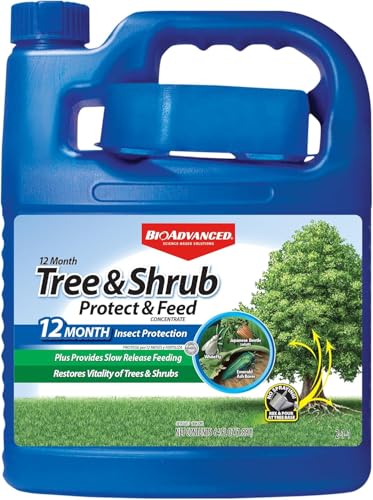
BioAdvanced 12 Month Tree & Shrub Protect and Feed Concentrate 64 oz

BioAdvanced All-In-One Rose and Flower Care Concentrate 64 oz

Spectracide Weed and Grass Killer Concentrate 32 oz

BioAdvanced 12 Month Tree and Shrub Protect and Feed Granules 10 lb

Spectracide Weed & Grass Killer for Driveways & Walkways 1.33 gal

Roundup Ready-To-Use Max Control 365 with Comfort Wand 1.33 gal
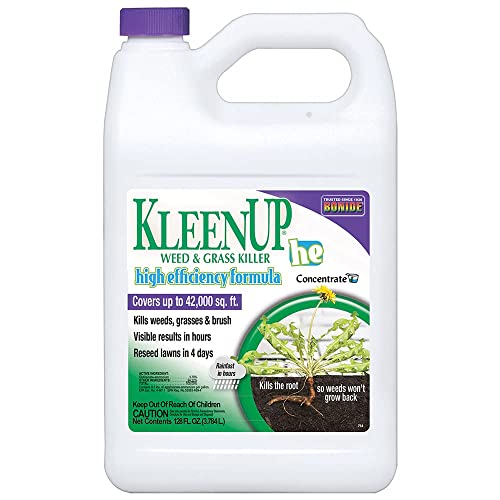
Bonide KleenUP Weed & Grass Killer Concentrate 128 oz

Roebic FRK Foaming Tree Root Killer 1 lb Granules

Spectracide Weed & Grass Killer Concentrate for Driveways 40 oz
What Each Pick Brings To The Table
The opening entry is built for a very specific problem: existing growth you want gone, plus a season of suppressed regrowth you don’t want to babysit. The Dual Action formula handles both jobs in a single pass, and the Pump ‘N Go 2 sprayer removes the pump-and-pour routine that slows down most weekend jobs.
For most backyards dealing with shrub suckers creeping out from a hedge row or fence line, the convenience alone is the selling point. The 1.33-gallon pack of two covers a meaningful stretch of bed edge, and the preventer side buys you a calmer late-summer cleanup.
Reasons It Performs
- Combines an existing-growth killer with a four-month pre-emergent soil barrier in one jug, so a single application handles two chores at once
- Pump ‘N Go 2 sprayer pressurizes in roughly a minute and delivers a continuous spray without manual pumping mid-job
- Targets both weeds and grasses down to the root, useful for spot clearing along fence lines where mixed growth is the norm
- The four-month residual is long enough to skip the peak summer regrowth window in most climates
- Two-bottle pack suits medium to large driveways without running dry mid-project
Things To Consider
- Pre-emergent action prevents desirable plants from establishing too, so keep it well clear of new lawn seed or flower transplants
- Concentrate and pump sprayers require rinsing after each use; owners commonly report slow cleanup if you let the residual dry inside the wand
Who It Suits Best
Homeowners reclaiming a long driveway edge or fence row where they want one thorough application to do both jobs.
Where Another Pick Suits Better
For pure foliar kill without the four-month barrier, the Spectracide Weed and Grass Killer Concentrate 32 oz is a cleaner fit on small spot-treat jobs.
This entry shifts the conversation from killing shrubs to protecting them. The BioAdvanced concentrate is a systemic drench, meaning the active ingredient travels up through the root system and into the entire plant, delivering a year of insect defense plus slow-release feeding in a single application.
For property owners with high-value ornamentals like Japanese maples, boxwood hedges, or established roses, the protection angle matters more than any killing product in this lineup. It also lays groundwork for healthier regrowth if you’re selectively removing one shrub while preserving its neighbors.
Advantages To Know
- One soil drench protects against listed insects such as aphids, Japanese beetles, and emerald ash borer for up to twelve months
- Slow-release fertilizer component feeds roots during the same application, saving a separate feeding trip
- Liquid concentrate format mixes evenly and absorbs through the root zone without disturbing mulch or top-dress
- Targets a broad pest list, useful when you’re uncertain which insect is damaging a particular shrub
Honest Caveats
- It’s a protectant, not an eradicant, so don’t reach for this when you actually want to kill a stubborn shrub
- Mixing ratio depends on trunk circumference or shrub height, and getting the dose wrong reduces coverage; read the label closely before measuring
Built With In Mind
Owners of mature, named-variety trees and ornamental shrubs who want one annual treatment that handles insect pressure and feeding at once.
Reach For A Different Pick When
The BioAdvanced All-In-One Rose and Flower Care Concentrate suits flowering beds where disease pressure matters as much as insects.
Where the previous concentrate leans toward trees, this one targets the flower bed side of the same family. The All-In-One Rose and Flower Care combines three functions into a single drench: fertilizer, insect control, and disease control. For rose gardeners tracking black spot, aphids, and feeding cycles simultaneously, that’s a meaningful workload reduction.
It is also a useful neighbor to a kill product. While you remove an unwanted shrub with a foliar treatment, you can protect the surrounding roses with this and avoid collateral stress on the keepers.
The Practical Payoff
- Three products in one jug removes the rotation schedule most rose growers juggle between feed, fungicide, and insecticide
- Systemic action means rain or overhead watering won’t wash the protection off after application
- Designed for roses specifically, so the fertilizer ratio and disease list target the most common rose problems rather than a general plant
- The 64-ounce bottle covers a meaningful rose bed before needing a refill
Points To Note
- Protection window is around six weeks per application, so plan on repeat treatments through the active growing season
- Works only on the listed pests and diseases, so a separate fungicide is still warranted for less common rose pathogens
Right Fit For
Rose gardeners managing a bed of multiple bushes who want to streamline their feeding and spraying schedule into one product.
Skip It When
You need broad insect protection across mixed trees and shrubs, in which case the BioAdvanced 12 Month Tree & Shrub Protect and Feed Concentrate covers more plant types.
Some jobs are small and shouldn’t require a backpack sprayer. This Spectracide concentrate arrives in a 32-ounce bottle with the AccuMeasure dosing cap, which doubles as a measuring tool so you can mix straight into a pump sprayer without a separate measuring cup.
The compact size suits apartment patios, narrow side yards, and any spot where pulling a gallon jug out from under the deck feels like overkill. It also makes a smart backup bottle for re-treatments after the first pass on a stubborn shrub cluster.
Practical Pluses
- AccuMeasure cap removes the need for a separate measuring cup, which reduces spills and over-mixing
- Concentrate format goes further per ounce than a ready-to-use (pre-mixed) spray and costs less over the long haul
- Non-selective formula kills both weeds and grass down to the root in one pass
- Lightweight 32-ounce bottle is easy to carry to back-fence spots without dragging a heavy jug
Practical Considerations
- Smaller bottle means a refill trip if you have a long fence line to clear
- Concentrates require careful labeling of any mixed solution left in the sprayer
Made For
Apartment dwellers and small-yard homeowners handling targeted shrub and weed patches without the storage room for larger jugs.
Look Elsewhere When
Larger acreage jobs are a better match for the Bonide KleenUP Weed & Grass Killer Concentrate 128 oz, which covers substantially more square footage per quart.
The granular sibling to the concentrate earlier in this list, this BioAdvanced formula trades the mixing step for a simple shake-on application. You sprinkle the measured amount around the drip line of the shrub, water it in, and the granules deliver twelve months of insect protection plus slow-release feeding.
For gardeners who prefer to skip sprayers and measuring cups, the granular format removes two of the most common application complaints. It’s especially useful around foundation plantings where a sprayer would be awkward and overspray onto siding is a real risk.
Everyday Wins
- No mixing required, which suits gardeners who don’t want to dilute concentrates or own a sprayer
- Kills listed insects such as Japanese beetles, aphids, and emerald ash borers through root uptake
- Slow-release feeding improves plant vigor during the same treatment, so you’re fertilizing while protecting
- Ten-pound bag covers multiple shrubs or a row of foundation plantings
Where It Is Less Suited
- Needs a watering step after spreading to activate the active ingredient, so dry-season timing matters
- Granular breakdown is slower than liquid drenches, so it may not save a heavily infested shrub mid-season
Feature Snapshot
Whose Shelf It Belongs On
Foundation-planting caretakers who want an annual once-over without dragging out a sprayer each time.
Swap It Out When
You’re managing larger trees or shrubs with deep root zones, where the BioAdvanced 12 Month Tree & Shrub Protect and Feed Concentrate 64 oz reaches the root system more reliably through liquid drench.
This entry is built for the hardscape end of the spectrum. The Spectracide Weed & Grass Killer for Driveways & Walkways arrives pre-mixed in a 1.33-gallon container, so there’s no measuring and no mixing. You hook up the AccuShot Continuous Power Sprayer (sold separately) and walk the perimeter.
For homeowners dealing with shrub sprouts creeping up through driveway cracks or sprouting along fence rows, the convenience of a pre-mixed formula can’t be overstated. It’s also rainproof within fifteen minutes, which matters when afternoon storms are unpredictable.
Useful Highlights
- Pre-mixed formula removes the dilution step and the risk of over- or under-mixing concentrate
- Designed specifically for hardscape surfaces like patios, walkways, and driveways where overspray onto lawn is less of a concern
- Rainproof in fifteen minutes, useful in climates where afternoon storms interrupt outdoor work
- 1.33-gallon volume handles a full driveway perimeter without a refill stop
Trade Offs
- Pre-mixed format costs more per application than a concentrate, which adds up on large acreage
- The AccuShot sprayer is a separate purchase, so the total project cost is higher than it first appears
Best Suited To
Hardscape-heavy properties where you want a pre-mixed solution for spot-treating weeds and grass along driveway edges.
Consider Something Else When
Larger properties benefit more from the Bonide KleenUP Weed & Grass Killer Concentrate 128 oz, which delivers significantly more coverage for the same workload.
If there’s one product in this lineup designed for the “set it and forget it” gardener, this is it. Roundup Ready-To-Use Max Control 365 kills existing weeds and prevents new ones for up to twelve months by creating an invisible barrier in the soil. The included Comfort Wand extends reach and avoids the bending strain of a standard nozzle.
For anyone fighting shrub and weed re-growth from cracks in a gravel driveway or along a patio edge, a year of prevention removes the most tedious part of yard upkeep. It’s also rainproof in thirty minutes, which gives some flexibility if your application window is tight.
Where It Delivers
- Combines a foliar kill with a twelve-month soil barrier in a single no-mix application
- Comfort Wand extends reach, so the sprayer stays at a comfortable height while treating ground-level growth
- Rainproof in thirty minutes, so a passing shower won’t undo the work
- Targets driveways, patios, sidewalks, and gravel areas, the spots where shrub regrowth is most stubborn
Honest Caveats
- Pre-emergent barrier will prevent anything from growing, so avoid runoff into lawn or flower bed areas
- Trigger sprayers require occasional rinsing to keep the wand from clogging after repeated uses
Perfect Match For
Gravel driveways and patio perimeters where shrub suckers return every season and a year-long barrier would be welcome.
Where A Sibling Pick Shines
For lawn edges where you want kill without a long soil barrier, the Spectracide Weed and Grass Killer Concentrate 32 oz offers a more targeted approach.
Where coverage area is the headline, this Bonide concentrate leads the roundup. The High Efficiency formula treats up to roughly 42,000 square feet per quart depending on the mix ratio, which is a meaningful coverage figure for larger properties or acreage-style lots.
The contact-and-root action starts working on contact and continues into the root zone. For landowners clearing a long fence line or a wide gravel approach, the per-square-foot economics are the main reason to choose this over a smaller concentrate.
Standout Benefits
- Covers up to roughly 42,000 square feet per quart, lowering cost per square foot on larger projects
- Starts working on contact, so you see results within hours rather than days
- Replant treated areas about four days after application, faster than many concentrates
- Versatile enough for patios, walkways, driveways, sidewalks, and around flower beds
Less Ideal Details
- 128-ounce concentrate requires a sizable storage spot and proper labeling for any mixed solution
- Contact formula means thorough coverage matters; missed spots may regrow and need a second pass
Who Should Grab It
Property owners clearing long fence lines or acreage-style lots where the per-square-foot economics outweigh the convenience of a pre-mixed jug.
A Better Fit Elsewhere
The Spectracide Weed & Grass Killer for Driveways & Walkways 1.33 gal pre-mixed option fits smaller hardscape jobs where mixing feels like extra work.
This entry handles an entirely different problem: tree roots infiltrating sewer lines and septic drain fields. The Roebic FRK uses a foaming action that fills the pipe on contact, so the active ingredient reaches the entire interior surface rather than just the bottom. The active ingredient, dichlobenil, inhibits new root growth along the line.
It’s a specialty product, but for homeowners with mature trees near sewer laterals, the cost of a professional rooter service makes this kind of preventative maintenance appealing. It also claims not to harm the surrounding trees, which matters when you love the shade but hate the drain backup.
A Few Highlights
- Foaming action fills the pipe cross-section, so the active ingredient contacts the entire interior rather than running along the bottom
- Dichlobenil active ingredient inhibits new root growth rather than just burning existing roots back
- Safe for the surrounding trees when applied correctly, so you can clear the line without sacrificing the canopy
- Suitable for septic systems and drain fields, where mechanical rootering can damage the bed
Possible Compromises
- Specialty product with a narrow use case; not useful for typical shrub and weed control above ground
- Application timing relative to root flush cycles affects results; expect to learn your system before judging performance
Quick Facts
Who Will Love This
Homeowners with mature trees whose roots have found their way into sewer laterals or septic lines and want a non-mechanical solution.
Not Your Match When
You need above-ground shrub control, where the Roundup Dual Action Weed & Grass Killer Plus 4 Month Preventer 1.33 gal handles the soil and foliar side.
The closing entry sits in the middle of the Spectracide concentrate range, larger than the 32-ounce AccuMeasure version but smaller than the 1.33-gallon pre-mixed jug. The 40-ounce bottle suits homeowners with a medium-length walkway or a fence row where a single gallon feels like overkill.
For most residential walkways and patio edges, this is the practical sweet spot. It mixes easily into a standard pump sprayer, covers a meaningful section of hardscape, and stores in a garage corner without taking up a full shelf.
Useful Strengths
- Mid-size bottle strikes a balance between coverage volume and storage footprint
- Concentrate format delivers more applications per dollar than the equivalent pre-mixed jug
- Non-selective formula handles both weeds and grass in one pass
- Mixes readily with water and accepts standard pump sprayer fittings
Small Caveats
- Requires a separate sprayer, which adds to the total project cost for first-time users
- Mixing ratio needs to be measured carefully for consistent results across multiple applications
The Right Fit
Homeowners with a medium walkway or fence row who want concentrate economics without the bulk of a gallon-sized bottle.
Where A Sibling Pick Shines
Long driveways benefit from the Spectracide Weed & Grass Killer for Driveways & Walkways 1.33 gal pre-mixed option, which removes the mixing step entirely.
What Matters Most Before Choosing Shrub Root Killers
The first decision is whether you actually want to kill the plant or protect it. Killing formulas in this roundup include the Roundup and Spectracide herbicides along with the Bonide KleenUP concentrate. Protecting formulas include the BioAdvanced Tree & Shrub and All-In-One Rose products. Conflating the two wastes money and frustrates results, so clarify the goal before browsing.
Next, match the format to your toolset and tolerance for prep. Concentrates like the Spectracide 32-ounce and Bonide 128-ounce cost less per square foot but require a pump sprayer, measuring, and post-use cleanup. Pre-mixed jugs like the Spectracide 1.33-gallon container skip those steps but cost more per application. Granules like the BioAdvanced 10-pound bag eliminate mixing entirely but depend on watering-in to activate.
Then think about the residual window. A four-month preventer handles one growing season, while a twelve-month product like the Roundup Max Control 365 or the BioAdvanced Tree & Shrub protect-and-feed extends coverage across a full year. Longer windows mean fewer applications but also more careful placement, since anything planted in the treated soil during the barrier window will struggle.
Common Shopping Slip Ups And Upgrade Tradeoffs
Pitfalls Shoppers Hit
A frequent mistake is grabbing a non-selective herbicide for a flower bed. Products like the Roundup Dual Action and Spectracide Driveway formulas kill any plant they touch, including the roses you wanted to keep. Match the product to the plant, not the size of the bottle.
Another common slip is treating at the wrong time of year. Most foliar herbicides translocate best when the plant is actively growing and pushing sap, typically late spring through early fall. Treating dormant or drought-stressed shrubs reduces the active ingredient’s reach into the root system, which often shows up as partial die-back and regrowth.
Where The Extra Money Goes
Higher-tier products in this category earn their keep through longer protection windows, broader pest lists, and lower per-application cost. The BioAdvanced 12-month concentrates and granules trade a higher upfront cost for one annual treatment instead of two or three. Larger concentrates like the Bonide KleenUP 128-ounce cost less per square foot even though the sticker price looks bigger. For homeowners who treat shrubs every year, the upgrade pays back over two seasons of skipped repeat applications.
Frequently Asked Questions
How long does it take for shrub root killers to work?
Most foliar herbicides show visible yellowing within days, with full root kill taking two to four weeks depending on the plant size and soil moisture. Soil-applied preventers work preventatively, so the visible result is what doesn’t grow back.
Can shrub root killers be applied near desirable plants?
Non-selective herbicides like the Roundup and Spectracide products will damage any plant they contact, so apply with a shield or on calm days. Selective protect-and-feed products like the BioAdvanced Tree & Shrub formulas are designed to be applied around desirable plants without harm.
Do shrub root killers contaminate the soil long-term?
Most modern formulas break down within a single growing season. Long-residual pre-emergents like the Roundup Max Control 365 create a barrier for up to twelve months, after which the soil returns to normal planting conditions per the manufacturer.
Is spraying shrubs better than cutting them down?
Cutting removes the visible top growth but leaves the root system intact, so most shrubs resprout vigorously. A systemic herbicide that reaches the roots prevents the cycle and removes the hand-digging workload, though digging remains the only truly mechanical removal.
When is the best season to apply shrub root killers?
Late summer through early fall is generally most effective, because active growth pulls the herbicide down into the root system before the plant enters dormancy. Spring applications work too, but expect more regrowth during the same season after a spring-only treatment.
Bottom Line
The right product depends less on the size of the problem and more on what you’re actually trying to accomplish. Killing unwanted growth calls for a non-selective herbicide matched to the surface area. Protecting valued shrubs and trees calls for a systemic protect-and-feed formula. Solving drain-line root intrusions calls for a specialty foam product like the Roebic FRK. Match the goal to the chemistry, read the label on coverage and replant timing, and the season gets noticeably easier.
