

Countertop composting has quietly become the easiest entry point for anyone trying to cut down on food scraps. Apartment dwellers with no yard, busy families cooking nightly, and gardeners who just want richer soil all face the same friction: where do peels, coffee grounds, and bones actually go between trips outside? A small composter turns that messy middle into something clean, contained, and almost invisible on the counter. The picks below cover two distinct camps, sealed stainless bins that store scraps for weekly trips to an outdoor pile, and electric dehydrators that grind and dry waste into ready-to-use amendment on the spot. Each option solves a different version of the same problem, so matching the format to your kitchen rhythm matters more than chasing the flashiest feature.
An Overview Of The Picks

Reli. 1.3 Gallon Stainless Steel Compost Bin for Kitchen

Ouaken 4L Smart Countertop Electric Composter (White)

RED FACTOR Premium Compost Bin 1.3 Gallon (Brilliant Steel)

Granrosi Compost Bin 1.3 Gallon, 3 Charcoal Filters
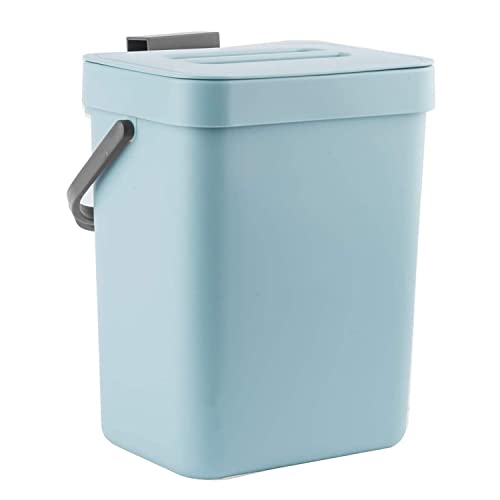
LALASTAR Compost Bin 3L Hanging Bucket (Blue)

LALASTAR Countertop Compost Bin 5L with Lid (Black)

LALASTAR 1.8 Gallon Hanging Compost Bin (Green)
Arkalis 1.3 Gallon Countertop Compost Bin with Lid

Ouaken OK-255 Electric Composter 5.5L

Ouaken 4L Smart Countertop Electric Composter (Black)
A Closer Look At Each Pick
The Reli. bin sits in that comfortable middle ground between bargain plastic pails and the heavier steel setups. At 1.3 gallons it holds a few days of peels, grounds, and trimmings for a couple who cooks nightly, which is the sweet spot most people actually need before walking scraps to an outdoor pile or curbside bin.
Stainless steel construction means the body resists the staining and odor absorption that plague plastic. For anyone moving from a cheap pail to something more permanent, that material upgrade alone tends to justify the step up. Compared to the RED FACTOR dome design reviewed later, this one trades style points for a simpler rectangular footprint that tucks against a backsplash more easily.
Notable Gains
- Dual activated charcoal filters (activated charcoal is carbon treated to trap odor molecules) keep smell contained between emptying days
- Stainless body wipes clean in seconds and resists rust near the sink
- Compact 1.3-gallon size fits under most upper cabinets without dominating counter space
- Tight-fitting lid helps keep fruit flies from investigating your scraps
Worth Noting
- Filters are replaceable parts, meaning a small ongoing cost and a recurring task to swap them every few months
- Capacity may run short for households cooking multiple dishes that generate heavy scrap volume
Key Specs
Made For
Couples and small households who cook most nights and want a sturdy bin that empties once or twice a week.
Consider Something Else When
Families cooking big Sunday dinners will find the LALASTAR 1.8 Gallon Hanging Compost Bin a more comfortable fit, since it handles higher scrap volume without daily emptying.
Electric composters flip the script entirely. Instead of storing scraps until you trek to a curb bin, the Ouaken 4L unit uses high-temperature drying, grinding, and cooling cycles to turn scraps into dry, soil-like amendment you can scoop into a planter. For apartment dwellers with no outdoor access, that closed-loop approach changes what composting even means.
The 4L capacity handles a couple of days of scraps for one or two people before a cycle. Run times vary with what you load, and the low-noise profile keeps it from drowning out kitchen conversation. Compared to the steel pails earlier, this is a different category entirely, more appliance than bin, but the white housing keeps it visually quiet on the counter.
Bright Spots
- High-temperature drying neutralizes odor sources rather than masking them
- Self-contained grinding produces dry amendment ready for houseplants
- Low-noise operation suits open-plan kitchens and shared walls
- Eliminates the outdoor trip entirely, ideal for renters without a yard
Trade Offs
- Electric cost and cycle time mean a different ownership rhythm than passive bins
- Hard scraps like bones and pits may need pre-cutting or skipping
Feature Snapshot
Best Suited To
Apartment dwellers and eco-minded households without access to a yard or municipal compost pickup.
A Better Fit Elsewhere
Traditional gardeners hauling scraps to an outdoor pile will find the Granrosi 1.3 Gallon Bin a quieter, lower-cost alternative that needs no power outlet.
The RED FACTOR bin leans hard into the visual side of countertop composting. The dome-shaped lid gives it a softer silhouette than the rectangular Reli. or Granrosi options, and the Brilliant Steel finish reads as a deliberate design choice rather than a utility pail. For open shelving or exposed counters, that matters more than spec sheets suggest.
Under the styling sits a familiar 1.3-gallon format with dual filter technology and spare filters included. The dome lid swings open easily one-handed during prep, which is a small but real benefit when your other hand holds a peeler. You give up some under-cabinet clearance for the taller lid arc, so measure before committing.
A Few Strong Suits
- Dome lid reads as kitchenware rather than a basic trash pail
- Spare filters included means no rush to source replacements down the line
- Dual filter design aims to contain smell across several days of buildup
- Stainless body cleans with a quick rinse and resists the staining common to plastic
Points To Keep In Mind
- Dome height may not fit beneath cabinets with low trim or under-shelf lighting
- Brilliant Steel finish shows water spots more visibly than brushed finishes
Right Fit For
Style-conscious cooks whose kitchen stays visible and wants a bin that complements the decor rather than hides in a corner.
Look Elsewhere When
Tight under-cabinet clearance is a deal-breaker, since the LALASTAR 5L Countertop Compost Bin uses a flatter lid profile that tucks in more easily.
Granrosi built this bin around a simple promise: three filters in the box, so the first year of ownership requires no shopping trips for replacements. For first-time composters unsure of the rhythm, that buffer removes a small but nagging uncertainty about when and where to reorder.
The farmhouse-inspired silhouette and 1.3-gallon capacity echo the other countertop steel pails on this list, but the wider filter supply is the real differentiator. Filters rated for roughly three to four months each mean a year of daily use before you even think about restocking. If the Reli. bin earlier felt like a starter and the RED FACTOR felt like an upgrade, this one feels like the steady middle.
Practical Advantages
- Three filters included, supporting roughly nine to twelve months of use
- Farmhouse shape with a wide base that resists tipping during one-handed scrap drops
- Standard 1.3-gallon size mirrors other countertop pails for easy routine-building
- Stainless body handles quick rinses without special cleaners
Room For Improvement
- Filter replacement remains a recurring ownership task, just delayed rather than removed
- Lacks the hanging or mounting hardware of the LALASTAR options below
Whose Shelf It Belongs On
First-time composters who want a forgiving setup that does not demand filter research or replacement schedules within the first year.
Swap It Out When
Counter space is at a real premium, since the Arkalis 1.3 Gallon Bin skips filters entirely and ships with a removable inner basket for easier cleaning.
Not every kitchen needs a 1.3-gallon steel pail on the counter. The LALASTAR 3L hanging bucket is built for spaces where every square inch counts: RVs, sailboats, office break rooms, dog-treat prep stations. The 0.8-gallon capacity is small, but it covers a day of scraps for one person before emptying.
The plastic body and lighter weight let it hang from a hook, cabinet door, or under a shelf, freeing counters entirely. Blue is a friendly color choice for a category dominated by steel and black. Compared to the heavier steel pails earlier, this is a different tool: less about visual permanence, more about flexibility and minimal footprint.
What Makes Sense
- Hangs from cabinet doors or hooks, freeing counter space completely
- Lightweight plastic is easy to detach and empty mid-week
- Tight lid blocks the worst of kitchen smells during short holding periods
- Useful beyond kitchens, including RVs, bathrooms, and pet-food prep zones
Small Caveats
- Plastic body does not match the durability of stainless steel over years of daily scrubbing
- Smaller capacity means more frequent trips to the outdoor bin
Who Should Grab It
RVers, office kitchen managers, and anyone with a galley layout who needs scraps off the counter entirely.
Skip It When
Heavier weekly use is the plan, since the LALASTAR 5L Countertop Compost Bin offers more capacity with the same hanging hardware.
The 5L LALASTAR steps up to 1.3 gallons in a body that works equally well on the counter or mounted under a sink. That dual positioning is the real story, since most bins force you to commit to one location at purchase. Black plastic hides splashes and integrates with appliances more easily than bright colors.
For small kitchens where counter and cabinet real estate are both at a premium, the ability to relocate the bin as routines change is genuinely useful. The mounting hardware suits standard cabinet doors, pantry doors, and wall brackets. Compared to the 3L LALASTAR above, the upgrade here is mostly capacity and a quieter visual finish.
Advantages To Know
- Mountable on cabinet doors, walls, or under sinks using included hardware
- 5L capacity suits a small family’s weekly accumulation between emptying days
- Black finish hides splashes and pairs with most appliance lines
- Tight lid blocks fruit flies and reduces odor escape during short holds
A Few Limitations
- Plastic body absorbs odors more readily than steel over multi-year use
- Wall mounting adds a step to setup that countertop bins skip
Built With In Mind
Small households that need flexibility between under-sink mounting and countertop placement as kitchen layouts change.
Reach For A Different Pick When
Durability matters more than mounting flexibility, since the Arkalis 1.3 Gallon Bin uses stainless steel construction built for years of heavy scrubbing.
The 1.8-gallon LALASTAR is the largest hanging bin in this roundup, sized for households that cook most nights and generate real scrap volume. Hanging it from a cabinet door frees up counter space that a similar-capacity steel pail would otherwise claim, which is the whole pitch.
Green plastic reads as a deliberate kitchen choice rather than utility equipment. The sealed lid and fruit fly resistance matter more here than on smaller bins, since larger capacity means longer holds between empties. For families who batch-cook or cook once for leftovers across the week, this is the size that finally stops the daily emptying ritual.
Everyday Wins
- 1.8-gallon capacity handles multi-day accumulation for a small family
- Hangs on standard cabinet doors up to a typical thickness
- Sealed lid design blocks fruit flies better than loose-fitting alternatives
- Plastic body keeps the bin light enough to mount without reinforcement
Honest Caveats
- Larger capacity takes longer to fill, meaning odors have more time to build before emptying
- Plastic construction ages with heavy scrubbing more visibly than steel alternatives
Who Will Love This
Small families and frequent home cooks who need multi-day capacity without giving up counter space to a stationary pail.
Another Choice May Suit
A solo cook in a tight space will find the LALASTAR 3L Hanging Bucket a more comfortable fit, since smaller capacity means shorter holds and lighter loads.
Most countertop composters rely on charcoal filters, which means a recurring replacement task and a small ongoing cost. The Arkalis bin skips filters entirely, using a tight-fitting lid as its sole odor strategy. For minimalists who want one less thing to reorder, that single design choice reframes the whole ownership experience.
The removable basket inside the body is the second practical move. Pulling the basket out separates solids from liquids and lets you rinse the messy part under the tap without hauling the whole pail to the sink. Compared to the filter-equipped bins above, this trades ongoing filter costs for stricter discipline about emptying on time.
Points In Its Favor
- No charcoal filters means no replacements, no shopping list, no extra cost over years
- Removable inner basket simplifies the part of the job most people dislike: cleaning
- Tight lid design handles everyday kitchen scraps with a snug seal
- Standard 1.3-gallon capacity fits the same routines as other countertop pails
Some Limits To Know
- Without charcoal filtration, longer holds between emptyings may allow more odor escape
- Disciplined weekly emptying matters more than with filter-equipped bins
Feature Card
Perfect Match For
Minimalists and first-time composters who want a low-maintenance bin without filter subscriptions or recurring tasks.
Where A Sibling Pick Shines
Households with heavy weekly scrap volume benefit from the Granrosi 1.3 Gallon Bin, where multiple charcoal filters give more headroom between cleanings.
The OK-255 is the bigger sibling of the 4L Ouaken earlier. At 5.5L it sits squarely in heavy-duty territory, aimed at larger households that would overwhelm a smaller electric unit between cycles. The flatter, oval profile is a thoughtful shape choice that adapts to wider counter runs where circular footprints feel awkward.
Like the smaller Ouaken, this one uses high-temperature drying and grinding to reduce scraps into dry amendment. The larger capacity translates directly into fewer cycles per week, which means lower cumulative noise exposure for open-plan homes. For households already considering an electric composter, sizing up tends to feel like the right call once you picture a week of meal prep.
The Case For It
- 5.5L capacity handles multi-day accumulation for families cooking nightly
- Oval footprint tucks along wider counter runs more naturally than round bins
- High-temp processing neutralizes odor sources rather than masking them
- Reduces trips to outdoor bins entirely, valuable for high-rise living
Potential Drawbacks
- Bigger body demands dedicated counter real estate that smaller units do not
- Higher electrical draw and longer cycle times than 4L models under heavy loads
Quick Facts
The Right Fit
Larger households and serious meal planners who run smaller electric composters hot and want fewer cycles per week.
Consider Something Else When
Solo cooking in a tight space will find the Ouaken 4L Electric Composter a more manageable footprint that still handles daily scraps.
The black version of the Ouaken 4L electric composter shares its core engineering with the white model reviewed earlier but adds an auto-cleaning cycle, which addresses the single most common complaint about countertop electric units. Anyone who has scrubbed residue from a grinder chamber knows why that feature earns a spot on the spec sheet.
The black housing reads more like a serious appliance than a white kitchen accessory, which suits modern kitchens with darker palettes. Low-noise operation matters more in households where the composter runs during evening cooking. Compared to passive bins, the trade-off is power and noise; compared to other electric units, the auto-clean cycle is the practical edge.
What It Does Well
- Auto-cleaning cycle cuts the deepest maintenance chore of electric composters
- Low-noise mode keeps operation discreet during evening cooking hours
- 4L capacity matches typical daily scrap volume for one or two cooks
- Black finish integrates with stainless and dark appliance suites
Worth Bearing In Mind
- Auto-clean adds cycle time you can hear running, even if quieter than the grind itself
- Hard scraps like bones and pits still need pre-treatment before loading
Technical Highlights
Built With In Mind
Tech-forward households who already use smart kitchen gear and want a composter that fits the same ecosystem.
Skip It When
Simplicity matters more than features, since the RED FACTOR 1.3 Gallon Bin handles basic composting without electronics, cycles, or power outlets.
Factors To Weigh When Choosing Small Composters
Match Capacity to Real Scrap Volume
Capacity looks like a number on a spec sheet, but the practical question is how often you can empty. A solo cook who shops twice a week generates far less scrap volume than a family of four batch-cooking on Sundays. The 0.8-gallon LALASTAR bucket fits the first profile; the 1.8-gallon hanging bin fits the second. Mismatching size to volume either forces daily emptying or creates long holds that stress odor control. Think about your worst cooking day, not your average one.
Decide Between Passive Storage and Active Processing
This is the most fundamental split in the category. Passive bins like the Reli., RED FACTOR, and Granrosi units hold scraps until you walk them outside. Active electric composters like the Ouaken 4L and OK-255 turn scraps into dry amendment on the counter. Your yard access, gardening plans, and tolerance for appliance cycles decide which side fits your routine.
Filter Strategy Changes Ownership
Charcoal filters absorb odors but cost money and require replacement tracking. The Granrosi ships three filters for roughly a year of use; the Arkalis skips filters entirely and relies on a tight lid. Filter-free designs demand more disciplined emptying, while filter-equipped bins let you stretch holds a bit longer. Neither approach is wrong, but knowing your own routine helps avoid surprises.
Material Affects Longevity and Look
Stainless steel resists stains and odors but shows water spots and adds visual weight. Plastic hides splashes, mounts more easily, and weighs less, but ages faster under heavy scrubbing. Choose based on your kitchen’s aesthetic and how long you want the bin to last before visible wear sets in.
Where the Bin Lives Drives the Size
Countertop placement favors compact 1.3-gallon pails with low profiles. Under-sink or cabinet-door mounting opens up the hanging LALASTAR options and frees working surfaces. Measure the actual space before buying, since dome lids and taller housings add inches that spec sheets understate.
Common Slip-Ups and Smart Upgrades
Mistakes Worth Dodging
Choosing by capacity alone ignores how often you realistically empty. A 1.8-gallon bin saves trips but stretches odor exposure, and a smaller bin feels constant if you cook nightly. Match capacity to your most demanding cooking day rather than the easiest one. Also worth weighing: passive bins depend on a downstream system, municipal pickup, a backyard pile, or a community garden, so an electric composter may suit you better if that handoff is unreliable.
Where the Extra Money Goes
Higher-tier electric composters cost more because they handle capacity, noise, and cleaning differently than basic units. The Ouaken OK-255 5.5L and the auto-cleaning 4L black model both tackle chores that smaller or simpler units push onto you, including longer cycles, manual scrubbing, and higher noise. For households generating real scrap volume daily, that upgrade pays off in lower cumulative maintenance time. For occasional use, the basic tier is the smarter spend.
Frequently Asked Questions
How often do you need to empty a small composter?
Most 1.3-gallon countertop bins need emptying every three to five days for a couple cooking nightly, while larger hanging bins can stretch to a week. Electric composters finish their own cycle rather than needing emptying on a schedule.
Do charcoal filters really make a difference?
Yes, they absorb odor molecules that would otherwise escape when you open the lid. Filters last a few months each, and replacing them on schedule keeps the bin usable between emptying days.
Are electric composters worth it over basic bins?
For households without outdoor compost access, electric units replace the missing handoff and produce usable amendment on the counter. For everyone else, passive bins are simpler and quieter.
Can you put meat and dairy in a small composter?
Passive bins are usually limited to fruit, vegetables, and plant scraps to avoid odor and pest issues. Electric composters handle broader scraps because their high-temperature drying neutralizes sources of smell and decay.
How do you clean a countertop composter without damaging it?
Stainless steel bins rinse cleanly with warm water and mild soap, while plastic bodies do well with a baking soda scrub. Removable inner baskets, like the Arkalis design, make the deepest cleaning much faster.
Closing Remarks
The right small composter depends less on features than on your kitchen rhythm. Solo cooks and small households often do best with a simple 1.3-gallon steel bin and a weekly trip outside. Larger families, frequent cooks, and anyone without a yard will find electric countertop units change what composting means in a small space. Pick the format that matches how you actually cook, then let capacity and material follow from there.
