

A fresh garden bed shouldn’t demand a full afternoon of back-breaking digging. The new wave of compact, battery-powered cultivators makes quick work of loosening soil, mixing in compost, and turning stubborn patches into plant-ready ground, all without the noise, fumes, or extension cords of older models. Walk into any home and garden shop right now and you’ll find a wall of small tillers that look similar at first glance, then diverge sharply once you compare tine width, battery capacity, and whether the body accepts the battery platform you already own.
For backyard vegetable beds, flower borders, and raised planters under a few hundred square feet, the right mini tiller saves real time. We’ve narrowed nine solid options across cordless and corded categories, from featherweight cultivators for seniors to brushless workhorses for compacted clay.
The Leading Options At A Glance

Cordless Tiller Cultivator for Gardening, Battery Powered

Seesii 40V Cordless Tiller for Gardening, 12″
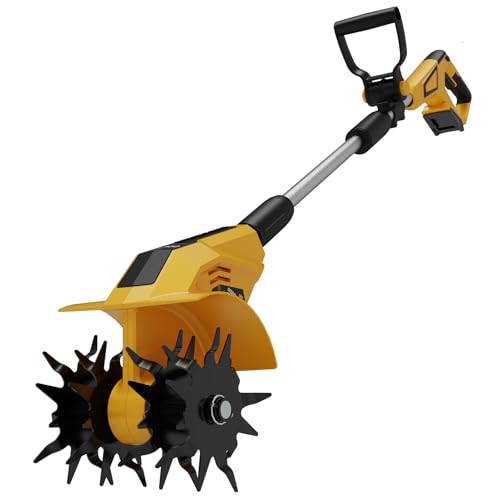
Brushless Cordless Tiller Cultivator for Dewalt 20V Max

Zericuf 21V Cordless Garden Tiller 8.0Ah 3-Stage

Zericuf 21V Cordless Tiller Cultivator 8.0Ah SK5
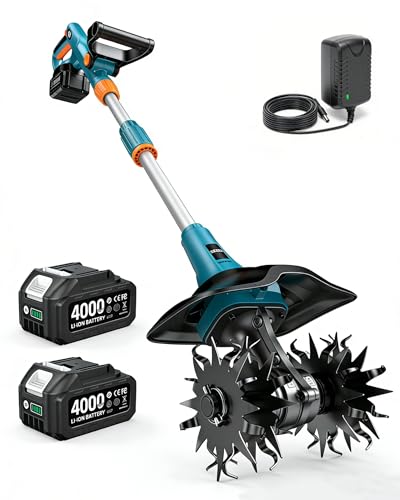
Seesii 20V Cordless Tiller Cultivator for Gardening

FORDWALT Cordless Garden Tiller for Dewalt 20V Max

Earthwise TC70065EW 11-Inch 6.5-Amp Corded Tiller

Seesii Mini Cordless Tiller Cultivator 20V
The Strengths Of Each Pick
The TaskStar lands first because it threads the needle most gardeners actually want, versatile enough for spring bed prep, light enough to carry one-handed, and simple enough that the learning curve is more of a step than a climb. Battery power means there’s no extension cord to drag across the lawn or reel back up afterward, and the tool swaps between tilling, cultivating, and mixing compost without a separate attachment.
Where this model earns its spot is in the messy middle ground of suburban gardening: weekend vegetable patches, established flower borders, and the kind of clay-heavy soil that laughs at hand tools but doesn’t need a gas engine. It cuts a reasonable path per pass and stays controllable around existing plants.
The Value In It
- Cordless freedom removes trip-hazard cords and limits on where you can work
- Multi-task design handles tilling, cultivating, and compost mixing in one tool
- Lightweight frame suits a wide range of gardeners without fatigue complaints
- Battery platform lowers entry cost if you already own compatible cells
Things To Consider
- Not designed for breaking truly compacted or rocky ground on the first pass
- Run time depends heavily on the amp-hour battery you pair it with
Key Product Details
Made For
Backyard gardeners juggling vegetable beds, flower borders, and compost top-dressing on a single afternoon.
Reach For A Different Pick When
Someone managing a larger plot with compacted soil should look at the Seesii 40V Cordless Tiller for its wider working path.
Where the TaskStar handles gentle work, the Seesii 40V brings more muscle to the party, in the form of a 40-volt battery platform that pushes harder through compacted clay, stubborn roots, and neglected corners of an established garden. The 12-inch working width means each pass covers more ground, which adds up fast across a mid-sized vegetable plot or a freshly reclaimed lawn strip.
For raised beds and tight borders, the smaller tilling footprint gives you enough precision to work between existing plants without slicing through roots. Setup is straightforward enough to start the same day the box arrives, which matters when the planting window is closing.
Practical Pluses
- 12-inch tilling width reduces total passes for mid-sized plots
- 40V motor handles clay and compacted ground more confidently than 20V rivals
- Cordless design reaches garden corners far from any outlet
- Compact enough to navigate around raised beds and established plantings
Honest Caveats
- Heavier than 20V cultivators, which may tire out smaller users during long sessions
- Charger and batteries may ship as a separate purchase depending on the bundle
Whose Shelf It Belongs On
Mid-sized plot owners and serious food gardeners who want cordless convenience without giving up tilling muscle.
Look Elsewhere When
Seniors or anyone with grip strength concerns should consider the Seesii Mini Cordless Tiller Cultivator instead, since it weighs a fraction of this model.
The brushless motor is the headline feature here, and it’s worth explaining: brushless motors use electronic controllers rather than physical brushes to manage the motor, which generally means more torque per charge, longer motor life, and less heat buildup under load. For a tiller, that translates to more confident digging through tough patches and a tool that should last several seasons of regular use.
Compatibility with Dewalt 20V Max batteries makes this a no-brainer if your garage already holds a drill, impact driver, or string trimmer using that platform. No need to invest in a second battery ecosystem, just slide in the cell you already own.
Strong Points
- Brushless motor delivers stronger torque and longer service life than brushed equivalents
- Accepts existing Dewalt 20V Max batteries, saving the cost of a new platform
- 800W motor output handles compacted soil that frustrates smaller cultivators
- Cordless convenience without sacrificing the muscle of a corded tool
Points To Note
- Batteries and charger are not included, which adds to the total cost for new buyers
- Heavier than entry-level cultivators due to the robust motor housing
Best Suited To
Dewalt 20V Max owners who want to add tilling capability without buying into another battery platform.
Swap It Out When
Anyone without an existing Dewalt collection will get better value from the FORDWALT Cordless Garden Tiller Cultivator, which targets the same ecosystem at a more accessible entry point.
Zericuf’s 3-stage adjustable design solves a real problem most cultivators ignore: not every gardener is the same height, and not every bed is the same distance from the ground. The shaft can shift between a full-height mode for taller users and a shorter configuration that brings the handles down to raised planters and tight flower borders. That same adjustability makes it easier to share the tool across a household.
The 9-inch tilling width and 8.6-inch working depth cover most backyard bed prep without overshooting into “I just wanted a small tiller” territory. SK5 steel blades are a notable upgrade, since SK5 is a high-carbon tool steel that holds an edge and resists bending better than standard carbon steel when it meets the occasional buried rock.
A Strong Showing
- 3-stage adjustable shaft fits multiple users and bed heights in one tool
- SK5 steel blades resist wear and bending better than standard tines
- Two 4.0Ah batteries extend runtime for longer sessions
- Reasonable 9-inch width balances speed with precision in tight beds
Worth Bearing In Mind
- 21V motor is less aggressive than 40V options on first-pass hard ground
- Multi-piece shaft assembly adds setup steps out of the box
Feature Snapshot
Who It Suits Best
Multi-user households where one tiller gets passed between taller and shorter gardeners, or anyone working raised beds at varying heights.
Not Your Match When
Owners of large open plots who want fewer passes per row will find the wider 12-inch Seesii 40V Cordless Tiller a more efficient choice.
This second Zericuf model shares much of the hardware with the previous pick, including the same SK5 steel blades, 9-inch working width, and 8.6-inch depth, but it leans more toward seasoned gardeners who work their plots weekly rather than seasonally. The dual-battery setup means you can keep one charging while the other runs, effectively eliminating downtime on longer Saturday morning sessions.
Where it differs in feel is the 3-stage adjustment being framed for repeated position changes throughout a session: full height for open vegetable rows, mid-height for transition areas, and compact mode for finishing around drip lines and existing perennials. The honest read is that most owners leave it in one configuration and switch only between major tasks.
What Works In Its Favor
- Dual 4.0Ah batteries keep the tool running through extended sessions
- SK5 blade steel holds up to repeated contact with abrasive soil
- 3-stage height adjustment handles varied bed types without swapping tools
- Cordless design suits gardeners without easy outdoor power access
Trade-Offs To Consider
- Nearly identical performance to the previous Zericuf model, so choose based on feature priorities
- 21V platform underperforms 40V options when breaking truly compacted ground
- Two batteries add bulk to storage if space is limited
At A Glance
Perfect Match For
Active gardeners who till weekly through the growing season and want continuous coverage without battery downtime.
A Better Fit Elsewhere
Casual gardeners who only run a tiller twice a year will find the TaskStar Cordless Tiller Cultivator a simpler, lighter alternative.
Seesii’s 20V cultivator sits in the practical middle of the lineup: lighter than the 40V workhorses, more capable than featherweight one-hand tools, and built for the gardener who treats tilling as a regular chore rather than an annual expedition. The all-in-one design claims to handle tilling, loosening, mixing, and aerating in a single body, which removes the friction of swapping attachments between beds.
For small to medium flower borders and the kind of vegetable beds that get refreshed every spring, this model lands in comfortable territory. The 20V battery platform keeps the tool light enough to maneuver one-handed around delicate perennials.
Points In Its Favor
- All-in-one design handles multiple soil tasks without attachment swaps
- 20V battery platform keeps weight manageable for most users
- Cordless operation reaches beds far from any outdoor outlet
- Reasonable price point for first-time cultivator owners
Trade Offs
- 20V motor struggles on compacted or previously untilled ground
- Battery runtime is shorter than higher-voltage platforms
Right Fit For
Gardeners maintaining existing beds that need regular refreshing rather than breaking new ground from scratch.
Skip It When
Anyone facing heavy clay or lawn-to-garden conversion will want the extra voltage of the Seesii 40V Cordless Tiller.
The FORDWALT shares the same Dewalt 20V Max battery compatibility as the QESOO brushless model reviewed earlier, but it takes a more accessible, lighter approach. For gardeners who already own a few Dewalt tools and want a no-frills cultivator to round out the collection, this is the kind of tool that earns its place by being ready when needed and simple to operate.
The 300W output and 270 RPM rotation cover typical backyard soil with confidence, though they fall short of the brushless model’s muscle on truly compacted ground. Storage is easy thanks to a compact body that slides onto a shelf or hangs from a wall hook.
What Earns Its Place
- Slides into existing Dewalt 20V Max battery collection without new investment
- Lightweight body reduces fatigue during typical backyard sessions
- Compact form factor stores easily in sheds and garage corners
- Straightforward operation suits gardeners who prefer simple controls
A Few Limitations
- 300W output is less powerful than brushless or 40V alternatives
- Tool-only bundle means batteries and charger must be purchased separately
- Not the right choice for breaking new ground from sod
Quick Facts
Who Will Love This
Dewalt 20V Max collectors who want a simple, lightweight cultivator to handle routine bed maintenance.
Another Choice May Suit
Gardeners needing more torque should pick the QESOO Brushless Cordless Tiller Cultivator, which uses the same battery platform with a stronger motor.
The Earthwise TC70065EW earns its place on this list by doing something most modern cordless models can’t: running indefinitely. As long as you have a standard outdoor outlet and a heavy-duty extension cord, the 6.5-amp motor keeps turning soil without pause for battery swaps or charging breaks. For gardeners with established beds near the house, this removes a layer of hassle the cordless category can’t match.
The 11-inch working width sits between the smallest cultivators and the wider mid-range models, covering a respectable strip per pass. Four steel tines handle typical garden soil competently, and the single-lever switch keeps startup foolproof. Where it falls short is anywhere beyond cord reach.
Real-World Strengths
- Unlimited runtime when plugged into an outdoor outlet
- 6.5-amp motor handles typical garden soil with steady power
- 11-inch width covers a reasonable area per pass
- Single-lever switch starts reliably every time
- Soft ergonomic grip reduces hand fatigue
Practical Considerations
- Cord limits mobility and creates trip hazards around the garden
- Requires a heavy-duty outdoor extension cord, which is an added cost
- Not suited for gardens far from any power source
Feature Rundown
Built With In Mind
Gardeners with beds close to the house who value unlimited runtime and simple operation over cordless convenience.
Consider Something Else When
Anyone working beds at the far end of a large yard should pick the TaskStar Cordless Tiller Cultivator instead, since dragging an extension cord across a lawn gets old quickly.
The Mini Cordless Tiller lives at the opposite end of the spectrum from the heavy-duty models, and that is exactly the point. At roughly 2.6 pounds, it weighs less than a bag of flour, which makes it approachable for seniors, apartment gardeners with balcony beds, and anyone who has tried a full-size cultivator and decided it was more tool than they wanted to wrestle.
For one-handed operation in tight spaces, the Mini earns its keep: between patio containers, around established perennials, and along narrow bed edges where a wider tiller would do more damage than good. Two included batteries extend runtime enough to finish a small balcony project without sitting on the charger.
The Helpful Details
- Featherweight 2.6 lb body reduces hand and arm fatigue
- One-handed operation suits seniors and limited-mobility gardeners
- Two included batteries minimize downtime on small projects
- Cordless design works anywhere, including balconies and patios
Some Limits To Know
- Compact size limits it to small bed and container work
- Light motor cannot break new ground or compacted soil
- Not the right tool for larger vegetable plots
The Right Fit
Seniors, apartment dwellers, and anyone maintaining small containers or tight flower borders who values lightweight handling over tilling muscle.
Where A Sibling Pick Shines
Gardeners with raised beds or larger plots will find the Zericuf 21V Cordless Garden Tiller offers more substantial tilling in a still-adjustable package.
What Matters Most Before Choosing Small Garden Tillers
Choosing a small garden tiller comes down to honest answers about your soil, your body, and your typical project. A cultivator that thrills one gardener can frustrate another, and the gap usually traces back to a mismatch in tilling width, battery capacity, or shaft ergonomics.
Tilling Width And Depth
Working width is the first number most shoppers compare, and for good reason. A 9-inch cultivator covers a respectable bed strip per pass and fits easily between existing plants. A 12-inch model halves the number of passes across an open vegetable plot, but it also becomes harder to maneuver in tight borders. Depth matters too, since most small tillers reach 8 to 9 inches, enough for typical vegetable root zones but not for deep soil renovation.
Battery Platform And Voltage
Cordless tillers run on battery platforms ranging from 20V to 40V, and the gap shows up clearly in compacted soil. A 20V cultivator handles maintained beds with ease but stalls on first-pass hard ground. A 40V or brushless motor pushes through with more confidence, though it adds weight and cost. If you already own a battery platform from a major brand, choosing a compatible tool eliminates the charger and battery expense entirely.
Comfort And Adjustability
Shaft height, grip ergonomics, and total weight determine whether you finish the project or abandon it halfway. Multi-user households benefit from adjustable shafts that fit different heights. Seniors and anyone with grip concerns should prioritize models under 5 pounds for one-handed comfort, even if that means smaller tilling width per pass.
Corded Versus Cordless
Corded tillers offer unlimited runtime but tether you to an outdoor outlet, which becomes a real limitation across larger properties. Cordless models trade runtime for mobility, with battery swaps or fast chargers closing the gap. For gardeners with beds clustered near the house, corded remains a sensible choice; for anything spread across a yard, cordless pays off quickly.
Things Worth Knowing Before You Buy
A few patterns come up again and again when shoppers compare small garden tillers, and steering around them saves time and money.
Common Buying Slip Ups
The most frequent mistake is matching voltage to bed size without considering soil type. A 20V cultivator handles loose, previously-tilled soil beautifully, but stalls on compacted clay or lawn-to-garden conversion. The flip side is overbuying: a 40V brushless model on a small balcony bed is more tool than the space needs, and the extra weight becomes a burden rather than a benefit. Buyers also underestimate extension cord requirements for the corded Earthwise, which needs a heavy-duty outdoor cord rated for the motor’s draw.
Why Premium Models Cost More
Higher-tier tillers earn their price through brushless motors (longer life, more torque per charge), higher-capacity batteries (longer runtime per swap), and tougher blade materials like the SK5 steel used in the Zericuf models. Adjustable shafts and dual-battery bundles add cost but reduce fatigue and downtime. The upgrade makes sense for gardeners who till weekly through the growing season, while casual users get everything they need from entry-level cordless or corded options.
Frequently Asked Questions
How wide should a small garden tiller be?
For typical backyard beds, a 9 to 11-inch tilling width balances speed with control. Narrower cultivators under 7 inches work best for tight flower borders and containers, while wider 12-inch models suit open vegetable plots with straight rows.
Are cordless tillers powerful enough for hard soil?
Cordless tillers with 40V or brushless motors handle moderately compacted soil well, but heavily compacted clay or unbroken sod still calls for a gas-powered machine. For maintained beds that need regular refreshing, modern cordless tillers offer plenty of muscle.
Can seniors use small garden tillers safely?
Lightweight cultivators under 5 pounds, like the Seesii Mini, work well for seniors with one-handed operation and simple controls. Adjustable-shaft models also help, since the handle height can match the user rather than forcing awkward posture.
How long does a battery last on a cordless tiller?
Most 20V cultivators deliver 30 to 45 minutes of runtime per 4.0Ah battery under typical use, while 40V models often extend past an hour. Dual-battery bundles effectively double that window, and fast chargers shorten the wait between sessions.
Should I get a corded or cordless tiller?
Choose corded if your beds sit close to an outdoor outlet and you value unlimited runtime. Choose cordless for mobility, easy storage, and beds spread across a yard. Both deliver similar results in maintained soil, so the decision usually comes down to your property layout.
Closing Remarks
The right small garden tiller turns a dreaded chore into a manageable afternoon, and the best match depends less on specs than on your soil, your body, and where your beds actually sit. Cordless convenience suits most modern backyards, while corded simplicity still wins near an outdoor outlet. Match the tool to the project, and the rest of the season tends to take care of itself.
