

Walking out to a soaked patio at midnight because you forgot to shut the hose, again, gets old fast. Smart hose timers quietly take over that chore so lawns stay green while you travel, sleep in, or just enjoy the weekend. This roundup looks at eight app-friendly and dial-friendly options that automate watering without turning your hose bib into a wiring project.
A Snapshot Of The Selections

RAINPOINT Sprinkler Timer Outdoor, Programmable Hose Timer

RAINPOINT Sprinkler Timer with Metal Inlet

Underhill AquaZone Digital Hose Timer

LinkTap G2S Smart Hose Timer & Gateway
RAINPOINT WiFi Water Timer, Brass Inlet & Outlet

Insoma Sprinkler Timer with Brass Inlet
meross WiFi Water Timer, Rain Skip, Hub Included
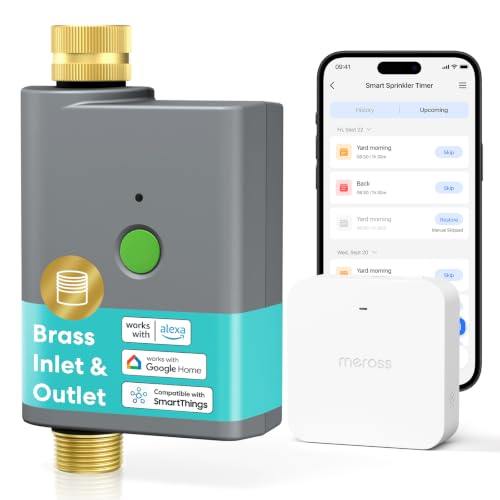
meross WiFi Water Timer, Brass Inlet & Outlet
A Breakdown Of The Leading Choices
If you have never programmed a hose timer before, this plastic-bodied RAINPOINT model earns its place at the top of the shortlist. The wide LCD screen shows watering time, frequency, and remaining battery at a glance, which removes the guesswork that usually sends first-timers back to the manual. For most suburban patios with a single hose run, that clarity is the real win.
Setup follows the usual dial-and-button pattern, and a built-in inlet filter keeps grit from clogging the valve over a long summer. Rain delay and manual override cover the two situations people actually care about: a surprise downpour and a quick rinse without resetting the schedule.
Advantages To Know
- Large LCD display makes schedule review easy without squinting.
- Built-in inlet filter reduces clogging from well or hard-water sediment.
- Rain delay plus manual override cover real daily-use scenarios.
- Lightweight plastic body is simple to mount on a standard hose bib.
Things To Consider
- Plastic inlet threads may strip faster than brass under heavy daily use.
- Single-zone design suits basic yards but limits larger landscapes.
Who It Suits Best
First-time timer owners with a small lawn, a single hose run, and no need for app control.
Skip It When
You need smartphone control on the road, in which case the LinkTap G2S Smart Hose Timer & Gateway offers app-based scheduling.
This RAINPOINT version shares the friendly LCD and dial controls of the plastic model above, then swaps the inlet hardware for metal threads and a metal mesh filter. The upgrade is small on paper and meaningful in practice: brass-style threads resist cross-threading and gasket fatigue over years of seasonal hookups. For gardens where the timer stays installed through summer and winter, the sturdier hardware justifies itself.
Programming logic is identical, so anyone trading up from the entry-level RAINPOINT can move schedules over without relearning anything. Rain delay, manual run, and frequency dials all carry over.
The Value In It
- 360-degree metal inlet and metal filter add real durability where plastic often fails.
- Same straightforward LCD programming as the lighter RAINPOINT model.
- Rain delay keeps watering in sync with actual weather, saving water over a season.
Worth Noting
- Still a single-zone controller with no WiFi or app option.
- Slightly heavier body needs a solid mount on softer hose bibs.
Made For
Gardeners who run a timer most days through the growing season and want fewer mid-summer leaks.
Reach For A Different Pick When
You want voice or app control at the spigot, in which case the RAINPOINT WiFi Water Timer with Brass Inlet & Outlet fits better.
The AquaZone steps up from single-hose convenience into genuine multi-zone irrigation thinking. Its programmable controller is aimed at sprinklers, drip lines, and garden hose faucets running side by side, which suits homeowners with mixed beds, a vegetable row, and a lawn strip that all want different schedules. Where the RAINPOINT picks handle one hose run, this one thinks in zones.
The interface stays dial-and-button rather than app-driven, so you do not need a hub, router password, or smartphone to get going. For installers who want set-it-and-forget-it behavior without pairing headaches, that matters.
Everyday Wins
- Multi-zone programming handles sprinklers and drip systems from one controller.
- Clear LCD keeps setup straightforward even without a smartphone.
- Works with standard garden hose faucets as well as dedicated irrigation lines.
Honest Caveats
- Lacks WiFi and remote app control that travel-heavy owners may want.
- Programming multiple zones takes longer the first time than a single-zone dial.
- More features than a casual gardener with one flower bed needs.
Quick Facts
Best Suited To
Landscapers and serious homeowners running several irrigation zones from the same faucet area.
Look Elsewhere When
A single flower bed is all you water, in which case the Insoma Sprinkler Timer with Brass Inlet keeps things simpler.
The LinkTap G2S breaks from the dial-timer crowd with a wireless gateway and a phone app that handles scheduling, manual runs, and weather-adaptive control. You adjust watering from the office, the airport, or the couch, which solves the classic summer problem of a surprise dry spell hitting while you are out of town. Real-time alerts about flow and leaks add a layer of confidence a simple dial cannot match.
The advertised two-year battery life keeps maintenance low, so the timer feels more like a set-and-monitor device than another gadget to babysit. For tech-comfortable gardeners who already use smart-home apps daily, the learning curve is small.
What Stands Out
- Weather-adaptive scheduling trims watering when rain is already on the way.
- 24/7 flow monitoring with instant alerts flags leaks before they soak a patio.
- App control from anywhere removes the need to walk to the spigot for every tweak.
- Two-year battery life keeps ownership hassle to a minimum.
Trade Offs
- Gateway must stay plugged in indoors and paired with your WiFi router.
- App-based setup is less intuitive for shoppers who prefer physical dials.
Quick Facts
Whose Shelf It Belongs On
Frequent travelers and second-home owners who need to manage watering from a distance.
A Better Fit Elsewhere
The meross WiFi Water Timer with Hub Included fits households already invested in a smart-home ecosystem.
This is the dial-free evolution of the RAINPOINT line, pairing 2.4GHz WiFi connectivity with brass fittings on both inlet and outlet. The companion app handles schedules from a smartphone, and voice control fits naturally into homes that already use a smart speaker for lights and locks. Compared to the metal-inlet RAINPOINT timer earlier in this list, the jump is mostly about brains rather than brawn.
Automatic weather-based rain delay skips cycles when storms roll through, which matters more in climates with sudden summer downpours than in steady-soak regions. The dual-brass build still keeps it a strong outdoor performer.
Positive Takeaways
- Voice and app control integrate with most smart-home routines.
- Brass inlet and outlet extend service life in sun-exposed installs.
- Weather-based rain delay avoids watering right after a storm.
Room For Improvement
- Only works with 2.4GHz WiFi, which can frustrate owners of newer dual-band routers.
- App-dependent setup means no backup dial if your phone is missing.
Feature Snapshot
Right Fit For
Smart-home enthusiasts who want voice-activated watering without giving up outdoor-grade fittings.
Not Your Match When
You avoid app-driven gadgets, in which case the RAINPOINT Sprinkler Timer with Metal Inlet stays dial-simple.
The Insoma timer leans hard into flexible scheduling, which is exactly what gardeners juggling vacation coverage and seasonal shifts want. Frequency runs from every hour up to every 15 days, and durations stretch from one minute to several hours, so you can dial in anything from a quick vegetable patch misting to a long soak for new sod. The brass inlet adds welcome durability to a category that often leans plastic.
Auto, manual, and rain delay modes cover the everyday switches, and the single-outlet design keeps wiring-free installation quick. You will not get app control, but you also will not troubleshoot a router to water a lawn.
What Works In Its Favor
- Wide frequency and duration range fits everything from seedlings to established lawns.
- Three modes, including auto, manual, and rain delay, handle daily adjustments cleanly.
- Brass inlet threads resist wear across seasonal hookups.
Some Limits To Know
- Single outlet limits use to one hose run at a time.
- No app or voice integration for remote adjustments.
- Display can be hard to read in direct midday sun.
Who Should Grab It
Vacation-mode gardeners who want detailed scheduling without adding a smart-home layer.
Consider Something Else When
You want remote control during travel, where the LinkTap G2S Smart Hose Timer & Gateway handles that role.
meross ships this kit with the hub in the box, which removes the most common smart-timer frustration: buying a timer and then discovering you need a separate bridge. Owners with HomeKit households especially benefit, since the MSH400 hub supports voice and remote control after a firmware update. The IP65 rating (a standard for dust-tight and water-jet-resistant enclosures) helps the timer shrug off hose-splash zones.
Rain skip logic looks at upcoming forecasts and adjusts cycles accordingly. For households already running meross smart plugs and switches, this drops into the same app without much fuss.
Bright Spots
- Hub bundled means no extra accessory purchase to get started.
- IP65 enclosure handles splash and dust at outdoor spigots.
- Rain skip uses forecast data to skip unnecessary cycles.
- HomeKit compatibility after firmware update for Apple households.
Points To Keep In Mind
- Power compartment needs a screwdriver to open for cell replacement, adding a small hassle.
- Hub-dependent design means a hub failure stops watering until it is restored.
Feature Card
Perfect Match For
HomeKit households that want a hub-bundled smart hose timer ready to install out of the box.
Swap It Out When
You already own a meross hub and want to skip paying for another, in which case the meross WiFi Water Timer with Brass Inlet & Outlet is the no-hub route.
The hub-free version of the meross timer trades the bundled bridge for brass fittings on both inlet and outlet. For shoppers who already own an MSH400 or MSH450 hub and just want a sturdier outdoor unit, this skips the duplicate hardware. Brass at both connection points is a quiet upgrade that pays back over years of seasonal hookups.
Rain skip still pulls from local forecast data to pause watering when storms approach. The smart-home experience matches the hub-included model above, just without the extra box on the shelf.
A Few Strong Suits
- Brass inlet and outlet improve long-term durability at the spigot.
- No-hub design saves shelf space for owners with existing meross hardware.
- Rain skip avoids wasteful watering around incoming storms.
Where It May Fall Short
- Requires an existing meross MSH400 or MSH450 hub with the right firmware.
- Hub-less purchase is a poor fit for newcomers to the meross ecosystem.
At A Glance
Built With In Mind
Existing meross users who want a brass-fitted, hub-free upgrade for a permanent outdoor install.
Where Another Pick Suits Better
First-time smart-timer shoppers should consider the meross WiFi Water Timer with Hub Included instead, which avoids extra setup steps.
What To Weigh Before Picking A Smart Hose Timer
Connectivity And Hub Requirements
Some timers talk straight to a home router over 2.4GHz WiFi, while others need a small bridge called a hub that stays plugged indoors and relays signals. Hubs add a piece of hardware to manage, but they often support broader smart-home platforms like HomeKit or Alexa (a common voice assistant used for smart-home control). Pick a WiFi-direct model if you want one less box, or pick a hub-based kit if you already use that ecosystem or want HomeKit support. Either approach works reliably when installed within reasonable WiFi range of the spigot.
Build Materials And Outdoor Durability
A timer spends its life in the sun, the rain, and the occasional frost, so inlet and outlet fittings matter more than they look. Brass threads resist cross-threading and gasket damage far better than plastic, especially on hose bibs that get disconnected and reconnected each season. Plastic bodies are lighter and cheaper, which suits basic installs, while brass fittings suit permanent outdoor mounts.
Scheduling Flexibility
Frequency options (how often watering repeats) and duration options (how long each cycle runs) decide whether a timer matches your garden’s actual needs. Lawns want longer, less frequent runs; flower beds often want shorter, more frequent drinks. Rain delay or rain-skip features use sensor or forecast data to skip cycles after storms, which avoids the classic waste of watering a soaked lawn.
App Control Versus Dial Simplicity
App-controlled timers shine for travelers and second-home owners who want to tweak schedules from anywhere. Dial timers shine for gardeners who want set-and-forget reliability without router passwords, firmware updates, or smartphone pairing. The honest read is that dial timers fail less often in the long run, while app timers feel more convenient when they work. Choosing between them comes down to how much remote control you actually need.
Key Considerations Across These Picks
Where Shoppers Go Wrong
The first trap is buying a smart timer when a basic dial model would have done the job. App control adds convenience, but it also adds firmware updates, WiFi hiccups, and hub compatibility to manage. Another common misstep is ignoring the spigot environment: a plastic-body timer left in full southern sun for three summers tends to chalk and crack, while a brass-fitted model on the same wall still looks fresh. Match the timer’s build to the install, not just to the feature list.
When Paying More Pays Off
The jump from a basic dial timer to a smart or brass-fitted model usually pays off in two scenarios: frequent travel, and permanent outdoor installs. Travelers get rain-skip, remote adjustments, and leak alerts that prevent soaked patios from missed cycles. Permanent installs benefit from brass fittings and weather-rated enclosures that outlast plastic by several seasons. For everyone else, a mid-range dial timer often delivers the same end result with less to manage.
Frequently Asked Questions
Do smart hose timers need WiFi to work?
App-controlled timers need a 2.4GHz WiFi connection or a paired hub to receive schedules and updates, but most still run their last programmed schedule if the network drops briefly. Dial timers need no network at all, which suits gardeners who want a low-maintenance setup.
Can one smart hose timer cover multiple zones?
Most single-outlet timers run one hose at a time, so multi-zone setups need a controller like the Underhill AquaZone or several timers spread around the yard. Splitting zones across separate timers is common when different beds need different schedules.
How long do smart hose timer batteries last?
Battery life varies widely by model and usage, with some smart timers advertising around two years on a set of cells while others need seasonal swaps. Cold winters and frequent manual runs tend to drain batteries faster than passive scheduling.
Are brass fittings worth the extra cost?
Brass inlet and outlet fittings tend to outlast plastic across seasons of disconnecting and reconnecting hoses, which matters on permanent outdoor mounts. For gardeners who swap hoses a few times a year, plastic usually holds up fine.
Do smart timers work during a power outage?
Timers running on internal batteries keep their programmed schedule during a power outage, but app-controlled timers lose remote access until WiFi returns. Dial timers are unaffected by outages because they have no network dependency.
Closing Thoughts
Smart hose timers quietly solve one of the most forgettable chores in outdoor care, and the right model depends more on your spigot setup than on raw features. Dial timers win for simplicity, smart timers win for travel, and brass fittings win for permanence. Pick the one that matches the way you actually use your garden, and the rest takes care of itself.
