

A neglected lawn tells the truth by midsummer. Brown patches creep across the front yard, container beds go thirsty on the back porch, and that weekend trip you planned turns into an excuse to run a hose at 6 a.m. Smart water timers take that daily chore off your plate, opening and closing outdoor faucets on schedules you set once and barely touch again. The right pick depends on your hose layout, your tolerance for wiring a hub, and whether your garden needs a simple on-off brain or a weather-aware system that skips cycles when rain is on the way. These nine options cover the common scenarios most homeowners run into, from compact patios to multi-zone yards with distant spigots.
The Leading Options At A Glance
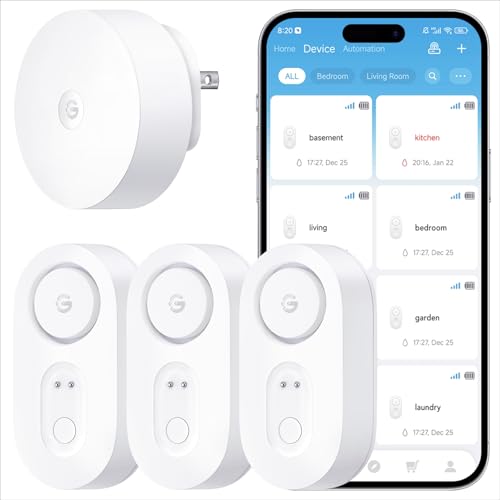
GoveeLife Smart Water Leak Detector 1s (3 Pack)

GoveeLife H5901 Smart WiFi Sprinkler Timer (Gateway, 1 Outlet)

GoveeLife H5901 Bluetooth Sprinkler Timer (No Gateway)
RAINPOINT WiFi Water Timer with Brass Inlet (2 Outlets)
CENSTECH 2100 CFM Evaporative Air Cooler
RAINPOINT WiFi Water Timer with Brass Inlet & Outlet (2 Zone)
RAINPOINT WiFi Water Timer (Brass, No Hub)
RAINPOINT WiFi Hose Timer (Brass, Weather-Smart)

MOGUNDAM Bluetooth Meat Thermometer (2 Probes)
The Details Behind The Selections
Smart water timers handle the garden, but leaks under sinks and behind washing machines ruin a Saturday faster than a missed watering cycle. The GoveeLife Smart Water Leak Detector 1s sits in the safety category, not the irrigation category, yet it earns a spot here because no irrigation system is complete without a way to catch the burst pipe or slow drip it may eventually cause.
The detector uses a long-range Sub-1G wireless signal (a low-frequency radio that punches through walls far better than standard WiFi) rated to reach roughly 1,804 feet in open line-of-sight and still hold a connection through several dense walls. For homes with detached garages, basements, or far-flung utility rooms, that range keeps the alarm reliable where WiFi-only sensors often fail.
Well-Handled Touches
- Strong signal penetration for sprawling layouts and multi-floor homes
- Three-pack coverage lets you protect kitchen, laundry, and water heater zones at once
- High-volume audible alarm catches attention over background noise from HVAC or TVs
- App notifications arrive on the phone you actually carry, even away from home
Things To Consider
- Placement under raised cabinets can muffle the audible alert, so testing each spot matters
- Battery swaps follow typical coin-cell cycles, and the app reminder is the only prompt
Who It Suits Best
Homeowners with finished basements, multi-story layouts, or any past leak history who want a reliable early warning paired with their outdoor watering setup.
Where Another Pick Suits Better
For gardeners who only need irrigation control, the RAINPOINT WiFi Hose Timer delivers dedicated watering brains without the leak-detection extras.
Yards with a detached shed, a side garden, and a back lawn drain the patience of single-spigot timers fast. The GoveeLife H5901 system leans into a hub-and-spoke layout, with a dedicated gateway that bridges your home router to up to 64 valve units across the property. The included timer handles one outlet, but the architecture is what you buy.
The gateway’s 1,640-foot rated range means a faucet at the far end of a long driveway stays reliably connected, even when the router sits at the opposite corner of the house. Built-in weather awareness pulls local rain, temperature, and humidity data, then skips cycles when the soil already has what it needs.
Notable Gains
- One gateway can coordinate dozens of valves, useful for future yard expansions
- Weather-aware scheduling cuts down on wasted water during rainy stretches
- Long-range signal keeps distant spigots from dropping off the network
- App-driven scheduling lets you tweak programs from a hotel room
Trade Offs
- The gateway adds a small box that needs an outlet and a spot near the router
- Owners with one small patio may find the hub architecture overkill
Right Fit For
Homeowners planning a multi-zone irrigation system across a large or oddly shaped property who want one central app to manage every valve.
Look Elsewhere When
A single raised bed on a porch only needs the simpler GoveeLife H5901 Bluetooth timer, with no gateway setup required.
Not every garden needs a hub, an account, or a router handshake. The Bluetooth-only version of the GoveeLife H5901 strips out the gateway and pairs straight to a phone within roughly 229 feet. For a single side-yard spigot feeding a few beds or a greenhouse, that simplicity is often the whole appeal.
The valve unit shares the H5901 family build quality, so durability against sun and weather follows the same path as its networked sibling. Setup means screwing it onto a hose bib, opening the app, and you’re running a schedule, with no 2.4 GHz network gymnastics.
What Earns Its Place
- No hub or extra box to mount and power
- Direct phone pairing keeps the setup under five minutes for most owners
- Same rugged H5901 construction as the WiFi version
- Works in greenhouses and metal sheds where WiFi signals struggle
Honest Caveats
- Range tops out at roughly 229 feet, so leaving the property means losing remote access
- Single-outlet design won’t cover a split front-and-back-yard layout on its own
Best Suited To
Small-space gardeners, greenhouse growers, and anyone who wants phone-based control without dragging in a hub or wrestling with router settings.
A Better Fit Elsewhere
For a property that spans both sides of the house, the RAINPOINT WiFi two-zone timer delivers remote access without range anxiety.
Most suburban yards split cleanly into two watering zones: a lawn strip and a flower bed, or a front yard and a back patio. Running two separate timers is clumsy when one unit with two valves can handle both. The RAINPOINT T2WiFi leans into that two-zone reality, with a brass inlet that won’t crack after a few seasons under the sun.
Each outlet runs up to three independent schedules through the RAINPOINT app, and the built-in flow meters track actual water delivered rather than just timing minutes. For owners who care about water bills, that data turns vague watering into measurable results.
Where It Delivers
- Two valves on one brass body reduces spigot clutter and leak points
- Built-in flow meters give honest usage data, not guesswork
- Three schedules per zone handle morning, midday, and soak cycles independently
- Weather-based rain delay cuts cycles when storms roll through
Worth Noting
- WiFi setup only on the 2.4 GHz band, so dual-band routers need separate naming
- Two outlets mean a heavier unit on the spigot, so a sturdy hose bib helps
Made For
Homeowners with a single spigot feeding two distinct garden zones who want brass durability and measurable water usage in one body.
Swap It Out When
For an all-brass inlet and outlet on every connection, the RAINPOINT WiFi Water Timer with Brass Inlet & Outlet takes durability one step further.
Water timers keep the garden alive, but the same weekend projects that demand irrigation also tend to cook a garage or patio workspace. The CENSTECH evaporative cooler earns a spot here for the gardeners who spend hours in a workshop, garage, or covered patio between watering cycles and need moving air without a window unit install.
The unit delivers 2,100 CFM (cubic feet per minute, the standard measure of airflow volume) through a 15-inch circular outlet, with three speed settings and four included ice packs that drop the output temperature when you need relief. Caster wheels mean it rolls from the garage to the patio without a wrestling match.
Useful Highlights
- High airflow moves air across a 700-square-foot area for large workspaces
- Ice packs boost cooling beyond what ambient evaporation alone provides
- Rolling casters simplify transport between garage, patio, and porch
- No window installation needed, helpful for renters and second floors
Points To Keep In Mind
- An 8-gallon tank means regular refills in dry climates during heavy use
- Evaporative cooling works best in low humidity, so performance dips in steamy regions
Whose Shelf It Belongs On
Garage tinkerers, patio entertainers, and homeowners in dry climates who need powerful spot cooling alongside their outdoor watering setup.
Consider Something Else When
For dedicated kitchen and grilling precision, the MOGUNDAM Bluetooth Meat Thermometer handles temperature tracking while you enjoy the breeze.
The plastic hose timers of a decade ago all shared the same fate: a slow crack under summer sun and a quiet leak onto the foundation. The RAINPOINT T2 Brass tackles that weakness head-on by upgrading both the inlet and outlet to brass, the metal of choice for outdoor plumbing for a reason.
Two zones run independently through the RAINPOINT app, with three schedules per outlet, weather-based rain skipping, and quantity-based watering that uses flow meters to deliver a target volume rather than guessing at minutes. Owners can build watering programs around how much water a bed actually needs, not how long the valve has been open.
What Pays Off
- Brass on every connection point resists UV and impact damage over years
- Quantity-based scheduling delivers exact gallons, helpful for thirsty beds and tight budgets
- Two zones and six total schedules cover most yard layouts without extra timers
- Weather integration skips cycles on rainy days without manual input
A Few Limitations
- Brass weight adds heft, so reinforced hose bibs and wall mounts help long-term
- 2.4 GHz only, so older routers may need a quick configuration update
Built With In Mind
Long-term homeowners and anyone replacing a cracked plastic timer who values durability and measurable water delivery over a lower upfront price.
Not Your Match When
For a simpler single-zone yard, the RAINPOINT WiFi Hose Timer with brass inlet and outlet handles one zone with the same weather awareness.
Hub-free doesn’t mean cheap. The RAINPOINT TWG004WRF brass valve links directly to a 2.4 GHz WiFi network, skipping the extra bridge box that multi-valve systems require. For a single-zone yard or one remote spigot, that simplicity keeps the install clean and the parts shelf empty.
The 2.4 GHz compatibility matters here: dual-band routers need the 2.4 GHz band named separately from the 5 GHz band for the timer to find the network. Once connected, scheduling runs through the RAINPOINT app with the same weather and timing features as the multi-zone siblings.
The Upside
- Brass inlet and outlet deliver the durability RAINPOINT built its reputation on
- No extra hardware to mount, power, or troubleshoot
- Direct WiFi link cuts a layer of failure between the router and the valve
- Compatible with later-lot RAINPOINT hubs for future expansion
Some Limits To Know
- Single-zone design limits use to one outlet, so two yards need two units
- 2.4 GHz dependency may require router reconfiguration for some households
Perfect Match For
Single-zone homeowners on a 2.4 GHz network who want brass durability without the complexity of an extra gateway on the shelf.
Reach For A Different Pick When
For two-zone coverage from one body, the RAINPOINT WiFi Water Timer with Brass Inlet keeps the spigot count to one.
Hose-fed raised beds, container gardens, and small lawn patches all share a simple reality: one hose, one timer, one outlet. The RAINPOINT WiFi Hose Timer targets that exact setup, with brass connections on both ends and weather-aware scheduling that handles the brain work without an app tutorial.
Voice assistant compatibility adds a layer of convenience when your hands are full of soil or hose. Manual rain delay kicks in for 24, 48, or 72 hours when a forecast changes, helpful during surprise storms that the automated weather feed sometimes misses.
Features That Help
- Voice control through common assistants frees your hands during yard work
- Automatic rain delay saves water without constant app adjustments
- Brass fittings stand up to repeated hose connections and disconnections
- App-based manual override lets you run a quick rinse without losing the schedule
Less Ideal Details
- Single-outlet design covers one zone, so larger yards need additional units
- 2.4 GHz only, which may frustrate homes running primarily on 5 GHz networks
Who Should Grab It
Hose-fed gardeners with raised beds, vegetable patches, or single-zone lawns who want voice and weather control in a compact body.
Where A Sibling Pick Shines
For a yard that splits into two distinct zones, the RAINPOINT WiFi Water Timer with Brass Inlet doubles the coverage without doubling the spigots.
Smart watering and weekend grilling share more than a season. Long smokes and slow cooks pull you away from the kitchen, and a meat thermometer that pings your phone from across the yard lets you host, water the beds, and still hit the right pull temperature. The MOGUNDAM wireless thermometer slides into this category as the outdoor cook’s companion.
Two ultra-thin probes fit into small cuts without leaving a telltale puncture, and the Bluetooth 5.3 connection reaches up to roughly 500 feet in open air. The app works on both iOS and Android, so guests can monitor the cook too without buying extra gear.
Standout Benefits
- Long Bluetooth range keeps the phone connected while you tend the garden
- Two probes track a main and a side dish at the same temperature
- Waterproof construction handles splashes during cleaning
- Cross-platform app removes guesswork about phone compatibility
What To Weigh
- Bluetooth-only connection means the phone must stay within range for alerts
- Probes benefit from occasional calibration for the most accurate readings
The Right Fit
Backyard grillers and smoker enthusiasts who want real-time cook alerts while tending to the rest of the yard.
Skip It When
For dedicated irrigation control without the cooking extras, any of the RAINPOINT or GoveeLife timers in this list covers watering needs alone.
What Matters Most Before Choosing Smart Water Timers
Connection Type and Range
Bluetooth-only timers pair to your phone within a couple hundred feet, ideal for small gardens and greenhouses where WiFi is weak. WiFi timers link directly to your home router for remote access anywhere with cell service, while hub-based systems handle sprawling properties through a dedicated bridge. For most suburban yards, direct WiFi on 2.4 GHz (the lower-frequency band that reaches farther through walls than 5 GHz) hits the sweet spot of simplicity and control.
Outlet Count and Zone Planning
Count the watering zones you actually need before buying. A single front lawn is one zone, but a lawn plus raised beds plus a hedge line may push you to two or three. Two-zone timers cut spigot clutter, while single-zone units keep the install simple. Future-proof by choosing one more zone than you currently use.
Build Materials and Weather Resistance
Plastic timers crack under sustained sun after a few seasons, which is why brass inlets and outlets have become a quiet standard for serious outdoor use. Look for UV-resistant housings and check the seal quality around battery compartments, since these units live outside year-round. Brass adds weight, so make sure the hose bib can support the body.
Smart Features That Actually Help
Weather-based rain delay, quantity-based flow metering, and voice assistant integration each address a specific need. Rain delay alone can save hundreds of gallons per month. Flow meters turn guessing into measurable watering. Voice control adds convenience but rarely changes the watering outcome. Match the features to your real frustration, not the longest spec sheet.
Key Considerations Across These Picks
Pitfalls Shoppers Hit
Buying a 5 GHz-only timer for a router that broadcasts primarily on 2.4 GHz (or vice versa) is the most common setup snag. Confirm your router’s bands before purchase, and rename the 2.4 GHz and 5 GHz networks separately so the timer connects to the right one. Another mistake is underestimating zone count: a “single outlet” timer covers one watering area, so a yard that needs two or three requires either multiple units or a multi-zone model.
Why Top Tier Costs More
Premium smart water timers earn their price through brass construction, weather-aware scheduling, and multi-zone coordination. The upfront cost spreads across years of avoided leaks, skipped rainy cycles, and lower water bills. For homeowners in dry climates or those running multiple zones, the upgrade typically pays for itself within a couple of seasons.
Frequently Asked Questions
Do smart water timers work during a power outage?
Most WiFi timers lose remote control during an outage but continue running their stored schedule, since the valve and battery keep operating. Once power returns, the app reconnects and resumes updates.
Can smart water timers handle well water and high pressure?
Most outdoor-rated timers specify a maximum operating pressure, so check your home’s PSI before installing. Brass-bodied models typically handle higher pressure better than plastic units.
How long do batteries last in a smart water timer?
Two AA batteries usually run a single-zone timer for about a full season of typical use. Heavy schedules and frequent manual overrides shorten battery life, so plan for a swap before spring startup.
Do these timers work with drip irrigation and soaker hoses?
Yes, any timer that opens and closes a hose bib will feed drip lines and soaker hoses downstream. Just match the flow rate to the timer, since some low-flow drip systems need a timer rated for that range.
What happens if the WiFi goes down?
The timer keeps its last known schedule and runs on stored programs. Manual watering still works at the valve or through the app once the phone reconnects to the timer directly via Bluetooth on supported models.
The Takeaway
Smart water timers turn a daily chore into a one-time setup. Match the connection type to your property size, count your zones honestly, and weigh brass construction if the timer lives in full sun year-round. The right pick keeps the lawn green and the water bill calm without constant attention.
