

Compacted soil sneaks up on every lawn. Foot traffic, mowing, and rain all press the surface down until water runs off instead of soaking in, and roots start gasping for air just below the grass line. Soil aerators fix that by punching small holes that reopen the channel for water, oxygen, and nutrients to reach the root zone where it actually counts.
The tools on this list cover three different jobs. Spike aerators push narrow holes straight down, hollow tines pull actual plugs out for the deepest relief, and strapped-on aerator shoes turn a slow stroll into the work itself. Match the tool to your soil, lawn size, and tolerance for bending over, and the rest of the season gets easier.
The Picks In Brief

WOLF Garten Aerator – BIM – 1345000
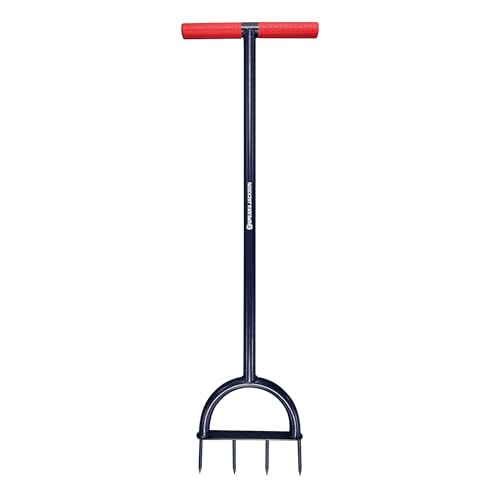
Spear & Jackson 4852LSA Lawn Spike Aerator

Lawn Aerator Shoes for Compacted Clay Soil

Sakerplus Aerator Lawn Tool, Hand Metal Spike

Sakerplus Aerator Lawn Tool, Self-Cleaning Tines

Lawn Aerator Shoes with 13 Metal Spikes

Rolling Lawn Aerator, Hollow Tine Roller
The Strengths Of Each Pick
The WOLF Garten BiM slots into a different job than anything else on this list. Its narrow 3.5 cm working surface and sharpened steel blade are built for scarifying and loosening soil between tightly planted rows, not for punching holes across a wide lawn. Gardeners tending vegetable beds or flower borders will appreciate how cleanly the blade slips between plants without disturbing the root zone of neighboring crops.
Pair it with the matching ZM 140 ash handle and you get a long-reach tool that saves your back during longer sessions. The trade-off is that it is genuinely a niche implement: anyone looking to aerate a full backyard will find the blade far too small for the task. For the right reader, though, this is the kind of precision instrument that earns its place in the shed.
Bright Spots
- Hardened steel blade cuts cleanly through crusted soil between rows.
- Narrow 3.5 cm head reaches spaces a wide lawn tool simply cannot.
- Multi-star system pairs with a long ash handle to keep you upright.
- Steel and plastic construction stays light enough for extended detail work.
Worth Noting
- Not designed for whole-lawn aeration, so coverage feels slow on open turf.
- Requires the separately sold ZM 140 handle to function properly.
Best Suited To
This is the right pick for kitchen gardeners and detail-oriented landscapers who treat soil between rows like a precision task rather than a broad sweep.
Look Elsewhere When
Step past it for the Spear & Jackson 4852LSA if your real goal is treating a wide patch of compacted lawn rather than the gaps between vegetables.
The Spear & Jackson 4852LSA leans hard into the manual spike approach with no plastic shortcuts in the working parts. Its all-metal frame and carbon steel spikes are made for the homeowner who wants a tool that survives several seasons of foot-down pressure and stays sharp through clay or sun-baked soil.
The wide T-handle with a non-slip grip keeps wrists in a neutral position, while the secure footrest gives you a stable platform when you really need to lean in. Compared with the WOLF Garten blade up above, this is a true full-lawn aerator: you stand over it, drive the spikes down, and walk a grid pattern across the yard.
Useful Strengths
- Carbon steel spikes slice into compacted ground with steady downward force.
- All-metal construction shrugs off the rough treatment yard work dishes out.
- Wide T-handle and non-slip grip keep hands comfortable over long passes.
- Built-in footrest makes driving the spikes home feel controlled.
Trade Offs
- Spike aeration compacts soil slightly at the hole edge, unlike hollow tines that remove a plug.
- Hand-driven work gets tiring on lawns over a few thousand square feet.
Quick Facts
Made For
Homeowners with mid-size yards who want one durable tool that handles clay and compaction without electric motors or rolling drums.
Consider Something Else When
Reach for the LawnVigor Rolling Lawn Aerator instead if the lawn is large enough that hand-stepping becomes a workout rather than a chore.
onoxouo’s aerator shoes go straight at one of the toughest lawn conditions: heavy, compacted clay that laughs at ordinary spikes. The 5mm metal bottom is a serious step up from the lighter bases most strap-on aerators use, and the wider footrest lets you push your weight through without the platform bowing mid-stride.
The honest read is that aerator shoes are slower per square foot than a rolling or plug tool, but they trade speed for ease. You just walk. For clay-heavy yards where the goal is steady, ongoing improvement rather than a single dramatic intervention, the heavier base makes these worth the extra effort.
Everyday Advantages
- 5mm thickened metal base outlasts thinner plates found on standard shoes.
- Wider footrest channels your full body weight straight down into each spike.
- Walking motion covers ground without the back strain of bending and pulling.
- Steel spikes punch through clay that deflects lighter plastic-tined designs.
Potential Drawbacks
- Covering a full yard on foot takes noticeably longer than using a roller.
- Heavier metal base can feel fatiguing after extended walking sessions.
Who It Suits Best
Gardeners battling stubborn clay patches who would rather walk the lawn than wrestle a heavy tool, and who do not mind taking it slow.
A Better Fit Elsewhere
Pick the Sakerplus spring-loaded aerator tool if you would rather stand upright and step down than strap spikes to your feet for a long walk.
Sakerplus’s hand spike model is the kind of tool that lowers the barrier for anyone aerating their lawn for the first time. The thickened iron body and rust-resistant coating handle exposure to damp soil, and the foot pedal is held on with high-strength screws rather than spot welds, which means fewer surprise breakages mid-step.
For first-timers, the appeal is the simple, direct motion: step, push, lift, move. The two-layer platform and rebound spring take some of the sting out of pulling a spike tool back out of firm ground. You will still work for the result, but the tool does more of the lifting than older designs.
A Few Strong Suits
- Screw-fastened pedal holds up better than welded joints under repeated force.
- Rust-resistant coating extends tool life through damp storage conditions.
- Double-layer platform adds rigidity during downward stepping.
- Rebound spring reduces the wrist effort of extracting each spike.
Some Limits To Know
- Hand-stepping across a large yard still builds up leg and back fatigue.
- Spikes compact soil at the hole edge, so deeply thatched lawns may need a second pass.
Feature Snapshot
The Right Fit
First-time lawn owners working on a modest yard who want a forgiving hand tool that teaches good technique without overcomplicating the job.
Reach For A Different Pick When
Step up to the LawnVigor Rolling Lawn Aerator if you would rather push a drum across the grass than take hundreds of single steps.
This Sakerplus model keeps the same general shape as the hand spike above but adds two features that change the feel of the work. The spring-loaded double-layer platform pops the tool back up after each step, so your legs and back carry less of the lifting burden across a long session.
The self-cleaning tines address one of the more annoying habits of older spike aerators: the way clay and thatch cling to the spike on the way out. With material shed as the tool lifts, you spend less time stopping to clear debris and more time actually covering ground.
Positive Points
- Spring-loaded auto-return saves your back over hundreds of repetitions.
- Self-cleaning tines shed soil on the upstroke so you keep moving.
- Same screw-fastened pedal design carries over from the brand’s earlier tool.
- Faster overall pace than traditional hand spike aerators on larger lawns.
Small Caveats
- Spring mechanism adds parts that may need occasional inspection.
- Still slower than a rolling aerator on truly large properties.
Whose Shelf It Belongs On
Homeowners with bigger yards who want hand-tool control without the punishing repetition of a basic spike model, and who value keeping tines clear.
Swap It Out When
Move to the LawnVigor Rolling Lawn Aerator if you want to cover a full lawn quickly and do not mind a heavier rolling tool doing the work.
FurFrolic’s aerator shoes take the opposite approach from the heavy clay-focused pair earlier. The reinforced nylon sole keeps the platform light, and 13 pre-installed two-inch steel spikes come ready to use, so there is no assembly project before you head outside.
Lace-up fit means you can dial in tightness for your foot shape, and the lighter build encourages the kind of steady pacing that suits maintenance aeration on a regular basis. For lighter soils and routine care, this is the comfortable, easy-on easy-off option.
Why It Works Well
- Comes pre-assembled with 13 solid steel spikes so you can start immediately.
- Nylon reinforced sole cuts weight compared with all-metal shoe designs.
- Lace-up closure lets you tune the fit and keep the platform secure mid-stride.
- Two-inch spike length reaches a useful depth in average lawn soils.
Points To Keep In Mind
- Lighter build will not push through stubborn clay the way the onoxouo shoes do.
- Walking method still treats a large yard as a slow stroll rather than a quick job.
At A Glance
Who Should Grab It
Casual lawn owners who want to aerate while doing other yard walks and who value a lighter, more comfortable shoe over maximum penetration.
Skip It When
Pick the onoxouo aerator shoes if your soil is heavy clay and you need every bit of spike force the heavier metal base provides.
The LawnVigor rolling aerator closes the list with a different mechanism entirely. Hollow tines, the cylindrical spikes with an open core, actually remove small plugs of soil rather than simply displacing it. That matters on severely compacted ground because removed material creates real channels instead of compressed sidewalls.
Six non-clogging tines and a rolling drum design let you push your way across the lawn rather than stepping one hole at a time. Replaceable tines extend the working life of the tool, and the plug-style aeration matches what professionals consider the deeper-relief method for stressed turf.
Strong Points
- Hollow tines remove plugs, creating genuine channels for air and water.
- Six non-clogging tines keep you moving without constant stops to clear.
- Replaceable tines mean the working edge can be renewed over time.
- Rolling drum covers wide lawns far faster than any spike tool on this list.
Less Ideal Details
- Heavier to push than a hand spike, especially on sloped sections.
- Leaves visible soil plugs on the surface that some homeowners find untidy until they break down.
- Requires enough storage space for a rolling drum tool.
Core Details
Who Will Love This
Homeowners with large, visibly compacted lawns who want the deeper relief of plug aeration and do not mind a heavier rolling tool.
Where Another Pick Suits Better
Stay with the Spear & Jackson 4852LSA for smaller yards where pushing a rolling drum around tight corners feels like overkill.
Choosing The Right Soil Aerator For Your Yard
Soil type drives most of the decision. Sandy or loamy ground responds to almost any spike tool, while heavy clay demands either a thicker spike base like the onoxouo shoes or a hollow-tine roller that physically removes compacted material. Knowing what you are standing on before you buy saves you from a tool that bounces off the surface.
Lawn size changes the math fast. Hand-step aerators and strapped-on shoes make sense up to a few thousand square feet. Past that, the repetition either wears you out or pushes you toward a rolling drum. The hollow tine roller at the top of this list exists for exactly that transition point.
Storage and physical comfort matter more than most shoppers expect. Rolling tools need somewhere to live, shoes have straps that can tangle, and long-reach tools need vertical space. Pick the form factor that matches your shed as much as your soil.
Key Considerations Across These Picks
Mistakes Worth Dodging
Matching the tool to the soil is the single biggest decision, and it is also where most first-timers go wrong. Spike aerators on hard clay often feel like they are doing nothing because the spike compacts the side of each hole. Hollow tines or thicker metal bases handle that soil much more honestly.
Lawn shape matters as much as lawn size. A wide-open yard is rolling-drum friendly. A yard cut up by flower beds, paths, and tight corners rewards a narrow hand tool or strapped-on shoes that pivot on a dime.
Where The Extra Money Goes
Higher-tier tools tend to put the budget into materials that survive real use: thicker metal bases, replaceable tines, screw-fastened joints, and rust-resistant coatings. For occasional maintenance on light soil, basic models can be enough.
For tougher soil, frequent use, or longer reach across big yards, the upgrade usually pays for itself through durability and faster coverage. The right call depends on how often you will actually use it, not on the depth of your lawn problem alone.
Frequently Asked Questions
How often should soil aerators be used during the growing season?
Most cool-season lawns benefit from aeration once or twice a year, ideally during active growth so the lawn recovers quickly. Warm-season grasses often do best with a single late-spring or early-summer pass.
Is spike or plug aeration better for compacted lawns?
Plug aeration, which uses hollow tines to remove small cores of soil, generally relieves compaction more thoroughly because it removes material rather than pushing it aside. Spike aeration works well for routine maintenance on lighter soils.
Can aerator shoes replace a rolling or plug aerator?
Shoes handle light, ongoing maintenance on small yards effectively, but they cannot match the depth or coverage of a hollow-tine roller on severely compacted ground. They are best viewed as a complement rather than a replacement.
When is the best time to aerate a lawn?
Aim for periods of active growth, when the lawn can recover quickly. For cool-season grasses, early fall or early spring is common. For warm-season grasses, late spring through early summer is typical.
Do aerator tools need any special care after use?
Wipe down metal parts, knock off clinging soil, and store tools in a dry spot. A light coat of oil on steel spikes and tines helps prevent rust between uses, especially in damp sheds.
The Takeaway
The right aerator depends less on brand hype and more on a clear picture of your soil, your lawn size, and how much repetition your body is willing to take. Match those three honestly and any of these seven tools will deliver visible improvement over a season or two. Start with the soil test, then pick the form factor that fits the way you actually work.
