

Your Venus flytrap will not survive in standard potting soil. These carnivorous plants evolved in boggy, nutrient-poor environments and need a specific growing medium to thrive indoors, on a sunny windowsill, or in a terrarium setup. Picking the right substrate from day one sets the tone for everything from trap color to dormancy health, which is why we narrowed down ten options that cover single-plant care, multi-plant collections, and DIY mixers. Each pick below matches a different stage of the carnivorous plant hobby, from a one-quart starter bag to a twelve-quart bulk supply.
An Overview Of The Picks
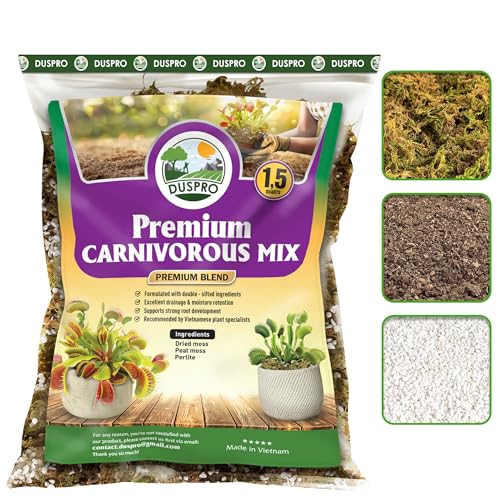
DUSPRO Carnivorous Plant Soil Mix 3in1 1.5 QT
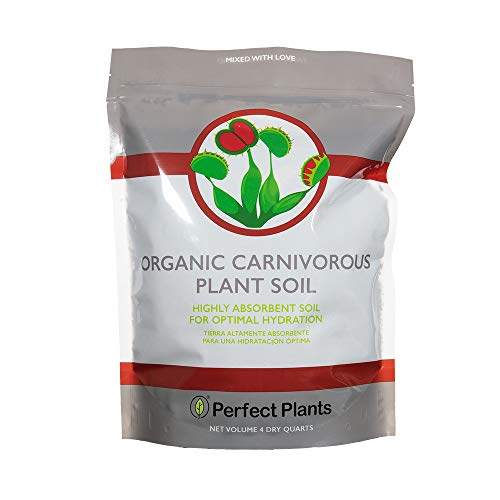
Perfect Plants Carnivorous Plant Soil 4 qt

Soil Sunrise Carnivorous Plant Potting Mix 12 Quarts
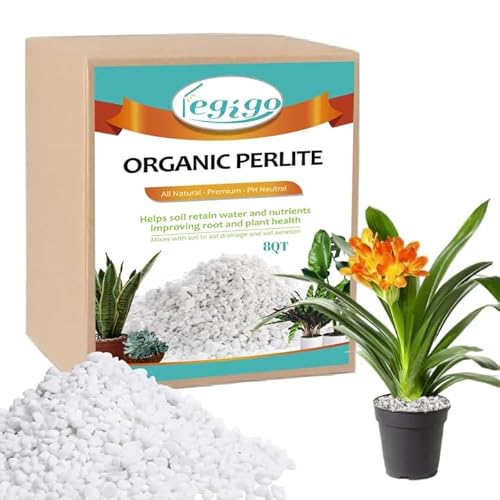
Legigo Organic Perlite 8 Quarts Soil Amendment

Gardenera Professional Carnivorous Plant Soil 1 Quart

Gardenera Professional Carnivorous Plant Soil 2 Quart

Organic Earth Carnivorous Plant Soil Mix Large

Gardenera Carnivorous Plants Spray Fertilizer Mist 8oz

Gardenera Liquid Carnivorous Plant Fertilizer 3-1-2 8oz

Kapecute Sphagnum Moss 34QT for Propagation
More On The Choices That Made The List
Opening a bag of pre-mixed substrate is the easiest way for a new carnivorous plant owner to skip the measuring cups. DUSPRO’s blend combines dried moss, perlite, and peat moss (a decomposed sphagnum fiber prized for low-nutrient, acidic conditions) into a single ready-to-use medium, so you can pot a flytrap the same day it arrives. The 1.5-quart size fits one standard four-inch pot with a little left over, which is honestly ideal for someone starting out with a single plant on a sunny sill.
Compared to the larger bulk blends further down this list, this one trades volume for convenience. You will not need to buy separate bags of perlite and peat, and you avoid the trial-and-error of mixing ratios at home.
Useful Highlights
- Moss-forward texture that holds moisture without waterlogging roots, supporting consistent humidity between waterings.
- Pre-mixed format eliminates the guesswork for owners who have never blended a carnivorous medium before.
- Works across flytraps, sundews, and pitcher plants, so a small starter collection can share one bag.
- Light enough to ship and store easily on a shelf above your potting tray.
Things To Consider
- The 1.5-quart volume runs out quickly once you repot a second plant.
- Perlite dust at the bottom of the bag is common; sift or rinse before potting to keep white grit off your surfaces.
Key Specs
Who It Suits Best
First-time Venus flytrap owners who want a one-bag, no-measuring introduction to carnivorous plant care.
Where Another Pick Suits Better
Collectors tending a windowsill of four or more plants get more mileage from the Soil Sunrise 12-quart blend below.
Perfect Plants leans into long-term consistency with this organic blend designed for the entire life of a carnivorous plant. The four-quart bag is large enough to repot a starter trio and still leave material for the next annual refresh. Owners who have watched flytraps decline after a year in the wrong medium will appreciate that this mix is built to stay stable across multiple seasons rather than break down quickly.
It targets the same audience as DUSPRO above but gives you room to grow. If your collection is creeping past two pots, the extra volume here pays off before you need to graduate to the bulk 12-quart option.
Strengths Worth Knowing
- Organic composition aimed at long-term nutrient stability through dormancy cycles.
- Four-quart size handles three to four standard repottings without forcing a second purchase.
- Suitable for flytraps, pitcher plants, sundews, and bladderworts, so one bag covers a mixed shelf.
- Moisture management tuned to hold enough water for boggy roots without saturating the crown.
Worth Noting
- Heavier and pricier per bag than the DUSPRO starter option, which can feel like a lot for a single flytrap.
- Organic blends tend to compact over time, so refreshing the top inch annually is widely recommended.
Made For
Intermediate hobbyists building a small mixed collection of flytraps, sundews, and pitcher plants on one shelf.
Skip It When
You run a single plant and want the smallest possible bag, in which case the one-quart Gardenera pick further down fits better.
Bulk buyers want one bag that lasts through a repotting season, and Soil Sunrise delivers exactly that with a 12-quart hand-blended mix. The volume is generous enough to refresh a full collection plus start a propagation tray of leaf cuttings. For someone running a small greenhouse shelf or moving flytraps into larger six-inch pots, this is the size class where you stop buying every spring.
The composition leans on perlite and peat moss, which is the classic two-ingredient carnivorous base. Compare that to Organic Earth’s sphagnum-forward blend later in this roundup: same goal, different texture profile.
What Helps Most
- Twelve-quart volume covers roughly a dozen small repottings, reducing restock trips during peak repot season.
- Hand-blended approach keeps ingredient distribution even from the bottom of the bag to the top.
- Perlite-heavy texture supports quick drainage, which most owners prefer for terrariums with airflow.
- Compatible with flytraps, sundews, pitcher plants, butterworts, cobra lily, and dewy pine, so a diverse collection shares one bag.
Trade Offs
- Bulk format is awkward to store in a small apartment closet.
- You will want a sieve on hand, as perlite fines tend to settle during shipping.
Quick Facts
Best Suited To
Active collectors repotting multiple plants each year and tired of buying small bags over and over.
Look Elsewhere When
You only have one or two pots to fill, in which case the Perfect Plants 4-quart bag above is a more practical volume.
Not everyone wants a pre-blended bag. Some hobbyists prefer to source their own peat and perlite so they can fine-tune the drainage ratio plant by plant. Legigo’s coarse perlite fills that role cleanly, offering eight quarts of evenly sized granules that pull water away from roots without compacting. Volcanic perlite has a neutral pH, which keeps it from throwing off the acidic environment flytraps demand.
This is the building block, not the finished mix. Pair it with sphagnum or peat moss for a classic 50/50 blend, or push it higher for plants that sit in very wet conditions.
Points In Its Favor
- Coarse grade is ideal for carnivorous blends where finer perlite can compact over time.
- Eight-quart volume lets you mix several batches without running out mid-repot.
- pH neutral, so it will not raise the alkalinity of your carefully acidic medium.
- Pulls excess water away from roots, which helps prevent rot during winter dormancy.
Points To Note
- Not a complete soil; you still need to source peat or sphagnum moss separately.
- Dusty out of the bag, so a quick rinse before potting is widely recommended.
Right Fit For
Hobbyists who want to dial in their own perlite-to-peat ratio rather than rely on a pre-mixed bag.
Not Your Match When
You just want to open a bag and start potting, which is exactly what the DUSPRO and Perfect Plants picks above are built for.
One quart is the right size for a single small flytrap in a three- or four-inch pot. Gardenera’s Professional blend layers peat moss, coco coir (a fibrous coconut husk material used as a peat alternative), and perlite into a hand-mixed medium that holds moisture at the root zone without staying soggy. The formula is aimed at all four major carnivorous plant families, so a single bag can cover a starter shelf of mixed species.
The trade-off for the small footprint is that you will outgrow it quickly. Most owners step up to the two-quart sibling once they add a second plant.
What Makes Sense
- Compact one-quart size is right-sized for a single small flytrap, avoiding waste.
- Coco coir addition helps the mix rewet evenly after drying out between waterings.
- Hand-mixed by the brand, which tends to produce more even ingredient distribution than bulk-blended competitors.
- Compatible with flytraps, sundews, pitcher plants, and butterworts in the same bag.
Small Caveats
- One quart disappears fast once you add a second plant.
- Coco coir can hold salts if your water supply runs hard, so flushing the pot monthly is widely advised.
Who Will Love This
Solo-plant owners working with a tight windowsill or single terrarium who want a small bag with no excess.
A Better Fit Elsewhere
Anyone with two or more plants in rotation will get more value from the Gardenera two-quart version below.
The two-quart sibling solves the volume problem of the one-quart Gardenera bag while staying manageable for small collections. Two quarts comfortably covers two to three standard repottings or one large six-inch upgrade. The formula is identical: peat moss, coco coir, and perlite, hand-blended to keep the air-to-moisture ratio friendly to carnivorous roots.
For most home growers, this is the sweet spot between the tiny starter sizes and the 12-quart bulk option. You get enough media to refresh a couple of plants annually without dedicating half a closet to storage.
Notable Upsides
- Mid-size volume fits a two-to-three plant collection without leaving you overstocked.
- Aeration-tuned blend keeps roots oxygenated, which supports healthy trap development.
- Fertilizer absorption is calibrated for carnivorous plants, which absorb very little from soil in the first place.
- Same multi-species compatibility as the one-quart version.
A Few Limitations
- Still small if you maintain a full sundew shelf of five or more plants.
- Coco coir’s salt-retention tendency means a monthly flush is wise in hard-water areas.
Feature Snapshot
Perfect Match For
Owners maintaining two to three carnivorous plants who want a small enough bag to stay fresh in storage.
Swap It Out When
You run a propagation operation or a tray of seedlings, which is where the Soil Sunrise 12-quart pick above earns its keep.
Organic Earth leads with Canadian sphagnum moss instead of peat, which makes this blend a different beast from the perlite-heavy options earlier in the list. Sphagnum holds more air around the roots and rewets more reliably after a dry cycle, so it is a common pick for terrariums and high-humidity setups. Pair that with perlite for drainage, and you get a forgiving medium that suits flytraps sitting under a dome or in a glass jar.
If your flytrap is outdoors in a clay container that dries fast, sphagnum’s water retention can actually save you a watering day. In a more open pot, the same trait can keep things too wet without close monitoring.
Good Reasons To Consider
- Canadian sphagnum moss holds moisture evenly, reducing the risk of dry pockets around roots.
- Airflow-friendly texture suits covered terrariums where humidity stays high.
- Organic perlite addition keeps the medium from compacting over time.
- Large bag size supports multiple repottings across a single season.
Practical Considerations
- Sphagnum holds more water than peat-based mixes, so outdoor pots in rainy climates may stay soggy.
- Long-fiber moss can shed strands during repotting, so working over a tray helps with cleanup.
Feature Rundown
Whose Shelf It Belongs On
Terrarium keepers and owners running covered humidity domes who want moisture retention without compaction.
Reach For A Different Pick When
Your flytraps live in open outdoor pots where rain is frequent, since the Legigo perlite option above drains more aggressively.
Foliar feeding is the workaround when soil nutrition stays near zero, which is exactly the situation flytraps live in by design. Gardenera’s spray mist uses a 3-1-2 nutrient ratio (nitrogen-phosphorus-potassium, the three numbers always listed on fertilizer labels), a gentle blend aimed at leaf uptake rather than root burn. The eight-ounce bottle mists cleanly across a small collection and skips the measuring routine of liquid concentrates.
It is a supplement, not a soil replacement. Pair it with any of the substrate picks above and you have a more complete feeding setup for indoor flytraps that rarely catch insects.
Benefits That Matter
- Pre-diluted spray format removes the risk of over-mixing a concentrate by accident.
- 3-1-2 ratio is widely accepted as a mild blend for carnivorous foliage.
- Eight-ounce bottle is enough for several months of occasional foliar feeding.
- Works as a complement to any of the soil picks on this list.
Where It May Fall Short
- Spray format dries quickly, so consistent application matters more than with a soil drench.
- Not a substitute for a proper substrate; flytraps still need the peat or sphagnum base.
Built With In Mind
Indoor growers whose flytraps rarely catch bugs and want a gentle supplement to round out their setup.
Consider Something Else When
You prefer to control dilution strength yourself, which is exactly what the Gardenera liquid concentrate below allows.
Concentrate gives experienced growers the precision that a spray bottle cannot. Gardenera’s liquid fertilizer uses the same 3-1-2 nitrogen-phosphorus-potassium ratio as the spray above, delivered as a concentrate you dilute yourself. The eight-ounce bottle stretches across many feedings when handled correctly, which is the appeal for owners who have a feel for their plants’ feeding rhythm.
The flip side is real: too strong a dilution can burn carnivorous roots faster than almost any other mistake in this hobby. Use it cautiously until you have a routine down.
Useful Touches
- Concentrate format lets you tune dilution for shy feeders or more vigorous growth periods.
- Organic formulation aimed at indoor collections that lack outdoor insect prey.
- Compact eight-ounce bottle stores easily next to your watering can.
- Compatible with flytraps, sundews, pitcher plants, and butterworts at light doses.
Things That May Matter
- Requires careful measuring; over-dilution is far less risky than under-dilution for flytraps.
- Not a soil substitute, so you still need one of the substrate picks above.
The Right Fit
Careful, methodical owners who want full control over feeding strength for an established collection.
Another Choice May Suit
First-timers are better served by the pre-diluted spray mist above, which removes the measurement risk.
Long-fiber sphagnum moss is the medium most propagators reach for when starting flytrap divisions or leaf-pullings. Kapecute’s 34-quart bale of hand-picked, air-dried moss holds humidity well and gives roots something to grip as they establish. It doubles as a top dressing for mature plants, helping the surface stay evenly damp between watering cycles.
The volume is oversized for casual use, so this is really a propagation-scale purchase. If you only have one plant to repot, the Organic Earth blend above gives you a more measured sphagnum experience.
The Case For It
- Hand-picked, air-dried moss retains its structure through repeated wet-dry cycles.
- High-humidity profile suits propagation trays and sealed containers.
- Large 34-quart volume supports leaf-pulling projects and tray setups.
- Useful as a top dressing for mature plants that dry out too fast between waterings.
Less Ideal Details
- Oversized for owners who only need a single small pot.
- A few sticks and natural debris are common in the bag, so a quick sort before use is widely recommended.
Quick Facts
Who Should Grab It
Propagators and serious hobbyists running leaf-pulling trays or building humidity chambers for divisions.
A Better Fit Elsewhere
Casual owners with one or two plants will find the Organic Earth carnivorous blend above easier to handle.
Matching Soils For Venus Fly Trap To Your Setup
Picking the right medium starts with where your flytrap will live. Indoor growers under grow lights or on a sunny windowsill typically need less water retention than outdoor patio growers, where heat and wind pull moisture fast. A peat-and-perlite blend drains reliably in either environment, while sphagnum-forward mixes shine in covered terrariums where humidity is high and airflow is limited.
Think about your watering habits next. Owners who top up trays every couple of days can handle a peat-heavy mix that stays damp longer. People who forget between waterings are better served by sphagnum, which tolerates a missed day more gracefully. The Gardenera and DUSPRO pre-mixed bags give beginners a safe starting point, while hobbyists who like tweaking ratios will appreciate the perlite and sphagnum options for custom blends.
Finally, match the bag size to your collection. A single flytrap on a kitchen sill uses maybe a quart per year, while a propagation tray eats through a 12-quart bag in a single repotting session. Buying too small leads to mid-repot runs to the store; buying too big means stale, compacted medium sitting in storage.
Key Things To Weigh Across The List
Where Shoppers Go Wrong
The most common slip is grabbing a bag of standard potting soil because it says “outdoor” or “all-purpose” on the front. Flytraps evolved in nutrient-starved bogs, and fertilizers added to general-purpose soils will burn their roots within weeks. Stick to mixes built around peat, perlite, and sphagnum only.
Another trap is assuming any peat moss works. Some “peat” products are blended with starter fertilizer or wetting agents, both of which will stress carnivorous plants over time. Read ingredient lists carefully, and when in doubt, choose mixes labeled specifically for carnivorous use.
Where The Extra Money Goes
Larger bags and hand-blended mixes cost more because they skip the shortcuts. Bulk perlite and sphagnum require consistent sizing to drain evenly, and hand-blending produces more uniform texture from the top of the bag to the bottom. Pre-mixed carnivorous blends also tend to skip the fertilizer additives that mainstream soils rely on, which adds processing steps and quality checks. For a single plant, a small bag is enough; for a propagating collection, the upgrade pays back in fewer repots and more vigorous growth.
Frequently Asked Questions
What soil does a Venus flytrap need to survive?
Venus flytraps need a low-nutrient, acidic medium built from peat moss, perlite, or sphagnum moss. Standard potting soil contains fertilizers that will kill the plant within weeks, so always choose a blend labeled for carnivorous use.
Can I use sphagnum moss instead of peat?
Yes. Long-fiber sphagnum moss works well on its own, especially in terrariums and humidity domes. It holds more moisture than peat, so adjust your watering frequency and pot drainage accordingly, particularly in outdoor setups where rain accumulates.
How often should I repot my Venus flytrap?
Most owners repot every one to two years, ideally in early spring before active growth resumes. Refresh the top inch of medium annually even if you skip a full repot, since peat and sphagnum tend to compact over time.
Do Venus flytraps need fertilizer?
Indoors, a light foliar feeding with a 3-1-2 spray during the active growing season can help. Avoid soil drenches with regular houseplant fertilizer, and never feed during winter dormancy when the plant is resting.
Is perlite safe for Venus flytraps?
Yes, perlite is one of the most common amendments in carnivorous blends. Use coarse-grade perlite, rinse off the fine dust before potting, and you will get reliable drainage without affecting pH.
Bottom Line
The right soil depends less on brand and more on matching the medium to your environment and watering routine. Beginners do well with a pre-mixed peat-and-perlite bag like DUSPRO or Perfect Plants, propagators reach for long-fiber sphagnum, and DIY hobbyists layer perlite and peat to taste. Pick the format that fits your shelf, refresh annually, and your flytrap will reward you with steady traps and a healthy dormancy cycle.
