

Bringing a Monstera home is easy. Keeping it thriving through every season comes down to what surrounds the roots. Most store-bought blends stay too dense for these jungle natives, trapping water around the rhizome and inviting rot. The right mix mimics the loose, bark-rich floor of a tropical forest, holding a little moisture while letting the rest drain freely.
You’ll find pre-blended tropical mixes that open the bag and go, single amendments for dialing in your own recipe, and foliar feeds that round out a routine. The list below sorts the strongest options across those categories so your Swiss cheese plant can push out fenestrated leaves without drama.
An Overview Of The Picks
FoxFarm Ocean Forest Potting Soil, 12 Quarts

ZeeDix 3QT Coarse Perlite for Plants

FoxFarm Ocean Forest Potting Soil, 1.5 cu ft

Char Bliss 8 Qts Organic Biochar

ZeeDix 3QT Tropical Potting Mix for Monstera
ZeeDix 1QT Coarse Perlite for Plants
Gardenera Premium Monstera Potting Soil, 1 Quart

Gardenera Monstera Spray Fertilizer Mist, 8oz

Gardenera Monstera Organic Superfood Spray Mist, 8oz

ZeeDix 1QT Tropical Potting Mix for Plants
More On The Choices That Made The List
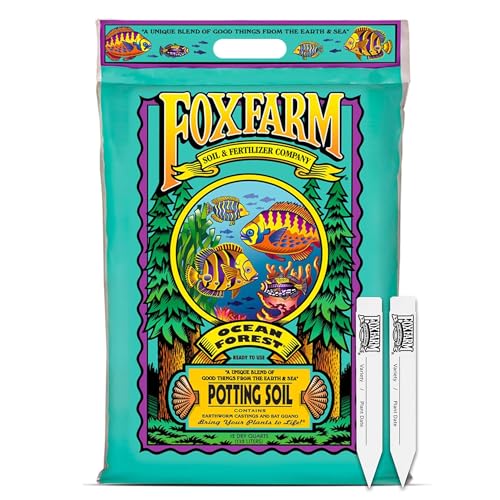
FoxFarm’s 12-quart Ocean Forest is the bag most houseplant owners reach for first, and the reason is simple: it comes ready to use straight out of the bag. The texture is light and slightly spongy, and the recipe leans on earthworm castings, fish meal, and crab meal to feed a Monstera without an extra bottle of fertilizer. You just tip the bag into a pot, settle the root ball, and water in.
Compared with the bagged tropical blends later in the list, this one runs richer and a touch denser, so growers repotting a chunky, mature Monstera may want to cut it with extra perlite. For a starter plant in a 6 to 8 inch pot, though, the included plant tags and manageable size make it a low-fuss starting point.
Everyday Perks
- Ready-to-use blend removes the guesswork for new Monstera owners
- Organic amendments feed roots gradually across several waterings
- 12-quart size covers one repotting plus a few small top-offs
- Two plant tags let you label varieties straight away
Trade Offs
- Slightly dense for mature Monsteras that prefer chunky aroid mixes
- Smaller bag may run short for collectors with several large plants
Right Fit For
Beginners repotting a single Monstera deliciosa or Swiss cheese plant into a fresh container.
A Better Fit Elsewhere
Collectors with several mature Monsteras will get more mileage from the FoxFarm Ocean Forest 1.5 cu ft bag further down the list.
Perlite is the white, porous volcanic rock that keeps aroid mixes from compacting into concrete, and ZeeDix ships it in a generous 3-quart bag with a coarse 3 to 9 millimeter grade. Coarse grains create wider air pockets than fine perlite, which matters for a Monstera’s chunky aerial roots. You fold it into your existing blend at roughly one part perlite to three parts soil, and the texture opens up immediately.
This is a supporting player, not a stand-alone medium, so pair it with FoxFarm Ocean Forest, a coco coir base, or the tropical mixes later in this list. The dust at the bottom of the bag calls for a quick rinse before you mix, and you may find the 3-quart size perfect for refreshing three to four mid-sized pots.
Notable Gains
- Coarse grade builds durable air pockets that resist collapse over time
- Improves drainage so roots never sit in soggy soil
- Lightweight format is easy to pour and blend by hand
- 3-quart volume suits mid-sized collections
Honest Caveats
- Bag dust tends to settle, and a quick rinse helps before mixing
- Not a complete medium, so it needs to be combined with soil or bark
Built With In Mind
DIY mix builders dialing in a custom aroid blend for Monsteras and philodendrons.
Consider Something Else When
Anyone wanting a single ready-to-use bag should turn to the ZeeDix 3QT Tropical Potting Mix further down instead.
The 1.5 cubic foot bag is the same Ocean Forest recipe as the smaller 12-quart option, just scaled up for collectors who run a whole shelf of Monsteras. That volume works out to roughly 45 quarts, enough to repot a dozen medium houseplants or top-dress a row of large pots with fresh material. The blend includes earthworm castings, fish meal, and crab meal in a peat-based matrix with a slightly coarse texture.
Compared with the smaller FoxFarm bag above, this one trades convenience for economy and reduces the number of trips to the retailer. The trade-off shows up in storage, since a 1.5 cubic foot sack takes up meaningful closet space. For growers mixing their own aroid blend, you’ll still want to add perlite or orchid bark to keep mature Monsteras happy.
A Few Highlights
- Large volume reduces repackaging and restocking across the year
- Same proven Ocean Forest recipe trusted across houseplant circles
- Useful as a base for custom Monstera mixes when amended with perlite or bark
Practical Considerations
- Bulk bag demands closet or garage space and stays heavy once opened
- Texture remains on the dense side, so chunky amendments are still recommended
Best Suited To
Multi-plant households refreshing soil across several Monsteras in a single session.
Skip It When
A single-plant caretaker will find the FoxFarm Ocean Forest 12 Quarts a tidier first pick.
Char Bliss is a pure biochar amendment, meaning finely charred organic material that looks like coarse black gravel and behaves like a slow-release sponge. Biochar holds onto nutrients and water in its porous structure, then releases them as the surrounding roots draw moisture in. Mixed into a Monstera blend at roughly 10 to 20 percent by volume, it lifts the cation exchange capacity, a measure of how well soil holds positively charged nutrients like calcium and potassium.
Unlike the tropical mixes below, biochar arrives as a single ingredient that you’ll combine with soil, bark, and perlite. The 8-quart bag is generous, and most home growers will sip through it across many repotting sessions. For owners who already keep a base potting soil on hand, this is the piece that takes a decent mix into genuinely nutrient-savvy territory.
Bright Spots
- Improves nutrient retention so feedings stretch further
- Adds lasting structure that resists compaction across seasons
- OMRI-listed material suits organic-focused gardeners
- 8-quart bag handles multiple Monstera repots
Things To Weigh
- Single-purpose amendment that needs to be combined with soil and bark
- Dusty at first, so a quick rinse or sieve is helpful before mixing
At A Glance
Who It Suits Best
Experienced mix builders who already keep a base soil and want to add long-term nutrient holding.
Look Elsewhere When
A first-time owner wanting an open-and-pour option should grab the ZeeDix 3QT Tropical Potting Mix instead.
ZeeDix’s tropical blend is purpose-built for aroids, the plant family that includes Monstera, Pothos, Philodendron, and ferns. The label lists a 5-in-1 pre-mixed formula designed to promote aeration and drainage without any extra blending on your part. You open the bag, fill the pot, and repot. The texture reads chunky enough to keep roots breathing while still holding the moisture a tropical understory plant expects.
Stacked against the FoxFarm blends above, this is a more specialized option aimed at owners who care about matching the soil to the plant rather than using a generic all-purpose base. Three quarts fills a single 8 to 10 inch pot with a little leftover, making it well matched to one repotting project at a time.
What Pays Off
- Targeted recipe saves you from mixing five ingredients yourself
- Chunky structure mirrors how Monsteras grow in their native habitat
- Ready out of the bag with no measuring or blending required
- Works across the broader aroid family, not just Monstera
Points To Keep In Mind
- 3-quart bag suits one medium Monstera, not a multi-plant refresh
Made For
Monstera, Pothos, and Philodendron owners who want a tailored tropical blend without mixing amendments.
Another Choice May Suit
Collectors running a full repotting day across multiple plants will appreciate the FoxFarm Ocean Forest 1.5 cu ft for volume.
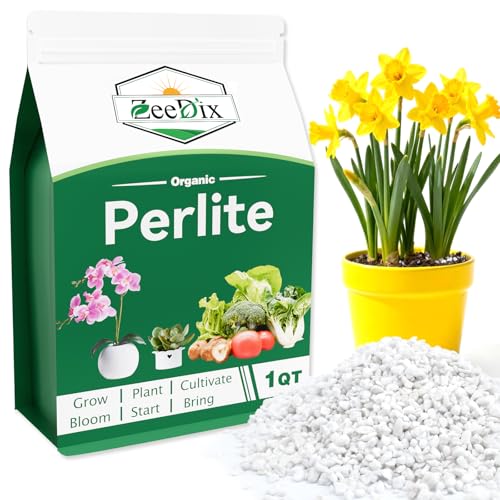
The 1-quart version of ZeeDix coarse perlite is the smaller sibling of the 3-quart bag reviewed earlier. Same coarse 3 to 9 millimeter grade, same porous volcanic structure, just sized for a one-plant refresh. If you keep a single Monstera on a plant stand and want to open up a bag of standard potting soil without committing to a giant sack, this format makes sense.
For most collectors, the 3-quart bag is the smarter buy per quart, but the 1-quart option wins on storage footprint and shelf life in a humid closet. Think of it as a test size before committing to a larger amendment purchase.
Strengths Worth Knowing
- Small footprint fits in tight storage areas
- Coarse grade delivers the same drainage lift as larger bags
- Good trial size for first-time mix builders
Small Caveats
- Higher cost per quart than the 3-quart option above
- Won’t cover more than a single mid-sized repotting session
Who Should Grab It
Single-plant owners testing perlite for the first time without committing to a larger bag.
Reach For A Different Pick When
Anyone refreshing multiple plants at once should step up to the ZeeDix 3QT Coarse Perlite reviewed earlier.
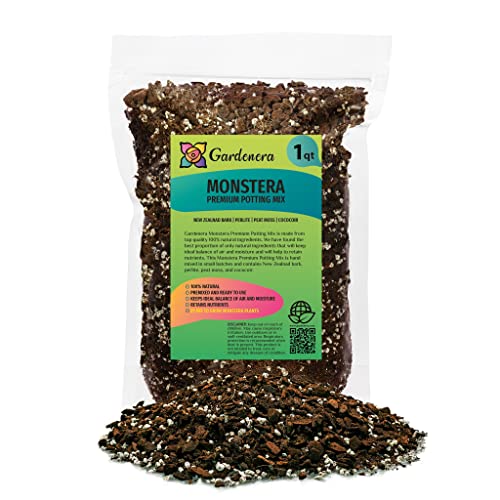
Gardenera’s premium Monstera blend is the specialist option of the list, with a recipe built specifically around Monstera deliciosa and its close relatives. The label lists peat moss, perlite, coco coir, biochar, worm castings, and bark, which covers drainage, moisture retention, and slow nutrient release in a single bag. The “quick drain” framing tells you the texture leans chunky rather than spongy.
Against the ZeeDix tropical mix above, Gardenera’s blend goes heavier on the bark and biochar, which keeps the airy structure intact longer between repots. The trade-off shows up in volume: a single 1-quart bag covers one small to medium Monstera, so a shelf of plants will burn through it fast.
Real Benefits
- Specialist blend targets the exact soil profile Monstera roots prefer
- Mix of bark and biochar keeps structure open over many months
- Combines drainage, moisture holding, and feeding in one bag
- Suits both new propagations and mature Swiss cheese plants
A Few Limitations
- 1-quart volume is small for multi-plant households
- Premium positioning may stretch tight budgets
Feature Snapshot
Whose Shelf It Belongs On
Single-plant owners repotting a beloved Monstera deliciosa or Swiss cheese plant into a tailored blend.
Swap It Out When
Anyone with a full aroid shelf will find the FoxFarm Ocean Forest 1.5 cu ft far more economical by volume.
Foliar feeding sits alongside soil health in a complete Monstera routine, and Gardenera’s spray mist delivers a 3-1-2 nutrient ratio directly to the leaves. That ratio, meaning three parts nitrogen, one part phosphorus, two parts potassium, leans nitrogen-heavy to support the broad, glossy foliage Monsteras are grown for. The 8-ounce bottle gives you a gentle supplement rather than a strong root drench.
Compared with a soil-applied fertilizer, foliar mists absorb quickly and show results on leaf color in a short window. You’ll still want a solid soil base from the FoxFarm or ZeeDix picks above. The mist works as the topping, not the foundation, and you may find it useful between regular waterings during the active growing season.
The Good Stuff
- Gentle 3-1-2 ratio suits Monstera’s nitrogen-hungry foliage
- Spray format delivers nutrients directly to leaves for fast uptake
- Compact 8-ounce bottle fits on a plant care shelf
Where It May Fall Short
- Foliar feed alone cannot replace a nutrient-rich soil base
- Sprays need consistent reapplication to maintain leaf condition
Perfect Match For
Monstera owners building a complete care routine that pairs quality soil with regular leaf support.
Not Your Match When
Anyone who wants soil and feed in one bag should look at Gardenera Premium Monstera Potting Soil reviewed above.
The Organic Superfood Mist sits one rung above the basic 3-1-2 spray, layering in micro-fungi and a blend of 18 key vitamins and minerals. Beneficial fungi build a quiet alliance with root systems, helping Monstera roots pull in nutrients that would otherwise wash past. For mature plants pushing out new fenestrations, that extra microbial support can make a visible difference across a growing season.
Versus the simpler spray mist above, this one costs more and brings more to the table in return. The honest read is that beginners with a single starter Monstera rarely need the microbial layer, while owners of older, leafier plants tend to notice the difference. Pair it with any of the soil options on this list to round out a routine.
Practical Pluses
- Micro-fungi blend supports root efficiency over time
- 18-nutrient profile covers more than a basic N-P-K mist
- Organic formulation appeals to chemical-conscious gardeners
Things To Consider
- Higher cost than simpler foliar sprays
- Best payoff comes with mature Monsteras, not starter plants
Who Will Love This
Mature Monstera owners committed to an organic-leaning, microbe-friendly care routine.
Where A Sibling Pick Shines
First-time growers should start with the simpler Gardenera Monstera Spray Fertilizer Mist and revisit this one later.
The 1-quart ZeeDix tropical mix is the smaller version of the 3-quart blend reviewed earlier, offering the same 5-in-1 aroid formula in a low-commitment bag. The smaller format is useful if you want to try a tropical blend before graduating to a larger volume, or if you only have one small Monstera in a 4 to 6 inch pot to repot.
For most gardeners the 3-quart version gives you better value per quart, but the 1-quart option lets you test the recipe without taking up closet space. The trade-off shows up if your plant collection grows, since you’ll be back at the retailer quickly.
Key Advantages
- Low-cost way to try a tropical aroid blend
- Same targeted 5-in-1 recipe as the larger ZeeDix bag
- Compact size stores easily in tight spaces
Potential Compromises
- Higher cost per quart than the 3-quart sibling
- Won’t cover a full multi-plant repotting day
Right Fit For
First-timers curious about aroid mixes who want to test the recipe on a single small Monstera.
Where A Sibling Pick Shines
Anyone committing to a regular Monstera routine will save by stepping up to the ZeeDix 3QT Tropical Potting Mix.
Reading The Label: What Makes A Monstera Mix Work
A Monstera’s native floor is a loose carpet of decomposing leaves, bark fragments, and airy pockets where roots travel freely. The job of any potting mix is to recreate that balance indoors, holding water long enough for the roots to drink while letting excess drain away before rot sets in. Three attributes decide whether a blend succeeds or struggles.
Drainage comes first. A mix that holds too much water suffocates roots and encourages fungal growth. Perlite, orchid bark, and coarse amendments open the structure so excess moisture escapes through the pot’s drainage holes. For most Monstera setups, drainage matters more than water retention, since overwatering causes far more losses than underwatering.
Aeration runs alongside drainage. Roots need oxygen between waterings, and chunky ingredients like bark and perlite keep air pockets from collapsing as the soil settles. A bag that compacts within weeks is usually too fine for a mature Monstera.
Moisture retention rounds out the trio. Coco coir, peat moss, and worm castings hold a buffer of water the plant can draw on between drinks. The goal is enough retention to skip daily watering, but not so much that the pot stays soggy.
Most store-bought mixes lean too dense for Monsteras, which is why experienced growers add perlite, bark, or biochar to lift the structure. Pre-formulated tropical blends save that step, and the right pick depends on how many plants you keep and how hands-on you want to be.
Key Considerations Across These Picks
Common Shopping Slip Ups
The biggest misstep is grabbing a generic all-purpose potting soil and calling it done. Those blends work for outdoor beds and many flowering houseplants, but they hold water like a sponge compared with what Monsteras prefer. Brown spots, yellowing lower leaves, and a soggy stem base usually trace back to soil that stayed wet too long.
A second trap is buying a tropical mix without checking your pot’s drainage. Even the best blend fails in a cachepot without holes, since water has nowhere to go. Match the soil to the container, and your Monstera will reward you.
When Paying More Pays Off
Premium blends like Gardenera’s premium Monstera mix charge more per quart because they include bark, biochar, and worm castings in proportions already tuned for aroids. For a single plant, that extra cost buys you time you’d otherwise spend sourcing and blending amendments yourself.
For collectors with several Monsteras, the math flips. A bulk bag of FoxFarm Ocean Forest plus a separate perlite amendment costs less per quart and lets you tune the ratio to each plant. The premium option earns its keep when convenience matters more than unit price.
Frequently Asked Questions
How often should I repot my Monstera? Most Monsteras thrive with a fresh soil refresh every two to three years, or whenever roots circle the pot and push out drainage holes.
Can I use regular potting soil for Monstera? Standard all-purpose soil works in a pinch, but adding coarse perlite or orchid bark improves drainage and reduces the risk of root rot.
Do Monsteras need fertilizer in their soil? A nutrient-rich blend like FoxFarm Ocean Forest or Gardenera Premium covers early needs, while a foliar mist like Gardenera’s spray adds support during active growth.
What size pot does a Monstera need? Pick a pot one to two inches wider in diameter than the current root ball, with drainage holes, to avoid water pooling around the rhizome.
Is perlite necessary in a Monstera mix? Perlite isn’t strictly required, but it lifts drainage and aeration enough that most growers include it as a baseline amendment.
Closing Remarks
The right soil turns Monstera care from a guessing game into a calm routine. Match the blend to your collection’s size, your tolerance for hands-on mixing, and the pot it lives in, and your Swiss cheese plant will keep pushing out those signature split leaves. Start with a ready-to-use tropical mix for simplicity, or build your own with perlite and biochar if you enjoy dialing in the details.
