

Healthy soil rarely announces itself. You notice when the hydrangeas shift from blue to pink, when the tomatoes sulk through July, or when lawn patches stay stubbornly thin. The right meter turns guesswork into numbers you can actually act on, and the wrong one costs you a season. The list below mixes multi-function probes, lab-grade pens, and specialty compaction tools so you can match the tool to the job.
The Essentials At A Glance
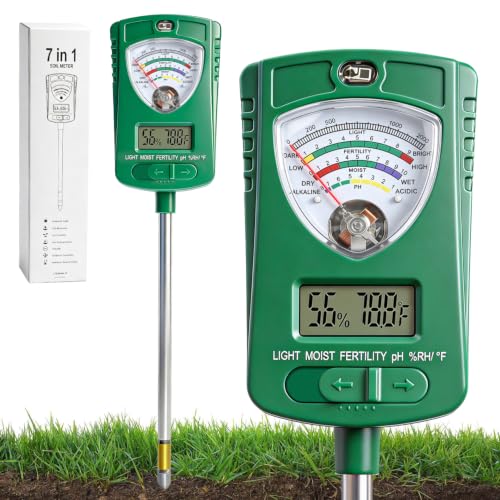
FOTSHARER 7-in-1 Soil Test Kit with Rotatable Head
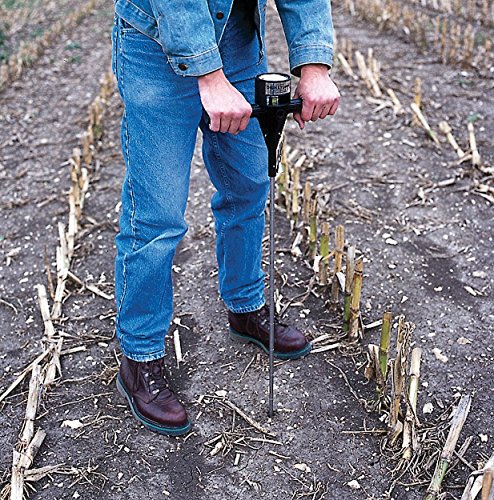
Dickey-John Soil Compaction Tester
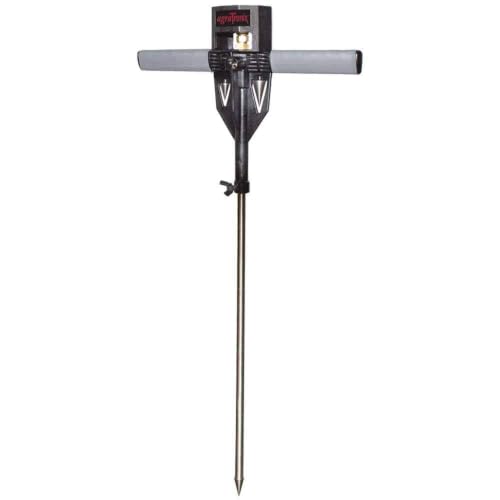
AgraTronix 8180 Soil Compaction Tester
LAWNFUL Digital Soil pH Meter

EDGEVEIL 4-in-1 Soil Moisture Meter

Apera Instruments GS1 pH Pen Tester

Apera Instruments GS4 Combo 5-in-1 Pen Tester

Apera Instruments GS2 Soil pH Pen Tester

LUVCOSY Calibration-Free Soil pH Pen
Aenncci 2-in-1 Soil Moisture and pH Meter
What Each Pick Brings To The Table
Most home gardeners want one tool that handles the usual questions: is the bed too wet, is the spot sunny enough, and is the dirt leaning acidic. The FOTSHARER probe answers all three plus a handful of secondary readings from a single 90-degree rotating head, which keeps the display upright when the probe angles into a raised bed. You get soil moisture, pH, fertility, light intensity, soil temperature, ambient temperature, and air humidity without swapping instruments.
For a mixed backyard that includes a vegetable patch, a sunny border, and a few houseplants, the multi-metric design is genuinely useful. You can move from one bed to the next and log conditions in a few seconds, which matters during a busy spring weekend. The trade-off is that any all-in-one probe tends to be a jack-of-all-trades; you may find the pH reading less precise than a dedicated pen would deliver.
Benefits That Matter
- Replaces several single-purpose tools with a single probe
- Rotating head keeps the display readable in tight spaces
- Includes ambient temperature and humidity for grow-room users
- Handy for tracking seasonal changes across multiple beds
Things To Consider
- All-in-one probes typically deliver less precise pH than dedicated pens
- Probe tips commonly need cleaning between zones to avoid cross-contamination
Key Advantages
Who It Suits Best
Curious hobby gardeners with mixed beds who want one tool that surveys moisture, light, and pH without juggling separate meters.
Look Elsewhere When
Compost tea brewers and serious hydroponic growers will prefer the Apera Instruments GS1 pH Pen Tester for its replaceable laboratory-grade probe.
Soil pH gets the spotlight, but compaction quietly strangles roots long before pH ever becomes an issue. The Dickey-John tester is a long steel probe with two interchangeable tips (1/2 inch and 3/4 inch diameters) and a 30-inch reach, designed to read penetration resistance up to 500 PSI. Press it into the ground and the gauge shows how tightly the soil is packed, layer by layer.
For growers with pastures, food plots, or sizable vegetable ground, that depth matters. Surface crusting and deeper plow pans create different problems, and this tool tells you which you have. You won’t use it on a window box, and it isn’t a chemistry test, but where compaction is the suspected culprit it answers a question no probe-based meter can.
Everyday Wins
- 30-inch steel probe reads compaction at meaningful root depth
- Interchangeable 1/2-inch and 3/4-inch tips suit different soil types
- Mechanical gauge needs no batteries or calibration fluids
Honest Caveats
- Measures compaction only, not pH or moisture
- Requires significant hand and body strength on dense soils
- Overkill for small raised beds and container gardens
Right Fit For
Pasture managers, small-acreage farmers, and serious food-plot growers diagnosing whether subsurface compaction is choking their root systems.
Consider Something Else When
Container gardeners and apartment growers will find the Aenncci 2-in-1 Soil Moisture and pH Meter a far more practical scale of tool.
The AgraTronix 8180 takes the same core idea as the Dickey-John probe and wraps it in a more ergonomic package. A 24-inch stainless probe pairs with rubber grip handles, a water-filled stainless dial that smooths out the needle, and a 300 PSI pressure range that covers most agricultural scenarios. The shorter length makes it less back-straining on smaller plots.
You see the comfort advantage the moment you push into harder ground. The grips absorb torque, the liquid-damped dial settles quickly, and the readings stay stable enough to log without squinting. Compared to the Dickey-John, you trade two inches of depth and 200 PSI of upper range for noticeably easier handling. For most working farms below large commercial scale, that swap works in your favor.
Notable Gains
- Rubber-grip handles reduce fatigue on repeated readings
- Water-filled dial damps vibration for steadier needle behavior
- Stainless construction handles wet soil without early rust
Points To Note
- Limited to 300 PSI, so extremely compacted sites may under-read
- Single-purpose tool that still requires some physical effort
Best Suited To
Working smallholders and market gardeners who want a comfortable compaction tool they can grab and use for repeated spot checks across a property.
Not Your Match When
Vegetable bed hobbyists should skip this in favor of the FOTSHARER 7-in-1 Soil Test Kit, which surveys several conditions at once.
Calibration solutions, buffer powders, and probe storage solutions are a chore for most home gardeners. The LAWNFUL digital pH meter skips that step entirely with a calibration-free design, dropping the probe into moist soil and reading the result on a backlit LCD. A double-needled stainless-steel probe provides the contact surface, and the housing stays light enough to carry around all afternoon.
Compared to the FOTSHARER 7-in-1, this trades multi-metric versatility for a sharper pH focus. You give up moisture, light, and temperature, but you get a number that maps more directly onto amendment decisions like lime or sulfur applications. The honest read is that calibration-free pens sacrifice some long-term precision, so the LAWNFUL works best for trend-tracking rather than exact chemistry.
A Few Highlights
- Skip the calibration ritual common to lab-grade pH pens
- Backlit LCD makes readings easier in shaded beds and indoor pots
- Double-needled probe widens soil contact for faster stabilization
Trade Offs
- No moisture, light, or temperature data to cross-reference
- Probe tip needs wiping between samples to avoid carryover
Perfect Match For
Home growers who want pH numbers without buying buffer solutions and who mainly need to track whether beds are leaning acidic or alkaline over time.
Skip It When
Hydroponic growers who manage daily nutrient solutions will want the Apera Instruments GS1 pH Pen Tester, where calibration control is part of the workflow.
Overwatering kills more houseplants than underwatering, and a meter that flags trouble before leaves yellow saves a lot of guesswork. The EDGEVEIL probe reads soil moisture, soil temperature, sunlight time, and ambient temperature from a single wireless unit with a large display. The low-moisture alert flashes when a pot drops below your threshold, which is genuinely helpful for people with more plants than memory.
You may find the wireless range a small daily luxury, because you can check the back porch plant from the kitchen. Sunlight time tracking is a unique data point that few hobby meters offer, useful for repositioning finicky species like orchids or succulents. The trade-off shows up in pH: this meter doesn’t measure it, so anyone focused on soil chemistry should pair it with one of the pH-specific picks on this list.
Points In Its Favor
- Low-moisture alert catches dry pots before wilting
- Wireless design reads across rooms and outdoor spaces
- Sunlight time data helps fine-tune placement decisions
A Few Limitations
- No pH reading, so you still need a separate meter for chemistry
- Wireless base requires battery changes over time
Who Should Grab It
New houseplant owners and casual lawn keepers who want a forgiving tool that warns them before plants go thirsty, without a chemistry background.
A Better Fit Elsewhere
Blueberry and azalea gardeners who obsess over pH will get more from the LUVCOSY Calibration-Free Soil pH Pen for dedicated acidity tracking.
Once you start measuring nutrient solutions, calibration stops feeling optional and starts feeling necessary. The Apera GS1 is a lab-grade pH pen with a replaceable double-junction probe, which matters because the junction (the porous reference point inside the probe) is the part that wears out first on budget pens. Apera designed the Gen II specifically for growers managing hydroponic reservoirs where daily pH swings directly affect nutrient uptake.
The replaceable probe is the headline feature. When readings drift after months of use, you swap the probe rather than the whole meter, which spreads the cost over years. Compared to the LAWNFUL meter, you gain precision and longevity at the cost of a calibration routine and a higher upfront spend. For anyone mixing nutrient solutions in a reservoir, that precision pays off quickly.
The Practical Payoff
- Replaceable double-junction probe extends working life
- Lab-grade accuracy suits daily reservoir checks
- Designed specifically for hydroponic workflows
Worth Noting
- Requires calibration buffers and routine maintenance
- Higher upfront cost than calibration-free consumer pens
Whose Shelf It Belongs On
Hydroponic growers, indoor farmers, and anyone managing a nutrient reservoir who treats pH as a daily variable rather than a seasonal check.
Reach For A Different Pick When
Outdoor soil gardeners working a few vegetable beds will find the LUVCOSY Calibration-Free Soil pH Pen a simpler, lower-maintenance fit.
Where the GS1 focuses purely on pH, the GS4 expands into the rest of the water-chemistry picture. It measures pH, electrical conductivity (EC, which signals total dissolved nutrients), and total dissolved solids in both 500 ppm and 700 ppm scales. The replaceable double-junction pH/EC probe keeps the cost of ownership manageable once the sensor eventually ages out.
For a serious hydroponic or coco-coir setup, this single pen replaces three separate instruments. EC tracking tells you whether your feed strength is on target, while pH tells you whether nutrients stay available to roots. The catch is that the GS4 expects you to know what you’re doing with the numbers; raw values without context don’t help beginners. The honest read is that this is a step up in complexity, not a step up in convenience.
Why It Works Well
- Five readings in one pen cuts bench clutter
- Replaceable pH/EC probe keeps long-term cost down
- Dual ppm scales match common hydroponic reference charts
Less Ideal Details
- Steep learning curve for first-time growers
- Calibration solutions and storage fluid are ongoing expenses
Made For
Experienced hydroponic growers running multi-gallon reservoirs who actively manage feed charts and treat pH and EC as daily numbers.
Swap It Out When
If you only need occasional pH checks, the Apera Instruments GS2 Soil pH Pen Tester offers a spear tip that reads directly in soil.
The GS2 splits the difference between the GS1 reservoir pen and a casual soil probe. Apera designed it for direct soil testing, so it ships with a replaceable Swiss spear pH probe that pushes into moist ground without needing a slurry. You can also drop it into nutrient solutions, which makes it a versatile bridge tool for growers who move between soil beds and reservoir tanks.
The spear tip reads faster in soil than a flat glass bulb, and the replaceable sensor keeps the meter useful for years. Compared to the LAWNFUL calibration-free meter, you trade the no-fuss workflow for better long-term accuracy and the option to run calibration buffers when you want pinpoint numbers. Depending on your soil type, a hard clay may require pre-moistening the spot before the spear penetrates cleanly.
Practical Advantages
- Swiss spear probe reads directly in soil, no slurry required
- Works in both soil and nutrient solutions
- Replaceable probe extends working life significantly
Where It May Fall Short
- Spear tip needs occasional cleaning and proper storage fluid
- Hard or rocky soils can be tough to penetrate without prep
Built With In Mind
Greenhouse operators, indoor growers with mixed setups, and serious raised-bed gardeners who want one pen that handles both soil and reservoir pH.
Where Another Pick Suits Better
Field-scale farmers managing broad pastures will prefer the AgraTronix 8180 Soil Compaction Tester for diagnosing soil physical structure instead.
The LUVCOSY pen leans into the same easy-entry appeal as the LAWNFUL meter: no calibration buffers, no storage solutions, no warm-up rituals. Stick the double-needled stainless probe into moist soil and read the result on a backlit LCD. At roughly 160 grams, the housing is light enough to slip into a garden tote without adding weight to the rest of your kit.
For the casual gardener who checks pH twice a season across a handful of beds, the workflow fits perfectly. The trade-off shows up in heavy use, because inexpensive electronics tend to drift faster than lab-grade circuits. You may find the readings stay reliable for a year or two of occasional use, then begin to wander. For most home soil scenarios, that’s plenty of life.
Where It Helps
- No calibration routine, so the first read takes seconds
- Lightweight handheld body reduces wrist fatigue
- Backlit display works under dense canopies and indoors
Potential Drawbacks
- Probe body requires care, since dropping it can knock sensors out of spec
- Long-term drift is faster than replaceable-probe lab pens
The Right Fit
Budget-conscious home gardeners tending lawns, flower beds, and small vegetable plots who want pH numbers without committing to a maintenance routine.
Another Choice May Suit
Daily hydroponic growers should step up to the Apera Instruments GS1 pH Pen Tester for replaceable-probe longevity.
Sometimes a tool earns its place by what it doesn’t ask of you. The Aenncci meter is a no-battery analog probe with a large dual dial: one needle for moisture, one for pH. You push the prongs into the soil and read two columns at a glance, no charging cables, no buffer solutions, no menus. For older gardeners, classroom settings, or anyone who wants pH readings without a learning curve, that simplicity is the feature.
The trade-off is precision. Analog probes tend to deliver broader bands than digital pens, and readings can shift with soil moisture levels. The honest read is that the Aenncci works best as a screening tool: it tells you a bed is leaning acidic or that a pot is dry, which covers most casual decisions. Where you need the difference between 6.2 and 6.5, the Apera GS2 spear probe is the better tool.
Strengths Worth Knowing
- No batteries or charging means always ready to use
- Dual-dial layout shows moisture and pH side by side
- Lightweight and safe for shared spaces like classrooms
Things To Weigh
- Analog readings are coarser than digital pen accuracy
- Probes need wiping between samples to avoid cross-readings
Who Will Love This
Casual home gardeners, kids learning about soil science, and anyone who wants pH and moisture without committing to calibration routines or app setup.
Where A Sibling Pick Shines
Serious amendment planning benefits more from the LUVCOSY Calibration-Free Soil pH Pen, which gives a sharper digital number.
Factors To Consider When Choosing Soil Ph Testers
The right category of tester depends entirely on what you’re measuring and how often. Probe-style analog meters (like the Aenncci) suit casual gardeners who want quick pH and moisture checks without any setup. They trade precision for simplicity, so the bands are broader, but for a backyard with a few raised beds that’s usually enough. Digital pH pens (LAWNFUL, LUVCOSY, Apera GS1, GS2) push accuracy higher, with calibration-free options for low maintenance and replaceable-probe models for long-term precision work.
Multi-function probes (FOTSHARER, EDGEVEIL) fold moisture, light, and temperature into a single tool, which helps gardeners tracking several variables at once. Compaction testers (Dickey-John, AgraTronix) are a different category entirely: they measure how tightly soil is packed, not its chemistry, and matter most on larger plots, pastures, and food plots where root penetration is a recurring problem.
For hydroponic and greenhouse growers, EC and ppm tracking (Apera GS4) often matter as much as pH, since nutrient strength and acidity both shape plant uptake. Match the tool to the question you actually need to answer, because a five-function probe is wasted on a tomato grower who really only wants pH.
Key Considerations Across These Picks
Wrong Turns To Avoid
A common misstep is buying a multi-function probe and assuming every reading is equally accurate. In practice, all-in-one meters tend to do everything passably and nothing superbly, so a gardener who only needs pH will get sharper numbers from a dedicated pen. Another trap is skipping calibration on a lab-grade pen, then wondering why reservoir adjustments miss the mark; calibration buffers exist because reference drift is real, even on quality electronics.
The Case For Spending Up
Higher-tier models earn their cost through replaceable probes, sharper circuits, and tougher housings. A lab-grade pen like the Apera GS1 costs more up front, but a replacement probe costs less than a full new meter, which spreads the investment across years. For growers testing pH weekly or daily, that math shifts quickly in favor of the upgrade. Casual gardeners who test twice a season may never notice the difference, and a calibration-free pen is the smarter spend.
