

Loose gravel migrating into the lawn, mulch washing away after every rain, potted succulents sitting in soggy soil; these are the small frustrations that send homeowners hunting for the right fix. Soil stabilizers cover a wide spectrum, from binders that glue decorative rock in place to porous mineral amendments that balance drainage in planters, and even structural grids that turn a soft path into a load-bearing surface. The picks below were chosen for genuinely different jobs, so you can match the product to the mess instead of forcing one tool to do everything.
The Essentials At A Glance

CactiCal Limestone 12oz Crushed Calcium Carbonate Granules
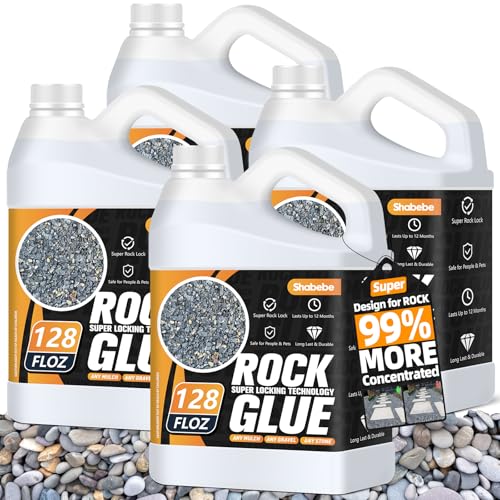
Shabebe Rock Glue 4 Gallon 20X Mega Hold Gravel Binder

Shabebe Ultra Mulch Hold 1 Gallon Gravel Stabilizer

Shabebe Rock Glue 1 Gallon with Sprayer Kit

DeWitt DuPont GroundGrid Geotextile Stabilization System

Shabebe Mulch Glue 2 Gallon Concentrated Binder

DESHIL Chem Rock Glue 1 Gallon with Sprayer

Lockscape Mulch Glue 2 Gallon Concentrated Binder
Inside Each Recommended Option
Most soil stabilizers in this roundup are designed to hold rock or mulch in place, but this Seven Springs Farm pick works on a different scale entirely. Crushed calcium carbonate acts as a mineral soil amendment, the kind of granular additive that gets mixed directly into a potting blend before planting.
You get a 12-ounce starter bag, which is enough to test a small batch of cactus or bonsai mix without committing to a full-size sack. The granules are porous in the same general way as pumice, so water drains through while a little moisture clings to the particles.
A Strong Showing
- Lifts and stabilizes pH in alkaline-loving plants
- Improves drainage in dense or peaty mixes
- Small 12-ounce bag suits trial batches
- Doubles as a long-release calcium source
- Lightweight granules mix easily by hand
Worth Noting
- Not suited to acid-loving plants like blueberries or azaleas
- Starter size runs out fast on big collections
Quick Facts
Whose Shelf It Belongs On
Succulent and bonsai hobbyists working with small pots who want better drainage and steady pH without buying a bulk sack.
Skip It When
You need a binder to glue down loose landscape gravel, where the Shabebe Rock Glue 4 Gallon 20X Mega Hold Gravel Binder is the more useful match.
When your yard holds a long pea-gravel walkway and a wide decorative border, a quart of binder disappears in one afternoon. This Shabebe jug comes in at 4 gallons with a thick, honey-like viscosity around 12,000 mPas, so each pass lays down a heavier film than thinner sprays.
Even diluted, the formula carries more solid particles than standard binders, which is why the listing leans into the 20X hold claim. It also handles pea gravel, river rock, and decorative stones, making it the broadest-coverage option in this guide.
Advantages To Know
- 4-gallon volume covers multiple zones
- High-viscosity formula reduces product waste
- Works on pea gravel, mulch, and stone
- Pet-safe formulation
- Suitable for walkways and driveway edges
Trade-Offs To Consider
- Pouring from a 4-gallon jug onto a wet path gets awkward without a pump sprayer
- Honey-thick liquid takes longer to dry in shaded spots
- Over-application can leave a visible film on light-colored stone
Feature Snapshot
Made For
Property owners tackling whole driveways or extensive decorative borders in a single weekend who want fewer refills.
Consider Something Else When
You only need to bind a small path or a single flower bed, where the Shabebe Rock Glue 1 Gallon with Sprayer Kit is a better fit.
Most landscape binders are designed with foot traffic in mind, but if your gravel path doubles as a shortcut for the kids on bikes, you need a harder cure. This upgraded 1-gallon Shabebe formula is positioned as bicycle-friendly, meaning the cured film resists the kind of point load a tire puts on loose stone.
The all-weather resistant binder also claims reduced washout and blowout, which matters in regions where heavy rain or wind routinely scatters unprotected gravel. Compared to the lighter 1-gallon kit, this one prioritizes strength over convenience.
What Pays Off
- Bicycle-grade bond for active paths
- Resists washout in heavy rainfall
- Handles gravel, pebbles, and pine straw
- Locks mulch without hardening it into a sheet
Soft Spots
- Single gallon may run short on larger projects
- Sprayer not included, so you supply your own
Right Fit For
Households with bike paths, sloped gravel walkways, or garden borders that take a beating from the elements.
Look Elsewhere When
You want the sprayer bundled in, in which case the Shabebe Rock Glue 1 Gallon with Sprayer Kit is the simpler choice.
The honest read on most binders is that the hardest part isn’t the glue itself, it’s finding a sprayer that doesn’t clog after five minutes. Shabebe sidesteps that problem by bundling a heavy-duty 1-gallon sprayer with clog-resistant nozzles alongside the gallon of adhesive.
You get a non-toxic, rapid-dry formula that cures clear, which keeps decorative gravel looking natural rather than glossy. For first-timers, this kit removes the guesswork of matching pump equipment to a viscous binder.
The Good Stuff
- Sprayer included with clog-resistant nozzles
- Dries clear for invisible bonding
- Non-toxic formulation
- Rapid-dry cure time
Honest Caveats
- Sprayer quality commonly varies and may need a thorough rinse after each use
- Single gallon is tight on mid-sized projects
Best Suited To
First-time users who want a ready-to-spray bundle and a small-to-medium pea gravel patio or border to tackle.
A Better Fit Elsewhere
You expect heavy bike traffic or slope erosion, where the Shabebe Ultra Mulch Hold 1 Gallon Gravel Stabilizer brings stronger bonding.
The other picks on this list all work at the surface level, but the DeWitt DuPont GroundGrid operates underneath. It expands into a three-dimensional honeycomb with 110 mm-deep cells that hold gravel, soil, or sand as infill, creating a stable sub-base rather than a glued top layer.
That structural approach makes it the right call for driveways, parking pads, slopes, and pathways that need to bear the weight of vehicles. Once filled, the cells minimize lateral movement and keep materials from migrating into the lawn.
Where It Helps
- 3D honeycomb supports heavy loads
- Holds gravel, soil, or sand as infill
- Reinforces driveways, slopes, and pathways
- Improves load distribution under vehicles
A Few Limitations
- Installation requires excavation and ground prep
- Single panel layout may need multiple units for larger areas
Spec Overview
Who Should Grab It
DIYers laying a new gravel driveway or slope who want a permanent sub-base instead of repeatedly re-leveling loose stone.
Swap It Out When
You only need to glue decorative rock in an existing bed, where the Shabebe Rock Glue 4 Gallon 20X Mega Hold Gravel Binder is the faster surface-level answer.
Rubber mulch, wood chips, and pea gravel all behave differently once glued, so a binder that handles the whole trio in one jug saves a lot of trips to the shed. This 2-gallon Shabebe concentrate is formulated for broad surface compatibility, including rubber mulch, which most landscape adhesives struggle to grip.
The pet-safe profile and 2-gallon size make it a sensible middle ground between the 1-gallon starter and the 4-gallon mega jug above. It’s a steady, versatile option for ongoing yard maintenance.
Real-World Strengths
- Bonds rubber mulch, wood chips, and pea gravel
- Pet-safe chemistry
- Mid-size 2-gallon container suits most yards
- Concentrated formula stretches further than standard binders
Points To Keep In Mind
- Concentrate requires accurate dilution to avoid over-saturation
- Not the strongest option for heavy vehicle traffic
Quick Technical Notes
Who Will Love This
Homeowners juggling several bed types across the yard who want a single, flexible binder rather than multiple specialty jugs.
Another Choice May Suit
You need bicycle-grade strength on a gravel path, where the Shabebe Ultra Mulch Hold 1 Gallon Gravel Stabilizer is the tougher performer.
If your project goes beyond loose gravel and into actual stonework, you’re past the comfort zone of a generic mulch glue. DESHIL Chem’s rock glue is geared toward bonding natural stone, pavers, and even boulders, the kind of hardscape that needs to stay put through freeze-thaw cycles.
The gel-based formula is meant to be blended with stone dust or sand for a sanded, invisible joint, so the finished surface looks like real masonry. The included sprayer means you can spray-apply for wider areas or trowel-apply for tight joints.
Useful Highlights
- Engineered for paver and boulder bonding
- Withstands freeze-thaw and heavy rain
- Blends with stone dust for natural finish
- Sprayer included for broad coverage
Where It May Fall Short
- Overkill for loose mulch beds
- Gel consistency takes practice to trowel evenly
The Right Fit
Hardscape builders and ambitious DIYers installing flagstone paths, boulder accents, or stacked stone borders.
Reach For A Different Pick When
You mostly need to lock down rubber mulch and wood chips, where the Shabebe Mulch Glue 2 Gallon Concentrated Binder is more appropriate.
In regions where spring storms routinely wash mulch down the driveway, reapplying binder every few weeks gets old fast. Lockscape markets a 2-gallon ultra-concentrated formula with multi-season staying power, claiming the cured film holds up through repeated storms.
The non-toxic profile keeps it safe around pets and edible garden edges. For a household that battles persistent rain or wind, the longer interval between treatments is the headline benefit.
The Value In It
- Extended cure window between reapplications
- Non-toxic, pet-safe chemistry
- Ultra-concentrated formula covers wide areas
- Works on mulch, pea gravel, and pine straw
Possible Compromises
- Concentrate needs accurate dilution for proper cure
- Longevity claims depend on weather and surface prep
Perfect Match For
Homeowners in stormy or windy climates who want to reapply mulch glue less often across large garden areas.
Where A Sibling Pick Shines
Your project is hardscape rather than mulch, where the DESHIL Chem Rock Glue 1 Gallon with Sprayer is purpose-built for stonework.
What Matters Most Before Choosing Soil Stabilizers
Match The Product To The Job
The biggest split in this category is surface binders versus structural grids. Surface binders like rock glues and mulch adhesives work on top of existing material, locking decorative stone, gravel, or mulch into a fixed layer. Structural options like the DeWitt GroundGrid work beneath the surface, creating a honeycomb sub-base that holds infill in cells. Households focused on decorative beds should look at the binder category first, while anyone planning a new driveway should start with the structural side.
Think About Traffic And Exposure
A backyard path that sees occasional foot traffic is a very different project from a slope that funnels rainwater past the foundation every storm. Bicycle-grade formulas handle point loads from tires, while standard all-weather binders work fine for gardens. In rainy or windy regions, a non-toxic, longer-lasting formula reduces the need to reapply after every season.
Check Compatibility With Your Materials
Not every binder grips every surface. Pea gravel, river rock, rubber mulch, pine straw, and pavers each behave differently once cured, and a one-size-fits-all jug often underperforms on at least one of them. For mixed beds, a versatile 2-gallon concentrate tends to be the safer bet than a specialty formula.
Plan For Application Tools
Thicker binders need either a heavy-duty pump sprayer or a trowel, and thin sprays can drift onto plants or stonework you wanted to keep clean. Bundled kits remove the guesswork for first-timers, while experienced users may prefer buying the concentrate alone and supplying their own applicator.
Key Considerations Across These Picks
Mistakes Worth Dodging
Buying the largest jug on the market without confirming your sprayer can handle the viscosity is the most common misstep. A 4-gallon jug with a thin pump sprayer leads to clogging, uneven coverage, and wasted product. Starting with a smaller container for a test patch prevents overspending on a formula that ends up mismatched to your stone or mulch type.
What The Higher Tier Buys
Stepping up to a higher-viscosity or bicycle-grade formula costs more, but the upgrade pays off when you have a path that takes real abuse or a slope that sheds material in every storm. Premium concentrates also tend to use non-toxic chemistry that holds up longer between reapplications, which lowers the yearly maintenance load.
Frequently Asked Questions
How long does mulch glue typically last before reapplication is needed?
Most landscape binders hold for several months under normal weather, though heavy rain, slope runoff, and high-traffic paths shorten that window. Concentrated formulas marketed as long-lasting can stretch the interval to a year or more, depending on conditions.
Can soil stabilizers handle vehicle traffic on a gravel driveway?
Surface binders are designed for foot and light vehicle traffic, but for full vehicle loads on a fresh driveway, a structural geogrid like the DeWitt GroundGrid is a better foundation. Some users combine both, putting a grid underneath and a binder on top for the cleanest finish.
Are rock glues safe around pets and edible gardens?
Many modern binders are formulated as non-toxic once cured, including several options on this list. Check the product page for any specific safety notes, and keep pets and kids off the surface until the film has fully dried.
What is the difference between a rock glue and a mulch glue?
The chemistry is similar, but mulch glues are usually formulated to stay slightly flexible, since organic mulch expands and contracts with moisture. Rock glues lean toward a harder cure to handle the weight and point loads of stone.
Do I need to remove old mulch before applying binder?
A clean, dry surface gives the best bond, so raking back debris and letting the area dry improves results. Applying over damp, matted, or decomposing mulch often leads to uneven adhesion and shorter working life.
Bottom Line
The right soil stabilizer depends almost entirely on the job in front of you. Binders excel at decorative beds and walkways, while geogrids belong under new driveways and slopes. Match the formula to your material, climate, and traffic level, and the rest of the project usually falls into place.
