

A single evening browse through the lettuce rows is enough to convince anyone that deer and raccoons don’t read property lines. Solar deer repellents promise a humane, chemical-free middle ground between doing nothing and building a fence, and the better ones pair motion-triggered ultrasonics with flashing LEDs to keep grazing herds off hostas, tomatoes, and tender annuals. The shortlist below rounds up seven current options worth your attention, from single sentinel units to multi-pack stake systems that handle burrowing pests too. Each pick was chosen for a specific yard situation, so you can match the right tool to the right trouble spot.
The Shortlist At A Glance

G-Jyuncyou 360° Solar Deer Repellent for Yard & Garden

PEXPEL 360° Solar Deer Repellent with 5 Modes

Lycxbfjia Solar Ultrasonic Animal Repellent 4-Pack
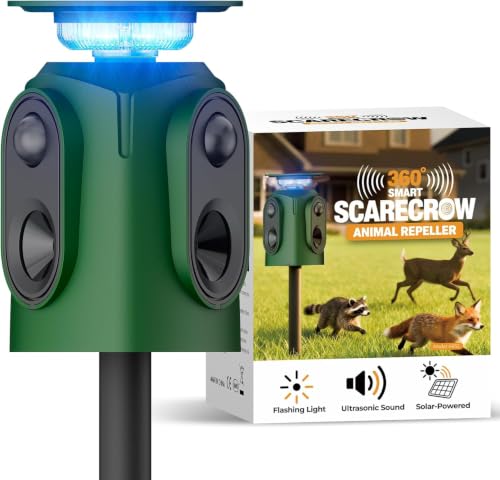
Peepst Solar Powered Ultrasonic Deer & Cat Repellent
BORHOOD Solar Mole Repellent 12-Pack Stakes

Thcritter 2026 Upgraded Ultrasonic Solar Repellent 4-Pack
BORHOOD Solar Mole Repellent 4-Pack Stakes IP65
The Details Behind The Selections
The G-Jyuncyou unit stakes into the ground near garden borders and stands guard with three motion sensors angled around the housing. Where most budget repellents ship with a single forward-facing PIR (passive infrared) detector and quietly fail when animals approach from the side, this model sweeps nearly a full circle and reacts from any direction.
Once triggered, the unit pairs a high-frequency ultrasonic burst (a tone above human hearing that irritates animal ears) with a flashing strobe to spook visitors mid-stride. You rely on the integrated solar panel for daily charging, which removes the chore of swapping batteries every few weeks. Gardeners with wide-open suburban lots, where deer tend to wander in from open lawns, tend to get the most out of this design.
Practical Pluses
- Three PIR sensors cover a full 360° field, reducing the side-angle blind spots common in single-sensor units.
- Solar panel keeps the unit running year-round without disposable batteries.
- Combined ultrasonic and flashing-light response works in both daylight and after dark.
- Weatherproof housing handles rain, snow, and summer heat without routine maintenance.
Worth Noting
- Heavy shade or a covered porch limits charging, so placement matters for consistent operation.
- A single unit covers a modest radius, so larger lots may need two or three.
Feature Snapshot
Built With In Mind
Suburban gardeners with open lawns and a clear planting border benefit most from the wide sensor spread.
Look Elsewhere When
You live on an acreage with multiple entry points, where the BORHOOD Solar Mole Repellent 12-Pack Stakes spreads coverage more practically.
PEXPEL leans into the adaptive problem at the heart of ultrasonic deterrents: animals eventually habituate to a single repeating pattern, so the fear wears off. This model rotates between five mode combinations of ultrasonic frequency and LED flash, which slows that learning curve considerably. A three-sided PIR layout watches a full circle, with dual flashers and dual speakers working in concert.
Charging comes from the top-mounted solar panel, while a Type-C USB backup port lets you top off the cell during long stretches of overcast weather. On a full charge, owners commonly see roughly a month of typical yard activity before a recharge is needed. You get the most from this pick in yards with persistent, intelligent wildlife like raccoons and skunks, since these animals are quick to learn a static pattern.
The Helpful Details
- Five adjustable mode combinations slow animal habituation, extending effective deterrence.
- Type-C backup charging keeps the unit topped off during weeks of cloudy weather.
- One charge typically lasts 25 to 30 days under normal use, easing routine maintenance.
- Dual LED flashers plus dual ultrasonic speakers reinforce the response across a wider area.
Things To Consider
- More modes also mean more setup decisions; choosing the right one takes a few trial evenings.
- Higher feature density places this unit a step above entry-level stakes on cost.
At A Glance
Whose Shelf It Belongs On
Property owners fighting raccoons, skunks, and other quick-learning animals in mid-sized yards benefit most from the cycling pattern.
Where Another Pick Suits Better
Casual gardeners with light deer pressure and a tight budget get better value from the Lycxbfjia Solar Ultrasonic Animal Repellent 4-Pack.
Animals rarely respect a single line of defense, so the Lycxbfjia four-pack takes a coverage-first approach. You place each stake at a separate problem area: a fence gap, a vegetable bed entrance, the side yard where raccoons tip the trash bins. The PIR sensor on each unit watches a wide 120° arc out to roughly 33 feet in clean conditions, which is enough to flank most suburban gardens.
Three mode settings let you run ultrasonic only, flashing lights only, or both together, which lets you tailor each unit to its zone. One unit near a quiet flower bed might run silent so it doesn’t disturb outdoor dinners, while a stake by the trash cans runs the full show. Gardeners working multiple entry points tend to get strong mileage from this distributed layout.
Benefits That Matter
- Four units in the box let you surround a garden from multiple angles.
- Wide 120° PIR detection reaches up to 33 feet in clear sightlines.
- Three modes (sound only, light only, both) adapt to zone-specific needs.
- Distributed placement reduces blind spots that plague single-unit setups.
Trade Offs
- Wide-angle detection on each unit means you need to space them thoughtfully to avoid gaps.
- Running four units at once drains each battery faster than a solo sentinel would.
Who Will Love This
Mid-size yard owners with multiple garden zones and varying noise tolerance per area make the most of the distributed layout.
Skip It When
You live on a small lot with a single planting border, where one well-placed G-Jyuncyou 360° Solar Deer Repellent handles the job.
Cloudy climates are where most solar units quietly give up. The Peepst sidesteps that with a dual charging system: a solar panel on top for everyday topping-off, plus a Type-C USB port that lets you manually top up the battery when the weather doesn’t cooperate. In practice, that combo holds up through gray winters and tree-shaded patios where solar-only designs run flat.
Three PIR sensors arranged around the housing deliver full 360° coverage, and the unit fires both ultrasonic sound and a flashing strobe when motion is detected. The “lemon” color is a small touch, but it makes the stake easier to spot in tall grass so you don’t mow it over. Households in northern or coastal regions with frequent overcast stretches tend to find this design reassuring.
Strengths Worth Knowing
- Combined solar plus USB charging keeps the unit alive in low-light conditions.
- Three-sided PIR sensors cover the full 360° around the stake.
- A full charge reportedly holds for 25 to 30 days under normal use.
- Bright color casing helps the unit stand out in tall grass during lawn maintenance.
Small Caveats
- The distinctive yellow finish may not blend into formal garden aesthetics.
- USB top-ups still require manual effort every few weeks in heavy cloud cover.
Feature Snapshot
The Right Fit
Gardeners in cloudy, tree-shaded, or coastal climates benefit most from the redundant charging design.
Not Your Match When
You garden in wide-open sun with deep burrowing mole pressure, where the BORHOOD Solar Mole Repellent 4-Pack Stakes IP65 does more underground.
Where most repellents target animals above the soil, this BORHOOD bundle tackles the problem from underneath as well. Each of the twelve stakes emits a low-frequency vibration paired with ultrasonic pulses every 20 seconds, which travels through the soil and disrupts the tunneling patterns of moles, voles, and gophers. Above ground, the same frequency range discourages snakes, skunks, and rabbits from settling in.
Installation is intentionally simple: push the stake into the ground, flip the switch, and the unit runs continuously on solar power. The IP65 weather rating (a standard that certifies dust-tight construction and protection against low-pressure water jets) means rain and irrigation don’t interrupt operation. Large rural lots, orchards, and farms where burrowing pests are as much a problem as surface grazers tend to lean on a dense 12-stake layout like this one.
Useful Touches
- Twelve stakes in the box let you blanket a half-acre or larger lot.
- Vibration plus ultrasonic dual tech addresses burrowing pests that ultrasonic-only stakes miss.
- IP65 weather rating handles rain, sprinklers, and outdoor humidity year-round.
- Push-in installation needs no tools, wiring, or daily attention.
A Few Limitations
- More stakes mean more visible garden hardware, which may not suit tidy landscapes.
- Soil composition affects how far vibrations travel, so dense clay responds differently from sandy loam.
Best Suited To
Rural property owners with both above-ground browsing pressure and active tunneling damage get the most from this dense layout.
Consider Something Else When
You have a small city yard without burrowing pest activity, where a single PEXPEL 360° Solar Deer Repellent with 5 Modes covers the deer problem.
The 2026 Thcritter bundle introduces a subtle twist you don’t see on most stakes: simulated flame lights, an LED effect that flickers orange and red in a fire-like pattern to mimic a small blaze. Combined with ultrasonic bursts and strobe flashes, it stacks three sensory layers for animals that respond more strongly to visual cues than sound alone.
The PIR sensor covers a 110° arc and fires up to 26 feet, and the dual-mode switch toggles between ultrasonic-only and a combined ultrasonic-plus-flame operation. Each unit runs independently on its own solar panel, so the four-pack deploys cleanly without any central hub. Vegetable gardeners protecting tender night-time crops often appreciate the extra visual dimension.
Noteworthy Benefits
- Simulated flame lights add a visual deterrent that pure ultrasonic stakes can’t offer.
- 110° detection out to roughly 26 feet covers solid approach paths.
- Four independent solar units deploy flexibly around beds and paths.
- Dual-mode switch lets you toggle between quiet operation and full deterrent output.
Honest Caveats
- The flame-light effect may feel decorative for gardeners who prefer understated hardware.
- Deterrent strength beyond 26 feet drops off, so dense lots need more units to overlap coverage.
Quick Facts
Perfect Match For
Vegetable gardeners who lose tender crops to night-time browsing benefit from the stacked visual-and-audio response.
Reach For A Different Pick When
You mainly fight burrowing moles and gophers, where the BORHOOD Solar Mole Repellent 12-Pack Stakes targets soil-dwelling pests directly.
This smaller-footprint version of the BORHOOD stake system delivers the same dual ultrasonic-plus-vibration technology as the 12-pack, just pared back to four units. Each stake pushes low-frequency sound waves into the soil every 20 seconds, which makes the surrounding earth uncomfortable for tunneling moles, voles, and gophers. Above the surface, the same frequencies discourage snakes, raccoons, and stray cats from lingering.
Safe for kids and pets, no chemicals, no traps, and the IP65 rating keeps everything running through rain and irrigation. The four-stake footprint suits mid-size suburban lawns rather than full-acre farms. Compared to the Peepst single-unit earlier, this set covers ground instead of pointing in one direction.
Standout Benefits
- Soil-borne vibration technology targets burrowing pests that ultrasonic-only designs miss.
- IP65 weather rating keeps stakes functional through heavy rain and watering.
- Chemical-free and trap-free operation is safe around children and household pets.
- Push-in installation needs no wiring and runs continuously on solar power.
Soft Spots
- Four stakes cover a moderate lawn; very large lots may want to step up to the 12-pack version.
- Soil density influences how far vibrations travel, so results vary yard to yard.
Feature Rundown
Who Should Grab It
Suburban homeowners with visible mole tunnels and moderate deer pressure benefit from the dual-action design.
A Better Fit Elsewhere
You mainly need one corner-of-the-yard unit with full 360° coverage, where the G-Jyuncyou 360° Solar Deer Repellent watches all sides from a single stake.
Matching The Right Repellent To Your Yard
Start by mapping the problem, not the product. Walk the property line at dusk and note where deer enter, which fence gaps rabbits use, and whether your lawn shows fresh mole mounds. The answers push you toward a single sentinel with full 360° coverage, a multi-pack for distributed defense, or a stake-based vibration system for soil pests.
Sensor geometry shapes effectiveness more than raw power. A unit with three PIR sensors around the housing catches animals approaching from any angle, while a single forward-facing sensor quietly fails when deer come in from the side. For lots over a quarter acre, two or three units spaced 30 to 40 feet apart outperform one flagship device.
Weather and sun exposure matter more than spec sheets suggest. Solar panels in deep shade or heavy overcast regions may not charge reliably, so a model with a USB backup top-up (like the Peepst) holds up where solar-only units run flat. Confirm the IP rating (the international standard that rates dust and water resistance, where the second digit rates water protection up to 9) if you garden with sprinklers or live in a wet climate.
Deterrent layering reduces habituation. Animals learn a single repeating ultrasonic pattern in roughly two to three weeks, so mode-cycling units like the PEXPEL slow that learning curve. Combining ultrasonic bursts with flashing lights, or with simulated flame effects, adds visual reinforcement that pure-sound stakes can’t match.
Key Considerations Across These Picks
Where Shoppers Go Wrong
Buying a single stake and expecting it to cover the entire yard is the most common misstep. Most repellents project in a 25 to 35 foot radius, so anything beyond that zone stays unprotected. Spread units along fence lines and near known entry points rather than clustering them in one corner. Another frequent miss is placing a stake behind tall shrubs or under dense canopy, where the solar panel starves and the unit goes dark within a week.
The Upgrade Payoff
The premium tier earns its keep through habituation resistance and weather resilience. Mode-cycling units, dual solar-plus-USB charging, and combined ultrasonic-vibration designs cost more upfront but extend the useful life of the system across seasons and across clever wildlife. For a small city lot, that upgrade rarely matters. For a rural property with persistent deer pressure and burrowing pests, the extra spend pays back in fewer replanting costs.
Frequently Asked Questions
How long do solar deer repellents take to show results?
Most gardeners notice reduced browsing activity within one to three weeks of consistent deployment, though soil-dwelling pests like moles often take closer to a month to relocate their tunneling patterns.
Do ultrasonic repellents bother dogs or cats in the home?
Ultrasonic frequencies above 20 kHz sit above most human hearing and generally above dogs and cats as well, though some pets with sharper hearing may notice faint tones near the unit itself.
Can solar repellents work through winter?
Yes, provided the solar panel stays clear of snow and receives a few hours of direct daylight. Models with USB backup charging are more reliable in regions with limited winter sun.
How many stakes do I need for a half-acre lot?
Plan on roughly one stake per 1,000 to 1,500 square feet for solid perimeter coverage, which usually means a four to twelve unit deployment depending on the layout.
Do these repellents harm animals or the environment?
No. Ultrasonic and vibration deterrents are non-lethal and chemical-free, designed to encourage wildlife to move elsewhere rather than injure them.
Bottom Line
The right solar repellent depends entirely on which animals show up and how your yard is laid out. For a single sentinel with full-circle coverage, the G-Jyuncyou 360° Solar Deer Repellent is a sensible starting point. For wider lots or stubborn wildlife, mode-cycling units and multi-pack bundles spread the defense more effectively. Match the product to the pest, place each unit where the solar panel can breathe, and give the system a few weeks to settle the local population into new habits.
