

Hanging a hose out at dawn gets old fast, and forgetting a thirsty tomato plant on a hot afternoon costs you the whole crop. A solar drip irrigation system solves both headaches, feeding moisture right to the root zone on a timer you barely have to touch once it’s set. The four kits below cover everything from a modest herb garden to a long backyard row, so you spend less time watering and more time enjoying what you’ve grown.
An Overview Of The Picks

Delinlin Drip Irrigation System Kit 60ft

MQHUAYU 360° Adjustable Drip Irrigation System 100FT

DFDNFF 200FT Quick-Connect Drip Irrigation System
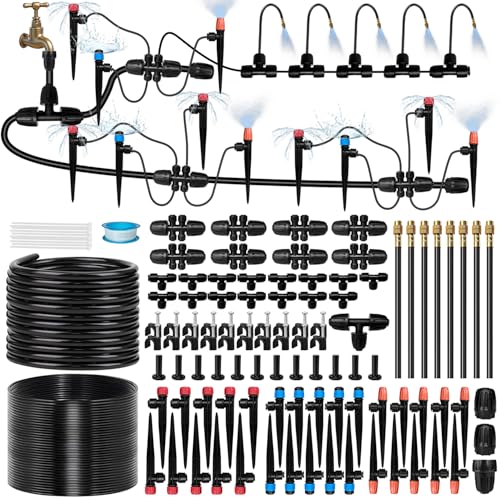
GGAQHLK 230FT Drip Irrigation System with 38 Copper Nozzles
The Details Behind The Selections
The Delinlin kit stretches 60 feet and ships with twelve bendy aluminum arms, so you can aim water at hanging baskets, window boxes, and tight cluster plantings without redesigning the layout. The misting-style heads do a fair job on leafy crops like lettuce and herbs where a heavy stream would flatten the stems.
For a balcony gardener running a single timer and a short hose run, this kit covers the basics without overcomplicating things. You may find the aluminum arms lose their shape after a season of repositioning, so plan on occasional re-bending rather than permanent aiming.
Practical Advantages
- Bendable aluminum arms let you reposition watering angles as plants grow or get repotted.
- Misting output suits delicate greens, seed-starting trays, and flower boxes where soaking is too aggressive.
- Compact 60-foot footprint fits balconies, small patios, and a single raised bed without leftover tubing clutter.
Trade Offs
- Aluminum arms are widely reported to bend out of position after repeated handling during the season.
- Sixty feet is tight for anything beyond a single bed, so larger gardens will feel under-served.
Made For
Balcony and patio gardeners tending a small cluster of pots, herbs, or a single raised bed.
Look Elsewhere When
You need longer reach or more emitter flexibility, in which case the MQHUAYU 360° Adjustable Drip Irrigation System 100FT stretches further across a mid-size yard.
The MQHUAYU system runs 100 feet of 5/16-inch tubing, and that wider inner diameter means noticeably more flow than the skinny 1/4-inch hose you’ll find in cheaper kits. Plants at the far end of the line actually get water instead of a sad dribble.
The 360-degree adjustable heads let you fine-tune each emitter, which matters once your tomatoes, peppers, and flowers start demanding different amounts. For most backyards with two or three beds, the length and flow land in the sweet spot, though the larger tubing is stiffer to route around corners than the smaller hose used in the Delinlin kit above.
What Earns Its Place
- Wider 5/16-inch tubing holds pressure across the full 100-foot run.
- Adjustable heads let each plant receive a tailored flow rate.
- Enough tubing length to cover multiple beds or a long border without splicing.
- Works well paired with a solar timer for a fully unattended setup.
Honest Caveats
- Stiffer tubing can be tricky to snake through tight corners or around existing roots.
- More emitters on a longer line means more pieces to flush and check each season.
Right Fit For
Homeowners with a mid-size backyard running two to three beds or a long row of vegetables.
Consider Something Else When
You want the simplest possible setup with minimal fiddling, in which case the DFDNFF 200FT Quick-Connect Drip Irrigation System trades some adjustability for a much faster install.
The DFDNFF kit leans hard into easy assembly, with quick-connect fittings that simply push in and lock, no tools or hose clamps required. Two hundred feet of line gives a beginner room to experiment with multiple beds and still have leftover tubing for future expansion.
You may find the quick-connect design pays off the first time you disassemble the system for winter storage, since everything pulls apart cleanly without twisting weakened tubing. The trade-off is fewer per-emitter adjustments, so crops with very different water needs may need separate zones rather than one shared line.
Strong Points
- Tool-free quick-connect fittings cut install time down to minutes for first-timers.
- Two hundred feet handles most suburban yards in a single kit.
- Push-together connections make seasonal teardown and storage painless.
Things To Keep In Mind
- Less per-emitter fine-tuning means thirsty and drought-tolerant crops may need separate zones.
- Quick-connect fittings should be checked periodically for debris that can break the seal.
Feature Card
Who It Suits Best
First-time DIYers who want a working drip system laid out in a single afternoon.
Where A Sibling Pick Shines
You run a greenhouse or large yard where every plant needs a custom flow rate, in which case the GGAQHLK 230FT Drip Irrigation System with 38 Copper Nozzles gives finer per-plant control.
The GGAQHLK kit ships 230 feet of upgraded 1/2-inch main tubing with thirty-eight adjustable copper nozzles, the largest emitter count on this list by a wide margin. Copper nozzles resist the mineral buildup that clogs plastic emitters in hard-water areas, which is a quiet headache you only discover mid-summer.
The 1/2-inch tee connector splits the system into two independent zones, so thirsty raised beds and modest potted plants can run on different schedules from the same tap. For most greenhouses or large yard layouts, the heavier tubing and metal emitters handle the workload, though a kit this size takes longer to lay out than the simpler DFDNFF above.
A Few Highlights
- 1/2-inch main line supports higher pressure across long runs and split zones.
- Thirty-eight adjustable copper nozzles outlast plastic emitters in hard-water regions.
- Tee connector builds two separately timed zones from a single water source.
- Targets moisture right at root zones, cutting evaporation and runoff.
- Length and emitter count suit greenhouses, large raised beds, and multi-yard setups.
Worth Noting
- Larger tubing and more parts mean a longer layout pass than simpler kits.
- Copper nozzles cost more to replace if one gets lost or damaged mid-season.
- Overkill for a small patio, so the feature set only earns its price in bigger gardens.
Feature Card
Whose Shelf It Belongs On
Greenhouse owners, serious raised-bed growers, and homeowners managing a larger yard with mixed watering needs.
Skip It When
Your garden is one small raised bed or a row of pots, in which case the Delinlin Drip Irrigation System Kit 60ft delivers enough coverage without the extra setup time.
Picking The Right Setup For Your Garden
A solar drip irrigation system only earns its keep when the tubing length, emitter count, and water pressure match the layout you actually have. Start by measuring the farthest point from your tap, then add a generous margin for routing around beds, paths, and corners.
Tubing diameter matters more than most shoppers expect. The 1/4-inch hose found in entry-level kits loses pressure fast, so the plant at the end of a long run ends up under-watered. Wider 5/16-inch or 1/2-inch lines hold pressure across longer distances, which is why the MQHUAYU 100FT and GGAQHLK 230FT kits both step up to thicker main lines.
Emitter type affects long-term upkeep more than the install itself. Plastic emitters clog faster in hard-water areas, while copper nozzles resist mineral buildup and tend to last longer between cleanings.
Sizing Tubing Length To Your Beds
Measure each bed’s perimeter and add the distance back to the tap. A 60-foot kit covers a single small bed; a 100- to 200-foot kit handles most suburban yards; anything over 200 feet is built for greenhouses or multi-zone properties.
Matching Emitters To Plant Types
Tomatoes, peppers, and squash want slow, deep soaking, so adjustable emitters with a higher flow setting help. Lettuce, herbs, and seed starts prefer misting or low-flow drippers, which is why the Delinlin kit leans into misting arms for tight clusters of greens.
Planning For Solar Power
Pair any of these kits with a solar timer that mounts at the tap, and the system runs on light alone with no plumbing or electrician required. Make sure the timer matches your tubing diameter and the number of zones you plan to run.
Key Considerations Across These Picks
Pitfalls Shoppers Hit
The most common mistake is buying a kit that’s too short, then splicing on cheap off-brand tubing that doesn’t match the original fittings and leaks at every joint. Another quiet trap is underestimating hard water, since plastic emitters clog faster in regions with high mineral content and need more frequent flushing.
Where The Extra Money Goes
Stepping up from a basic 60-foot kit to the GGAQHLK 230FT system buys you thicker main tubing, copper emitters, and zone-split hardware that lasts longer between maintenance passes. For a small patio, that upgrade is wasted; for a greenhouse or large yard, it pays for itself in fewer clogs and longer runs without pressure loss.
Frequently Asked Questions
How long does it take to install a solar drip irrigation system? Most homeowners lay out a 100- to 200-foot kit in an afternoon, especially with quick-connect fittings that skip tools entirely. Larger multi-zone setups with 1/2-inch main tubing take longer because the heavier hose is stiffer to route.
Can a drip system run off solar power alone? Yes, a solar timer mounts at the tap and powers the valve from a small panel, so no electrical outlet is needed. Just make sure the panel gets enough direct sunlight to keep the battery topped off through the watering season.
Do drip systems work in areas with hard water? They work fine, but plastic emitters clog faster in hard-water regions and need periodic flushing. Copper emitters, like the ones on the GGAQHLK kit, resist mineral buildup better and tend to need less maintenance.
How often should I replace drip tubing? Most tubing lasts three to five seasons before UV exposure starts to weaken it, especially if left out year-round. Storing the system indoors over winter extends that lifespan and reduces spring replacement costs.
Can I expand a drip kit later with more tubing? Yes, as long as you match the tubing diameter and fitting style of your original kit. Mixing diameters creates pressure mismatches that leave plants at the far end of the line under-watered.
The Takeaway
A solar drip irrigation system pays you back every time you skip a hand-watering session, and the right kit depends almost entirely on the size and complexity of your garden. Start with a kit that comfortably covers your farthest bed, step up to wider tubing if you have hard water or long runs, and pair the whole thing with a solar timer for a setup that runs itself through the heat of summer.
