

Thrips are the silent invaders of warm-season gardening, piercing tender leaf tissue and leaving behind silvery streaks before most growers even notice damage. The right spray turns that slow decline into a quick recovery, and the wrong one wastes a week of treatment while the colony multiplies. Gardeners who grow roses, vegetables, or greenhouse ornamentals each have a different thrips pressure to manage, and a single product rarely covers every scenario. This guide walks through ten proven spray options for 2026, from heavy-duty systemic concentrates to gentle soap solutions, so you can match chemistry to your growing style and tolerance for spraying.
The Main Contenders

Orthene 97.4% Acephate + Sticker Spreader Bundle

Bonide Captain Jack’s Neem Max 16 oz

Trifecta Crop Control + Myco Supreme Bundle

Conserve SC Insect Control

Ortho Insect, Mite & Disease 3-in-1 1 gal
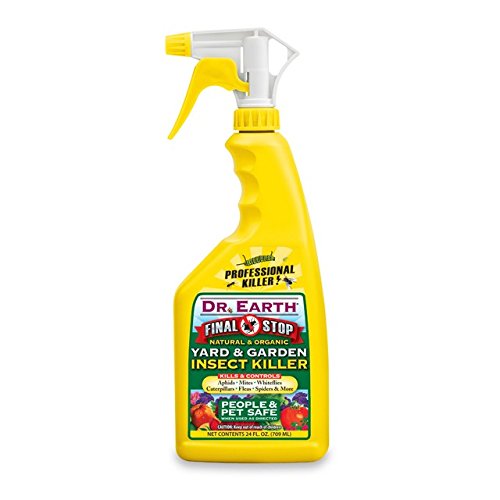
Dr. Earth Final Stop Yard & Garden Insect Killer

Atticus Pyrus TR Greenhouse Fogger 3x2oz

Atticus Piston TR Greenhouse Fogger 2oz

NATRIA Insecticidal Soap 24 oz Pack of 2

Bonide Captain Jack’s Tomato & Vegetable 32 oz
The Details Behind The Selections
Roses, hibiscus, and big-leafed shrubs that look stippled by midsummer often need a systemic approach rather than a surface spray, which is exactly where this Orthene bundle earns its keep. The 97.4% acephate concentrate moves into plant tissue, so thrips feeding from underneath still ingest the active ingredient and stop feeding within hours. Pairing it with the Southern Ag sticker spreader is a thoughtful touch: the adjuvant keeps droplets from beading up on waxy rose and cabbage foliage, so you get more even coverage in a single pass.
Owners of mixed ornamental borders usually appreciate that the residual window stretches up to three weeks, cutting down on how often you’re dragging a hose out to the garden. For most backyard infestations, the kit is enough to handle a dozen or more shrubs without refilling mid-season.
Standout Benefits
- Systemic activity means hidden thrips feeding inside buds still get hit
- Sticker spreader boosts adhesion on waxy leaves like roses and cabbage
- Up to three weeks of residual control per application
- Treats ornamentals, vegetables, and field crops in one concentrate
- Proven effectiveness against thrips alongside other chewing and sucking pests
Honest Caveats
- Mixing concentrates requires a dedicated sprayer and basic PPE
- Not suitable for organic-certified edible gardens
- Restricted-use feel means label reading is essential before spraying food crops
Right Fit For
Serious rose growers and shrub collectors who want systemic, longer-lasting thrips knockdown without reapplying every few days.
Skip It When
Organic-only vegetable gardeners should reach for Bonide Captain Jack’s Neem Max instead, since it carries a friendlier profile for edible beds.
Where the Orthene bundle leans into raw chemistry, Captain Jack’s Neem Max takes the gentler route through cold-pressed neem oil, a botanical concentrate that handles pests, fungi, mites, and nematodes in one bottle. The ready-to-spray 16-ounce bottle skips measuring cups, so a kitchen herb grower can treat basil one evening and move to tomatoes the next without breaking out a separate sprayer. For organic gardeners juggling multiple problems at once, this multi-mode approach keeps the spray cabinet small.
Spray coverage behaves predictably on tender foliage, and you may find the smell fades within a few hours, leaving the garden usable for kids and pets. Compared to a systemic concentrate, the contact action means thorough coverage matters more than timing.
What Helps Most
- One product handles insects, mites, fungal issues, and nematodes
- No mixing required with the ready-to-spray bottle
- Cold-pressed neem carries friendlier re-entry windows than synthetics
- Useful on both edible crops and ornamental beds
Trade Offs
- Contact action means undersides of leaves must be thoroughly wetted
- Reapplication cadence is shorter than systemic options
Key Specs
Best Suited To
Organic gardeners tending vegetable beds and mixed flower borders who want one bottle that handles several common pest and disease issues.
Look Elsewhere When
Heavy rose growers with stubborn infestations may want Orthene 97.4% Acephate + Sticker Spreader Bundle for its systemic punch instead.
Trifecta positions this bundle as a grower’s combo, pairing the natural 32-ounce Crop Control spray with a 2-ounce jar of Myco Supreme mycorrhizal inoculant. That dual approach treats the symptom (thrips on foliage) while supporting the underlying root system, which is a thoughtful match for vegetable beds where weak roots invite secondary pest pressure. The Crop Control formula targets thrips alongside spider mites, russet mites, broad mites, and several fungal issues, so a single bottle handles a multi-pest outbreak without tank-mixing.
Vegetable growers who restart beds every season may find this kind of bundle cuts down on separate product purchases. The Myco Supreme component is applied at transplant rather than sprayed on leaves, which fits into most routine planting schedules.
Features That Help
- Targets thrips alongside spider mites and several fungal pathogens
- Myco Supreme adds root support during transplanting
- Single bottle covers most vegetative-pest problems in one spray
- Natural formulation fits organic-minded gardeners
Things To Consider
- The mycorrhizal step adds a small chore at transplant time
- 32-ounce refill runs out quickly across large vegetable plots
Who It Suits Best
Vegetable gardeners who restart beds each season and want pest control plus root support bundled into one order.
A Better Fit Elsewhere
If you’re not actively transplanting, Bonide Captain Jack’s Tomato & Vegetable Spray skips the root supplement and stays focused on pest and disease control.
Landscape professionals and turf managers reach for Conserve SC because it tackles thrips, bagworms, cutworms, armyworms, and sod webworms at low use rates, which keeps per-application cost down on big properties. The spin-based active ingredient brings a different mode of action than pyrethroids or neem, making it useful in rotation programs where thrips populations have started tolerating older chemistries. In a mixed ornamental bed bordering turf, one bottle covers several problem groups without juggling separate products.
For most homeowners managing a single yard, the concentrate format may feel like overkill, but the dilution flexibility is genuinely useful for spraying everything from a small shrub to an acre of lawn.
Where It Delivers
- Low use rates stretch a bottle across large areas
- Covers thrips plus several caterpillar and worm pests
- Different chemistry class supports resistance management
- Labeled for both turf and ornamental settings
Points To Keep In Mind
- Concentrate format requires accurate mixing
- Smaller yards may not use a full bottle before shelf life matters
Quick Facts
Built With In Mind
Property managers and serious landscape gardeners maintaining turf borders alongside ornamental beds.
Where Another Pick Suits Better
Small backyard growers will find Ortho Insect, Mite & Disease 3-in-1 1 gal more approachable with its no-mix bottle.
There’s a comfort in grabbing a one-gallon ready-to-use bottle when thrips show up mid-season and you don’t want to measure anything. The Ortho 3-in-1 handles insects, mites, and common fungal diseases at once, which is a real advantage when damage is hard to diagnose by eye. For most suburban yards, the trigger-spray format means you can treat a rose bed in fifteen minutes without setting up a separate pump sprayer.
Garden newcomers tend to appreciate that the bottle requires no math, no separate equipment, and minimal cleanup. Depending on your garden size, one gallon may be enough for a couple of thorough applications across a backyard.
The Upside
- No mixing, no measuring, no extra sprayer needed
- Multi-purpose formula covers pests and fungal issues
- Beginner-friendly trigger application
- Useful on roses, ornamentals, and listed edibles
Softer Spots
- Bottle weight can tire your hand during large treatments
- Less flexible dilution than concentrate options
Perfect Match For
First-time gardeners and busy households who want a grab-and-spray solution when pests show up unexpectedly.
Not Your Match When
Large-property managers will find Conserve SC more economical at scale thanks to its concentrate format.
Dr. Earth’s Final Stop takes a botanical route, combining essential oils and organic acids to knock down mites, thrips, and other soft-bodied pests on contact. The 24-ounce ready-to-use format suits small patios, herb gardens, and houseplant collections where dragging out a pump sprayer feels like overkill. For households avoiding synthetic chemistry, this bottle keeps the active ingredients short and pronounceable, which matters when kids and pets share the yard.
The essential-oil blend gives off a noticeable scent during application, but for most users that fades within an hour or two, depending on humidity.
Where It Helps
- Plant-based formula fits organic gardening rules
- Ready-to-use format skips the mixing step
- Effective against thrips plus mites and other soft-bodied pests
- Safe for households wary of synthetic residues
Some Limits To Know
- Strong botanical scent at application time
- Contact action requires thorough leaf coverage
Feature Snapshot
Whose Shelf It Belongs On
Households prioritizing botanical ingredients and quick spot treatments over systemic power.
Reach For A Different Pick When
Greenhouse operators will want Atticus Pyrus TR Greenhouse Fogger for whole-room coverage rather than leaf-by-leaf spraying.
Greenhouse growers know that thrips love to hide on leaf undersides, and a handheld spray often misses those sheltered spots. The Atticus Pyrus TR fogger solves that by releasing billions of micro-sized particles that drift up and around the canopy, reaching places a trigger bottle can’t touch. Each 2-ounce can covers a defined greenhouse volume, and the three-can pack gives a full treatment cycle plus a follow-up for residual hatch.
The pyrethrin plus piperonyl butoxide combination offers broad-spectrum knockdown of thrips, mites, aphids, fungus gnats, and whiteflies, which is genuinely useful in propagation houses where multiple pests tend to arrive together.
What It Does Well
- Fog coverage reaches leaf undersides where thrips hide
- Three-can pack supports a treatment plus follow-up cycle
- Broad-spectrum control across several common greenhouse pests
- No sprayer cleanup between treatments
Areas To Watch
- Requires sealed, unoccupied greenhouse during application
- Reentry ventilation time adds to the day’s schedule
Made For
Greenhouse and conservatory growers managing enclosed spaces where handheld sprays cannot reach the canopy effectively.
Swap It Out When
Outdoor gardeners will get more flexibility from Ortho Insect, Mite & Disease 3-in-1 1 gal since foggers are designed for enclosed areas only.
Rotating active ingredients is the backbone of resistance management, and the Piston TR fogger brings chlorfenapyr, a different chemistry than pyrethrins, into the greenhouse rotation. Pairing it with the Pyrus TR fogger from earlier on this list creates a proper two-step program that keeps thrips from adapting to either compound alone. The 4.5% chlorfenapyr formulation targets adult fungus gnats, mites, and thrips with a 72-hour knockdown window, which fits neatly into weekly IPM schedules.
For fruiting vegetables like peppers and tomatoes, the label approval adds flexibility that many greenhouse-only products don’t offer.
A Strong Showing
- Different chemistry class than pyrethrins for rotation programs
- 72-hour adult knockdown on thrips, mites, and fungus gnats
- Labeled for fruiting vegetables and most greenhouse ornamentals
- Total-release format reaches the full canopy
Points To Note
- Not registered for sale in Alaska or Hawaii
- Requires an enclosed, unoccupied space during application
- Works best as part of a rotation rather than a standalone
Who Should Grab It
Greenhouse IPM programs running multi-cycle rotations who need a second chemistry class to break thrips resistance.
Consider Something Else When
Single-can growers without rotation plans should start with Atticus Pyrus TR Greenhouse Fogger 3x2oz as the foundational treatment.
Potassium-based insecticidal soaps have been a houseplant staple for decades because they smother soft pests on contact and break down quickly after drying. The NATRIA 24-ounce ready-to-use bottle brings that approach to a two-pack, which is a sensible format for households with both indoor plants and a small outdoor herb garden. For most light infestations on tender foliage, the spray dries clear and leaves no lingering residue, so you can treat a kitchen windowsill herb without worrying about what you’ll cook with later.
Apartment dwellers without outdoor hose access often prefer this kind of trigger spray because it works at room scale without setup.
Positive Points
- No mixing required with the ready-to-use trigger bottle
- Safe for indoor houseplants and outdoor edibles alike
- Residue breaks down quickly after drying
- Two-pack format covers multiple rooms or planting zones
Practical Considerations
- Contact action only, so thorough coverage is essential
- Re-treatment cadence is more frequent than systemic options
Who Will Love This
Apartment gardeners and houseplant collectors who want a kitchen-friendly spray for small-scale thrips sightings.
Not Your Match When
Large outdoor gardeners should size up to Bonide Captain Jack’s Tomato & Vegetable Spray for better coverage area per bottle.
Tomato and pepper patches tend to attract both thrips and a parade of fungal problems once humidity rises in midsummer, and Captain Jack’s Tomato & Vegetable Spray handles both groups at once. The 32-ounce ready-to-use format arrives as a two-pack, which is useful for a full garden pass plus a follow-up treatment. For most home vegetable plots, applying early in the season as a protective spray sets the tone before thrips populations build.
Compared to Dr. Earth Final Stop from earlier on the list, this Bonide option focuses more specifically on listed fruit and vegetable crops, with broader disease coverage on the label.
The Value In It
- Handles thrips alongside blackspot, powdery mildew, and blight
- Pre-mixed bottle suits weekly protective spraying
- Labeled for listed fruits, vegetables, and ornamentals
- Two-pack format covers a full season for most home gardens
Honest Caveats
- Best used preventatively rather than for severe existing outbreaks
- Reapplication required through the growing season
Quick Technical Notes
The Right Fit
Tomato and pepper growers running a weekly protective spray program through the growing season.
A Better Fit Elsewhere
Strict organic rose growers may prefer Bonide Captain Jack’s Neem Max for its broader organic framing on mixed ornamentals.
What To Weigh Before Picking Your Thrips Spray
Choosing the right thrips control depends less on the brand and more on the chemistry, the plant, and the space it lives in. Systemic options like Orthene absorb into plant tissue and continue working between sprays, which suits large shrubs and roses that hide thrips deep in new growth. Contact products such as insecticidal soap or essential-oil sprays need thorough leaf coverage to work, making them better fits for smaller plants or low-pressure situations.
For greenhouse growers, fogger formats reach the leaf undersides where thrips congregate, but the sealed-room requirement rules them out for open gardens. Organic gardeners should weigh certification rules carefully, since some botanical products qualify for organic use while others only market themselves as “natural.” Always match the active ingredient to the pest pressure you actually have, and rotate chemistry classes when infestations persist beyond a single season.
Key Considerations Across These Picks
Pitfalls Shoppers Hit
One common trap is reaching for a broad-spectrum product when a targeted one would do the job with less collateral damage to beneficial insects. Another misstep is underestimating how much thrips pressure a single plant can carry, leading to a half-bottle purchase that runs out mid-treatment. Always estimate the square footage you’ll actually spray before sizing your bottle.
When Paying More Pays Off
Higher-tier greenhouse foggers and systemic concentrates cost more per can, but they reach places handheld sprays cannot, which means fewer follow-up treatments overall. For large landscapes or sealed growing rooms, that efficiency often offsets the upfront cost within a single season.
Frequently Asked Questions
How fast do thrips sprays typically work?
Most contact sprays begin killing exposed thrips within hours, while systemic products like acephate can take a day or two to fully translocate through plant tissue. Fogger formats usually show results within 24 to 72 hours depending on the active ingredient.
Can I mix different thrips sprays together?
Tank mixing should only be done when both product labels explicitly allow it, since some combinations reduce effectiveness or damage plant tissue. Rotating products between applications is usually safer than mixing them in one sprayer.
Are botanical sprays safe for edible crops?
Many botanical options like neem and essential-oil blends are labeled for edible crops, but always check the pre-harvest interval on the label. Synthetic systemics often have longer intervals that affect when you can safely harvest.
Do I need to spray leaf undersides?
Yes, thrips strongly prefer leaf undersides and tender new growth, so skipping those areas lets colonies recover quickly. For dense canopies, fogger formats or angled spray wands reach those surfaces more reliably than upright trigger bottles.
How often should I reapply during peak season?
Contact products generally need reapplication every 5 to 7 days during heavy pressure, while systemics can stretch to 2 to 3 weeks per application. Scouting plants between sprays helps you adjust the cadence before damage becomes visible.
The Takeaway
Thrips control comes down to matching the active ingredient to your growing environment, your tolerance for synthetic chemistry, and how much coverage your plants actually need. Gardeners managing a small vegetable bed will find different answers than greenhouse operators running tight IPM rotations, and that’s exactly why this list spans both ends. Pick the spray that fits your real situation, follow the label, and your plants will thank you by midsummer.
