

If you spend any part of your weekend chasing weeds along fence lines, driveways, and garden borders, the right trimmer decides whether Saturday feels productive or endless. The class has shifted hard toward battery, but gas still rules for thick brush, long sessions, and remote properties without easy charging. This roundup focuses on string gas trimmers that earn their keep, mixing pro-grade cordless alternatives with serious gas options for heavier work. Each pick below fits a real use case, and the trade-offs are spelled out honestly.
An Overview Of The Picks

Milwaukee M18 Fuel Quik-Lok String Trimmer Attachment

Makita XRU15PT1 36V Brushless String Trimmer Kit

Makita XUX01ZM5 36V Couple Shaft Power Head

Makita XRU13Z 18V LXT Curved Shaft Trimmer

Kihoplly 4-in-1 Cordless Weed Wacker with Wheels

Heywork 20V 12″ Cordless String Trimmer & Edger

Wild Badger Power 26cc 3-in-1 Gas Trimmer
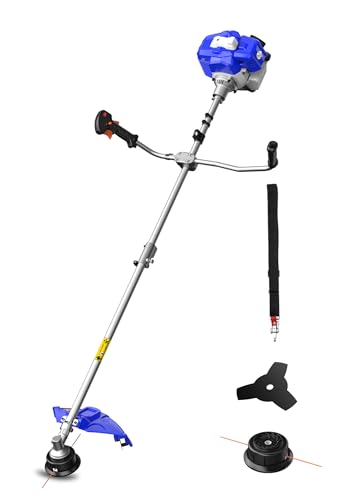
Wild Badger Power 52cc 2-Cycle 3-in-1 Kit

Wild Badger Power 26cc 4-in-1 Pole Saw Kit
What Each Pick Brings To The Table
Milwaukee’s Quik-Lok attachment only makes sense as part of a larger M18 system, but if you already own the power head, this string trimmer slides on in seconds. You swap heads tool-free, which means one battery platform handles trimming, edging, and brush work without dragging out a second machine. For crews and homeowners who have standardized on M18 Fuel tools, it removes the redundancy of separate trimmers.
The real advantage is battery commonality. The brushless motor (a design that uses electronic controls instead of carbon brushes for longer life and better efficiency) pulls from the same 18V packs that drive your drill, blower, and chainsaw. The catch is that this is an attachment, not a standalone tool, and the head’s footprint leans toward light-to-medium grass rather than woody brush.
Strong Points
- Tool-free head swaps expand the M18 system quickly.
- Brushless motor design stretches battery life on routine trimming.
- Shared 18V batteries mean fewer chargers cluttering the garage.
- Compact attachment body navigates fence lines more easily than larger dedicated trimmers.
Worth Noting
- Requires the M18 Quik-Lok power head, sold separately.
- Cutting swath sits on the conservative side for thick, weedy areas.
Whose Shed It Belongs In
M18 Fuel owners who already run a Quik-Lok power head and want one more task covered from the same battery.
Skip It When
You don’t yet own the M18 platform, in which case the Kihoplly 4-in-1 Cordless Weed Wacker is a friendlier entry point with batteries included.
The XRU15PT1 kit ships with four 5.0Ah batteries, which is the whole point. Two 18V packs pair to deliver 36V output (Makita’s LXT system stacks batteries in series for higher voltage), and the included spares mean a landscaping crew can rotate packs all day without waiting on a charger. The brushless motor keeps the cut speed steady while sipping power, and the overall trimmer body feels balanced even during long sessions.
Compared to the Milwaukee attachment above, this is a full standalone unit built for sustained commercial work. It’s heavier, but the runtime math is hard to beat when four batteries ship in the box. Landscapers switching from gas will appreciate the lack of fumes and the much quieter neighborhood footprint.
Bright Spots
- Four 5.0Ah batteries keep the trimmer running through full workdays.
- 36V output from paired 18V packs handles thicker grass with less bogging.
- Brushless motor reduces routine maintenance over the tool’s life.
- Quieter operation than comparable 2-cycle gas alternatives.
Trade Offs
- Kit price runs higher than bare-tool options, and chargers take space.
- Heavier than single-voltage cordless trimmers; arm fatigue on extended use is worth considering.
Key Specs
Right Fit For
Professional landscapers and serious property owners who trim several hours a day and need a real rotation of batteries.
Reach For A Different Pick When
Your yard is small and you don’t need four batteries, since the Wild Badger Power 26cc 3-in-1 Gas Trimmer handles light residential jobs without the kit bulk.
Makita’s XUX01ZM5 is the heart of a modular outdoor system: a 36V brushless power head that accepts multiple attachments, including the string trimmer that ships in this kit. The couple-shaft design splits for easier transport and storage, which matters if your shed is tight or you haul tools to job sites. Once paired with other Makita attachments, it replaces a rack of single-purpose tools.
The trade-off, like the Milwaukee Quik-Lok above, is upfront commitment. You’re buying into a system, not a single tool, and bare-tool pricing assumes you already own LXT batteries. For homeowners building a cordless outdoor lineup, that math eventually pays off, but the first purchase feels steep.
Noteworthy Benefits
- Modular split-shaft accepts multiple attachments beyond string trimming.
- 36V brushless power rivals small gas engines for grass and weeds.
- Storage footprint shrinks when the shaft splits apart.
- Shared LXT batteries integrate with Makita’s broader tool ecosystem.
Points To Keep In Mind
- Ships as tool only, so batteries and charger must be sourced separately.
- Full value only emerges once you own at least two attachments.
Best Suited To
Makita LXT owners planning a multi-tool outdoor system who already have batteries on hand.
Where A Sibling Pick Shines
Beginners should look at the Heywork 20V 12″ Cordless String Trimmer, which ships ready to run with no platform commitment.
The XRU13Z is the residential-friendly side of Makita’s LXT string trimmer family. The curved shaft telescopes from roughly 59-3/4″ to 63-3/4″, which lets you set the length to your height and reach into awkward spots behind shrubs or along foundations. A 3-speed selector (4,000 / 5,000 / 6,000 RPM) lets you throttle down for light grass to stretch battery life, then ramp up for thicker patches.
Reverse rotation is the small detail that owners appreciate: when grass wraps the head, you flip a switch and unwind the tangle without grabbing it. Compared to the 36V XRU15PT1 reviewed earlier, this single 18V trimmer is lighter and easier to maneuver, but it won’t sustain the same workload on large properties.
Features That Help
- 3-speed control matches output to the job and saves battery on light work.
- Reverse rotation clears wrapped grass without manual unwinding.
- Curved, telescoping shaft adjusts for comfortable posture.
- Brushless motor design trims maintenance and extends runtime.
Honest Caveats
- Tool only, so factor in batteries and charger if you don’t have them.
- Lower voltage than 36V Makita models, so it bogs in tall, wet grass more easily.
Key Specs
Who It Suits Best
Homeowners with mid-size yards who already own LXT batteries and value comfort over maximum power.
Consider Something Else When
You handle heavy brush regularly, in which case the Wild Badger Power 52cc 2-Cycle 3-in-1 Kit has the engine displacement to chew through it.
Kihoplly’s 4-in-1 design is built for accessibility. Detachable wheels take the weight off your arms and turn it into a rolling edger, while three blade options cover stringless trimming, brush cutting, and edging from the same body. Two 4000mAh batteries ship in the box, so first-time users can start cutting without a separate battery purchase.
The brushless motor helps stretch each charge, and the adjustable head pivots to convert between modes. It’s the friendliest pick in this roundup for someone who’s never owned a trimmer before, though serious acreage will demand something heavier.
Advantages To Know
- Wheels reduce arm strain during longer edging sessions.
- Two batteries included for immediate, out-of-box use.
- 4-in-1 versatility handles trimming, edging, and light brush without extra tools.
- Stringless design avoids the line-feed hassles common to entry-level trimmers.
A Few Limitations
- Lighter motor power than gas or pro-grade cordless trimmers for dense growth.
- Wheel setup adds bulk that some users find awkward in tight corners.
Made For
First-time trimmer owners, older users, and anyone with a small-to-medium yard who values low effort over raw power.
Look Elsewhere When
You have multiple acres of heavy growth, where the Wild Badger Power 52cc 2-Cycle 3-in-1 Kit will save you time per cut.
Heywork’s 20V trimmer is the smallest, simplest option here, and that’s the appeal. The 12-inch cutting swath and 8,000 RPM motor handle weekly touch-ups around small lawns, and the head pivots to switch between trimming and edging modes without extra tools. The auto line feed (a system that advances fresh line as the old one wears down) means you stop less often to restring.
For suburban lots under a quarter acre, this is the right size. Anything bigger, or any growth thicker than maintained lawn grass, will push past its comfort zone. Compared to the Kihoplly above, it’s lighter and cheaper but lacks wheels and 4-in-1 flexibility.
Everyday Wins
- Auto line feed keeps the cut consistent without manual adjustments.
- 2-in-1 trimmer and edger head pivot in seconds.
- Lightweight build suits smaller users and quick jobs.
Practical Considerations
- 20V power bogs quickly in tall, wet, or woody growth.
- Battery life is modest on the higher RPM settings, depending on the size of your lawn.
Key Specs
Who Should Grab It
Townhouse and small-lot owners who trim weekly and want minimal storage footprint.
Not Your Match When
Your property includes fence lines bordered by waist-high weeds, since the Makita XRU15PT1 has the power reserves to handle that with less frustration.
Wild Badger Power’s 26cc model is a 3-in-1 gas tool: a 17-inch string trimmer, an edger, and a 10-inch brush cutter blade for thicker growth. The full-crank 2-cycle engine (where the crankshaft runs the full length of the engine for better balance and longer life, versus a cheaper half-crank design) holds up better than budget engines, and the rubber handle plus shoulder strap reduce fatigue during longer sessions.
This is the entry point for real gas power in this roundup, suited to suburban lots with rougher edges. The trade-off versus cordless picks is fuel mixing, pull-starting, and more noise, but you trade those for unlimited runtime and stronger cutting force in heavy weeds.
The Practical Payoff
- Full-crank engine typically outlasts cheaper half-crank designs.
- 3-in-1 functionality covers trimming, edging, and brush cutting in one tool.
- Shoulder strap redistributes weight for longer trimming sessions.
Some Limits To Know
- 2-cycle engine requires mixed fuel, which means fuel prep and storage.
- Pull-start can be stubborn in cold weather, depending on the model year.
Key Specs
Perfect Match For
Homeowners with half-acre to acre lots, fence-line brush, and mixed terrain who want one gas tool that handles it all.
A Better Fit Elsewhere
Neighbors with strict noise rules or shared walls should consider the Kihoplly 4-in-1 Cordless Weed Wacker for quieter operation.
The 52cc Wild Badger is the muscle option. Its full-crank 2-cycle engine doubles the displacement of the 26cc model, the 18-inch cutting swath covers more ground per pass, and the same 3-in-1 platform (string trimmer, edger, 10-inch brush cutter) handles overgrown lots that smaller machines can’t touch. Owners commonly report it starts within about five pulls once broken in.
The tool-free air filter cover simplifies maintenance, and the attachment changes don’t require extra wrenches. This is a real working trimmer for rural properties, food plots, and lots that have been neglected for a season or two. It is heavier and louder than the rest of this list, which is the honest trade for that cutting force.
Practical Pluses
- 52cc displacement chews through brush that stalls smaller engines.
- Full-crank design extends engine life under heavy workloads.
- Tool-free air filter access simplifies routine maintenance.
- Wider 18-inch cut finishes large areas faster than mid-tier trimmers.
Worth Bearing In Mind
- Heavier than 26cc and cordless options, so arm fatigue builds on long jobs.
- Loud enough that ear protection is essentially required.
Built With In Mind
Rural property owners, hobby farmers, and anyone reclaiming overgrown sections of land.
Swap It Out When
You mainly trim a tidy suburban lawn, where the Heywork 20V trimmer is quieter, lighter, and easier to store.
This 4-in-1 kit wraps the same 26cc full-crank platform around four attachments: string trimmer, edger, brush cutter, and a pole saw for branches overhead. For properties that need more than ground-level trimming, one engine drives every task, which saves storage space and cost versus buying dedicated tools.
The pole saw is the standout, reaching limbs that a ladder would otherwise handle. The trade is the same as other 26cc Wild Badger models: mixed fuel, pull starts, and noise. Versus the 52cc kit reviewed above, you give up some raw cutting force, but you gain a tool the 3-in-1 kit doesn’t include.
Why It Works Well
- Four attachments cover ground trimming, edging, brush, and overhead limbs.
- Shared 26cc engine simplifies fuel, storage, and spare parts.
- Full-crank construction supports longer service life than budget engines.
Points To Note
- Pole saw reach can feel short on very tall trees without an extension.
- Switching attachments takes longer than fixed single-purpose tools.
Key Specs
Who Will Love This
Property owners with mature trees, hedge rows, and varied terrain who want one engine for everything.
Skip It When
You only trim grass, since the Heywork 20V 12″ Cordless String Trimmer handles that work with far less hassle.
Choosing The Right String Gas Trimmer For Your Yard
Engine power and weight tend to rise together, so the first real decision is workload. Suburban lots under a quarter acre usually pair well with 20V to 36V cordless options or a 26cc gas model. Anything past half an acre, especially with brush, points toward 36V kits with multiple batteries or 52cc gas platforms.
Shaft design changes comfort more than people expect. Curved shafts (a bend near the cutting head that shortens overall reach) keep the trimmer head closer to your body for tighter control, while straight shafts (a single rigid tube from grip to head) reach further under decks and into ditches. Telescoping shafts, like the Makita XRU13Z, adjust to your height, which matters on longer jobs.
Attachment platforms, such as the Milwaukee Quik-Lok and Makita XUX01ZM5, only make sense once you plan to own more than one tool. If this is your only outdoor power tool, a dedicated trimmer usually delivers more value per dollar.
The fuel-versus-cordless question keeps coming up. Gas gives unlimited runtime and stronger cutting in brush, at the cost of noise, exhaust, and 2-cycle oil mixing. Cordless trimmers have closed the gap for routine grass, run quieter for close neighbors, and skip engine maintenance. For most homeowners, cordless is the more comfortable daily tool, and gas remains the right call for remote or heavy work.
Picking Wisely Across This List
Where Shoppers Go Wrong
Buying a trimmer based on engine size alone is a common trap. A 52cc machine on a quarter-acre lawn is overkill, and the extra weight and noise wear out the experience. Conversely, picking a 20V unit for waist-high brush guarantees frustration. Match the tool to the actual growth you’ll face, not the worst-case scenario you’ve imagined.
Another slip-up is ignoring battery ecosystem costs. Bare-tool Makita and Milwaukee trimmers look appealing, but if you don’t own LXT or M18 batteries, the total price climbs fast. Kihoplly and Heywork ship ready to run, which is often the smarter first purchase for new cordless users.
When Paying More Pays Off
Higher-tier models buy three real things: stronger motors that don’t bog, longer component life, and better ergonomics. The Makita XRU15PT1 kit is expensive because four 5.0Ah batteries effectively remove charging from your workday, which is worth real money if you trim professionally.
The Wild Badger 52cc model costs more than its 26cc sibling, but the full-crank engine, wider cut, and brush-clearing torque turn long jobs into shorter ones. If your weekends disappear into yard work, that time savings is the actual upgrade, not the engine label on the spec sheet.
Frequently Asked Questions
Are string gas trimmers better than cordless for large properties?
For multi-acre or brush-heavy land, gas still wins on runtime and raw cutting force. For maintained suburban lawns, modern 36V brushless cordless trimmers match the experience without fuel mixing.
How often do I need to replace trimmer line?
That depends on how much you cut and whether you contact hard surfaces like concrete or stone. Light weekly trimming might only need restringing every few weeks, while rocky edges can burn through line in a single session.
Can I use a 2-cycle trimmer without mixing oil?
No, 2-cycle engines (a lightweight design that combines fuel and lubrication in the tank) require fuel mixed with the correct oil ratio. Running straight gasoline will destroy the engine quickly, so mixing is non-negotiable.
What safety gear should I wear when operating a trimmer?
Sturdy closed-toe shoes, long pants, safety glasses, and hearing protection are standard. Brush cutter blades add the risk of thrown debris, so face protection and gloves are worth wearing for those attachments.
How do I store a gas trimmer over winter?
Drain the fuel or run the carburetor dry, clean the air filter, and store it in a dry space. Spring startup is much easier when the fuel system doesn’t have last season’s gas sitting in it.
The Takeaway
The right string gas trimmer matches your property size, your growth conditions, and your tolerance for noise and maintenance. Small urban lots lean toward the Heywork 20V or the Kihoplly 4-in-1. Suburban acreage with brush benefits from the 26cc Wild Badger models, while rural lots and serious side work call for the 52cc kit. If you already own Milwaukee or Makita batteries, the modular attachments make the most sense as your next purchase. Pick the tool that fits the work in front of you, not the work you might do someday.
