

Aphid colonies chewing through a maple, scale insects coating the lower limbs of a dogwood, or a Japanese beetle infestation turning leaves to lace: these are the slow-motion problems that can take down a backyard tree before you realize what’s happening. Surface sprays wash off, miss the underside of leaves, and rarely reach the pests hiding inside the wood. Systemic insecticides for trees work differently, moving through the sap so the entire plant becomes the delivery system. Below are ten options worth knowing, covering long-residual drenches, granular feeds with built-in protection, and a few contact sprays that pair well with systemic work.
A Snapshot Of The Selections
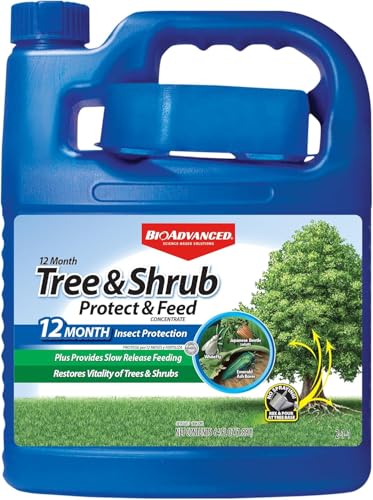
BioAdvanced 12 Month Tree & Shrub Protect and Feed Concentrate 64 oz

BioAdvanced All-In-One Rose and Flower Care Concentrate 64 oz

BioAdvanced All-in-One Rose and Flower Care Granules 4 lb

Fertilome Tree & Shrub Systemic Insect Drench Gallon

Bayer Merit 75 WSP (4 x 1.6 oz)
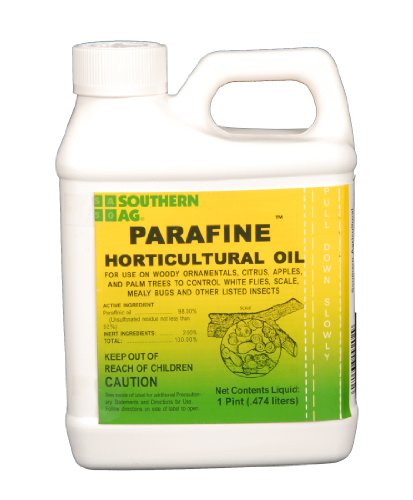
Southern Ag Parafine Horticultural Oil 16 oz

BioAdvanced 12 Month Tree and Shrub Protect and Feed Granules 10 lb

Osmocote Smart-Release Plant Food Plus 8 lb

Hi-Yield 55% Malathion Spray 8 oz

Sevin Insect Killer Concentrate II 32 oz
A Closer Look At Each Pick
This concentrate is built around a single-season philosophy: pour it around the root zone once, and the active ingredient moves up through the vascular system for up to twelve months. For homeowners managing mature maples, oaks, or ornamental cherries that act as year-round neighborhood focal points, that kind of residual coverage removes the mental load of monthly spray schedules.
The 64-ounce bottle is enough to treat several mid-size trees when diluted according to the label, making it practical for a typical suburban lot rather than just a single specimen planting. Compared to the granular BioAdvanced entry later in this list, the liquid form absorbs faster into the root zone, which matters in heavier clay soils where granules can sit on the surface during dry stretches.
Key Advantages
- Twelve-month protection from one application reduces seasonal chores.
- Targets a wide pest range including aphids, scale, leafminers, and Japanese beetles.
- Liquid concentrate reaches feeder roots faster than surface-applied granules.
- Dual-action formula feeds the tree while protecting it, supporting recovery from prior damage.
Things To Consider
- Mixing and measuring takes more care than pre-measured granules.
- Newly planted or stressed trees may need a lighter rate to avoid root burn.
Who It Suits Best
Homeowners with several mature ornamental or shade trees who want a single spring application to carry through the full growing season.
Where Another Pick Suits Better
For gardeners with mostly container ornamentals and roses rather than full-size trees, the BioAdvanced All-In-One Rose and Flower Care Concentrate is a more targeted match.
This formula bundles fertilizer, insect control, and disease protection into a single drench, which simplifies care routines for gardeners managing dense rose beds or mixed perennial borders. The systemic action means rain won’t strip protection off the foliage once the product has been taken up through the roots.
Although the name highlights roses, the active ingredient profile works across many flowering shrubs that face the same aphid and black-spot pressures. For someone stepping up from a plain liquid fertilizer, the all-in-one approach replaces two or three separate passes per month, depending on weather and bloom cycle.
What Helps Most
- Three-way formula replaces separate fertilizer, insect, and fungicide routines.
- Rain-fast uptake keeps protection active through summer storms.
- Liquid concentrate bottles store easily on a garage shelf between seasons.
- Encourages stronger root development alongside pest management.
Worth Noting
- Six-week protection window means more frequent reapplication than the year-long tree drench above.
- Mixing ratios change by plant size, so the label needs a careful read on first use.
- Disease coverage is narrower than a dedicated fungicide program.
Made For
Rose gardeners and mixed-flower bed keepers who want to cut the number of bottles in their shed without losing meaningful protection.
Skip It When
For full-canopy shade trees, the BioAdvanced 12 Month Tree & Shrub Protect and Feed Concentrate delivers a longer residual window with less mixing.
Granular formats appeal to anyone who wants pest control without dragging out a sprayer. The 4-pound jug is sized for smaller bed areas and container groupings, and the shaker-style application makes it approachable for gardeners who mix ornamentals with vegetables and want one product that handles both.
Once scattered and watered in, the granules release the same systemic protection as the liquid version covered above. The trade-off is speed: granules need moisture to activate, so dry stretches delay the uptake timeline by a few days.
The Upside
- No measuring or mixing reduces handling mistakes.
- Ideal for tight bed layouts where a sprayer would be awkward.
- Triple-action approach handles feed, insect, and disease in one pass.
Trade Offs
- Needs rain or irrigation to activate, so dry-soil timing matters.
- Smaller volume than the 10-pound tree granules, so cost per square foot runs higher.
- Can clump if stored in humid sheds over winter.
Right Fit For
Beginner gardeners and small-plot flower growers who prefer shake-and-water application over mixing concentrates.
Look Elsewhere When
For larger landscape plantings where economy matters, the BioAdvanced 12 Month Tree and Shrub Protect and Feed Granules 10 lb covers more ground per pour.
For larger properties or anyone managing several acres of trees, the gallon format removes the constant refilling that smaller bottles demand. This drench is designed for straightforward soil application around the root flare, with the active ingredient moving upward into the canopy where chewing and sucking insects feed.
The brand is a familiar one in nursery and farm supply circles, and the formulation has been in use across the trade for years. For homeowners comparing labels, the per-gallon cost tends to undercut quart-sized alternatives when treating multiple trees on the same property.
Real Benefits
- Bulk gallon reduces trips to the store mid-season.
- Trade-oriented formula trusted by small-acreage managers.
- Compatible with standard watering-can application methods.
Honest Caveats
- Full gallon weighs more than smaller formats, so carrying it across uneven yard terrain gets tiring.
- Less retail presence than BioAdvanced, so shelf availability varies.
Best Suited To
Property owners with multiple trees or a small orchard where buying by the quart would mean five or six separate purchases per season.
Another Choice May Suit
For a single shade tree in a suburban yard, the BioAdvanced 12 Month Tree & Shrub Protect and Feed Concentrate 64 oz is easier to store and handle.
Merit 75 WSP (water-soluble packets) is the format most often used by arborists and landscape professionals for curative soil injections and drenches against grubs, aphids, and a wide range of tree-feeding pests. The 75% imidacloprid concentration means very small volumes deliver meaningful protection, which is why each box arrives with just four 1.6 oz packets inside.
For homeowners comfortable with precise measuring, this is the same active ingredient found in consumer-friendly products, just in a more concentrated form. The catch is that the application math matters more here, because over-dosing can stress young root systems in lighter soils.
Notable Upsides
- Highly concentrated active ingredient keeps storage footprint small.
- Used by professional arborists, so label guidance is well documented.
- Each packet is pre-measured, removing one source of application error.
Points To Note
- Requires careful rate calculation based on trunk diameter or canopy spread.
- Over-application on sandy soils can affect ground-dwelling beneficial insects.
- Packets dissolve best in warm water, so cold-tap mixing takes longer.
Quick Facts
Whose Shelf It Belongs On
Experienced gardeners or arborists treating high-value specimen trees who already understand rate calculations and want a professional-grade formulation.
Reach For A Different Pick When
For a casual homeowner with one struggling maple, the BioAdvanced 12 Month Tree & Shrub Protect and Feed Concentrate offers a more forgiving, ready-to-dilute approach.
Horticultural oils work through suffocation rather than toxicity, coating scale insects, whitefly larvae, and spider mites so they cannot respire. The 98% paraffinic formulation here is light enough to use during the active growing season on most woody ornamentals, which is a meaningful upgrade over heavier dormant oils.
Although it isn’t a true systemic, oil fits into a systemic program by handling the surface pests that soil-applied products take longer to reach. Mixed at 1 to 4 tablespoons per gallon for non-dormant use, a 16-ounce bottle covers a small orchard or several mid-size ornamentals per application.
Practical Pluses
- Suffocation mode of action makes resistance buildup unlikely in pest populations.
- Compatible with many woody plants including roses, palms, citrus, and apples.
- Compact bottle stores easily in a garden cabinet.
Points To Keep In Mind
- Coverage must be thorough, since pests under loose bark or waxy coatings may survive missed spots.
- Best applied in cool mornings to avoid leaf burn under direct sun.
- Smaller bottle than other entries here, so larger properties need multiple purchases.
Perfect Match For
Organic-minded gardeners and edible-fruit growers who need pest control without broad-spectrum chemistry, especially during the crawler stage of scale insects.
Not Your Match When
For deep-rooted borers or soil-dwelling grubs, switch to a true systemic like the Fertilome Tree & Shrub Systemic Insect Drench for longer residual protection.
The granular form of the 12-month protection formula gives homeowners a no-spray alternative for larger landscape installations. At 10 pounds, the bag covers several trees per application, and the slow-release fertilizer side feeds roots through the entire growing season.
Where this differs from the liquid version reviewed earlier is in the activation timeline: granules need rainfall or irrigation to move the active ingredient into the root zone, so timing the application ahead of a forecasted rain saves a manual watering pass. Once activated, the protection window matches the concentrate.
Positive Takeaways
- Larger bag economy for multi-tree properties.
- Slow-release fertilizer component supports overall tree vigor.
- Targets Japanese beetles, Emerald Ash Borers, aphids, and scale in a single treatment.
- Granular format suits gardeners avoiding liquid mixing.
Room For Improvement
- Heavier bag than the liquid concentrate, harder to carry once opened.
- Surface application can wash off slopes before activating on steep grades.
Who Should Grab It
Property owners with several trees spaced across a yard who want one purchase to cover an entire landscape refresh in spring.
Where A Sibling Pick Shines
For smaller lots or single tree recovery work, the BioAdvanced 12 Month Tree & Shrub Protect and Feed Concentrate 64 oz is easier to handle and store.
Osmocote is best known as a long-feeding general fertilizer rather than a true systemic insecticide, but it earns a place on this list for gardeners who pair it with a targeted pest drench. Each granule contains eleven essential nutrients and releases them gradually over roughly six months, which supports the kind of vigorous growth that helps trees and shrubs recover from pest pressure.
Used alongside one of the insecticide products above, it addresses the recovery side of the equation: healthier foliage, stronger root flush, and faster replacement of damaged leaves. In container plantings and mixed ornamental borders, the slow-release coating also means less fertilizer burn risk.
Features That Help
- Six-month nutrient release reduces the number of fertilizer applications per year.
- Works on virtually all plant varieties in varied growing conditions.
- Coated granules minimize the risk of nutrient leaching during heavy rain.
Less-Strong Areas
- No insecticidal properties, so it must be paired with a true systemic for pest control.
- Coating breaks down faster in very hot climates, potentially shortening the release window.
Built With In Mind
Gardeners running a two-product program who want a steady feeding foundation beneath their pest management routine.
Swap It Out When
For a single-product approach that combines feeding and pest control, the BioAdvanced 12 Month Tree and Shrub Protect and Feed Granules 10 lb handles both jobs at once.
Malathion is an older broad-spectrum organophosphate that still earns a spot on garage shelves for fast knockdown of aphids, thrips, spider mites, and lace bugs. The 55% concentration in an 8-ounce bottle gives several applications for small fruit trees, vegetable plots, or a few ornamentals where the pest pressure has spiked beyond what a systemic alone can address.
It is a contact insecticide rather than a true systemic, so coverage on the leaf undersides and inside curled foliage matters. For edible plantings, the label timing windows are short, which means this is a quick-strike tool rather than a season-long foundation.
Strong Points
- Effective against a broad pest list including aphids, thrips, mites, and lace bugs.
- Labeled for vegetables, fruit trees, shrubs, and ornamental non-flowering plants.
- Compact bottle fits in a small garden tote.
Practical Considerations
- Not systemic, so pests hiding inside curled leaves or bark crevices may avoid contact.
- Strong odor compared to horticultural oils or modern systemics.
- Short residual window means repeat applications during heavy infestations.
Quick Facts
Best Suited To
Edible garden growers dealing with sudden aphid or mite outbreaks who need a fast contact knockdown alongside a longer-term soil-applied program.
A Better Fit Elsewhere
For ornamental-only landscapes where you want residual protection, the BioAdvanced 12 Month Tree & Shrub Protect and Feed Concentrate handles the same pests without the spray schedule.
Sevin concentrates are a familiar name in garden sheds, and the 32-ounce bottle with measuring cap lets you dial in mix ratios for anything from a single rose bush to a broad yard perimeter. The included cap simplifies measuring the standard 4 fluid ounces per gallon of water, which reduces one of the most common application errors.
Like the malathion entry above, Sevin is a contact insecticide rather than a true systemic, so it complements rather than replaces a soil-applied program. Where it shines is the flexibility: mixed in a pump sprayer, it covers vegetables, ornamentals, and fruit trees from a single bottle.
A Favorable Mix
- Measuring cap simplifies the standard 4 oz per gallon ratio.
- Single bottle serves vegetables, flowers, and shrubs.
- Pairs well with a soil-applied systemic for a layered pest program.
Possible Compromises
- Not systemic, so reapplication matters after rain or new growth flushes.
- Broad-spectrum action can affect beneficial insects if sprayed directly on blooming plants.
- Concentrate requires a separate pump sprayer for application.
The Right Fit
Versatile gardeners who manage mixed plantings and want one concentrate on the shelf for varied pest situations across the yard.
Consider Something Else When
For tree-specific pest issues with longer residual needs, the BioAdvanced 12 Month Tree & Shrub Protect and Feed Concentrate requires less mixing and lasts through the season.
Picking The Right Systemic Treatment For Your Yard
Trees and shrubs differ from annual flowers in one critical way: they live in the same soil for years, which means your pest strategy compounds over time. Start by identifying the actual pest rather than guessing, because systemic insecticides are not interchangeable. A drench that handles aphids may have little effect on borers already inside the trunk, and contact sprays like the Southern Ag oil handle scale crawlers in ways that soil-applied products cannot match as quickly.
Consider the application format that fits your routine. Liquid concentrates mix into a watering can and reach the root zone quickly, while granular forms suit gardeners who avoid measuring and prefer shake-and-water simplicity. For larger properties, the gallon-sized Fertilome drench reduces refill trips, and for mixed plantings, pairing a true systemic with a slow-release fertilizer like Osmocote supports both pest control and recovery.
Read every label twice, especially the pre-harvest interval and the reapplication interval. Edible fruit trees and ornamentals share many pests, but the legal waiting periods between spray and harvest vary by ingredient. Soil drenches generally need irrigation to activate, so timing applications ahead of rainfall saves a step, while granular formats on slopes may need a light watering to prevent surface runoff before the active ingredient moves into the root zone.
Finally, match the protection window to the pest lifecycle. Twelve-month options suit chronic infestations like Emerald Ash Borers, where a single season’s coverage is the difference between recovery and decline. Six-week products suit shorter bloom cycles on roses and ornamentals. Matching the window to the problem is where most homeowners overspend or under-treat, so choose the residual length that fits the pest pressure you actually face.
Key Considerations Across These Picks
Mistakes Worth Dodging
The most common error is treating on the wrong timeline. Systemic insecticides need to be in the root system before pest pressure peaks, which means spring applications work better than mid-summer rescue treatments for many tree pests. Another slip is misreading the concentration; products like Bayer Merit require careful rate math because the active ingredient is so concentrated that over-dosing stresses young roots. Finally, skipping label review on edible trees leads to harvest-timing mistakes, so always confirm the pre-harvest interval before treating fruit-bearing specimens.
When Paying More Pays Off
The premium tier in this category delivers longer residual windows, broader pest coverage, or professional-grade concentration. A 12-month drench costs more per bottle than a six-week product, but the labor savings from a single annual application typically outweigh the price difference for homeowners with several trees. Bulk gallons from Fertilome reduce per-tree cost on larger properties, while water-soluble packs from Bayer cut down on mixing errors for those who already understand rate calculations.
Frequently Asked Questions
How long does it take for a systemic insecticide to work on trees?
Most soil-applied systemics begin moving into the canopy within one to three weeks, depending on soil moisture and temperature. Visible results on pest populations typically follow within a month of application.
Can systemic insecticides harm beneficial insects?
Soil-applied systemics can affect pollinators if they reach nectar or sap in flowering plants, so application timing outside bloom windows matters. Always review the label for pollinator guidance before treating trees near active hives or wildflower areas.
Do I need to water after applying a granular systemic?
Granular products need moisture to move the active ingredient into the root zone, so watering or rainfall within a few days of application supports activation. Without that moisture, granules can sit on the surface and lose effectiveness.
Are these products safe for fruit trees?
Many soil-applied systemics are labeled for fruit trees, but pre-harvest intervals vary by ingredient. Read the label for the specific crop you intend to harvest before treating edible specimens.
How often should I reapply a 12-month systemic?
A single application is designed to cover the full growing season, so reapplication typically happens once per year in early spring. Late-season retreatments are generally reserved for severe reinfestations rather than routine scheduling.
The Takeaway
The right systemic insecticide for your trees comes down to identifying the pest, matching the residual window to the lifecycle, and choosing a format you will actually apply correctly. Year-long drenches suit chronic infestations on established trees, while six-week products work well for ornamentals and roses. Pair the drench with proper feeding and, where needed, a horticultural oil or contact spray, and your trees have a much better shot at a clean, vigorous growing season.
