

Healthy leaves do most of a plant’s work, and the right foliar spray shortens the path between “looking tired” and “pushing new growth.” Gardeners reach for foliar feeds when soil uptake stalls, when transplants sulk, or when a heatwave drains moisture faster than roots can replace it. Indoor growers lean on them for the same reason: a quick, targeted dose bypasses a compacted root zone entirely. This roundup covers the bottles worth keeping on the shelf, from heavy-duty concentrate to small kitchen-sink misters.
Your Options, Compared

Microbe Life Hydroponics Additive Kit
FOOP Mist Foliar Spray (32oz)

Wilt-Pruf Concentrate (16 oz)
Grow Queen Organic 5-5-5 Liquid (8oz)

Bloom City Supergreen Kelp (8 oz)

Bloom City Supergreen Kelp (32 oz)

Bloom City Supergreen Kelp (1 Gallon)

FOOP Organic Broad-Spectrum Spray (32oz)

Spray-N-Grow Micronutrients (8 oz)
Miracle-Gro Orchid Mist (2-Pack)
Meet The Standout Selections
Most foliar sprays solve a single problem. The Microbe Life Hydroponics Additive Kit tries to solve three at once, bundling a 16-ounce bottle each of Photosynthesis Plus, a foliar and root dip, and a vegetable and fruit yield enhancer into one box. In practice that means a hydroponic grower can pour one formula through the reservoir, mist another onto the leaves, and use the third as a pre-transplant soak without buying three separate products.
Where this kit pulls ahead of the ready-to-use options in this list is depth. A simple misting bottle, like the FOOP Mist reviewed below, handles quick rescue duty, but this kit supports a more involved feeding system. You mix, measure, and time applications, which fits growers who already manage nutrient schedules.
Practical Advantages
- Three coordinated formulas cover foliar feeding, root treatment, and yield support from a single purchase.
- The kit works across most feeding systems, so it adapts to drip, reservoir, or hand-watered setups.
- Each 16-ounce bottle stretches across a full grow cycle for small to medium hydroponic gardens.
- One-time purchase replaces the need to research and buy three separate products.
Practical Considerations
- More moving parts than a single bottle, so label tracking matters if you run multiple gardens.
- Geared toward hydroponic users; soil-only growers may not need every component in the kit.
Feature Snapshot
Made For
Hydroponic gardeners managing a small to mid-size system who want a coordinated trio of foliar, root, and yield formulas from one box.
Look Elsewhere When
Casual indoor plant owners should reach for the FOOP Mist Foliar Spray instead, since the no-mix convenience suits low-maintenance routines better.
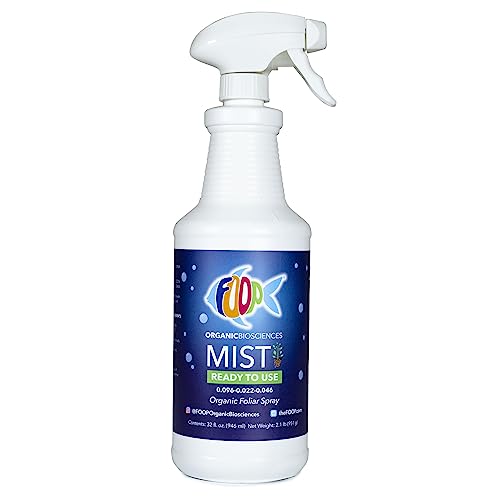
The FOOP Mist Foliar Spray is built for the person who never wants to read a mixing chart. Twist the cap, point, and mist. The 32-ounce bottle arrives ready to use, no measuring cups, no dilution math, no leftover concentrate going cloudy on the shelf.
Compared to the multi-bottle Microbe Life kit reviewed above, this one trades flexibility for convenience. A fresh minty scent signals a low-odor application, which indoor growers tend to appreciate in winter when windows stay closed. Organically minded shoppers will like the soil-enriching microbes included in the formula, since the spray supports leaf-level uptake while still feeding the root zone indirectly.
Where It Excels
- Truly ready to use, so first-time growers avoid the most common dosing mistakes.
- Organic composition fits growers avoiding synthetic feeds on edible houseplants.
- The 32-ounce size covers a long stretch of weekly misting for a typical indoor collection.
Points To Keep In Mind
- No-mix convenience means a higher per-application cost than concentrated options.
- The fresh minty scent, while mild, may bother scent-sensitive households during close indoor use.
Whose Shelf It Belongs On
First-time foliar feeders and houseplant collectors who want a grab-and-mist bottle without measuring or mixing.
A Better Fit Elsewhere
Growers scaling up to a large vegetable plot will find the FOOP Organic Broad-Spectrum Plant Spray a more cost-effective outdoor match.
Wilt-Pruf sits in a different lane from the nutrient-based sprays reviewed so far. It is an anti-transpirant, a clear film-forming product designed to slow moisture loss through leaves rather than feed the plant. Once it dries, the coating holds in the moisture the plant already has, which is the whole point when winter winds start pulling it out faster than roots can replace.
For gardeners in cold-winter regions, the 16-ounce concentrate replaces the old burlap wrap on evergreens like arborvitae, cypress, and rhododendrons. The professional-grade reputation goes back decades, and the spray-and-let-dry routine keeps the fall application quick. Where the FOOP Mist and Microbe Life kit feed the plant, this one protects it.
Everyday Perks
- Concentrate format stretches a small bottle into many gallons of mixed spray, which suits large property owners.
- Replaces burlap wrapping on evergreens, simplifying late-fall prep work.
- Professional-grade reputation among nursery and landscape users adds confidence for first-time buyers.
Trade Offs
- Not a fertilizer, so it pairs with a regular feeding routine rather than replacing one.
- Requires dilution before use, so first-timers need to follow the mix ratio carefully.
- Reapplication is needed in some climates, which adds an annual chore to the calendar.
Quick Facts
Best Suited To
Northern gardeners with broadleaf evergreens, recent transplants, or stock that struggles through dry winters and windy shoulder seasons.
Not Your Match When
Tomato growers and rose gardeners chasing bloom performance will get more from the FOOP Organic Broad-Spectrum Plant Spray as a feeding alternative.
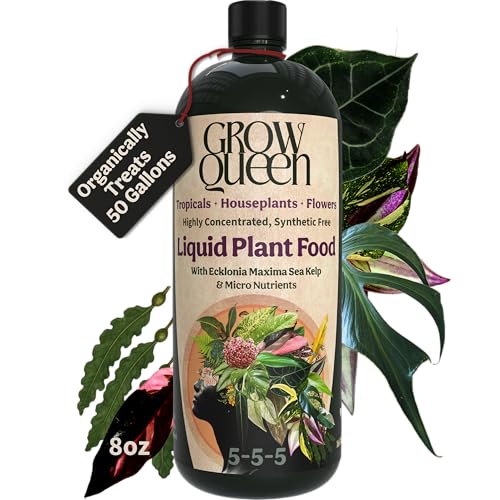
Most liquid indoor fertilizers lean heavily on nitrogen and leave phosphorus and potassium behind. Grow Queen’s 5-5-5 NPK ratio (nitrogen, phosphorus, potassium, in equal parts) spreads the nutrition evenly, which is gentler on houseplants and tropicals that scorch easily under high-nitrogen feeds. The 8-ounce bottle treats up to 50 gallons when diluted, so a small collection of potted plants lasts months.
Sea kelp adds a familiar organic touch, and the liquid format means faster uptake than granular options. Where the Wilt-Pruf reviewed above protects, and the FOOP Mist rescues, this one’s job is steady maintenance feeding. You pour a little into your watering can and let the roots do the rest.
The Helpful Details
- Balanced 5-5-5 ratio reduces the risk of leaf burn on sensitive tropicals.
- One 8-ounce bottle covers a long stretch of routine feeding, which lowers the per-month cost.
- Sea kelp inclusion appeals to organic-leaning indoor gardeners.
Some Limits To Know
- Requires dilution, so it is less grab-and-go than the FOOP Mist.
- Designed for general feeding rather than acute deficiency correction, so emergencies call for something stronger.
Who Will Love This
Houseplant owners with a mixed tropical collection who want a gentle, balanced feed for routine weekly use.
Consider Something Else When
Someone dealing with pale leaves and obvious nutrient gaps should look at the Spray-N-Grow Micronutrients for a more targeted trace-element push.
If kelp-based foliar feeding is new to you, an 8-ounce trial bottle is a smart starting point. Bloom City’s Supergreen formula uses kelp as the central ingredient, an organic input known for trace minerals and natural growth hormones. The small bottle fits neatly on a kitchen shelf next to the watering can, and it is small enough to use up before it loses freshness.
For indoor plants and small outdoor containers, this size keeps you from overcommitting. The two larger Bloom City options reviewed below cover gardeners with bigger collections, but they only make sense once you have already decided that kelp feeding fits your routine.
A Few Strong Suits
- Compact 8-ounce bottle suits kitchen-shelf storage and small collections.
- Organic kelp base appeals to gardeners avoiding synthetic chelates (synthetic binding agents that help minerals dissolve in liquid).
- Entry-level price point lowers the risk of trying a new feeding approach.
Honest Caveats
- Small bottle runs out quickly under heavy outdoor use, so larger yards will need a bigger format.
- Kelp alone is not a complete feed, so it pairs with a base nutrient for hungry plants.
Who Should Grab It
Curious indoor gardeners ready to test kelp feeding for the first time without committing to a gallon jug.
Skip It When
Greenhouse operators or large property owners will save money stepping up to the Bloom City Supergreen Kelp 1 Gallon format instead.
The 32-ounce Bloom City Supergreen hits the middle of the range: a refill-friendly container for gardeners who already know kelp works for them. The formula matches the 8-ounce bottle reviewed above, so the only real decision is sizing, not ingredients. You get the same organic kelp base without paying the per-ounce premium of the smaller trial format.
For a household running weekly kelp feeds on a patio collection or a small vegetable bed, this is the workhorse. The 1-gallon option reviewed next takes over once your spray sessions start eating through 32 ounces faster than expected.
Real Benefits
- Lower per-ounce cost than the 8-ounce starter bottle for committed users.
- Same trusted kelp formula across the size range, so switching sizes does not mean learning a new product.
- Organic composition supports growers transitioning away from synthetic feeds.
Worth Noting
- Bottle is heavier and harder to grip for gardeners with smaller hands during long spraying sessions.
- Larger size may lose freshness if the spray routine is not consistent.
Feature Snapshot
Perfect Match For
Committed home gardeners running a steady weekly foliar routine on patio vegetables, herbs, and mixed ornamentals.
Another Choice May Suit
Someone maintaining a small indoor shelf of plants will burn through this slowly, making the Bloom City Supergreen Kelp 8 oz a more practical size.
Once a foliar routine gets serious, the 1-gallon Bloom City jug removes the constant refill cycle. Greenhouses, small farms, and gardeners with sprawling landscapes tend to drink kelp sprays faster than they expect, and bulk format simply costs less per ounce. The formula stays identical to the 8-ounce and 32-ounce siblings, which keeps the learning curve short.
Pair this with a pump sprayer rather than a hand mister, because at gallon scale the wrist fatigue becomes real. The jug itself is also worth storing indoors between uses, since kelp-based products degrade faster in direct sun and heat.
What Helps Most
- Bulk format delivers the lowest per-ounce cost across the Bloom City range.
- One jug covers large greenhouses, small farms, or extensive landscape plantings without mid-season refills.
- Same kelp formula as the smaller sizes keeps switching between formats simple.
Factors To Consider
- Bulk format demands a pump or backpack sprayer, which is an extra piece of equipment to own.
- Heavy jug is awkward to pour into smaller spray bottles without spillage risk.
- Storage in a cool, shaded area is important to preserve freshness through the season.
Built With In Mind
Greenhouse growers, small-acreage farmers, and landscape managers running high-volume foliar programs across many plants at once.
Reach For A Different Pick When
A casual backyard gardener with a single raised bed should save the money and stick with the Bloom City Supergreen Kelp 32 oz format instead.
The FOOP Broad-Spectrum Plant Spray is the outdoor cousin of the FOOP Mist reviewed earlier. Same ready-to-use convenience, but tuned for vegetable beds, herb planters, and flower borders. The formula stacks nitrogen, calcium, kelp, aloe vera, and an organic rooting hormone in a single bottle, so the spray pulls double duty as a leaf feed and a mild root stimulant when it drips into the soil.
Soil-enriching microbes in the mix help keep the root zone biologically active, which matters in raised beds that get watered heavily and lose microbial life over time. The 32-ounce trigger bottle is sized for a typical backyard garden without forcing a jump to bulk concentrate.
A Strong Showing
- Ready-to-use trigger bottle suits gardeners who do not want to mix or measure.
- Broad-spectrum nutrient profile covers vegetables, herbs, and flowers in one product.
- Organic composition fits edible gardens where harvest safety matters.
- Soil-enriching microbes support long-term soil biology, not just leaf-level feeding.
Trade-Offs To Consider
- Trigger sprayers wear out faster than pump sprayers under heavy use, so the mechanism is worth monitoring.
- Per-ounce cost climbs compared to the Bloom City kelp options for very large plots.
Key Product Details
The Right Fit
Backyard vegetable growers tending raised beds, herb planters, and flower borders who want one organic spray to cover everything.
Where Another Pick Suits Better
Collectors focused on houseplants and tropicals will get more relevant nutrition from the Grow Queen Organic 5-5-5 Liquid reviewed above.
Most foliar sprays focus on the big three: nitrogen, phosphorus, potassium. Spray-N-Grow’s Micronutrients takes a different angle, delivering the trace elements that often go missing in standard feeds. Iron, manganese, zinc, and similar minerals are needed in tiny amounts, but their absence shows up fast in yellowing leaves and stalled growth.
The 8-ounce bottle is a problem-solver, not an everyday feeder. You reach for it when a specific deficiency shows up or when a high-yield crop needs the extra push. The other products in this roundup cover broader nutrition, while this one fills in the gaps.
Advantages To Know
- Specialty focus on micronutrients targets the deficiencies other foliar sprays miss.
- Small 8-ounce bottle suits periodic, targeted use rather than daily feeding.
- Pairs with any base nutrient program without overwhelming the existing schedule.
Less Ideal Details
- Not a complete feed, so it cannot stand alone for routine care.
- Requires some grower knowledge to match symptoms to a micronutrient solution.
Who Will Love This
Experienced gardeners troubleshooting visible nutrient gaps or boosting heavy-feeding crops with targeted trace minerals.
Swap It Out When
Beginners unsure about deficiency symptoms will get a more forgiving starting point with the Grow Queen Organic 5-5-5 Liquid.
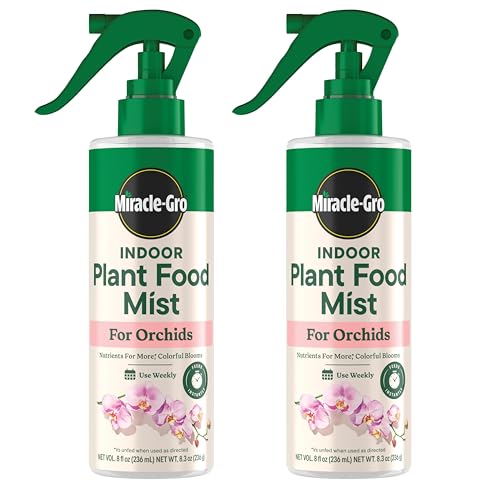
Orchids play by their own rules. Their roots want air more than moisture, and their leaves evolved in humid canopy conditions that a dry living room never quite matches. The Miracle-Gro Orchid Mist is built specifically for that reality, with a fine mister designed to mimic natural canopy feeding. The two-pack format means a backup bottle sits ready when the first runs dry mid-bloom cycle.
Where the FOOP Mist and Bloom City kelp options cover general houseplants, this one narrows in on a single genus. Orchid keepers who already know their plants want targeted feeding will appreciate the specialty focus, and the familiar brand lowers the learning curve for someone expanding into orchids for the first time.
A Favorable Mix
- Specialized orchid formula removes guesswork for first-time orchid keepers.
- Two-pack format prevents mid-bloom dry-out when one bottle empties.
- Fine mister design suits leaf-level feeding without drenching the crown (the central growing point where leaves meet roots).
A Few Limitations
- Narrowly tuned to orchids, so it does not generalize to a wider houseplant collection.
- Small 8-ounce bottles require frequent replacement under daily misting routines.
Perfect Match For
Dedicated orchid collectors with a windowsill full of phalaenopsis or similar tropicals who want a matched mist for the genus.
Where A Sibling Pick Shines
Houseplant owners with a mixed collection should pick the FOOP Mist Foliar Spray for broader coverage across many species.
Choosing Foliar Sprays That Match Your Garden
A foliar spray earns its place by solving a specific problem faster than root feeding can. Start by matching the format to the routine: ready-to-use trigger bottles for quick rescue work, concentrates for large landscapes, and bulk gallons for greenhouses and small farms. For houseplants, gentle organic blends lower the risk of leaf burn on sensitive tropicals, while kelp-based formulas add trace minerals that boost overall vigor.
Indoor growers should pay attention to scent and mist quality, since strong odors linger in closed rooms and coarse sprays leave ugly spotting on glossy leaves. Outdoor gardeners leaning toward edible beds will want organic certification and microbial support to keep the soil biology healthy through repeated harvests. Specialty options like the Wilt-Pruf concentrate or the Spray-N-Grow Micronutrients cover protective and corrective needs that general feeds miss entirely.
A simple rule of thumb: small bottle first to test the approach, then step up to the size that matches your real routine. Buying a gallon jug for a single windowsill collection wastes money, while a tiny 8-ounce bottle disappears in a week on a serious vegetable plot. The bottle you actually finish is the right bottle.
For winter protection specifically, the Wilt-Pruf approach is the standout because no nutrient spray solves moisture loss through wind and cold. For edible gardens, the FOOP Broad-Spectrum and the Bloom City kelp range cover most needs. Indoor orchid keepers will get the cleanest results from a dedicated orchid mist, while everyone else can lean on a general houseplant formula and call it done.
What To Watch Across The Foliar Sprays Category
Pitfalls Shoppers Hit
Many first-time buyers reach for the highest-nitrogen formula they can find, thinking stronger means faster growth. For foliar feeding the opposite is often true: leaves absorb nutrients quickly, and concentrated nitrogen burns tender foliage fast. A balanced 5-5-5 or a gentle kelp blend usually outperforms aggressive feeds on houseplants.
Another common trap is ignoring format. A concentrate that needs dilution is a poor choice for someone who never wants to measure, while a ready-to-use bottle becomes wasteful at greenhouse scale. Match the format to the routine, not the other way around.
When Paying More Pays Off
The higher-priced options in this category earn their premium by stacking ingredients: organic certification, microbial inoculants, balanced NPK ratios, and specialty tuning for orchids or hydroponic systems. Spending more makes sense when the garden has a specific, demanding use case, like a hydroponic reservoir or a large edible plot.
For a casual houseplant shelf, the premium tier rarely justifies itself. The honest read is that a mid-priced organic blend, used consistently, outperforms an expensive specialty formula used sporadically. Frequency and match to the plant matter more than the price tag alone.
Frequently Asked Questions
How often should foliar sprays be applied?
Most foliar sprays work well on a weekly schedule during active growth, with monthly maintenance feeds during slower seasons. Over-applying leads to leaf burn and salt buildup on the foliage, so following the label and watching the plant’s response matters more than rigid timing.
Can foliar sprays replace regular root feeding?
No, foliar sprays are a supplement rather than a replacement. Roots do the heavy lifting for nutrient uptake, and leaves handle only a fraction of total nutrition. The right approach combines routine root feeding with foliar sprays for targeted boosts and quick corrections.
Are organic foliar sprays safer for edible gardens?
Organic formulations tend to be gentler on beneficial soil microbes and reduce the risk of chemical residue on harvestable crops. That said, every plant responds differently, and even organic sprays should be applied in the early morning or evening to maximize absorption before the sun dries them out.
Do foliar sprays work on indoor houseplants?
Yes, and indoor plants often respond well because their root zones in pots can become compacted or depleted faster than outdoor soil. A weekly misting routine on tropicals, ferns, and orchids helps maintain leaf color and supports growth during low-light winter months.
What is the difference between foliar feeding and misting for humidity?
Foliar feeding delivers nutrients and is meant to leave a thin residue that the leaf absorbs. Plain misting for humidity uses water only and evaporates without leaving anything behind. Some products blur the line, so reading the label clarifies whether the spray is meant to feed the plant or just raise local humidity.
Wrap Up
The right foliar spray depends on what your plants actually need, whether that is gentle weekly feeding, winter moisture protection, or a targeted micronutrient push. Start with one bottle that matches your routine and let the plant’s response guide the next purchase. A small trial often prevents the most common mistake: buying a gallon of the wrong formula and never using it again.
