

Putting in a food plot without the right gear is like brushing a stain into the carpet. The right seeder determines whether seed lands where you want it, at the rate you need, and whether your plot actually takes off. This lineup covers hand-crank shoulder units, walk-behind broadcast spreaders, ATV-mounted hoppers, and tow-behind aerator-spreaders, plus two seed blends that pair well with any of the equipment.
You’ll see the most useful options for small backyard plots, mid-size food plots on leased ground, and large-acreage setups where a UTV or lawn tractor does the walking. Each pick notes who it suits best and where another entry in the list fits better.
A Closer Look At The Lineup

Yard Tuff Shoulder Seeder & Grass Seed Spreader

Evolved Harvest 7 Card Stud Food Plot Seed

Earthway 2750 Hand-Operated Bag Spreader

EarthWay 2150 Commercial 50 LB Broadcast Spreader

Ogrmar 5 PCS Seed Dispenser Sower Tool

Uniqwamo Handheld Grass Seed Spreader (Milwaukee 18V)

Uniqwamo Handheld Power Spreader (Dewalt 20V/60V)
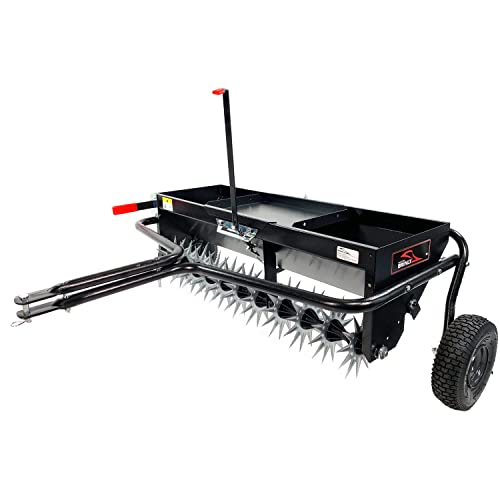
Brinly Tow Behind Combination Aerator Spreader 40-Inch

Buyers Products UTVS16 150 lb UTV ATV Broadcast Spreader
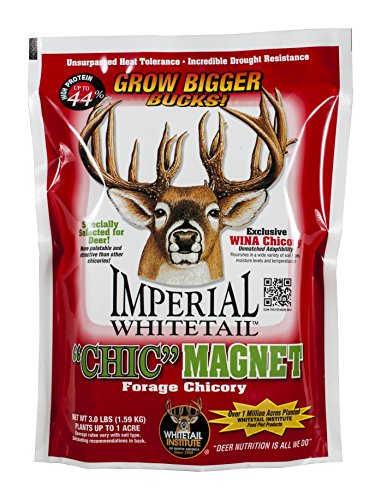
Whitetail Institute Chic Magnet Perennial Forage Chicory
The Yard Tuff shoulder spreader trades bulk for maneuverability, which is exactly what you want when navigating a narrow food plot edge or a tree line. The whole rig weighs about three pounds empty, yet the canvas hopper holds up to 25 pounds of seed, compost, or small granular material. You crank the handle with your right hand while the bag rides on the adjustable shoulder strap, keeping your off-hand free to swat branches or open gates.
Owners commonly report that the all-metal gear drive feels solid under cranking and that the calibrated flow gate holds its setting well once dialed in. For a small property where pulling a push spreader across uneven ground feels like overkill, this shoulder-style unit earns its place.
Everyday Wins
- Light enough at three pounds to wear for a full plot pass without shoulder fatigue
- 25-pound capacity covers most quarter-acre throw-and-mow jobs in one fill
- All-metal gears stand up to seasonal use better than plastic gearboxes
- Calibrated flow gate handles seed, fertilizer, and small granular amendments
- Zippered canvas bag makes cleanup simple, just shake out the dust and roll it up
Honest Caveats
- Not built for coated or large seed blends that clump and need agitation
- Shoulder strap can dig in during long passes across rough ground
- Assembly is quick but the crank handle alignment takes a careful eye the first time
Feature Snapshot
Right Fit For
Small-plot owners and hunters who want a no-fuss tool to walk a quarter-acre food plot without hauling a push spreader through the woods.
Consider Something Else When
You have a full acre or more to cover, where the EarthWay 2150 Broadcast Spreader will save serious time.
Evolved Harvest 7 Card Stud is a blended forage mix, not a spreader, but it belongs in any seeder discussion because the seven-species composition covers early, mid, and late season browsing in a single bag. Triticale, oats, winter peas, clover, chicory, turnip, and radish each peak at different points, so the plot keeps offering fresh forage as the calendar rolls. The seed is sold in a 10-pound bag, with a 3-pack option for larger ground.
For hunters building a destination plot, the high protein and mineral content of this blend supports antler growth and herd health while the sweet taste profile of the brassicas pulls deer onto the property. It’s also adaptable to a wide range of regions and climates, which matters if your hunting ground spans multiple soil types.
The Case For It
- Seven species in one bag means you don’t juggle multiple seed cans across seasons
- High protein and mineral profile supports both attraction and herd nutrition
- Works across a wide range of regions and soil conditions
- 10-pound bag is enough for a small throw plot, 3-pack scales to larger acreage
Soft Spots
- Mix contains larger seed like peas and radish that some shoulder spreaders struggle to meter cleanly
- Annual blend, so you re-seed yearly rather than getting multi-year stand life
Made For
Hunters running a single destination plot who want year-round attraction without buying three separate seed varieties.
A Better Fit Elsewhere
You want a perennial stand that comes back for years from one planting, in which case the Whitetail Institute Chic Magnet Perennial Forage Chicory makes more sense.
The Earthway 2750 borrows the shoulder-spreader concept from the Yard Tuff and adds refinement where it counts. The contoured molded base distributes weight across your hip rather than a single strap point, so the rig sits steady while you walk. The high-RPM gearbox produces a smoother, feathered broadcast edge compared to budget units, and the zippered top holds up to 25 pounds of seed.
Where this spreader separates itself is in the small details. The rocking agitator keeps seed flowing instead of bridging, and the spring-loaded shut-off helps you avoid dumping a pile when you stop mid-plot. For most small food plots, that’s a noticeable upgrade over the basic shoulder-bag format.
Notable Gains
- Contoured molded base reduces hot spots during long passes
- High-RPM gearbox delivers a cleaner broadcast pattern with feathered edges
- Oscillating shut-off plate prevents clumping at the gate
- Adjustable shoulder strap fits a wider range of body sizes
Worth Bearing In Mind
- Rustproof nylon construction is durable but can feel stiff in cold weather
- Hopper opening is slightly smaller than the Yard Tuff, so filling takes a steadier hand
Best Suited To
Hunters with mid-size plots up to a half acre who want shoulder-style convenience but better ergonomics than entry-level bag spreaders.
Look Elsewhere When
You’re pushing past an acre per pass, in which case the Brinly Tow Behind Combination Aerator Spreader attaches to your tractor and frees you from carrying anything at all.
The EarthWay 2150 is a walk-behind broadcast spreader, not a shoulder unit, and the 50-pound hopper is the giveaway that this rig means business. The 13-inch pneumatic stud tires with rustproof poly rims float over rough ground and soft soil, which is what you deal with on freshly disked food plots. A clog-free grate slides in and out of the hopper to break up chunks and debris before they jam the gate.
Earthway pairs the grate with a 3-hole drop system and side-spread control, so you can dial in your application rate and even feather the edge along plot borders. The enclosed gearbox shrugs off damp conditions that would stall budget units, and the adjustable drop rate sits right on the handle for quick tweaks mid-pass. Owners commonly report that the 2150 holds calibration well across multiple fill-ups.
The Good Stuff
- 13-inch pneumatic stud tires roll through soft, tilled soil without sinking
- Clog-free grate keeps chunks from jamming the gate during long sessions
- 3-hole drop with side-spread control delivers clean, even coverage with feathered edges
- Enclosed gearbox tolerates damp seed where open gearboxes stall
- 50-pound hopper cuts refill stops on larger plots
Practical Considerations
- Larger footprint than a shoulder spreader, so storage in a small shed takes planning
- Not designed for tight tree-line passes where a shoulder unit maneuvers more easily
Key Product Details
Whose Shelf It Belongs On
Land managers running plots between half an acre and several acres who want push-spreader accuracy without stepping up to a tow-behind rig.
Not Your Match When
You only maintain small kill plots and don’t want a 50-pound hopper sitting between uses, where the Earthway 2750 Hand-Operated Bag Spreader handles the workload more conveniently.
The Ogrmar dispenser is the smallest tool in this list and the simplest, a handheld plastic dial sower about 5 inches long and under 3 inches wide. You squeeze the body, a small opening releases a controlled stream of seed, and the dial lets you select from five settings to match different seed sizes. The pack includes five units, so you can stage them at the garden bench, the shed, and the truck.
This is the right tool for filling seed trays, planting a small kitchen garden, or repairing bare spots along a plot edge where a broadcast spreader would over-seed. It’s not a food plot tool by design, but for a backyard or hobby grower the dial sower handles precision work that broadcast gear cannot.
Everyday Advantages
- Five dial settings handle tiny seed through small beans without crushing them
- Plastic body stays light and resists corrosion from fertilizer residue
- Five-pack means you can leave one staged at the garden, one in the truck, one in the shed
Less-Strong Areas
- Not designed for broadcast seeding an entire food plot, this is a precision tool only
- Plastic construction can crack if dropped on hard ground in cold weather
Who Should Grab It
Backyard gardeners and plot owners who want a pocket-sized tool for spot seeding and tray starting without dragging out a full spreader.
Swap It Out When
Your project is a quarter-acre or larger food plot, where the Yard Tuff Shoulder Seeder or the Uniqwamo Handheld Power Spreader will cover the area in a fraction of the time.
The Uniqwamo handheld spreader is a battery-powered spreader that snaps onto your existing Milwaukee 18V pack, the same battery that already runs your drill, saw, and trimmer. The tool body holds a small seed reservoir, the trigger controls the spin rate, and the ergonomic handle keeps wrist strain down. In a winter pass across the driveway it handles rock salt the same way it handles seed in spring.
The big trade-off is that no battery or charger is included, so this is the right pick for someone who already owns Milwaukee M18 packs and just needs the spreader attachment. For Milwaukee households it’s a near-zero extra-cost add-on to the tool ecosystem.
A Strong Showing
- Cordless operation means no cranking, no shoulder strap, just trigger and go
- Works for seed, fertilizer, and rock salt across all four seasons
- Compatible with multiple Milwaukee 18V battery models for shared use
- Compact enough to store on a shelf with other handheld power tools
Trade-Offs To Consider
- Hopper is small, so you’ll refill often on any plot over a quarter acre
- Spread width is narrower than a shoulder or walk-behind unit, so passes take longer
Perfect Match For
Homeowners and hunters already invested in the Milwaukee M18 platform who want a one-hand spreader for sidewalk salt, lawn repair, and small food plot work.
Reach For A Different Pick When
You run Dewalt batteries instead of Milwaukee, in which case the Uniqwamo Handheld Power Spreader for Dewalt 20V/60V is the matching choice.
The Dewalt-side Uniqwamo mirrors the Milwaukee version almost exactly, same handheld body, same trigger-controlled spread, same multi-season use case. The key difference is battery compatibility, supporting common Dewalt 20V and 60V packs like DCB200, DCB203, DCB204, DCB206, DCB207, DCB181, and DCB182. If your shop is built around Dewalt 20V Max or 60V FlexVolt, this drops into the lineup without buying a new battery platform.
For lawn overseeding, de-icing the driveway, or pushing seed across a small kill plot, the cordless convenience is hard to beat. The ergonomic handle reduces hand fatigue compared to a cranked spreader, and one trigger pull delivers a measured burst instead of a continuous stream.
Advantages To Know
- Drop-in compatibility with multiple Dewalt 20V and 60V batteries
- Handles seed, granular fertilizer, and rock salt for year-round use
- Ergonomic grip reduces fatigue versus cranking a manual spreader
Some Limits To Know
- Reservoir is small, so larger plots require constant refilling
- Like the Milwaukee version, narrow spread width means more passes for a wide plot
Who Will Love This
Dewalt 20V Max and 60V FlexVolt owners who want a cordless, grab-and-go spreader for small plots, lawn patches, and winter ice control.
Where A Sibling Pick Shines
Your battery platform is Milwaukee 18V rather than Dewalt, in which case the Uniqwamo Handheld Grass Seed Spreader for Milwaukee 18V fits the existing kit.
The Brinly AS2-40BH-P is a 40-inch tow-behind that combines a steel-tine aerator with a seed/fertilizer hopper and a weight tray in one frame. The 3-D steel tine design doubles the strength over flat stars, so the tines resist bending even in compacted soil. The hopper drops material while the tines perforate the ground, so seed, lime, or fertilizer lands directly into the soil contact zone instead of sitting on top of the thatch.
The all-steel construction is heavier than most lawn spreaders, which is the point, since the weight helps drive the tines into the ground without you standing on the tray. The included weight tray lets you add cinder blocks or concrete pavers to fine-tune penetration based on soil conditions.
What Helps Most
- Two-in-one design means one tractor pass aerates and spreads at the same time
- 3-D steel tines resist bending in compacted or clay-heavy soil
- All-steel frame holds up to seasonal towing without flexing
- Weight tray accepts standard cinder blocks for adjustable tine depth
Room For Improvement
- Requires a lawn tractor or ATV with enough hitch capacity to pull 40 inches of steel
- Storage footprint is significant even when folded or hung on a wall bracket
Feature Card
Who It Suits Best
Tractor owners with established food plots or large lawns who want to combine aeration and overseeding into a single pass.
Skip It When
You maintain small plots without a tow vehicle, in which case the Uniqwamo Handheld Power Spreader for Dewalt 20V/60V is a more practical scale.
The Buyers Products UTVS16 turns a UTV or ATV into a 150-pound broadcast spreader with a receiver hitch mount. The poly hopper holds enough seed, fertilizer, lime, or salt to cover serious acreage before refill, and the receiver-mount design slides into a standard 2-inch hitch on most utility vehicles. The all-season versatility means the same rig handles food plot seeding in spring, fertilizing in summer, and de-icing the lane in winter.
For landowners managing multiple food plots across a larger property, the UTVS16 saves hours compared to a push spreader, since you drive between plots instead of walking. The poly hopper resists corrosion from fertilizer salts better than bare steel, and the design keeps the spreader low enough to clear trails and field edges.
The Value In It
- 150-pound poly hopper covers multiple plots in a single fill
- Receiver-mount design fits standard 2-inch UTV and ATV hitches
- Multi-purpose use for seed, fertilizer, lime, feed, and rock salt
- Poly construction resists corrosion from fertilizer and de-icing materials
Where It Is Less Suited
- Requires a UTV or ATV to use, no manual fallback option
- Empty weight and full load are substantial, so storage needs a sturdy corner
Quick Facts
Right Fit For
Landowners managing multiple food plots or a long gravel lane who already own a UTV or ATV and want to cover ground without walking.
A Better Fit Elsewhere
You only have a walk-behind tractor and a small yard, where the EarthWay 2150 Commercial 50 LB Broadcast Spreader is a better scale match.
Whitetail Institute’s WINA-100 is a perennial forage chicory designed for one job, growing a high-protein stand that deer return to year after year from a single planting. The seed is coated for improved seedling survival, and the variety is bred to be more tender and palatable than waxy traditional chicories. The 3-pound bag covers roughly an acre when broadcast correctly.
Heat tolerance, cold tolerance, and drought tolerance are all part of the package, so this seed works in regions where summer heat or dry Augusts wipe out clover-based blends. The high protein content supports antler growth, and the perennial lifespan means you plant once and manage for several seasons.
Real-World Strengths
- Perennial stand comes back for multiple seasons from one planting
- Drought and heat tolerance keep the plot green where clover fails
- High protein content supports antler-building nutrition
- Coated seed improves germination in less-than-ideal soil conditions
Possible Compromises
- Single-species blend, so the plot offers less variety than the Evolved Harvest 7 Card Stud mix
- Establishment year requires careful weed control for the chicory to take hold
The Details
Best Suited To
Hunters in hot, dry regions where clover struggles and a perennial stand saves the cost and labor of annual reseeding.
Where Another Pick Suits Better
You want multi-species variety in a single bag for year-round attraction, where the Evolved Harvest 7 Card Stud Food Plot Seed covers more calendar windows.
## Matching Equipment to Your Plot and Property The right seeder depends on three things: how much ground you maintain, how you get around it, and what you plant. Plot size drives the spreader format, since a shoulder unit covering a quarter acre per fill doesn’t scale well to a five-acre lease. Vehicle availability drives whether a push, tow, or receiver-mount rig makes sense, and seed type drives whether the spreader can meter the blend cleanly. Handheld spreaders like the Uniqwamo Milwaukee and Dewalt units work best for small plots, lawn patches, and winter salt. Shoulder bag spreaders like the Yard Tuff and Earthway 2750 cover quarter-acre to half-acre plots with a hand crank and reasonable comfort. Walk-behind broadcast spreaders like the EarthWay 2150 push past an acre with pneumatic tires that float over soft ground. Tow-behind units like the Brinly 40-inch aerator-spreader pair with a lawn tractor, while the Buyers Products UTVS16 bolts to a UTV or ATV for the largest jobs. For seed, perennial chicory like the Whitetail Institute WINA-100 wins in dry climates, while multi-species annual blends like the Evolved Harvest 7 Card Stud cover more seasonal windows. Match the seed to your soil and your climate first, then match the spreader to your walking tolerance and plot size. ## Key Considerations Across These Picks ### Common Shopping Slip Ups Buying more spreader than you need is a frequent misstep. A 50-pound walk-behind spreader sounds great in the store, but it becomes a storage problem for someone who only seeds a quarter-acre food plot each fall. Match the hopper size to your actual plot acreage, not your imagined future plans. Skipping battery compatibility on cordless spreaders is another common trap. The Uniqwamo Milwaukee and Dewalt units only work with their respective platforms, so a Milwaukee owner buying the Dewalt version ends up with an expensive paperweight. Check your existing battery model numbers against the spreader’s compatibility list before you click. ### Where The Extra Money Goes Higher-tier walk-behind and tow-behind spreaders earn their cost through pneumatic tires, enclosed gearboxes, and clog-resistant grates. The EarthWay 2150’s enclosed gearbox alone justifies its position for anyone spreading damp or freshly treated seed, since open-gear units stall in those conditions. Tow-behind aerator-spreaders like the Brinly add steel tine construction and a weight tray, both of which translate to longer service life and better soil contact. For larger properties, the Buyers Products UTVS16’s 150-pound poly hopper and receiver-mount design cost more upfront but replace hours of walking with minutes of driving, which is a real return on time and energy once the plot count climbs past a few acres. ## Frequently Asked Questions ### What size food plot seeder do I need? For a quarter-acre or less, a shoulder-style or handheld spreader like the Yard Tuff or Uniqwamo Milwaukee is enough. For half an acre to two acres, a walk-behind broadcast spreader like the EarthWay 2150 is more efficient. For multiple acres, a tow-behind or UTV-mounted unit like the Brinly or Buyers Products UTVS16 saves serious time. ### Can I use a lawn spreader for food plots? Yes, walk-behind broadcast spreaders like the EarthWay 2150 are designed for both lawn fertilizer and food plot seed, and the adjustable drop rate handles different seed sizes. Just clean the hopper between lawn and plot use if you’ve been spreading herbicide-treated material. ### Do cordless handheld spreaders work for food plots? They work well for small plots, spot seeding, and winter salt, but the small reservoir means constant refilling on plots over a quarter acre. They’re best as a complement to a larger spreader rather than a primary plot tool. ### What’s the difference between annual and perennial food plot seed? Annual blends like Evolved Harvest 7 Card Stud need replanting each year but offer multi-season variety. Perennial options like Whitetail Institute Chic Magnet come back for multiple seasons from a single planting but offer less species variety in the bag. ### How do I keep seed from clumping in a broadcast spreader? A clog-free grate, rocking agitator, and oscillating shut-off plate all help, and the EarthWay 2150 has all three. Keep seed dry in storage and avoid loading damp seed into the hopper, since moisture is the most common cause of clumping at the gate. ## Wrap Up The right seeder matches your plot size, your vehicle, and your seed. Start with the spreader format that fits your walking tolerance and acreage, then match the seed to your soil and climate. Whether you shoulder a 25-pound bag, push a pneumatic-tired walk-behind, or mount a 150-pound hopper on a UTV, the goal is the same: even coverage that puts seed in contact with soil. Pick the format that you’ll actually use consistently, and your plots will show the difference.