

Setting up a food plot is one of the most satisfying projects in deer management, and the seed blend you choose decides how the season plays out. The right mix pulls deer to your property during early archery weeks and keeps them coming back once the cold sets in. The wrong one sits in the bag, costs you a year, and leaves you reseeding come spring. This guide covers ten blends built for different goals, from remote hidey-hole plots to full-acre food factories, so you can match seed to soil and ambition.
The Picks In Brief

Evolved Harvest 7 Card Stud Adaptive Food Plot Seed

Whitetail Institute No-Plow Deer Food Plot Seed (.5 acre)
Whitetail Institute No-Plow Deer Food Plot Seed (1.5 acres)

Whitetail Institute FUSION Deer Food Plot Seed

Whitetail Institute Winter-Greens Deer Food Plot Seed (.5 acre)
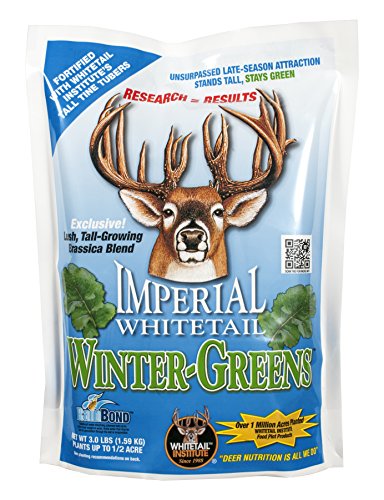
Whitetail Institute Winter-Greens Deer Food Plot Seed (2 acres)

Outsidepride Purple Top Turnip Seeds
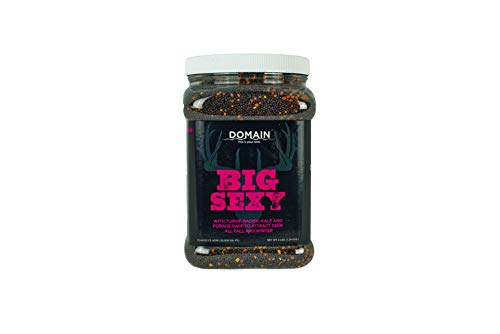
Domain Outdoor Big Sexy Food Plot Seed for Deer

Whitetail Institute Secret Spot Deer Food Plot Seed

Whitetail Institute Winter Peas Plus Deer Food Plot Seed
Taking A Closer Look At The Options
If you manage a single plot and want one bag that handles most of the calendar, the 7 Card Stud blend is built for that. It pulls together seven forage species, including triticale, oats, winter peas, clover, chicory, turnip, and radish, so the plot offers something fresh from the early fall archery opener through the late winter months. The mineral and protein content runs higher than a single-species blend, which helps body condition and antler growth on a year-round basis.
Where this seed earns its keep is adaptability. Soils that swing from sandy ridges to creek bottom loam tend to respond well, and the mix stretches across a wide climate range. For a first food plot on unfamiliar ground, that flexibility takes a lot of guesswork off your shoulders.
The Case For It
- Seven-species blend covers early, mid, and late season in one bag
- Adapts to varied soil types and regional climates
- Higher protein and mineral content than single-species options
- Draws consistent hoof traffic through seasonal transitions
- Available in single and multi-pack configurations
Things To Consider
- A general-purpose blend rarely tops a single-species plot in any one window
- Seeding rate requires careful calibration for the acreage you plant
Feature Snapshot
Who It Suits Best
Landowners running a single plot on mixed soils who want one bag to handle most of the season without juggling separate species.
Consider Something Else When
Whitetail Institute FUSION serves you better when you want a perennial stand that comes back for several years from a single planting.
The half-acre No-Plow bag is the answer to the spot you can only reach on foot or by ATV. The blend thrives with three to four hours of sunlight a day and establishes without disking or tilling, which matters when the only access is a logging road or a creek crossing. Compared to the seven-species flexibility of Evolved Harvest’s blend, this one is focused and predictable, an annual that pushes hard through roughly nine months of attraction.
For a backwoods plot tucked behind a ridge, the seed-to-soil contact you can achieve with a hand rake is enough to get a stand going. It removes the tractor from the equation entirely.
Everyday Advantages
- Establishes without tilling or heavy equipment
- Tolerates partial sun of three to four hours daily
- Provides up to nine months of forage and attraction
Worth Noting
- Annual blend requires yearly replanting
- Seed-to-soil contact still benefits from raking or a drag harrow
- Coverage tops out at a half acre per bag
At A Glance
Built With In Mind
Hunters planting a small, hard-to-reach plot on a slope, finger ridge, or creek-side clearing where heavy equipment is not an option.
A Better Fit Elsewhere
Whitetail Institute Secret Spot suits you better when the plot is even smaller and you want a 12-forage blend designed for hand-tool planting.
The 25-pound No-Plow bag covers one and a half acres using the same no-till approach as its smaller sibling, which makes it the right call when you have a sizeable clearing that a tractor still cannot reach. You get the same annual blend and the same tolerance for partial sun, just with enough seed to spread across meaningful acreage.
For land managers running multiple remote plots or one larger field, this size cuts down on repeat orders. The trade-off is weight, so hauling in a full 25-pound bag to a backwoods site takes a few trips.
Everyday Wins
- Covers 1.5 acres from a single bag
- Same no-till formula for inaccessible sites
- Delivers up to nine months of attraction per planting
Trade Offs
- 25-pound bag is heavy to pack into remote locations
- Annual lifecycle still means yearly reseeding
Key Product Details
The Right Fit
Landowners with one large remote plot or several smaller ones who want to seed the whole property in a single pass without tractor access.
Skip It When
Outsidepride Purple Top Turnips make more sense when you want a single-species brassica plot for soil building and dedicated bulb forage.
FUSION pairs proprietary clover with WINA perennial chicory, and the combination holds up through heat, cold, and dry stretches better than a straight clover plot. Unlike the annual No-Plow blends above, FUSION is perennial, so it comes back for several years from a single planting. That changes the economics considerably, especially on a plot you’ve already worked hard to establish.
The 3.15-pound half-acre bag suits smaller plots, while the 9.25-pound version covers one and a half acres. You can plant in spring or fall depending on your regional timing, which adds flexibility to your rotation.
Standout Benefits
- Perennial blend reduces yearly reseeding work
- Tolerates heat, cold, and drought stress
- Spring or fall planting flexibility
- Combines clover protein with chicory tonnage
Points To Note
- Perennial stands need proper soil pH to persist
- Establishment year often shows lower yield than mature stands
Who Should Grab It
Managers with prepared, pH-balanced soil who want a multi-year stand that delivers consistent forage without annual replanting costs.
Not Your Match When
Whitetail Institute Winter-Greens serves you better when late-season brassica attraction is the primary goal and annual reseeding is acceptable.
Winter-Greens is a brassica blend built for the back half of the season, when most other forages have gone dormant or frozen out. The mix includes the brand’s Tall Tine Turnip, which adds bulb production and cold tolerance to the plate. The half-acre bag is sized for small kill plots or supplemental late-season feeding zones.
Plant in fall, and the plot stands tall through frost and even under snow, holding attraction into the late season when deer are pressured and food is scarce. For hunters chasing late-season activity, that timing advantage is the whole point.
Notable Gains
- Cold and drought tolerant brassica blend
- Fortified with Tall Tine Turnip for bulb production
- Holds attraction into late season under snow
Softer Spots
- Annual blend needs fall planting and yearly reseeding
- Brassica flavor can take a season for deer to learn
Spec Overview
Best Suited To
Hunters focused on late-season deer activity who want a small kill plot that stays attractive long after the first hard freeze.
Another Choice May Suit
Evolved Harvest 7 Card Stud fits better when you want one bag to cover both early and late season on a single plot.
The 12-pound Winter-Greens bag stretches the same late-season brassica formula across two acres, which is a useful size for larger hunting properties or for managers running several smaller plots from a single order. Same Tall Tine Turnip fortification, same cold tolerance, just enough seed to cover meaningful ground.
For folks in the North where winter arrives early and lingers, the value of a brassica plot that stays palatable under snow is hard to overstate.
Real Benefits
- Covers two full acres in one bag
- Same proven brassica formula as the half-acre version
- Late-season attraction through frost and snow
Honest Caveats
- Annual cycle still demands yearly replanting
- Heavy 12-pound bag requires planning for transport
Whose Shelf It Belongs On
Property managers with two or more acres dedicated to late-season hunting plots who want bulk seed without splitting orders.
Look Elsewhere When
Domain Outdoor Big Sexy works better when you want a half-acre brassica plot in a reusable jug for quick establishment.
Purple Top Turnips are the workhorse single-species brassica, and the five-pound bag gives you a high-protein forage that doubles as a cover crop. The leafy greens pull early-season attraction while the bulbs develop underground and provide energy-rich feed once the cold sets in. Plant in full sun or partial shade, and the seed establishes in a wide range of soil types.
Compared to the multi-species blends higher in this list, a dedicated turnip plot puts all your attraction on one strong suit: late-season bulb grazing. For managers also thinking about soil improvement, the taproots break up compaction and add organic matter when they decompose.
Strong Points
- High-protein leafy forage and energy-rich bulbs
- Doubles as a cover crop for soil improvement
- Tolerates full sun to partial shade
- Five-pound bag covers a meaningful area
A Few Limitations
- Single-species plot lacks season-long diversity
- Brassica taste can take time for deer to learn in new areas
Quick Facts
Perfect Match For
Land managers who want a dedicated brassica plot with soil-building benefits and a simple, single-species management approach.
Where A Sibling Pick Shines
Whitetail Institute Winter-Greens fits better when you want a multi-species brassica blend fortified with Tall Tine Turnip for extra cold tolerance.
Big Sexy comes in a three-pound reusable jug that covers half an acre, mixing turnip, radish, kale, and forage rape into a cool-season brassica blend. The resealable container is a small but real quality-of-life upgrade over paper bags: pour what you need, store the rest without worrying about moisture or critters getting in. Domain positions this as a premier cold-season plot, and the kale and forage rape add leafy variety that pure turnip blends lack.
For a quick-establishment fall plot, the fast germination and simple planting approach make it accessible to first-timers. The half-acre coverage fits a small property or a focused kill plot.
Why It Works Well
- Reusable storage jug protects seed between seasons
- Four-species brassica blend adds leafy variety
- Fast germination suits short establishment windows
- Half-acre coverage fits small focused plots
Less Ideal Details
- Annual blend requires yearly replanting
- Half-acre coverage is small for larger properties
Made For
First-time planters and weekend project hunters who want a simple, contained half-acre brassica plot for cold-season attraction.
Reach For A Different Pick When
Outsidepride Purple Top Turnips suit you better when you want a single-species cover crop with broader soil-improvement benefits.
Secret Spot is the blend for the tiny plot most hunters never get to plant: a covert opening in the timber, a saddle on a ridge, the corner of a creek bottom you can only reach on foot. The seed mix contains twelve forages selected to keep attraction high through hunting season and beyond, and the bag includes a soil pH booster to help forage establish in slightly acidic ground.
You can plant it with hand tools, which removes the equipment barrier entirely. Clear the existing vegetation, expose the soil, scatter the seed, and drag a rake or branch over the top. For a hidey-hole plot that big equipment simply cannot reach, this is the formula that fits.
A Few Highlights
- Twelve-forage blend targets attraction through hunting season
- Soil pH booster helps in slightly acidic ground
- Hand-tool planting suits remote clearings
- Minimal ground prep beyond vegetation clearing
Where It Is Less Suited
- Small bag covers limited acreage
- Annual blend requires yearly replanting
Right Fit For
Hunters planting a covert micro-plot deep in the timber where no equipment can go and deer need a quiet, undisturbed food source.
Swap It Out When
Whitetail Institute No-Plow (half-acre) makes more sense when the plot is bigger and you can reach it with a four-wheeler but still skip the tractor.
Winter Peas Plus leads with over 80% winter peas, a legume loaded with sugar and protein that deer hammer once they discover it. The cool-season blend also includes Whitetail Oats, Winter Lettuce, and Forage Radish, which help the peas withstand heavy grazing and extend the attraction window into late season. At 11 pounds covering a quarter acre, the bag suits a focused late-season kill plot rather than a field-scale planting.
The honest read is that peas thrive in specific soil and climate conditions, so you may find performance varies by region. Where they do well, the attraction is strong and the late-season protein punch is hard to match.
What Earns Its Place
- Over 80% winter peas for protein-rich forage
- Very cold tolerant for late-season holding power
- Oats, lettuce, and radish buffer against heavy grazing
- Targets both early and late season attraction
Factors To Consider
- Quarter-acre coverage is small for most properties
- Pea performance varies by soil and climate conditions
Technical Highlights
Who Will Love This
Hunters running a quarter-acre late-season kill plot in regions where winter peas thrive and want a protein-focused brassica alternative.
A Better Fit Elsewhere
Whitetail Institute Winter-Greens works better when you want a brassica-dominant blend rather than a legume-focused cool-season plot.
What Matters Most Before Choosing Food Plot Seeds
Sunlight and Access Set the First Boundary
Before looking at species, walk the plot at midday and count hours of direct sun. Most forage blends need at least three to four hours of unbroken light, and the productive ones stretch toward six or more. If the clearing is shaded by a hardwood canopy, No-Plow and Secret Spot handle partial sun better than a full-sun brassica like Winter-Greens.
Access changes the seed choice almost as much as sunlight. Plots you can only reach on foot favor hand-plantable blends in smaller bags. Plots an ATV can service open up the half-acre and full-acre options without requiring a tractor.
Match Species to Your Local Deer Season
Whitetail behavior shifts sharply by region, and seed blends that crush in Georgia can underperform in Michigan. Cool-season annuals like brassicas and winter peas peak late, which matches northern rut timing. Perennial clover and chicory from FUSION spread attraction across the warm months and suit southern properties with longer growing seasons.
Check the planting window on the bag against your average first-frost date. Planting too late means the forage never establishes before cold shuts it down. Planting too early means the stand matures and loses palatability before peak hunting.
Perennial vs Annual Drives Long-Term Cost
A perennial like FUSION costs more per bag but persists for three to five years with proper management. An annual like No-Plow or Winter-Greens reseeds yearly, so the multi-year spend stacks up. Run the math against how long you plan to hold the property and how much soil prep you want to repeat.
Shopping Smart For Food Plot Seeds
Where Shoppers Go Wrong
A common slip is buying by bag size instead of by coverage. A 25-pound bag that covers an acre means nothing if your plot is a quarter acre, and you’ll end up overseeding and wasting seed. Match the bag to your measured acreage first, species second.
Another trap is ignoring soil pH until the seed is already in the ground. Most forage blends, especially clovers and brassicas, struggle in acidic soil below 6.0. A simple soil test before you buy lets you pick a blend that fits your conditions or amend the soil first.
Where The Extra Money Goes
Premium blends like the Whitetail Institute FUSION and Winter-Greens lines command higher prices because the seed varieties are proprietary and selected specifically for deer forage performance rather than general pasture use. You’re paying for research into palatability, cold tolerance, and drought resilience, traits that generic cover-crop seed often lacks.
For larger properties or multi-year commitments, that investment tends to pay back through better attraction and reduced reseeding. For one-off small plots or first experiments, a value-oriented blend like Outsidepride Purple Top Turnips gets you in the game without overcommitting.
Frequently Asked Questions
How much seed do you need per acre?
Most food plot seed bags list coverage in fractions of an acre, so divide your plot size in square feet by 43,560 to find acres, then match the bag. A half-acre plot needs a half-acre bag, a full acre needs a full-acre bag, and so on.
When should you plant food plot seeds?
Cool-season blends like brassicas and winter peas go in during late summer or early fall, typically 30 to 60 days before your average first frost. Perennial clover and chicory blends can go in spring or fall depending on regional timing and soil moisture.
Do you need a tractor to plant a food plot?
Not necessarily. No-Plow and Secret Spot blends are designed for no-till establishment with hand tools, rakes, or ATV-mounted spreaders. Tractors help with larger plots but are not required for every blend.
How long until deer start using a new plot?
Brassicas and rye-based blends can show browsing within two to four weeks of germination. Perennial clovers take longer to establish, and peak attraction usually arrives in the second or third growing season.
Can you plant food plot seed without tilling?
Yes, several blends on this list, including No-Plow and Secret Spot, are formulated for no-till planting. Clear existing vegetation, expose bare soil, broadcast the seed, and press it in with a drag or rake for good seed-to-soil contact.
Closing Remarks
The right food plot seed depends on your soil, your access, and the part of the season you’re targeting. Start by measuring your plot and counting your sun hours, then match those basics to a blend that fits the equipment you have on hand. Whether you plant a remote Secret Spot clearing or a full-acre brassica field, the work pays off the first time you watch a doe lead her fawn across a green strip you put in yourself.
