

Healthy fruit starts with consistent protection, and a single neglected spray window can turn a season of blossoms into a season of scab, aphids, or leaf curl. Backyard orchardists juggling apples, peaches, citrus, and roses usually want one reliable product that handles both insects and disease without forcing them to juggle a dozen separate bottles.
The picks below cover that full range, from dormant-season oil sprays that smother overwintering pests to three-in-one formulas that tackle active infections, plus a growth regulator for anyone tired of cleaning up nuisance fruit. Each option is matched to a specific kind of grower, from a single backyard apple tree to a small mixed orchard with stone fruit, pome fruit, and ornamentals.
The Shortlist At A Glance

Bonide Captain Jack’s Citrus, Fruit & Nut Orchard Spray
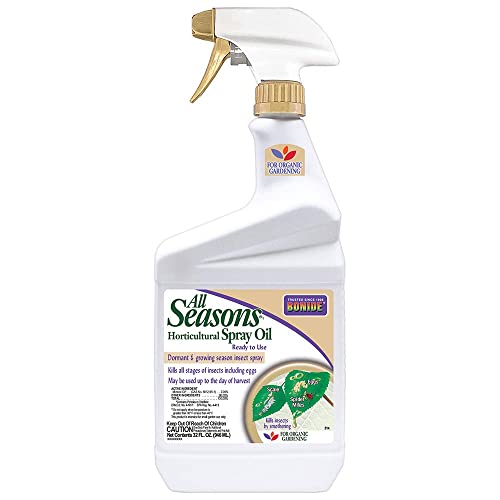
Bonide All Seasons Horticultural & Dormant Spray Oil

Bonide All Seasons Horticultural & Dormant Spray Oil (RTS)

Bonide Fruit Tree and Plant Guard Concentrate (16 oz.)

BioAdvanced 3-in-1 Fruit, Citrus, and Nut Tree Spray

Bonide Captain Jack’s Tomato & Vegetable Spray (RTU)

Monterey Florel Plant Growth Regulator (1 Pint)

Bonide Fruit Tree & Plant Guard, 32 oz Concentrate

Monterey Florel Plant Growth Regulator (1 Quart)
A Deeper Look At The Lineup
Backyard growers juggling apples, peaches, citrus, and roses tend to like having one concentrate that handles both the chewing insects and the fungal side of the equation, and Bonide Captain Jack’s Citrus, Fruit & Nut Orchard Spray is built for exactly that workload. The 32 oz concentrate is designed to be diluted at roughly 2.5 fl oz per gallon of water, which means a single bottle yields a generous amount of finished spray for a small property.
It also covers an unusually long list of plants, including citrus, pome fruit, stone fruit, vegetables, and ornamentals. For a homeowner with a mixed backyard orchard, that flexibility removes the need to stock several different bottles.
What Makes Sense
- Three-in-one approach tackles insects, mites, and fungal issues in one tank mix
- Dilutes to a generous finished volume, so the 32 oz concentrate lasts through multiple treatments
- Works on a long list of edibles, from apples and peaches to peppers and onions
- Permitted up to the day before harvest, which helps during late-summer sprays
Things To Consider
- Requires a hose-end or tank sprayer, so you’ll need basic equipment on hand
- Mixing ratios vary by target pest, and getting the dilution slightly off can reduce effectiveness
- Concentrate needs cool, dry storage and proper disposal of any leftover mixed solution
Right Fit For
Home orchardists with several fruit trees and a vegetable patch who want one flexible concentrate covering most of the seasonal spray schedule.
Consider Something Else When
You’d rather skip measuring and mixing entirely, in which case the Bonide Captain Jack’s Tomato & Vegetable Spray is a friendlier ready-to-use option.
Horticultural oils work on a beautifully simple idea: a thin film of oil smothers overwintering eggs and soft-bodied pests before the season even starts. The Bonide All Seasons Horticultural & Dormant Spray Oil is a paraffinic oil that can be deployed at multiple points in the year, including dormant, delayed dormant, and full growing season applications, which gives you more flexibility than a strict winter-only oil.
It’s positioned for organic gardening and is widely used on fruit trees, shrubs, and ornamentals where growers want to avoid synthetic insecticide residues. For anyone with a backyard orchard and a recurring aphid or scale problem, a winter oil pass can dramatically cut spring pressure.
What Earns Its Place
- Smothers overwintering eggs of scale, aphids, mites, and other listed pests
- Suitable for dormant, delayed dormant, and active growing season use
- Accepted in organic gardening routines
- Plays nicely with many fruit and nut trees when timed correctly
Worth Noting
- Spray must fully coat the branches, so good coverage on a large tree takes time
- Should not be applied during the heat of the day, or risk of leaf burn increases
- Mixing is required, so this isn’t a grab-and-spray product
Key Specs
Made For
Organic-minded orchardists who plan a deliberate late-winter spray pass to head off scale, mites, and aphid outbreaks before bud break.
A Better Fit Elsewhere
Homeowners who don’t want to bother with a separate dormant spray should look at the BioAdvanced 3-in-1, which folds insect and disease control into a single growing-season bottle.
For growers who like the idea of horticultural oil but dread the measuring and mixing step, this ready-to-spray version of the Bonide All Seasons oil is a clean alternative. The bottle hooks onto a standard garden hose and dilutes on the fly, so you can move from one tree to the next without stopping to refill a tank sprayer.
You still get the same year-round flexibility, including dormant, delayed dormant, and growing season windows, which is genuinely useful for catching pests at different life stages. It also helps remove one of the most common first-time mistakes: getting the dilution wrong.
Practical Advantages
- Hose-end bottle means no measuring or tank mixing
- Year-round usability across dormant and growing season windows
- Targets soft-bodied insects and mites through contact action
- Lower entry barrier for first-time orchardists
Points To Note
- You’ll use water as you spray, so a long hose or a long reach may be needed for big trees
- Avoid spraying in direct midday sun to reduce leaf burn risk
Best Suited To
New orchardists who want the smothering benefits of horticultural oil without investing in a separate sprayer or working through dilution math.
Look Elsewhere When
You already own a tank sprayer and want the lower per-use cost of a concentrate, in which case the standard Bonide All Seasons Horticultural & Dormant Spray Oil is the better buy.
Not every backyard has room for a half-dozen fruit trees, and that’s exactly the situation this 16 oz concentrate of Bonide Fruit Tree and Plant Guard is designed for. The smaller bottle is easier to store on a garage shelf, finishes in a single season for most urban yards, and still covers a useful list of plants from apples and pears to beans and petunias.
It’s also a sensible way to try the Fruit Tree and Plant Guard formulation without committing to the larger 32 oz jug, which is a fair concern for someone spraying only one or two trees.
The Case For It
- Smaller bottle stores easily in a garage or garden shed
- Covers fruit trees, vegetables, and ornamentals with one product
- Targets both insects and common fungal issues
- Lower commitment if you’re trying the formula for the first time
Less Ideal Details
- You’ll run out faster on anything bigger than a small yard, so plan on reordering mid-season
- Still requires a hose-end or tank sprayer
Key Specs
Whose Shelf It Belongs On
Urban gardeners with a single fruit tree and a tight storage shelf who want broad coverage without a bulky bottle.
Skip It When
You have several mature trees and don’t want to reorder mid-season, in which case the 32 oz Bonide Fruit Tree & Plant Guard is a more cost-effective option.
The BioAdvanced 3-in-1 Fruit, Citrus, and Nut Tree Spray is built around the same triple-action idea as the Bonide Orchard Spray but comes from a different brand with its own formulation. In a single pass it targets listed insects, listed diseases, and listed mites, which removes the mental load of matching three separate products to a busy spray calendar.
It’s positioned for fruit and nut trees, vegetables, and vine plants, and it can be used up to the day before harvest. For a homeowner with citrus, apples, and tomatoes, that kind of cross-category flexibility is genuinely useful.
What Helps Most
- Single-application approach against insects, mites, and diseases
- Approved for use up to the day before harvest on listed crops
- Useful across fruit trees, nut trees, vegetables, and vines
- Targets powdery mildew, rust, black spot, aphids, and caterpillars, among others
Practical Considerations
- Always confirm the exact pest or disease is on the label before treating
- Coverage on large canopies may require a pressurized sprayer for even results
Feature Snapshot
Who Should Grab It
Homeowners with several fruit or nut trees who want one bottle that handles the most common insect and disease problems in a single pass.
Reach For A Different Pick When
You specifically want a product allowed in organic gardening routines, in which case the Bonide Captain Jack’s Orchard Spray is a more direct match.
The Bonide Captain Jack’s Tomato & Vegetable Spray is the grab-and-go version of the Captain Jack’s family, and the appeal is its sheer simplicity. You twist the nozzle, point, and spray, which makes it a natural fit for someone who only has a few raised beds or a single small fruit tree and doesn’t want to think about dilutions.
It targets aphids, spider mites, caterpillars, and a long list of common vegetable garden pests, while also handling black spot, powdery mildew, rust, scab, and leaf spot. For organic-minded gardeners, the formulation is positioned for organic gardening use.
A Strong Showing
- Pre-mixed bottle removes any dilution guesswork
- Targets both insects and common fungal issues on edibles
- Suitable for organic gardening routines
- Handy for spot-treatments on a few plants
Honest Caveats
- A 32 oz RTU bottle runs out quickly on anything larger than a small garden
- Hand-trigger sprayers can fatigue the wrist during longer sessions
Perfect Match For
Beginners with a small vegetable patch or one fruit tree who want the simplest possible application method and minimal equipment.
Swap It Out When
You have several fruit trees and want more coverage per dollar, in which case the Bonide Fruit Tree & Plant Guard 32 oz concentrate is a more practical step up.
The Monterey Florel Plant Growth Regulator is a different animal from the rest of this list, and that distinction matters. A plant growth regulator doesn’t kill insects or fight fungal disease. Instead, it interrupts fruit set so nuisance trees drop their flowers or small fruit before they become a cleanup headache.
For anyone with a flowering pear, crabapple, sweet gum, or olive that’s dropping sticky fruit onto a driveway, that targeted function is exactly what’s needed. The 1 pint size is also a sensible starting volume for a single tree or a small grouping.
Everyday Advantages
- Prevents nuisance fruit on listed ornamental trees like crabapple, flowering pear, and olive
- Can also be used as a foliar treatment for mistletoe shoot removal in conifers
- Comes bundled with a measuring spoon for accurate mixing
- Targets a problem that no insecticide can solve
Small Caveats
- Timing is critical, and applying too late in the season won’t prevent the current year’s fruit
- Restricted to the tree species listed on the label
- Won’t help with active insect or disease problems, so it’s not a replacement for a fungicide
Built With In Mind
Homeowners with a single messy ornamental tree who want a chemical-free-feeling cleanup without climbing a ladder to hand-pick fruit.
Another Choice May Suit
You actually want to harvest fruit and need insect and disease control, in which case the BioAdvanced 3-in-1 is the right tool for that goal.
The 32 oz Bonide Fruit Tree & Plant Guard is the same formulation as the smaller 16 oz version, scaled up for properties with more trees to cover. For a backyard with a half-dozen fruit trees or a small homestead orchard, doubling the bottle size usually works out to a meaningfully better value per treated gallon.
It’s also worth noting that this concentrate continues to support the same broad use list, including apples, pears, cherries, tomatoes, beans, and ornamentals, so a single bottle can carry an entire property’s basic spray schedule through a normal season.
Practical Pluses
- Larger concentrate volume suits multi-tree properties
- Same broad plant coverage as the smaller 16 oz bottle
- Targets both chewing insects and common fungal diseases
- Lower per-use cost than the 16 oz version for big jobs
Trade-Offs To Consider
- You’ll still need a tank or hose-end sprayer to apply it
- Shelf life of mixed solution is limited, so plan to use what you mix in a single session
Feature Snapshot
Who Will Love This
Backyard orchardists with several fruit or nut trees who want a single larger bottle to cover the full growing season.
Where A Sibling Pick Shines
You’d rather have a ready-to-spray option that skips the mixing step, in which case the BioAdvanced 3-in-1 is the more convenient choice.
The 1 quart size of the Monterey Florel Plant Growth Regulator is the same active ingredient as the 1 pint version, just in a larger bottle aimed at properties with several nuisance-fruit trees. For a yard with a flowering pear and a sweet gum, doubling the volume saves a second order mid-season.
Like its smaller sibling, it’s paired with a measuring spoon and is intended for foliar application at the right window in the bloom cycle. Get the timing right, and the payoff is a season without sticky dropped fruit on walkways and cars.
Points In Its Favor
- 1 quart size suits multiple large ornamentals in one application
- Targets nuisance fruit on crabapple, flowering pear, sweet gum, and more
- Also effective as a foliar spray for mistletoe shoot removal
- Includes a measuring spoon for consistent mixing
Possible Compromises
- Won’t replace an insecticide or fungicide if you also have pest or disease pressure
- Application timing dictates results, so missed windows mean a return to manual cleanup
The Right Fit
Homeowners with two or more large ornamental trees that drop messy fruit each year, and who want to handle the problem in one well-timed spray pass.
Not Your Match When
You only have one small tree, in which case the 1 pint Monterey Florel is a more appropriately sized first purchase.
What Matters Most When Picking A Fruit Tree Spray
The right spray depends on what you’re actually trying to solve, and that decision is more important than any brand name. Start by identifying the dominant problem: is it chewing insects, fungal disease, soft-bodied pests like aphids and scale, or nuisance fruit on ornamentals? Each of these problems has a different kind of solution, and mixing them up usually means wasted bottles and unsatisfying results.
The second call is timing. Dormant-season oils like the Bonide All Seasons oil work best applied before bud break, while three-in-one formulas like the BioAdvanced 3-in-1 are designed for active growing season use. Plant growth regulators such as Monterey Florel have a narrow application window tied to bloom stage, so missing it means waiting another full year.
Concentrate versus ready-to-spray is the third real decision. Concentrates cost less per treated gallon and suit anyone with a tank or hose-end sprayer, while ready-to-spray bottles remove the dilution step for people who only treat a few plants at a time. In most cases, the size of the property and the grower’s comfort with measuring decide this question before any spec sheet does.
Finally, always check the plant list on the label before buying. Stone fruit, pome fruit, citrus, and nut trees don’t all share the same sensitivities, and a product that works beautifully on apples can be off-label for peaches. A two-minute label check now saves a season of regret later.
Key Considerations Across These Picks
Common Shopping Slip Ups
The most frequent mistake is buying a fungicide when the actual problem is an insect, or vice versa. Powdery mildew and aphid damage can look superficially similar on a leaf, but they need very different products to fix. Bring a damaged leaf to a local extension office or photograph it before ordering, so you buy the right category the first time.
Another common slip is assuming a single bottle will cover an entire backyard orchard through the year. Most three-in-one products are designed for active growing season use and don’t replace a separate dormant oil pass for overwintering pests. Plan on at least two different products for serious orchard care.
Where The Extra Money Goes
Spending up typically gets you a more concentrated formulation, a larger bottle, or a product that covers a wider range of plant species. For someone with a single apple tree, the cheaper ready-to-spray option is usually the smarter buy. For someone managing several trees through a full season, the per-use cost of a concentrate is meaningfully lower, and the upgrade pays for itself.
Frequently Asked Questions
When is the best time to spray fruit trees? Dormant oil sprays go on in late winter before buds break, while insect and disease sprays are timed to the active growing season, often starting at bud break and repeating on the label schedule.
Can I use the same spray on apples, peaches, and citrus? Some three-in-one products list all three, but many are restricted to specific crop groups, so always check the label’s plant list before treating a new species.
How often do I need to reapply during the season? Most fungicide and insecticide products are applied on a 7 to 14 day interval during active growth, with the exact cadence spelled out on each label.
Are these sprays safe around pets and children? Always read and follow the specific label directions, since re-entry intervals and drying times vary by product, and keep pets and children out of the area until sprays have fully dried.
Do I need a special sprayer, or will a regular spray bottle work? For small jobs a ready-to-spray bottle is fine, but anything beyond a few plants is much easier with a pump or hose-end sprayer that produces even coverage on the canopy.
The Takeaway
The right fruit tree spray comes down to matching the product’s purpose to your actual problem, then committing to a consistent schedule through the season. Start with one tree and one product, learn how that tree responds, and add a dormant oil or a separate fungicide as your orchard grows. Healthy fruit is built one well-timed spray at a time.
