

Granular fertilizers quietly do the heavy lifting in any healthy garden, feeding soil microbes and root systems with a slow, steady release of nutrients. The challenge most home gardeners face is matching a bag to a real project: a small herb bed, a sprawling lawn, or a mixed border of vegetables and ornamentals. This list rounds up ten widely available options covering organic blends, balanced synthetics, and slow-release lawn formulas, with honest trade-offs for each. Pick the one that fits the size of your space and the kind of growing you actually do.
The Main Contenders

Jobe’s Organics Granular All Purpose Fertilizer 4 lbs Bag

Jobe’s Organics Granular All Purpose Fertilizer 16 lbs Bag
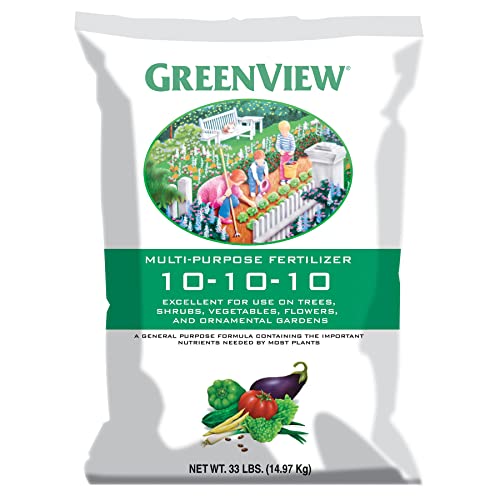
GreenView Multi-Purpose Fertilizer 10-10-10, 33 lb

Supply Solutions 16-16-16 Complete All Purpose Granular Fertilizer 5 lbs

Slow Release Lawn Fertilizer 25-5-10 NPK 20kg Bag

Miracle-Gro Organic All Purpose Plant Food, 3 lb

CountryMax 50LB 10-10-10 All Purpose Fertilizer
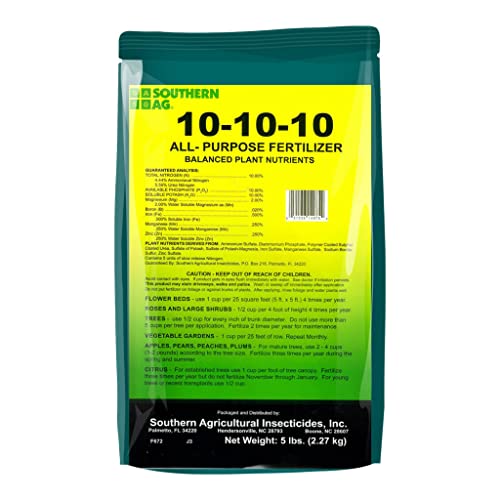
Southern Ag All Purpose Granular Fertilizer 10-10-10, 5 lb
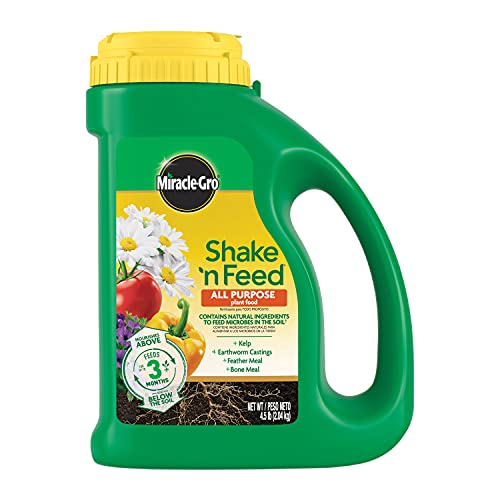
Miracle-Gro Shake ‘N Feed All Purpose Plant Food, 4.5 lb

Scotts All Purpose Flower & Vegetable Continuous Release Plant Food, 3 lbs
Taking A Closer Look At The Options
A small 4-pound bag of Jobe’s Organics is the kind of granular fertilizer that makes sense for someone just starting a kitchen herb garden or a few patio containers. The organic formulation (meaning it relies on naturally derived nutrient sources rather than synthetic salts) suits edible crops and is gentle enough for new gardeners learning how to feed without burning tender roots. Application stays simple, since the granules are designed to avoid wasteful runoff and messy spreading, which matters when you’re working in tight urban spaces.
For most home gardeners, this size offers a low-commitment way to try an organic granular without stocking up on something larger. It plays nicely alongside the heavier 16-pound Jobe’s bag later in this list, but where that one is built for serious garden plots, this little bag shines on balconies and small beds. You’ll still want a scoop or shaker to distribute it evenly, and you’ll need to reapply through the growing season.
The Practical Payoff
- Compact 4-pound size keeps storage simple in sheds and closets
- Organic formula suits vegetables, herbs, and flowers equally well
- Granular texture reduces dust and mess during application
- Low entry cost for new gardeners testing organic methods
Honest Caveats
- Small bag runs out fast across anything bigger than a single raised bed
- Reapplication intervals are more frequent than slow-release synthetics
Who It Suits Best
First-time organic gardeners working with containers, herbs, and small flower borders benefit most from the manageable size and gentle formulation.
Where Another Pick Suits Better
Gardeners managing a full vegetable plot should reach for the Jobe’s Organics 16 lbs Bag instead, since the larger size covers more ground per application cycle.
Step up to the 16-pound Jobe’s Organics bag and you get the same trusted organic formulation in a volume that suits a real backyard garden. The granules are engineered to release nutrients without producing the harsh smells that sometimes come with animal-based organic fertilizers, which makes the experience of applying them a little more pleasant. For organic gardeners managing a mix of vegetables, shrubs, and flowering plants, this bag covers the whole lot.
Compared to the 4-pound starter bag, this version cuts down on how often you reorder, and the granular consistency means less dust during spreading. The tradeoff is weight, so you’ll want a sturdy garden scoop and a dry storage spot to keep the bag from absorbing moisture. For committed organic gardeners, the bulk format is where the value really shows up.
Good Reasons To Consider
- Generous 16-pound size supports season-long feeding for typical garden plots
- Formulation works across vegetables, flowers, trees, and shrubs in one product
- Lower odor profile than many manure-based organic alternatives
Trade Offs
- Heavier bag requires dry indoor storage to prevent clumping
- Organic release means reapplying on a steady schedule rather than once per season
- More product than casual container gardeners will use in one year
Key Product Details
Made For
Dedicated organic gardeners with established vegetable plots, mixed borders, and shrub beds benefit most from this bulk format.
Consider Something Else When
Lawn-focused homeowners with half an acre or more of turf should consider the Slow Release Lawn Fertilizer 25-5-10 NPK, which is tuned specifically for grass nutrition.
GreenView’s 33-pound 10-10-10 is a workhorse bag aimed at homeowners with a real piece of property to maintain. The NPK ratio (a three-number label showing the percentage of nitrogen, phosphorus, and potassium, in that order) is perfectly balanced at 10-10-10, meaning the same granule feeds leaves, roots, and flowers without skewing toward any single nutrient. That balance makes it forgiving across mixed landscapes where lawns share space with ornamental beds.
You can expect roughly 3,300 square feet of coverage from a single bag, depending on what you’re feeding and how heavily you apply. The granular form goes through a standard spreader without hassle, and the homogeneous particle size (meaning every granule is the same shape and weight) helps ensure even distribution across a lawn. For most suburban lots, a single bag handles multiple feedings through the season.
What Makes Sense
- Balanced 10-10-10 NPK works across lawns, vegetables, trees, and ornamentals
- 33-pound bag covers substantial square footage per application
- Uniform granules spread evenly through standard broadcast spreaders
Points To Note
- Synthetic formula isn’t suited for gardeners seeking organic certification
- 33-pound bag is heavy to carry and needs dry storage
- Balanced ratio is general-purpose rather than tuned for specific deficiencies
Right Fit For
Suburban homeowners managing medium-to-large mixed landscapes with both lawn and garden zones get the most versatility from this balanced formula.
Look Elsewhere When
Gardeners focused exclusively on lush green turf should consider the Slow Release Lawn Fertilizer 25-5-10 NPK, which delivers higher nitrogen for deeper green color over a longer window.
Where most general-purpose granulars settle around a 10-10-10 ratio, Supply Solutions pushes the concentration up to 16-16-16. That higher nutrient percentage means each granule carries more usable nitrogen, phosphorus, and potassium, which translates into faster green-up and stronger bloom production when plants need a real boost. This is a 5-pound bag aimed at gardeners who want results without committing to a large sack.
The triple-16 formula is especially well-suited to fruiting vegetables, berries, and flower beds where you’d typically reach for a “bloom booster” type product. Apply carefully around young seedlings, since the higher concentration makes accidental over-application a real risk. For most established plantings, the smaller bag size keeps things manageable, and the all-purpose label means you can move it freely between garden zones.
Noteworthy Benefits
- Higher 16-16-16 concentration delivers more nutrients per scoop than typical 10-10-10 blends
- Strong bloom and fruiting performance on vegetables, berries, and ornamentals
- 5-pound size offers concentrated feeding without bulk-bag storage demands
Some Limits To Know
- Higher concentration increases the risk of fertilizer burn on tender or young plants
- Smaller bag means frequent repurchase for gardeners with large properties
- Not formulated for sustained slow release across many weeks
Feature Snapshot
Best Suited To
Gardeners focused on flower beds, fruiting vegetables, and berry patches who want a stronger nutrient push in a manageable bag size.
A Better Fit Elsewhere
Homeowners feeding primarily lawn turf should consider the GreenView Multi-Purpose Fertilizer 10-10-10, which covers broader lawn square footage at a lower concentration.
This Eco Solutions formula is purpose-built for the lawn-first gardener, with a nitrogen-heavy 25-5-10 ratio that drives deep green color and steady blade growth. The standout feature is the slow-release nitrogen structure (where coated granules meter out nutrients gradually rather than dumping them all at once), which feeds grass for up to around 110 days from a single application. For homeowners tired of feeding every few weeks, that extended window is the real selling point.
The 20-kilogram (44-pound) bag is substantial, so this is the pick for serious lawn care rather than a quick patch repair. You’ll want a broadcast or drop spreader to lay it down evenly, and a dry storage bin to keep the bag from clumping in humid weather. For most established turf areas, a single spring application carries the lawn well into summer.
Points In Its Favor
- High-nitrogen 25-5-10 ratio drives deep green color and vigorous blade growth
- Slow-release nitrogen feeds for up to roughly 110 days per application
- Large 44-pound bag supports whole-property lawn care from a single purchase
Honest Caveats
- Specialized for turf, not appropriate for vegetable gardens or delicate ornamentals
- Substantial bag weight requires a spreader and dry storage
- High nitrogen isn’t ideal for stressed or drought-affected lawns in midsummer
Feature Rundown
Perfect Match For
Homeowners with larger established lawns who want long-interval feeding without giving up color quality benefit most from this slow-release nitrogen formula.
Skip It When
Gardeners feeding mixed flower and vegetable beds should reach for the Jobe’s Organics Granular All Purpose Fertilizer 16 lbs Bag, which is better balanced for edible crops.
Miracle-Gro’s organic entry is the brand’s answer for gardeners who want a recognizable label alongside naturally derived ingredients. The 3-pound pouch is sized for the casual flower bed and small vegetable plot, and the formulation is designed to feed plants for up to around three months per application. That’s a comfortable middle ground for weekend gardeners who’d rather feed less often.
The granular format works well for both in-ground beds and container plantings, and the organic certification makes it appropriate for edible crops. Compared to the Jobe’s Organics 4-pound bag, you trade a little volume for the brand recognition and a longer stated feed window. For most users, the smaller pouch is a comfortable starting point before committing to a larger organic supply.
The Value In It
- Organic formulation suits edible gardening and flower beds alike
- Stated feeding duration of up to three months per application reduces reapplication trips
- Familiar brand backing with a compact 3-pound pouch size
Worth Noting
- Small pouch runs out quickly on anything beyond a small garden
- Organic release still requires reapplication over the season
Who Should Grab It
Brand-loyal gardeners with small-to-medium edible plots and mixed flower beds get the most from this organic pouch format.
Reach For A Different Pick When
Gardeners managing larger properties should consider the Miracle-Gro Shake ‘N Feed All Purpose Plant Food, which offers similar brand familiarity in a larger 4.5-pound container.
CountryMax steps in with one of the largest balanced bags on the list, a 50-pound 10-10-10 that supports serious multi-season feeding. The classic balanced ratio keeps the formula forgiving across lawns, vegetables, and ornamentals, while the bulk format means fewer trips to reorder. For homeowners with acreage or large garden plots, this is a practical way to keep a steady nutrient supply on hand.
Granule consistency stays uniform across the bag, which helps even spreading through a broadcast spreader. That said, 50 pounds is a lot to handle, so plan for a wheelbarrow or garden cart and a dedicated dry storage bin. Most users will find a single bag carries them through a full growing season across mixed landscape zones.
A Few Highlights
- Generous 50-pound bag supports multi-season landscape feeding
- Balanced 10-10-10 works across lawn, garden, and ornamental use
- Consistent granule texture supports even mechanical spreading
Practical Considerations
- Heavy bag demands dry storage and a sturdy spreader setup
- Synthetic formula isn’t suitable for organic gardening priorities
- Bulk size is more than most small urban gardens need in one season
Product Snapshot
Whose Shelf It Belongs On
Property owners with large mixed landscapes who want a single balanced product to cover lawn, garden, and ornamental feeding benefit most from this bulk format.
Where A Sibling Pick Shines
Gardeners focused purely on lawn color should consider the Slow Release Lawn Fertilizer 25-5-10 NPK, which is nitrogen-tuned specifically for turfgrass performance.
Southern Ag’s 5-pound 10-10-10 is the kind of bag that fits the way many casual gardeners actually shop: small, balanced, and easy to store. The uniform granular formulation (where every granule dissolves at a similar rate) helps with even feeding, and the moderate concentration makes it forgiving around tender ornamentals. This is a useful size for filling gaps between larger seasonal feedings or for testing out a formula before committing to a bigger purchase.
Southern Ag is a brand most often found in landscape supply and garden retailers in the Southeast, so the formulation tends to perform well in warm, humid growing conditions. The 10-10-10 balance keeps it flexible across flower beds, vegetable plots, and small lawn patches. For most gardeners, this 5-pound pouch is a tidy supplement to a primary fertilizer program.
Well-Handled Touches
- Compact 5-pound size suits smaller garden beds and borders
- Balanced 10-10-10 ratio works across flowers, vegetables, and shrubs
- Uniform granule texture supports even hand-spread application
Possible Compromises
- Smaller volume requires frequent repurchase for larger properties
- Synthetic formula not suited for organic gardening priorities
Who Will Love This
Casual gardeners with modest flower borders, small vegetable beds, and mixed containers get convenient balanced feeding from this manageable size.
Swap It Out When
Gardeners with larger lawn coverage should reach for the GreenView Multi-Purpose Fertilizer 10-10-10, which delivers the same balanced ratio in a much bigger bag.
Shake ‘N Feed is built around convenience, and the format delivers on that promise. You shake the granules directly from the container onto the soil, work them in lightly, and the formulation continues feeding for up to around three months. For gardeners who’d rather not measure, mix, or calibrate a spreader, the simple shake-on application is genuinely appealing.
The formula includes natural ingredients designed to feed soil microbes, which in turn help break organic matter into plant-available nutrients. The 4.5-pound container is a comfortable mid-size that bridges the gap between small starter pouches and bulk bags. In most garden settings, one container covers a respectable bed area over a full feeding cycle.
What Stands Out
- Shake-on application eliminates the need for a spreader
- Stated feeding duration of up to three months per application
- Natural ingredients feed soil microbes alongside plant roots
- Mid-size 4.5-pound container fits casual garden use
Details To Watch
- Shaker format can lead to uneven distribution if applied too quickly
- Container is not refillable once empty
Built With In Mind
Weekend gardeners and anyone wanting a simple shake-on feeding routine without spreader calibration benefit most from this format.
Not Your Match When
Gardeners managing large lawn areas should consider the Slow Release Lawn Fertilizer 25-5-10 NPK, which is engineered for broadcast spreading at scale.
Scotts closes the list with a continuous-release granular designed specifically for mixed flower and vegetable gardens. The formulation focuses on steady nitrogen delivery (gradually releasing nutrients over time rather than all at once) for up to around two months, which fits the way most home gardens actually grow, with constant planting and harvesting across the season. The 3-pound bag is a comfortable starter size for new gardeners.
The granular texture spreads easily by hand or with a small spreader, and the formula is designed not to burn plants when applied as directed. For gardeners who want a familiar name backing their vegetable bed feeding, Scotts delivers on consistency. The smaller bag is a low-commitment way to test a continuous-release approach before stepping up to a larger supply.
What Works In Its Favor
- Continuous-release nitrogen feeds for up to around two months
- Designed for mixed flower and vegetable garden use
- Low burn risk when applied according to directions
- Familiar Scotts branding for gardeners who trust established labels
Worth Bearing In Mind
- Two-month feed window is shorter than some organic competitors
- 3-pound bag runs out quickly across larger garden plots
The Right Fit
Gardeners maintaining mixed flower and vegetable beds who want reliable, brand-backed feeding in a manageable starter bag benefit most from this pick.
Another Choice May Suit
Organic-focused gardeners should consider the Miracle-Gro Organic All Purpose Plant Food, which offers a similar convenience profile with organic certification.
What Matters Most Before Choosing Granular Fertilizers
Reading the NPK Label
The three numbers on any fertilizer bag tell you the percentage by weight of nitrogen, phosphorus, and potassium. Nitrogen drives leafy growth and that deep green color on lawns, phosphorus supports root development and bloom production, and potassium strengthens overall plant resilience. A balanced 10-10-10 suits general feeding, while nitrogen-heavy ratios like 25-5-10 work best for turfgrass. The right pick depends on what you’re actually growing.
Matching the Bag to Your Space
Bag size should track the square footage you maintain, not the deal you spotted. A 50-pound sack saves money per pound but sits heavy in a small garden shed and risks clumping in humid conditions. For container patios and small beds, a 3- to 5-pound pouch is far easier to store and use before it loses potency. For half an acre or more of mixed landscape, a 33- to 50-pound bag pays off.
Organic vs. Synthetic Trade-Offs
Organic granulars rely on naturally derived nutrient sources and feed soil biology over time, which suits edible gardens and organic certification goals. Synthetics deliver nutrients more directly and predictably, often at lower cost per square foot, but skip the soil-building benefits. The honest read is that organic options usually demand more frequent reapplication, while synthetics can keep working with less hands-on attention.
Release Speed and Feeding Windows
Quick-release granulars feed fast and fade fast, which gives precise control but demands more frequent application. Slow-release formulas meter nutrients out over weeks or months, reducing labor but offering less fine-tuning. Lawns typically benefit from slow-release nitrogen, while vegetable gardeners often prefer quicker response times around planting and fruiting stages.
Key Considerations Across These Picks
Pitfalls Shoppers Hit
A common mistake is buying the biggest bag to save money per pound, only to find it sits in a damp garage and turns into a brick before you finish it. Another misstep is reaching for a high-nitrogen lawn formula for vegetables or delicate ornamentals, which can push excessive leaf growth at the expense of fruit and flowers. Always match the nutrient ratio to what you’re growing rather than to a general-purpose assumption.
Where The Extra Money Goes
Premium and organic granulars cost more because of certification requirements, slower nutrient release profiles, and gentler sourcing of raw materials. You pay for fewer burn incidents, better soil biology support, and longer shelf stability in storage. For gardeners maintaining edible landscapes or working toward organic certification, the upgrade is often worth it. For pure lawn coverage on a budget, a standard balanced synthetic delivers solid results at a lower cost.
Frequently Asked Questions
How often should granular fertilizer be applied?
Most granular fertilizers recommend reapplication every 4 to 8 weeks during the active growing season, though slow-release formulas can stretch that window to several months. Always check the specific product label for timing guidance.
Can granular fertilizer burn plants?
Yes, especially synthetic formulas with high nitrogen concentrations. Apply at the recommended rate, water in thoroughly after spreading, and avoid contact with tender stems and foliage. Organic granulars generally carry lower burn risk.
Is granular better than liquid fertilizer?
Granular feeds more slowly and lasts longer per application, making it lower-maintenance. Liquid feeds faster and absorbs more quickly through leaves and soil, but requires more frequent application. Many gardeners use both depending on the season and plant needs.
Should I water after applying granular fertilizer?
Light watering after application helps move granules into the soil where roots can access them, and reduces the risk of burn from concentrated contact with foliage. Heavy watering immediately after can wash nutrients past the root zone on slopes.
Can I use the same fertilizer on lawn and garden?
Balanced 10-10-10 formulas work across both, but specialized lawn products with high nitrogen ratios aren’t ideal for vegetables or flowering ornamentals. The safest approach is to keep separate products for lawn versus garden zones.
Wrap Up
Granular fertilizers come in enough variety that the right pick comes down to scale, plant type, and how much hands-on feeding you actually want to do. Small organic bags suit container gardens and starter herb beds, balanced 10-10-10 formulas work for mixed landscapes, and slow-release nitrogen options carry larger lawns through long stretches with minimal effort. Match the bag to your real growing conditions, store it dry, and water it in well, and most of these picks will reward you with steady, healthy growth across the season.
