

A thick, spongy layer of dead grass and moss sits between your soil and the green you actually want to see. Thatch thicker than half an inch blocks water, starves roots of air, and turns a healthy lawn into a dull, patchy mess. The right dethatcher pulls that layer up without tearing out what you are trying to keep, and the ten tools below cover every kind of yard, from a small city patch to a wide suburban stretch.
A Snapshot Of The Selections

Walensee 15-Inch Thatch Rake, 19-Tine Dethatcher

BUCOTOD 2-in-1 Electric Dethatcher and Scarifier, 16″
TCBWFY 15-Inch Dethatcher Rake, Adjustable Head

WEN DT1315 15-Inch Electric Dethatcher and Scarifier

cogardenshower 15″ Dual-Action Heavy Duty Thatch Rake

BlumeTrec 15″ Thatch Rake, 74-Inch Handle

Westinghouse 13″ 2-in-1 Electric Dethatcher and Scarifier
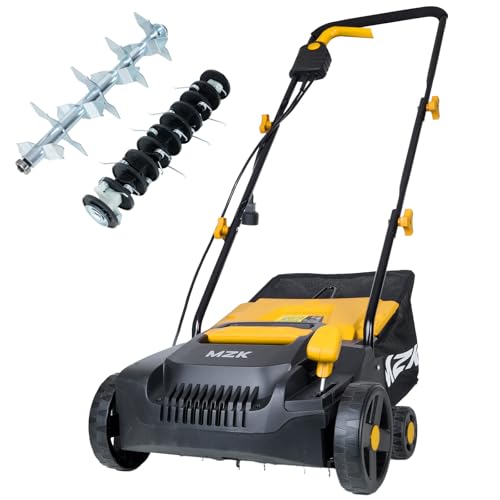
MZK 13-Inch Electric Dethatcher
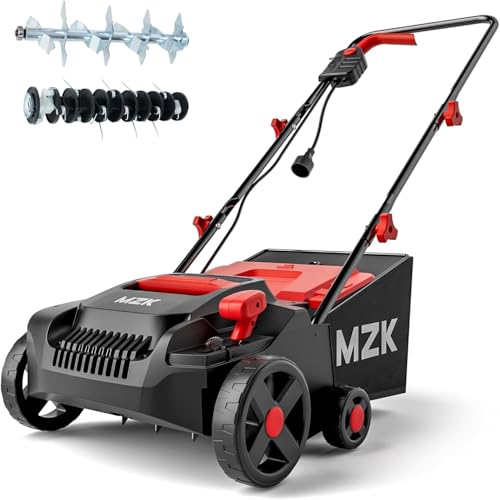
MZK 15-Inch Lawn Dethatcher

Danero Cordless Dethatcher and Scarifier for Milwaukee 18V
More On The Choices That Made The List
If your lawn is the size of a generous living room rather than a fairway, the Walensee 15-Inch Thatch Rake makes a strong opening argument. The 70-inch handle lets you stand mostly upright, so dethatching stops feeling like a punishment handed down by your lower back.
Nineteen curved steel tines work across a 15-inch head, which is wide enough to make real progress without feeling like you are wrestling a broom. The twist-lock handle sections keep setup quick, and the tool comes apart for hanging in a shed corner. Unlike the corded electric picks further down the list, this one asks for nothing but elbow grease and a free afternoon.
Strengths Worth Knowing
- Dual-sided 19-tine head pulls thatch on one side and loosens topsoil on the other
- 70-inch assembled handle reduces bending during long sessions
- 15-inch coverage strikes a useful balance between speed and control
- Detachable construction makes garage or shed storage painless
- No fuel, cords, or batteries to manage, so total ownership cost stays low
Things To Consider
- Manual effort adds up on anything bigger than a small city yard
- Steel tines may show surface wear after several seasons of heavy use
Key Specs
Who It Suits Best
Homeowners with a small lawn who want a no-fuss, cord-free tool and do not mind putting in some manual effort.
Consider Something Else When
Step up to the WEN DT1315 15-Inch Electric Dethatcher and Scarifier if your yard runs larger and you would rather walk than rake.
Mid-size yards reward tools that finish the job before the sun goes down, and the BUCOTOD 16-inch electric dethatcher is built for exactly that pace. The 2-in-1 design switches between dethatching tines and a scarifying blade, so you handle the surface cleanup and the deeper soil work without renting a second machine.
The 15-amp motor pushes through matted thatch and the lighter, wider footprint keeps passes efficient. Compared with the Walensee hand rake above, this one trades your shoulder for a power cord and a quiet hum. You trade some setup for a lot of saved time, and that math works out well on lawns between a quarter and half an acre.
What Stands Out
- Interchangeable dethatcher and scarifier heads add real versatility
- 16-inch cutting width covers more ground than most mid-tier competitors
- Corded 15-amp power means no battery runtime anxiety mid-job
- Walking pace stays comfortable even for first-time users
Worth Noting
- Cord management takes some attention around shrubs and corners
- Heavier than a manual rake, so storing it on a sturdy shelf matters
Feature Snapshot
Made For
Suburban yards that are too large for hand raking but not large enough to justify a tow-behind unit.
Look Elsewhere When
Pick the WEN DT1315 instead if you want an integrated collection bag that catches debris as you go.
Back pain decides a lot of lawn-care purchases, and the TCBWFY 15-inch dethatcher addresses that problem directly. The adjustable head angle lets you tilt into stubborn thatch or skim lightly across tender grass, which is a real help when one side of the yard looks like a hayfield and the other is a thin patch you are trying to nurse back.
Heavy-duty steel runs through the tines and the head, so the tool feels solid in the hand rather than hollow. The long handle keeps your posture reasonable across extended sessions. Where the Walensee uses a fixed dual-sided head, this one uses an articulated angle to find the right bite on different lawn conditions.
The Helpful Details
- Head angle adjusts for different thatch depths and turf sensitivity
- Heavy-duty steel construction handles compacted thatch without flexing
- Long handle layout supports taller gardeners
- 15-inch head balances coverage and control on irregular lawns
Room For Improvement
- Still a manual tool, so larger lawns will test your patience
- Angle adjustment mechanism may need a periodic check after heavy seasons
At A Glance
Best Suited To
Tall gardeners and anyone with a history of back strain who still prefers a manual approach.
Reach For A Different Pick When
Choose the BUCOTOD 16-inch electric if you want the work handled by a motor rather than your shoulders.
Dethatching produces an impressive amount of loose debris, and the WEN DT1315 includes a 12-gallon collection bag that catches most of it before it spreads across the lawn. For homeowners who dislike the second pass of raking afterward, that single feature often justifies the upgrade from a bagless model.
The 13-amp motor and 15-inch deck keep the work moving at a steady walking pace, while the 2-in-1 head swaps between dethatching and scarifying. Side by side with the BUCOTOD above, you trade a slightly wider cutting path for a built-in cleanup system. The trade is worth it for tidy types.
Useful Highlights
- 12-gallon collection bag cuts down on post-job raking
- 2-in-1 design handles both thatch removal and scarifying
- 13-amp motor delivers consistent torque under load
- 15-inch deck keeps passes efficient on mid-size lawns
Honest Caveats
- Bag adds bulk to storage and must be emptied periodically during longer sessions
- Corded design still requires some attention to run management
Who Will Love This
Homeowners who want one walk through the yard to deliver a clean, raked-looking result without a follow-up sweep.
A Better Fit Elsewhere
Step up to the Danero Cordless Dethatcher and Scarifier if you want to ditch the extension cord entirely.
Sloped and uneven lawns are where most rakes give up, but the cogardenshower dual-action thatch rake uses a tilt-adjustable head to keep the tines working at the right angle. Steep the head down for thick thatch or lay it flatter for a gentler skim across tender areas, and the rake follows your lead.
The 70-inch handle reaches comfortably for most adults, and the dual-action design works both sides of the head in the same pass. Compared with the TCBWFY above, the angle mechanism here is specifically tuned for sloped conditions. The build feels closer to a contractor’s tool than a casual weekend rake.
Good Reasons To Consider
- Tilt head handles sloped or uneven ground more naturally
- 15-inch head covers decent ground for a manual tool
- 70-inch handle keeps the work at a comfortable height
- Built-in hang hole simplifies off-season storage
Points To Note
- Manual effort still adds up on larger or heavily thatched lawns
- Sharp tines deserve careful storage around kids and pets
Perfect Match For
Anyone with a hilly or uneven yard where a fixed-angle rake just does not track well.
Not Your Match When
Pick the Westinghouse 13-inch electric instead if you would rather not work that hard on a sloped surface.
Four extra inches of handle sounds trivial until you spend an hour dethatching and your shoulders stop complaining. The BlumeTrec 15-inch rake stretches to 74 inches total, which gives taller gardeners a more natural upright posture through the job. The 15-inch steel head clears thatch and surface debris with steady, predictable strokes.
There is no adjustable angle here, so the tool works best on relatively flat ground. Against the Walensee above, the clear advantage is reach; against the cogardenshower, you give up tilt control for a longer shaft. The honest read is that this is a straightforward rake for gardeners who want a long handle and nothing fancy.
A Few Highlights
- 74-inch handle is one of the longest in the manual category
- Steel construction holds up to seasonal yard work
- 15-inch head balances coverage and control
- Simple design means very little can go wrong mechanically
Trade Offs
- Long handle can feel unwieldy for shorter gardeners
- No angle adjustment, so sloped lawns are harder work
Whose Shelf It Belongs On
Gardeners over six feet tall who want a simple, no-adjustment manual rake that does not force them to stoop.
Swap It Out When
Pick the cogardenshower 15-inch dual-action rake if your yard has slopes that demand a tiltable head.
Tight lawn spaces with flower beds, paths, and quirky corners benefit more from a nimble 13-inch deck than from a wide one. The Westinghouse 2-in-1 electric dethatcher keeps the working width compact while still swapping between dethatching tines and a scarifying blade for deeper work.
The 12-amp motor is a touch lighter than the WEN and BUCOTOD units, so expect a slightly slower pace through thick thatch. For most homeowners with smaller lawns, that tradeoff is invisible. Where the WEN adds a generous collection bag, this one aims at maneuverability first.
Practical Pluses
- 13-inch deck threads easily between landscaping features
- 2-in-1 head switches between thatch removal and scarifying
- Corded power avoids mid-job battery fade
- Collection bag keeps debris contained as you work
Small Caveats
- Smaller deck means more passes on larger lawns
- 12-amp motor works harder on heavy thatch than higher-amp units
Who Should Grab It
Homeowners with landscaped yards full of tight corners who value precision over raw speed.
Where A Sibling Pick Shines
Pick the MZK 15-Inch Lawn Dethatcher if you have a wider open lawn and want fewer passes.
First-time dethatcher shoppers often worry that an electric machine will be too much to manage, and the MZK 13-inch unit answers that concern with a compact deck and approachable controls. The 13-inch working width keeps the tool easy to steer for anyone new to powered lawn equipment.
This pick is a sensible training-wheel step up from a manual rake like the TCBWFY, and it shares the same 13-inch footprint as the Westinghouse above. The honest read is that for very small lawns, it gets the job done without intimidating the user or the turf.
Points In Its Favor
- Compact 13-inch deck suits smaller yards and tighter spaces
- Electric power removes the physical strain of manual raking
- Simple control layout is welcoming for first-time users
- Walk-behind format stores upright in most sheds
Less-Strong Areas
- Smaller width means longer sessions on bigger properties
- Corded operation still calls for some care around garden beds
Built With In Mind
Homeowners transitioning from manual tools who want an easy first step into powered dethatching.
Skip It When
Choose the MZK 15-Inch Lawn Dethatcher if your lawn is open enough to benefit from a wider pass.
The wider sibling to the 13-inch MZK, this 15-inch electric dethatcher makes a lot of sense for open lawns that lack the tight landscaping the smaller deck was designed for. The 15-inch working width covers noticeably more ground per pass without making the unit feel oversized in the shed.
Side by side with the WEN DT1315, you give up the integrated 12-gallon bag in exchange for a similar working width and an approachable price point. For lawn owners who do not mind raking up the aftermath, that is a worthwhile exchange.
Everyday Perks
- 15-inch deck covers ground efficiently on open lawns
- Electric motor keeps noise and vibration low
- Walk-behind design is familiar to anyone who has mowed a lawn
- Compact enough to store in a standard garden shed
Points To Keep In Mind
- No collection bag means a follow-up raking pass
- Corded design requires some planning around obstacles
The Right Fit
Owners of mid-size open lawns who want a wider electric deck and are fine handling cleanup separately.
Another Choice May Suit
Pick the WEN DT1315 if you would rather have a built-in bag to catch debris during the pass.
If your garage already hums with 18V tools, the Danero cordless dethatcher slots right into that ecosystem and skips the extension cord entirely. The brushless motor runs on two 18V batteries, and the 15-inch deck matches the working width of the WEN and MZK units while gaining the freedom of cordless operation.
Owners should plan to supply their own batteries and charger, which adds to the total cost unless you are already invested in the platform. Compared with the WEN above, you trade a built-in collection bag and a slightly lower price for genuine cordless convenience. For tool-shed builders, the trade is easy.
The Practical Payoff
- Cordless operation removes extension-cord hassle from the yard
- Brushless motor tends to deliver long service life under regular use
- 15-inch deck matches the working width of mid-tier corded units
- Compatibility with an existing 18V platform keeps the tool shed unified
Trade-Offs To Consider
- Batteries and charger are not included, raising the effective price
- Runtime depends on the amp-hour rating of the batteries you supply
Who Should Grab It
Homeowners already running Milwaukee 18V tools who want a dethatcher that shares the same battery platform.
Not Your Match When
Pick the WEN DT1315 if you do not already own compatible batteries and want a simpler all-in-one corded package.
Matching The Right Dethatcher To Your Yard
A dethatcher is a deceptively simple tool, and the choices on this list split into two clear camps. Manual rakes like the Walensee, TCBWFY, cogardenshower, and BlumeTrec rely on your effort, which keeps cost and maintenance low. Powered units like the BUCOTOD, WEN, Westinghouse, MZK models, and Danero trade money and storage space for a faster, less tiring job.
The first question to answer honestly is lawn size. Anything under 1,000 square feet rarely justifies a powered unit, and a 15-inch manual rake finishes in a single afternoon. Yards from a quarter to half an acre sit in the sweet spot for a 13 to 16-inch electric walk-behind. Anything larger starts pushing toward bigger machines than the picks on this list.
The second question is lawn shape. Tight, landscaped beds reward a compact 13-inch deck like the Westinghouse or MZK 13-Inch Electric. Open, rectangular lawns benefit more from a wider 15 to 16-inch pass. Sloped terrain makes a tilt-adjustable manual head worth the search.
Head Width And Why It Matters
Head width, also called working width, is the swath of grass the tool covers in one pass. A wider head finishes faster but is harder to maneuver in tight spaces. A 15-inch head is the most common compromise, and seven of the picks above use it. Going down to 13 inches makes sense only when maneuverability is a clear priority.
Power Source Trade-Offs
Manual rakes cost less upfront and store almost anywhere, but they ask for an honest amount of effort. Corded electric models deliver consistent power and unlimited runtime, limited only by the nearest outlet and the length of your extension cord. Cordless models free you from the cord entirely but tie runtime to battery capacity.
Handle Length And Comfort
Longer handles reduce bending, which matters more on longer jobs than on quick touch-ups. Anything in the 70 to 74-inch range accommodates most adults working upright. Adjustable heads add comfort on uneven ground, but they are not essential on flat lawns.
Build Material And Storage
Steel tines and heads hold up better across seasons than softer alloys, though they can show surface oxidation if stored damp. Most manual rakes break down for hanging storage, and powered units benefit from a dry corner of a shed or garage.
Key Considerations Across These Picks
Common Shopping Slip Ups
A frequent misstep is buying a wider deck than the lawn actually needs, which makes tight corners harder than they have to be. Another is choosing a manual rake for a yard that is clearly too large, then abandoning the project halfway through. Measure your lawn, count your flower beds, and be honest about how much effort you want to spend.
When Paying More Pays Off
Higher-tier models in this category usually add a collection bag, a scarifying mode, or a cordless battery platform. Each of those features solves a real problem. A bag eliminates a follow-up raking pass. A scarifier goes deeper into the soil for renovation work. A cordless platform removes the extension-cord dance. Pay for the feature you will use, not the one that sounds impressive.
Frequently Asked Questions
How often should you dethatch a lawn?
Most cool-season grasses benefit from dethatching once a year in early fall or spring, while warm-season grasses respond well to a late-spring pass. Thatch thicker than half an inch is the usual signal that it is time.
Can you dethatch a wet lawn?
Working on a damp lawn tends to clog tines and pull up more live grass than you want. A dry lawn with morning dew evaporated is the easier target.
Is scarifying the same as dethatching?
Dethatching removes the loose organic layer between grass and soil, while scarifying cuts shallow grooves into the soil to relieve compaction. Several picks on this list, including the BUCOTOD, WEN, Westinghouse, and Danero, handle both.
Will a dethatcher damage healthy grass?
Used at the right depth and at the right time of year, a dethatcher pulls out dead material and lets healthy grass spread. Going too deep or working during heat stress can stress the lawn, so adjust expectations based on conditions.
Do cordless dethatchers have enough power?
Modern brushless motors in 18V platforms handle most residential lawns comfortably. The trade-off is runtime, which scales with battery capacity, and the need to supply compatible batteries if you do not already own them.
The Takeaway
A cleaner lawn comes down to matching the tool to the yard, not to the most powerful option on the shelf. Small flat lawns do beautifully with a Walensee or BlumeTrec hand rake. Mid-size yards gain real time with a BUCOTOD, WEN, or MZK electric unit. Landscaped or sloped spaces earn their keep with a Westinghouse or cogardenshower. Pick the one that fits the space in front of you, and the grass will thank you by spring.
