

A neglected lawn hides the secrets behind its color. Thatch, dead roots, and matted debris quietly choke the soil, and the difference between a tired yard and a thriving one often comes down to the rake in your hand. Choosing the right tool saves your back, protects your grass, and turns a dreaded weekend chore into a satisfying reset. The picks below cover real lawns, artificial turf, and leveling work, so you can match a rake to the job instead of forcing one tool to do everything.
The Lineup, Simplified

Walensee 15-Inch Thatch Rake, 19-Tine Dethatcher

YEELOR Artificial Turf Rake with Long Handle
YEELOR Artificial Grass Rake, Dual-Sided

Union Tools 64309 Poly Leaf Rake 24-in

BARAYSTUS Thatch Rake 15-Inch Dual-Side

Coopvivi 18.5-Inch Metal Rake, 25 Tines
YEELOR 16-Tine Bow Rake, Metal

HIDALIFE Lawn Leveling Rake 30″x10″ Plate

DIIG 63″ Bow Rake, 17 Tines
Lilyvane 18″ Metal Leaf Rake, 25 Teeth
The Picks, Examined More Closely
Thatch is the spongy layer of dead roots and stems that builds up between grass blades and soil, and the Walensee is built to pull it out without tearing healthy turf apart. The 15-inch dual-sided head carries 19 curved steel tines, and the second side flips over to loosen topsoil and break up small clods.
For most homeowners running a twice-yearly dethatching pass, that combination is a real time-saver over single-purpose tools. Compared with the Union Tools poly rake below, this one trades lightweight fan-bristle action for genuine soil-penetrating power.
A Strong Showing
- Wide 15-inch head covers ground quickly on medium lawns
- Dual-sided tines handle both thatch removal and light cultivation
- Twist-lock handle sections break down for tight garage storage
- Stands taller than many dethatchers, reducing stoop time
Points To Keep In Mind
- Heavier than a simple leaf rake, so longer sessions can tire out your shoulders
- Curved tines work best on damp, established lawns rather than sparse new seed
Key Specs
Right Fit For
Homeowners with a mid-sized cool-season lawn who want one rake to handle both dethatching in spring and light soil work in fall.
Reach For A Different Pick When
The Coopvivi 25-tine metal rake is a better match if your main job is gathering fall leaves rather than tackling thatch buildup.
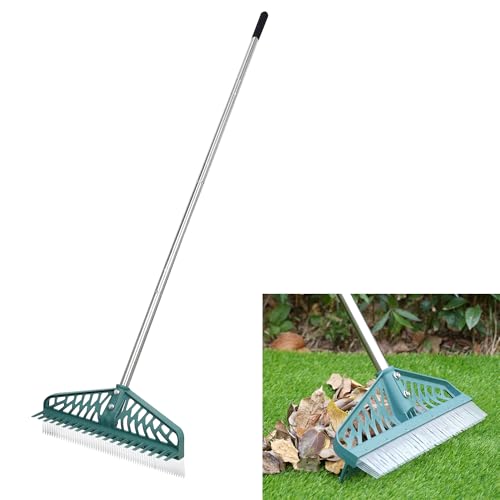
Artificial grass flattens out surprisingly fast under foot traffic, pet activity, and patio furniture, and a stiff brush is the only thing that brings the blades back upright. The YEELOR turf rake uses PA nylon bristles that resist snapping, paired with a stainless handle built to take steady pressure.
It adjusts to three lengths (roughly 33, 47, and 61 inches) so shorter household members and taller adults can both use it without hunching. Where the Walensee digs into soil, this one is designed to skim across synthetic fibers without pulling them loose.
Positive Points
- PA nylon bristles stay flexible and resist wear on rough turf
- Three-position handle fits a wide range of heights
- Stainless handle shrugs off the moisture common in pet areas
- Lighter than a metal bow rake, easier on wrists
Trade Offs
- Not designed for real soil or natural lawns, so it stays a specialty tool
- Bristle stiffness can feel light on heavily matted turf
Who It Suits Best
Pet owners with a mid-sized synthetic lawn who need a quick weekly fluff to keep blades standing and odors from settling.
Where Another Pick Suits Better
The YEELOR dual-sided artificial grass rake below is a smarter pick if you also need to pull leaves and small branches from turf.
Synthetic lawns collect a strange mix of debris: pet hair, fine dust, and the occasional twig that drifts in from a nearby tree. This YEELOR tackles both ends of that mess with a fine-tooth side for small particles and a coarse-tooth side for larger bits like branches and dead grass clippings.
The two-screw head attachment is simple enough that you can break it down for storage or swap heads later. Compared with the single-bristle YEELOR above, this one is a more versatile turf-care tool but trades some of the soft fluffing action for genuine debris pickup.
What Earns Its Place
- Fine-tooth side lifts pet hair and small debris from turf and rugs
- Coarse side handles branches and dead grass in one pass
- Two-screw head connection stays firm during long sweeps
- Plastic tines are gentle on artificial grass fibers
Minor Gripes
- All-plastic head means it will not stand up to rocky soil or stone yards
- Two-piece assembly is quick but not as refined as solid welded alternatives
Feature Snapshot
Made For
Households with a synthetic lawn and a shedding pet, where fine debris and fluffing need to happen in the same pass.
Skip It When
The Walensee 15-inch thatch rake makes more sense for natural cool-season grass that needs genuine dethatching, not just brushing.
Sometimes the job is simple: a maple dumped half a yard of leaves overnight and you need a fan rake, period. The Union Tools 64309 is a 24-inch poly fan head on a wooden handle, a design that has barely changed in decades because it works. Lightweight, forgiving on the back, and easy to drag through grass without gouging.
You will not find adjustable sections or specialty materials here, and that is the point. This is a leaf-moving tool, not a soil tool, and it treats the job accordingly.
A Few Highlights
- 24-inch poly fan clears leaves fast across open grass
- Lightweight build makes it accessible for older adults
- No assembly or screws to worry about
- Replaces worn tines less often than metal rakes in normal use
Honest Caveats
- Poly tines flex in heavy wet leaves, requiring more passes
- Not built for dethatching, leveling, or any soil work
- Marketed as a closeout item with limited return options from the retailer
Best Suited To
Anyone needing a no-fuss fall cleanup rake for a small-to-medium yard where leaves are the only real challenge.
Consider Something Else When
The Lilyvane 18-inch metal rake is worth a look if you want adjustable length and a stiffer bite for pine needles and small twigs.
Spring dethatching is hard on the lower back, and the BARAYSTUS leans into that reality with an extended stainless handle and an angle-adjustable head. The 19 curved carbon steel tines pull thatch up on one side while the flip side loosens soil and levels small depressions.
You can pivot the head to match your natural posture, which is a small touch that makes a long afternoon of raking far less punishing. Compared with the Walensee above, this one trades a slightly heavier build for more adjustability and a more robust steel handle.
Useful Highlights
- Extended handle reduces the need to bend during long sessions
- Adjustable head angle reduces wrist strain on uneven ground
- Carbon steel tines hold their shape through repeated heavy use
- Stainless handle resists rust in damp spring conditions
Worth Noting
- Heavier than a basic fan rake, so it is not ideal for quick touch-ups
- Stiffer tines can catch in rocky or root-heavy soil
Quick Facts
Perfect Match For
Homeowners with a neglected, thatch-heavy lawn who want a single rake that handles both dethatching and basic soil work in spring.
A Better Fit Elsewhere
The YEELOR 16-tine bow rake is a stronger choice for breaking up compacted garden soil and spreading compost.
A bag of fall leaves in the front yard, pine needles under the spruce, and grass clippings on the back hill all demand the same thing: a stiff-toothed rake that will not bend. The Coopvivi runs 25 rust-resistant stainless tines across an 18.5-inch head, with a 6-foot adjustable handle that suits most adult heights.
It threads neatly into a kid-sized or adult-sized user with no tools, and the dense tine count pulls more material per stroke than a 9 or 11-tine bow rake. Against the Union Tools poly fan above, this one is the stiffer, more aggressive sibling for serious fall weekends.
The Helpful Details
- 25 stainless tines clean up leaves, pine needles, and small twigs
- Adjustable handle length adapts as the family grows or shares tools
- Wide 18.5-inch head covers a generous sweep per pass
- Rust-resistant build handles wet grass without pitting
Some Limits To Know
- Metal tines can scuff delicate ground cover or shallow-rooted plants
- Heavier than a poly fan rake during long sessions
Whose Shelf It Belongs On
Homeowners with mixed debris, from soft leaves to stubborn pine needles, who want one rake to handle both with minimal fuss.
Not Your Match When
The HIDALIFE lawn leveling rake is the better tool if your real goal is smoothing topdressing across a low spot, not gathering debris.
A bow rake is the tool you reach for when the job is soil, not leaves. The YEELOR pairs a 16-inch carbon steel head with a stainless handle, and the head is fastened with screws rather than wedged or riveted, so it stays solid even when you are hauling gravel or breaking up a hard pan.
It pulls double duty: raking debris and leveling seedbeds, topdressing, or working compost into a row. Compared with the BARAYSTUS dethatcher, this one does not have curved tines or an adjustable angle, but it brings more raw breaking force for compacted earth.
Well-Handled Touches
- Carbon steel head takes hard pulls through clay and gravel
- Screw-fastened head connection resists loosening over time
- Stainless handle stands up to damp soil and storage sheds
- Versatile across soil prep, leveling, and debris tasks
Where It Is Less Suited
- Short, straight tines are not gentle enough for live turf
- No angle adjustment, so wrist position is fixed during long raking
Key Attributes
Who Will Love This
Vegetable gardeners and homeowners prepping new beds who need a serious tool for breaking soil and spreading amendments.
Look Elsewhere When
The Coopvivi 25-tine metal rake handles leaf season better, since its flexible tines glide through soft debris without dragging soil.
Lawn leveling is a different job from raking leaves, and a regular tined rake fights you the whole way. The HIDALIFE solves it with a flat 30 by 10-inch stainless ground plate that pushes and pulls topdressing, sand, and leveling mix across the surface like a wide putty knife.
It comes in two plate sizes, medium at 30 by 10 and large at 48 by 10, so you can size the tool to your yard. Compared with the tined rakes earlier in this list, this one is purpose-built for projects like filling low spots, smoothing mole damage, or prepping a new sod bed.
What Makes Sense
- Flat plate distributes topdressing evenly without leaving tine marks
- Two plate sizes cover both small patches and open lawn areas
- Stainless construction handles wet sand and compost without rust
- Works on warm- and cool-season grass types from Kentucky Bluegrass to Bermuda
A Few Limitations
- Not designed for leaf pickup or dethatching
- Heavier than a fan rake, which can fatigue you over a large area
Built With In Mind
Homeowners tackling a one- or two-weekend project to level a bumpy lawn, repair pet damage, or prep a fresh seed bed.
Swap It Out When
The DIIG 17-tine bow rake makes more sense for breaking new ground or working amendments into an existing vegetable bed.
When soil has been walked on, driven over, or neglected for years, a light rake just bounces off. The DIIG is a 63-inch bow rake with 17 metal tines and a triple-welded connection between the head and the bow, so it takes real abuse without the head folding or twisting.
The handle assembles from multiple pole sections, which lets you adjust length and pack it down for transport. Against the YEELOR 16-tine bow rake above, this one is heavier and a touch longer, geared toward tougher ground and longer reach across a garden or farm plot.
Strong Points
- Triple-welded head connection holds up under heavy soil work
- Multi-section handle adjusts for different users and easy transport
- Anti-rust and anti-corrosion coating handles damp storage
- 17 tines balance coverage and pull strength in tough ground
Honest Caveats
- Heavier than lighter-duty rakes, so it tires out casual users faster
- Best suited to bare soil and new ground rather than established turf
Who Should Grab It
Homeowners and small-scale growers preparing a new garden plot, breaking up compacted ground, or maintaining a larger rural yard.
Where A Sibling Pick Shines
The BARAYSTUS thatch rake is the better match for working on established grass where you want to lift debris without damaging the turf.
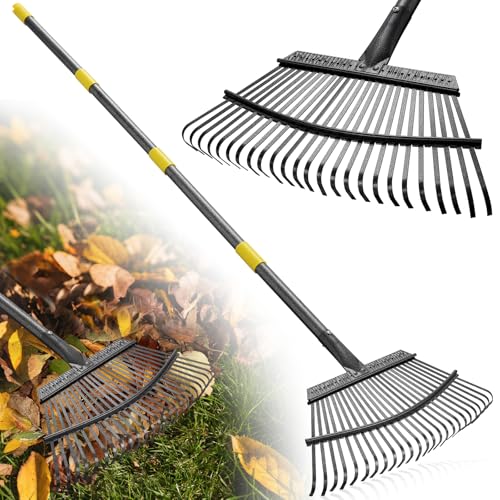
A rake that the whole family can use without a fight is a small miracle, and the Lilyvane 18-inch metal rake comes with a 65-inch adjustable handle that fits both kids and adults. The 25 steel tines, each about 0.27 inches thick, gather leaves, pine needles, and grass clippings without bending under normal yard debris.
It is built lighter than the Coopvivi above, which makes it easier to hand off without worrying about the handle wobbling. The trade-off is that heavy wet leaves may need a second pass compared to stiffer commercial rakes.
The Case For It
- Adjustable handle suits both shorter and taller users
- Wide 18-inch head covers meaningful ground in open yards
- Steel tines resist the breakage common in plastic rakes
- Light enough for kids to manage during family cleanup days
Points To Weigh
- Metal tines can scuff hard surfaces like concrete or flagstone
- Adjustable joints need occasional checks to stay tight
Best Suited To
Families with mixed-age household members who want one rake that everyone from kids to grandparents can use comfortably.
Another Choice May Suit
The Union Tools poly fan rake is a quieter, gentler option if you mainly need to sweep dry leaves off a small lawn.
What To Weigh Before Picking a Rake
The right rake starts with the lawn underneath. Natural grass asks for tasks like dethatching, leaf pickup, and leveling, while artificial turf mostly needs fluffing and debris removal. Matching the tool to the surface matters more than chasing the widest head or the longest handle.
Tine shape is the next decision. Curved steel tines dig into thatch and lift it free, which is why models like the Walensee and BARAYSTUS are spring favorites. Straight tines on a bow rake break and move soil, which fits new bed prep more than routine mowing-season care. For delicate surfaces like synthetic grass, plastic or nylon bristles clean without tearing fibers.
Handle length and adjustability change the whole experience. Taller users benefit from a 65-inch or longer shaft to avoid hunching, and adjustable designs let one rake serve the whole family. Storage is the final practical check: detachable or twist-lock sections slide into tight shed corners where a one-piece handle would not fit.
Buying Considerations That Change The Outcome
A good rake feels balanced in your hand and matches the soil and debris you actually have. Before settling on a model, think through these points: yard size, debris type, soil condition, and how often you will use the tool. A $12 fan rake handles weekend leaf duty beautifully, but a heavy clay yard needs a stiffer bow rake you can lean into.
Common Shopping Slip Ups
Many people grab the widest rake they can find, only to discover that an oversized fan head is harder to control under heavy wet leaves. Width helps, but only up to a point, and a 24- to 30-inch head tends to be the practical ceiling for most adult users. Another trap is choosing all-plastic construction for soil work: poly tines flex and snap when forced into compacted earth, so a steel-headed model is the safer bet for breaking ground.
Where The Extra Money Goes
Higher-tier rakes tend to spend your money in three places: better steel, better welds, and better handle joints. Carbon or stainless steel holds an edge across seasons, while a triple-welded head connection prevents the wobble that ends a tool’s life early. Adjustable aluminum or stainless handles also tend to lock more securely than budget pole sections, which matters when a teenager is using the same tool as an adult. For most home yards, a mid-tier metal rake lasts longer and feels more solid than a budget poly fan, but the top tier pays off mainly for large properties or weekly professional use.
Frequently Asked Questions
How often should I dethatch my lawn? Most cool-season lawns benefit from a light dethatching once a year in early spring or fall, while warm-season grasses usually do well with annual dethatching in late spring.
Can I use a leaf rake to dethatch my lawn? A standard fan rake only skims the surface and will not pull up the spongy thatch layer; a dedicated thatch rake with curved steel tines is built for that job.
What width rake head works best for a small yard? An 18- to 24-inch head gives a good balance of coverage and control in yards under a quarter acre, where maneuverability matters more than maximum reach.
Are adjustable handles actually worth it? Adjustable handles let one rake serve multiple household members and pack down for storage, which is a real convenience for families and small sheds.
How do I keep my rake from rusting? Wipe the head dry after wet use, store the rake indoors or under cover, and a light coat of oil on steel tines once a season helps prevent surface rust.
Closing Remarks
The best grass rake is the one that matches your lawn, your body, and the kind of debris you actually face. A homeowner with a real-grass yard will reach for a thatch rake in spring and a stiff metal leaf rake in fall, while someone with synthetic turf needs a gentler brush-style tool. Pick the rake that fits the job, and the work gets easier every time you head outside.
