

Starting a new lawn or rescuing a tired one usually means juggling a seed bag and a fertilizer bag, hoping the timing lines up. Combined grass seed and fertilizer mixes cut that hassle down to a single pass, which matters when you’re working around weather windows and weekend schedules. The picks below lean into that convenience in different ways, from all-in-one patch products to regional blends tuned for specific climates. Each one earns its spot for a different kind of yard and a different kind of gardener.
A Quick View Of The Lineup

Jonathan Green Black Beauty Ultra Grass Seed – 7 lb

Scotts Turf Builder Grass Seed Sunny Mix, 2.4 lbs.

Scotts Kentucky 31 Grass Seed Mix, 20 lbs.

Scotts Grass Seed Drought Tolerant Mix, 4 lbs.

O.M. Scott & Sons Tall Fescue Blend Grass Seed, 8 lbs.

Eco Solutions Slow Release Lawn Fertilizer 25-5-10 (44 lbs)

Sunday Northwest Seed + Feed Tall Fescue & Rye (10 lbs)
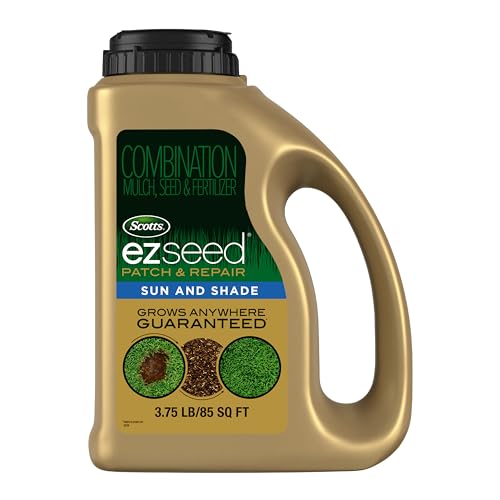
Scotts EZ Seed Patch & Repair Sun and Shade, 3.75 lbs

Scotts Turf Builder Sun & Shade Mix, 5.6 lbs

Scotts Turf Builder Thick’r Lawn Sun & Shade, 10 lbs
Taking A Closer Look At The Options
Front-yard renovations tend to live or die on color, and the Jonathan Green Black Beauty Ultra Grass Seed leans hard into that deep green turf look people picture when they imagine a magazine lawn. The blend pulls in tall fescues, Kentucky bluegrass, and perennial rye, three species that each handle a different stress, so the stand stays relatively even through the season.
You can broadcast it across a bare yard or work it into thin patches, and the 7 lb bag covers a meaningful chunk of ground without feeling like a commitment to a full landscape overhaul. For most homeowners starting fresh in a transitional climate, this lands in the sweet spot between ambitious and manageable.
Standout Benefits
- Three-species blend spreads risk across heat, wear, and color retention.
- Works for both brand-new lawns and patching bare spots, so one bag covers multiple projects.
- Known for the dark green color that tends to make neighbors slow down and look.
- Perennial rye germinates quickly, giving visible results while slower fescues fill in behind it.
Things To Consider
- Without an included fertilizer component, you’ll likely want to feed separately on day one.
- Germination timing varies by species, so the lawn can look patchy in the first few weeks before it evens out.
Who It Suits Best
Homeowners starting a full new lawn in a cool-to-transitional climate who care about color depth as much as coverage.
Where Another Pick Suits Better
For a sun-baked southern yard, the Scotts Turf Builder Grass Seed Sunny Mix is better tuned to direct light and heat stress.
Open lawns with six or more hours of direct light need seed that doesn’t sulk under that exposure, and the Scotts Turf Builder Grass Seed Sunny Mix is built for exactly that. The mix pairs seed with Root-Building Nutrition, a fertilizer component that aims to push root depth rather than just greening up the blade tip.
At 2.4 lbs, this is a smaller bag suited to a small yard or a focused overseeding pass. Compared to the Jonathan Green Black Beauty Ultra Grass Seed, this one trades multi-species diversity for a more targeted sunny-condition formula, which can pay off in places where the sun-baked edges usually thin out first.
The Case For It
- Root-Building Nutrition aims growth downward, which helps with drought resilience later.
- Tailored for full sun and light shade rather than trying to do everything at once.
- Small bag is approachable for first-timers who want a low-stakes starting point.
Worth Noting
- The 2.4 lb size covers limited ground, so larger properties may need multiple bags.
- Owners in deep shade will likely see weaker results than a dedicated shade mix would deliver.
Key Specs
Made For
Homeowners with sunny, exposed lawns who want a focused seed-and-feed formula rather than a multi-purpose blend.
Look Elsewhere When
For a yard that swings from heavy shade to full sun, the Scotts Turf Builder Grass Seed Sun & Shade Mix handles that variability more gracefully.
Bigger projects call for a bag you don’t burn through in a single afternoon, and the 20 lb Scotts Kentucky 31 Grass Seed Mix is sized for serious coverage. Kentucky 31 tall fescue is a workhorse grass, the kind that tolerates foot traffic, rough weather, and less-than-perfect soil without falling apart.
This isn’t a polished showpiece mix. It’s a durability-first blend aimed at new lawns and overseeding where the priority is thick, hardy turf over fine-leaf elegance. Compared to the Jonathan Green Black Beauty Ultra Grass Seed, you give up some of that signature dark green uniformity in exchange for tougher, lower-maintenance grass.
Notable Upsides
- Large 20 lb bag covers substantial ground, useful for half-acre or larger properties.
- Kentucky 31 tall fescue is known for durability in tough conditions and rough use.
- Works for both new lawn establishment and overseeding thin areas.
Trade Offs
- Blade texture is coarser than finer fescue blends, which may not suit formal lawn aesthetics.
- Heavier bag means more storage space and a single-purpose commitment before opening.
- Color sits more medium-green than the deep bluegrass tones some homeowners prefer.
Best Suited To
Owners of large yards who need coverage scale and a grass type that tolerates wear, weather, and inconsistent watering.
Skip It When
For a small urban lawn where fine texture and dark color matter more, the Jonathan Green Black Beauty Ultra Grass Seed delivers a more refined look.
Where summer water bills climb faster than the temperature does, the Scotts Grass Seed Drought Tolerant Mix earns its name. The blend combines tall fescue and Kentucky bluegrass, two species that send roots deep enough to find moisture well below the surface crust.
The bluegrass component also self-repairs, which means the lawn can fill in minor damage over time without constant reseeding. You can apply it to start a new lawn or to overseed an existing one, and spring or fall timing between 65°F and 85°F gives the seed a comfortable window to establish. Compared to the Scotts Turf Builder Grass Seed Sunny Mix, this is the better pick where water is the limiting factor rather than sunlight.
Strengths Worth Knowing
- Tall fescue and bluegrass combination reaches deeper soil moisture than shallow-rooted mixes.
- Self-repairing bluegrass helps close small bare spots without manual reseeding.
- 99.99% weed-free seed stock reduces the early-season weeding workload.
Honest Caveats
- Best results depend on hitting the 65°F to 85°F application window, which limits flexibility.
- Initial germination still demands consistent watering for the first few weeks, drought tolerance comes later.
Quick Facts
Who Should Grab It
Homeowners in dry or drought-prone regions who want a lawn that holds up once established, not just during establishment.
A Better Fit Elsewhere
For a heavily shaded yard with no drought pressure, the Scotts EZ Seed Patch & Repair Sun and Shade is a more practical patch-focused option.
The O.M. Scott & Sons Tall Fescue Blend Grass Seed leans into the brand’s long lawn-care history, framing itself as a straightforward, naturally-ingredient blend for DIY homeowners. The 8 lb bag is a useful middle ground, large enough for a meaningful overseeding pass but not so heavy that it overwhelms a casual project.
Tall fescue is the entire show here, no bluegrass or rye mixed in to complicate the picture. That single-species focus can make the lawn look more uniform in color and texture once it fills in. Compared to the multi-species Jonathan Green Black Beauty Ultra Grass Seed, this one trades diversity for a cleaner, more consistent appearance.
Bright Spots
- Single-species tall fescue delivers consistent color and texture across the lawn.
- Natural-ingredient formulation appeals to homeowners who prefer a simpler approach.
- Brand heritage suggests a degree of formulation refinement over many seasons.
Points To Keep In Mind
- Without species diversity, the lawn can struggle if a single disease targets tall fescue hard.
- Coarser blade texture may not satisfy gardeners aiming for a fine-leaf ornamental look.
Perfect Match For
Traditional homeowners who want a uniform fescue lawn without the visual variation of multi-species blends.
Reach For A Different Pick When
For a yard that bounces between harsh sun and shade, the Scotts Turf Builder Grass Seed Sun & Shade Mix is built to handle that range.
The Eco Solutions Slow Release Lawn Fertilizer is the pure-feed entry in this roundup, a 25-5-10 NPK blend (a ratio showing percent nitrogen, phosphorus, and potassium) built around 65% granular nitrogen for steady release over up to 110 days. For anyone tired of feeding every few weeks, that long window is the main draw.
At 44 lbs, this is a big bag aimed at full-yard coverage rather than spot feeding. The slow-release mechanism means the lawn gets a more even color response without the boom-and-bust growth pattern of quick-release products. Compared to the seed-and-feed combos above, this assumes you already have a lawn and want to maintain or rescue it.
Why It Works Well
- Up to 110 days of feeding reduces the number of applications per season.
- 25-5-10 NPK ratio is heavy on nitrogen, which directly supports green leaf growth.
- Granular form spreads evenly with a standard broadcast spreader.
Practical Considerations
- No seed included, so it’s a maintenance product rather than a lawn-starting solution.
- 44 lb bag requires storage space and a spreader for even application.
- Slow-release nitrogen means visible greening takes longer than with quick-release alternatives.
Feature Snapshot
Whose Shelf It Belongs On
Homeowners with established lawns who want fewer fertilizer applications and steady, even growth through the season.
Not Your Match When
For a brand-new lawn with no grass yet, the Sunday Northwest Seed + Feed combines seed and feed in a single pass.
Generic blends can miss the mark in regions with unusual weather patterns, and the Sunday Northwest Seed + Feed is tuned for Pacific Northwest conditions specifically. It combines tall fescue and perennial ryegrass, a duo that handles the wet winters and mild summers common from Oregon to western Washington.
The 9-0-2 NPK ratio (very low phosphorus, modest potassium) reflects a soil conditioner and fertilizer blend more than a heavy nitrogen feed. Coverage runs to about 1,500 square feet per bag, which is helpful for planning smaller yards. Compared to the broader Scotts Turf Builder Grass Seed Sunny Mix, this one trades general versatility for regional precision.
Advantages To Know
- Formulated specifically for Northwest climate conditions, not a generic national blend.
- Tall fescue and perennial ryegrass handle wet winters better than bluegrass-heavy mixes.
- All-in-one approach combines seed, soil conditioner, and fertilizer in a single pass.
Where It May Fall Short
- Regional tuning means results will vary outside the Pacific Northwest.
- 1,500 sq ft coverage per bag may require multiple bags for medium-sized lawns.
Built With In Mind
Homeowners in the Pacific Northwest who want a blend matched to their specific climate rather than a one-size-fits-all formula.
Another Choice May Suit
For a hot, dry Southwest yard, the Scotts Grass Seed Drought Tolerant Mix is better suited to those water-limited conditions.
Most lawns don’t need a full reseed, they just need the dog-runs and bare patches sorted out, and that’s exactly the lane the Scotts EZ Seed Patch & Repair Sun and Shade occupies. The product combines grass seed, continuous-release lawn food, and a super-absorbent growing material in one mix that holds moisture where you spread it.
It handles tough spots, including full sun, dense shade, heavy traffic, and slopes, which is a wider range than most blends will claim. The 3.75 lb size is built for spot treatment rather than whole-lawn coverage. Compared to the broad-coverage Scotts Turf Builder Thick’r Lawn Sun & Shade, this is the surgical tool for problem areas only.
Real-World Strengths
- Three-in-one formula handles seed, food, and moisture retention in a single application.
- Works in conditions that defeat most patch products, including slopes and dense shade.
- Absorbent growing material reduces how often you need to water new patches.
Small Caveats
- Designed for patches, not whole-lawn renovation, so the bag runs out quickly on big projects.
- Mulch-like material can crust over if allowed to dry out completely between waterings.
Who Will Love This
Homeowners dealing with a handful of stubborn bare spots who want one product that handles seed, food, and mulch in a single step.
Swap It Out When
For whole-lawn thickening, the Scotts Turf Builder Thick’r Lawn Sun & Shade is sized and formulated for that larger job.
Most yards aren’t uniformly sunny or uniformly shaded, they’re a patchwork, and the Scotts Turf Builder Sun & Shade Mix is built for that reality. The blend pairs seed, fertilizer, and soil improver in one bag, so a single pass covers multiple needs across varied light conditions.
Root-Building Nutrition is included, aiming to push growth downward rather than just greening the surface. The 5.6 lb size lands between small and large, suited to mid-sized suburban lots. Compared to the sun-only Scotts Turf Builder Grass Seed Sunny Mix, you give up some specialized heat tolerance for genuinely broader coverage.
The Value In It
- Sun-and-shade versatility handles the most common residential lawn light patterns.
- Three-in-one approach (seed, fertilizer, soil improver) reduces product juggling.
- Root-Building Nutrition supports stronger establishment during the critical first weeks.
Factors To Consider
- Versatile blends rarely outperform specialty mixes in their ideal conditions, so dedicated sun or shade yards may do better with a focused product.
- Soil improver component adds weight and may require more careful spreading than seed alone.
Feature Rundown
Right Fit For
Homeowners with mixed-light yards who want one product that handles the sunny front and the shaded side without switching bags.
Where A Sibling Pick Shines
For a yard in deep, consistent shade, the Scotts EZ Seed Patch & Repair Sun and Shade handles dense shade with stronger targeted performance.
Thin, weak lawns need more than just seed, they need volume, and the Scotts Turf Builder Thick’r Lawn Sun & Shade is a three-in-one product aimed squarely at building turf density. It combines seed, fertilizer, and soil improver in a single application designed to bulk up existing stands rather than start from scratch.
At 10 lbs, the bag is sized for full-yard coverage on a typical suburban lot. The sun and shade tolerance matches the most common residential light patterns, so you don’t need to sort seed by zone. Compared to the smaller Scotts EZ Seed Patch & Repair Sun and Shade, this is the whole-lawn version of the thickening strategy.
The Helpful Details
- Three-in-one approach thickens existing turf in a single pass, reducing repeat applications.
- 10 lb bag covers enough ground for a typical suburban lawn without buying multiples.
- Sun and shade formulation handles the mixed-light patterns of most residential lots.
Less Ideal Details
- Designed for overseeding, so it underperforms on completely bare ground compared to a starter mix.
- Actual thickening depends on existing lawn condition, so heavily damaged yards may need more than one season to respond.
Right Fit For
Homeowners with thin or weak existing lawns who want to bulk up density in one application rather than managing separate products.
Consider Something Else When
For a completely bare yard with no existing grass, the Jonathan Green Black Beauty Ultra Grass Seed is built for that new-lawn scenario.
What To Weigh Before Picking A Seed And Feed Blend
Start with your light situation, since seed blends are typically tuned for sun, shade, or a mix. A yard that gets six or more hours of direct light wants a sun-focused product like the Scotts Turf Builder Grass Seed Sunny Mix, while a deeply shaded lawn will struggle with anything that isn’t built for low light. The sun and shade blends make sense for mixed lots but rarely outperform specialty products in their ideal conditions.
Match the seed to your climate next. Tall fescue handles heat and drought better than most cool-season grasses, while Kentucky bluegrass offers self-repair but needs more water. Perennial ryegrass germinates fast and helps hold soil while slower species establish. Regional blends like the Sunday Northwest Seed + Feed exist for a reason, because generic national formulas can miss the mark in places with unusual weather patterns.
Size the bag to your actual square footage rather than guessing. Most products list coverage in square feet, and overseeding a half-acre lawn with a 3 lb patch bag means ten trips to the store. Buying the right size once is cheaper and easier than piecing together smaller bags.
Finally, decide whether you actually want a combined seed-and-feed or just seed. Pure seed lets you time your fertilizer separately, which matters if you’re starting in fall or addressing specific nutrient deficiencies. Combined products save time but tie your feeding schedule to your seeding schedule, which can be limiting in repair scenarios.
Key Considerations Across These Picks
Pitfalls Shoppers Hit
The most common error is buying a sun-blend for a shaded yard or vice versa, then wondering why germination stalls. Seed labels list target light conditions for a reason, and ignoring them usually means reseeding the same area months later. Another frequent misstep is underestimating the bag size needed, especially for overseeding, which actually requires more seed per square foot than new-lawn seeding in some cases.
When Paying More Pays Off
Higher-tier blends earn their price through species diversity, weed-free purity, and built-in root-supporting nutrition that generic mixes skip. A premium product like the Jonathan Green Black Beauty Ultra Grass Seed combines three species to spread risk across heat, wear, and color, which a single-species fescue bag can’t match. The upgrade pays off when your lawn has a real stress profile, mixed sun and shade, active foot traffic, or both, rather than a single uniform condition.
Frequently Asked Questions
When is the best time to apply grass seed and fertilizer mixes?
Cool-season grasses establish best in early fall or early spring when soil temperatures sit between 55°F and 70°F, while warm-season blends prefer late spring through summer timing. Most products print an ideal temperature range directly on the bag, and staying inside that window meaningfully improves germination rates.
Can I apply a combined seed and fertilizer mix on top of an existing lawn?
Yes, overseeding with a combined product is a common way to thicken a thin lawn, though you may need slightly more product per square foot than new-lawn seeding. Lightly rake the area first so the seed makes contact with soil rather than sitting on top of thatch.
How long does it take to see results from seed and fertilizer mixes?
Perennial ryegrass can germinate in 5 to 7 days, while tall fescue typically shows green in 7 to 14 days and Kentucky bluegrass may take 14 to 21 days. Full establishment, meaning the lawn can handle normal traffic, usually runs 6 to 8 weeks after germination.
Do combined seed and fertilizer mixes replace separate feeding later?
They cover the establishment period, but most lawns benefit from a follow-up feeding 6 to 8 weeks after germination, especially during peak growing season. A slow-release product like the Eco Solutions Slow Release Lawn Fertilizer extends that feeding window without daily attention.
Are seed and fertilizer mixes safe for pets and kids?
Most products recommend keeping people and pets off the treated area until the seed has germinated and been watered in, typically a few days. Once the lawn is dry and the seed is no longer visible on the surface, normal use can resume.
The Takeaway
The right grass seed and fertilizer mix depends less on brand and more on matching the product to your light, climate, and project scale. Sun-drenched southern yards, mixed-light suburban lots, and shaded Pacific Northwest lawns each have a different answer, and the picks above cover those scenarios in order. Start with your conditions, then choose the bag size that matches your square footage, and the rest of the decision gets a lot simpler.
