

Spreading seed by hand gets old fast, especially when the bag runs out mid-lawn. A dedicated seed spreader takes the guesswork out of coverage, helps you hit a consistent rate, and turns a tiring chore into a quick walk around the yard. The picks below cover small spot repairs, full-yard renovations, and shoulder-slung capacity for bigger properties, so you can match the tool to the size of the job.
The Main Contenders

Jonathan Green Hand Broadcast Lawn Spreader

Yard Tuff 25 lb Shoulder Seeder & Spreader

Uniqwamo Handheld Power Spreader for Dewalt

Scotts Liquid Green Max Lawn Food, 32 oz.

Rozlchar Power Spreader for Dewalt, 5,000 sq. ft.

Yhtpouqe Hand Held Spreader, 80 oz
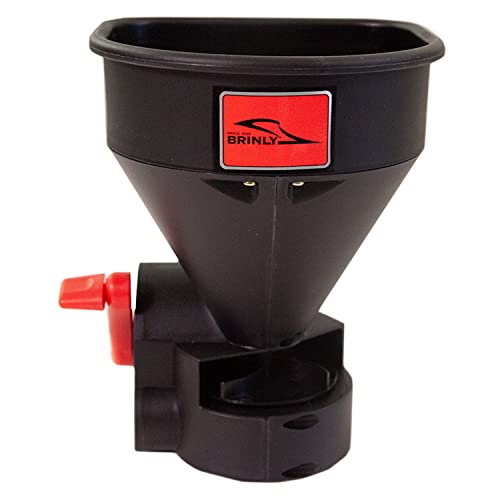
Brinly 5 lb. All-Season Handheld Spreader
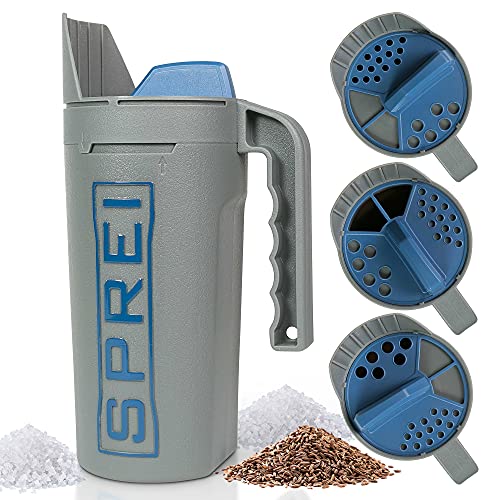
SPREI Spot Spreader 80 oz Handheld Shaker
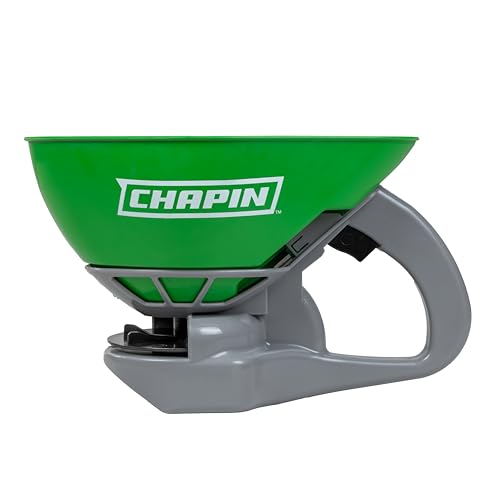
CHAPIN 8706G 3 lb Hand Crank Lawn Spreader

AquaDoc Handheld Seed Spreader, 2.5L
More On The Choices That Made The List
Spinning a crank by hand is the oldest trick in the lawn book, and the Jonathan Green Hand Broadcast Lawn Spreader leans into that simplicity. The ergonomic handle is sized for comfortable cranking during a full afternoon of spot work, and the broadcast head throws seed in a wide arc so you don’t have to overlap every pass.
For homeowners patching bare spots after a tough summer or chasing crabgrass, this is a refreshingly no-frills tool. You won’t cover a half-acre in a hurry, but for a typical suburban lawn it gets the job done without batteries, calibration charts, or assembly headaches.
Bright Spots
- Covers up to 1,500 sq ft, enough for a small front yard in one fill
- Ergonomic handle reduces hand fatigue during repeat cranking sessions
- Even distribution for seed, fertilizer, and ice melt alike
- Handheld form factor makes storage simple in a garage shelf
Things To Consider
- Manual cranking can feel slow on larger lawns over a quarter acre
- Plastic hopper benefits from a quick rinse after fertilizer use to prevent residue
Who It Suits Best
Homeowners maintaining a small lawn and reseeding bare spots a few times per season.
Consider Something Else When
The Yard Tuff 25 lb Shoulder Seeder is a better match for anyone with a mid-size lawn who wants to carry more seed per fill.
Slung over the shoulder, the Yard Tuff 25 lb Shoulder Seeder turns seeding into a walking task instead of a constant refill routine. The canvas bag holds up to 25 pounds, while all-metal gears and a zippered top keep the mechanism honest through years of seasonal work.
For anyone with a mid-size property or food plot, capacity matters more than people expect. You spend more time walking and less time topping off, and the calibrated flow rate adjuster lets you dial in everything from grass seed to compost without guesswork.
The Helpful Details
- 25 lb capacity means fewer refills on a half-acre lot
- All-metal gears outlast the plastic internals on many budget spreaders
- Adjustable shoulder strap distributes weight across the torso
- Calibrated flow gate handles seed, fertilizer, and small grain
Points To Note
- At 3 lb empty, the canvas bag can feel warm on a hot afternoon
- Initial assembly takes a few minutes out of the box
Built With In Mind
Property owners with food plots, mid-size lawns, or light groundskeeping who want shoulder-borne capacity over handheld refills.
Look Elsewhere When
The Brinly 5 lb All-Season Handheld Spreader is a smarter pick for tight landscaping beds where a shoulder bag would feel unwieldy.
The Uniqwamo Handheld Power Spreader is a clever add-on for anyone already running a Dewalt 20V or 60V platform. Drop in a battery you’ve probably got sitting on the bench, and you’ve got a motorized spreader that handles seed, granular fertilizer, and rock salt without manual cranking.
The ergonomic shell keeps the unit compact, and the all-season material list makes it useful from spring overseeding through winter driveway salting. You do need to bring your own battery and charger, which is the trade-off for skipping the bundled cost.
Good Reasons To Consider
- Works with the Dewalt 20V and 60V batteries many homeowners already own
- Year-round use for seed, fertilizer, and ice melt
- Compact, handheld design reduces arm fatigue compared to cranking
Worth Noting
- Battery and charger sold separately
- Not useful without an existing Dewalt battery on hand
Right Fit For
Dewalt 20V or 60V tool owners who want to add a spreader without investing in a new battery system.
A Better Fit Elsewhere
The Rozlchar Power Spreader covers up to 5,000 sq ft per pass, which fits larger yards better than this handheld form factor.
Strictly speaking, Scotts Liquid Green Max is a fertilizer, not a spreader. It earns a spot on this list because so many homeowners pair a dry spreader with a liquid feed to push the lawn toward that deeper green color after seeding is done.
The 32 oz bottle connects to a standard hose-end sprayer and covers a meaningful stretch of turf in one fill. It layers a quick nitrogen response with an iron supplement, so the greening effect tends to show up within days rather than weeks.
The Case For It
- Liquid form applies evenly without granule burn risk
- Iron supplement supports deeper color in any grass type
- 32 oz size suits a small to mid-size lawn in one bottle
Room For Improvement
- Doesn’t replace the dry spreader for seeding or ice melt
- Needs a hose hookup, which limits use during watering restrictions
Best Suited To
Homeowners who already own a dry spreader and want a quick greening boost without buying a second granular product.
Reach For A Different Pick When
The Yhtpouqe Hand Held Spreader is the right tool for anyone whose real goal is seeding or salting, since this bottle is strictly a feed.
The Rozlchar Power Spreader is the big sibling to most handheld units on this list, advertised to cover up to 5,000 sq ft per pass. It also runs on a Dewalt 20V or 60V battery, so homeowners with the right pack can skip the cord and the cranking entirely.
For larger residential yards, the wider reach is the main draw. You can knock out a full feeding or overseeding in a fraction of the passes a small handheld needs, and the year-round material list keeps it useful from spring through winter.
Everyday Wins
- Covers up to 5,000 sq ft, ideal for medium suburban lots
- Year-round use for feed, seed, weed control, and ice melt
- Battery power removes manual cranking fatigue
- Pairs with the same Dewalt batteries many tool owners already stock
Trade Offs
- Battery and charger sold separately, raising the real cost
- Heavier than a pure handheld, which can tire out smaller users
Feature Snapshot
Made For
Dewalt tool owners with medium to large lawns who want a wider spread without investing in a tow-behind unit.
Swap It Out When
The Uniqwamo Handheld Power Spreader is the more practical pick for anyone who needs light, single-hand control rather than a wider pass.
The Yhtpouqe Hand Held Spreader is a plastic jar-style unit with three adjustable opening sizes on the lid. Rotate to small, medium, or large, and you can dial in flow for fine grass seed, granular fertilizer, or chunkier rock salt without swapping tools.
The 80 oz capacity sits at the larger end of handheld spreaders, which means fewer trips back to the bag. The included scoop and gloves are a small touch, but they save a run to the shed before the first pass.
Key Advantages
- Three opening sizes handle fine seed through coarse salt
- 80 oz capacity trims down refill stops on bigger jobs
- Includes a scoop and gloves for a ready-to-go setup
Honest Caveats
- Shaker-style design takes a wrist flick to dispense
- Plastic body benefits from a dry storage spot to extend life
Who Will Love This
DIYers who want one jar for grass seed in spring and ice melt in winter without buying two separate tools.
Skip It When
The CHAPIN 8706G Hand Crank Lawn Spreader offers more even coverage for full-yard seeding, since a shaker can clump on long passes.
The Brinly 5 lb All-Season Handheld Spreader uses a trigger-fed rotary broadcast design. Squeeze the trigger and the internal spinner throws seed in a controlled arc, which is gentler on the wrist than a shaker and more consistent than hand-tossing.
The scoop-shaped opening at the top makes filling from a large bag easier than it sounds. You can pour directly without a funnel, and the tough poly construction is rated to handle ice melt in winter without cracking.
Notable Upsides
- Trigger design controls flow without constant cranking
- Easy-fill opening cuts down on spillage during refills
- Rotary spread pattern reaches tight garden beds
Points To Keep In Mind
- 5 lb capacity means more refills on a full lawn
- Trigger mechanism benefits from an occasional dry wipe-down
Perfect Match For
Gardeners with landscaped beds and small lawn patches who want controlled, targeted application.
Where A Sibling Pick Shines
The Yard Tuff 25 lb Shoulder Seeder covers a full yard in fewer refills, which suits larger properties better.
The SPREI Spot Spreader takes the simplest possible approach: a lightweight 80 oz jug with multiple opening sizes in the lid. No crank, no trigger, no battery. You shake it, and the granules come out at the rate the lid opening allows.
For spot seeding, ice melt along a walkway, or treating small weedy patches, this is genuinely fast. The hanging handle makes it easy to store on a hook in the garage, and the durable plastic body shrugs off seasonal use.
Points In Its Favor
- Lightweight build reduces arm fatigue on quick jobs
- Multiple lid openings suit different granule sizes
- Hanging handle stores neatly on a garage hook
Practical Considerations
- Shake-only design produces less even coverage than a rotary spreader
- Best for spot work rather than full-lawn coverage
Who Should Grab It
Homeowners who mainly need to spot-seed patches and salt a few icy spots without hauling out a full-size spreader.
Another Choice May Suit
The CHAPIN 8706G Hand Crank Lawn Spreader is a better fit for a full-lawn overseeding, where the SPREI’s shaker style would feel uneven.
CHAPIN has been making turf spreaders long enough that the 8706G feels like an old friend. The 3 lb poly hopper is light enough to carry one-handed, the large handle is easy to grip, and the green poly shell holds up to weather through years of garage storage.
It’s a residential-grade tool, clearly aimed at small yards and the homeowner who values simple, durable construction. The hand crank throws seed in a wide arc, and the weather-resistant body handles spring feed as easily as a winter ice melt pass.
Strengths Worth Knowing
- Large handle fits both small and large hands comfortably
- Lightweight poly build keeps wrist strain low
- Weather-resistant shell survives outdoor storage
Some Limits To Know
- 0.3 gal hopper means frequent refills on a full yard
- Manual crank pace slows down coverage on big lots
Whose Shelf It Belongs On
Suburban homeowners with a modest lawn who want a reliable, no-frills crank spreader from a known brand.
Not Your Match When
The Rozlchar Power Spreader is a smarter upgrade for larger yards where a manual crank becomes tedious.
The AquaDoc Handheld Seed Spreader rounds out the list with a multi-season pitch. The 2.5L capacity handles grass seed, fertilizer, and lawn feed in warmer months, then shifts to snow salt, ice melt, and even pool chemicals when the temperature drops.
It’s a versatile jar-style unit for the homeowner who’d rather have one tool in the garage than four. If your chores shift between lawn care and winter salting, the wide material compatibility is a real advantage over single-purpose spreaders.
Reasons It Performs
- Four-season versatility across seed, feed, salt, and chemicals
- 2.5L capacity fits a respectable workload per fill
- Smooth, controlled coverage for small to mid-size lawns
What To Weigh
- Handheld form factor slows down large-lawn projects
- Best rinsed between uses to avoid cross-contamination of materials
The Right Fit
Homeowners who want one tool that transitions from spring overseeding to winter walkway salting without switching equipment.
Where Another Pick Suits Better
The Yard Tuff 25 lb Shoulder Seeder is the better call for larger properties where a 2.5L jar would mean nonstop refills.
What Really Matters When Choosing a Grass Seed Spreader
Capacity and Yard Size
Capacity is the first number to think about, since it directly shapes how often you stop to refill. A 3 to 5 lb handheld works well for spot work and small lawns, while a 25 lb shoulder bag covers a half-acre without a single top-off. For most homeowners, matching capacity to actual square footage saves more time than chasing the biggest hopper on the list.
Broadcast Versus Drop
Broadcast spreaders throw granules in a wide arc, which speeds up coverage on open lawn. Drop spreaders, by contrast, lay material in a controlled line below the hopper, which suits garden beds and tight edges. The tools on this list lean toward broadcast, because most residential seeding and feeding benefits from that wider throw.
Power Source and Effort
Manual crank units cost less and never run out of battery, but they demand real arm work. Battery-powered spreaders remove that fatigue, especially on larger yards, and they tend to give a more consistent throw since the motor keeps the spinner at a steady speed. The trade-off is the upfront cost of batteries and chargers, plus the need to keep them charged between uses.
Material Compatibility
Most modern spreaders handle grass seed, granular fertilizer, and ice melt, but not all of them handle fine seed without clumping. A unit with adjustable openings or a calibrated gate gives you better control across material sizes, and it’s worth confirming that any spreader you consider matches the seed type and granule size you actually use.
Common Slips to Watch For in the Seed Spreader Aisle
Buying More Capacity Than You Need
A big shoulder bag looks appealing, but an oversized spreader on a tiny lawn is just extra weight. Most homeowners overestimate the size of their yard and end up lugging a half-empty bag. Match the tool to the job, and you’ll actually use it more often.
Overlooking Battery Compatibility
Battery-powered spreaders only make sense if you already own or plan to buy into a specific battery platform. A great deal on a Dewalt-compatible unit falls apart if you don’t own a Dewalt battery. Check the battery requirement before clicking buy, and budget for the battery if you don’t already have one on the bench.
Skipping the Material Match
A spreader optimized for fertilizer granules can choke on fine grass seed, and a salt-rated unit may spread seed unevenly. The lid opening, gate design, and rotor speed all matter. Picking a tool that handles your primary material well is more useful than buying the most versatile unit on paper.
Confusing Coverage With Capacity
Coverage numbers describe how far a single pass throws material, while capacity describes how much the hopper holds. A wide-throw battery unit sounds powerful, but with a small hopper you’ll still spend half the job refilling. Balance the two specs against your lawn size before settling on a model.
Frequently Asked Questions
What size spreader do I need for a typical suburban lawn?
For a yard up to about 5,000 sq ft, a handheld or small crank spreader in the 3 to 5 lb range usually gets the job done without constant refills. If your lawn is bigger, a shoulder-slung or battery-powered unit saves time and arm strain.
Can I use the same spreader for fertilizer and grass seed?
Most spreaders on this list handle both, though the gate or opening size may need adjustment. Fine seed needs a smaller opening to avoid dumping, while granular fertilizer flows freely through a wider setting. Always rinse the hopper between materials to prevent cross-contamination.
How do I keep seed from clumping in the hopper?
Dry storage is the biggest help. Moisture causes seed to clump and jam the gate, so keep the hopper closed and out of the rain between uses. If seed does clump, break it up by hand before refilling the unit.
Are battery-powered spreaders worth the extra cost?
For larger lawns, the time saved on manual cranking is meaningful, and the consistent motor speed gives a more even throw. For small lawns, a manual unit delivers the same end result at a lower cost. The upgrade mostly pays off above a quarter acre.
How often should I clean my spreader?
A quick rinse after each granular use prevents residue buildup, and a deeper clean at the end of the season keeps metal parts from corroding. Dry the unit fully before storage to extend the life of the gears and the hopper.
The Takeaway
The right grass seed spreader comes down to your yard size, your tool platform, and how often you actually do the job. A small handheld covers most spot repairs, while a shoulder bag or battery-powered unit earns its keep on bigger lawns. Pick the tool that matches the work you already do, and seeding stops feeling like a chore.
