

A patchy yard, a freshly tilled renovation, or a thin stretch that’s seen too many dry summers: each one of those situations calls for a starter fertilizer built around phosphorus, the nutrient that drives root formation in young grass. The hard part is matching the right analysis and bag size to the lawn in front of you, since the wrong ratio can push blade growth before roots catch up. The ten options below cover everything from a 4-pound patch fix to a 44-pound professional-grade spread, so you can match the product to the project instead of guessing at the garden center.
How The Shortlist Stacks Up

Jonathan Green Veri-Green Fertilizer for Seeding & Sodding (5,000 Sq Ft)

Jonathan Green Veri-Green Fertilizer for Seeding & Sodding (1,500 Sq Ft)

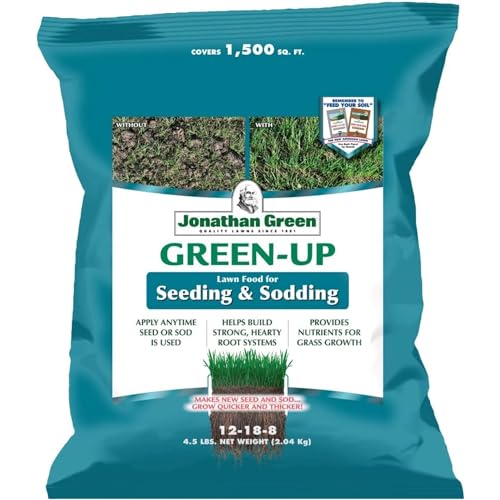
Jonathan Green Green-Up Lawn Food for Seeding & Sodding 12-18-8 (1,500 Sq. Ft.)
Jonathan Green Green-Up Lawn Food for Seeding & Sodding 12-18-8 (1,500 Sq. Ft.)

Fertilome (10906) New Lawn Starter Fertilizer 9-13-7, 20 lbs

Fertilome (10904) New Lawn Starter Fertilizer 9-13-7, 4 lbs

Sunday Lawn Kickstart, Liquid Lawn Fertilizer, 2 Pack + Sprayer

The Andersons Premium New Lawn Starter 20-27-5 Fertilizer (18 lb)
GreenView Fairway Formula Seeding Success plus Starter Fertilizer (38 lb)

Slow Release Lawn Fertilizer 25-5-10 NPK (44 lb Bag)
Inside Each Recommended Option
The 5,000-square-foot bag of Jonathan Green’s Veri-Green sits at a sweet spot for most home lawns, covering an average backyard with a single pass and a small front yard with room to spare. Phosphorus is the headline nutrient here at 18% of the analysis (NPK 12-18-8), which matters because young grass plants divert most of their early energy into roots rather than blades. The middle-of-the-pack nitrogen level keeps top growth from outpacing that root development, so seedlings anchor before they stretch.
Spreader application is straightforward on a damp, prepped seedbed, and the granule size tends to flow evenly through both drop and broadcast spreaders, depending on calibration. For most people re-seeding after a rough summer, the coverage math is comfortable without leaving much waste in the bag.
The Good Stuff
- Phosphorus at 18% drives deep root development in seedlings
- Covers 5,000 square feet, enough for a typical suburban lot
- 12% nitrogen feeds steady top growth without burning tender shoots
- Works across seeding, overseeding, and fresh sod projects
- Granules flow smoothly through standard rotary spreaders
Honest Caveats
- Heavier bag to haul to the backyard on a single trip
- Higher phosphorus can be restricted in regions with local lawn fertilizer rules
- Needs a second pass of regular fertilizer later in the season for sustained color
The Right Fit
Homeowners reseeding a mid-size yard in a single weekend who want one bag to handle seed and starter duty.
Look Elsewhere When
The Fertilome 9-13-7 (10906) 20-pound bag is a smarter call for very large lots where its lighter analysis and lower cost per square foot add up.
The 1,500-square-foot Veri-Green bag is the same 12-18-8 analysis as its bigger sibling, just scaled down for tight jobs. Apartment patios with a grass strip, side yards that have thinned out, and bare patches under a swing set all fall squarely into its coverage window. For most townhouse-scale projects you can finish the application in one short session without dragging half a bag back to the shed.
Compare that to the 5,000-square-foot version, which leaves you storing leftovers in a dry corner for months. The smaller bag stays portable, the application rates match exactly, and the granule flow is identical to the larger format.
Well-Handled Touches
- Same proven 12-18-8 analysis as the larger Veri-Green bag
- Covers 1,500 square feet, ideal for small lawns and patch work
- Easy to lift and pour from a standard spreader hopper
- Compatible with seed, overseeding, and new sod applications
Points To Keep In Mind
- Less cost-efficient per square foot than the 5,000-square-foot bag
- Still requires a follow-up feeding later in the season
Made For
Anyone patching a small lawn section without committing to a full-size bag they will not finish in one season.
Skip It When
The Jonathan Green Green-Up (11540) 12-18-8 in the B01JIRGOVE listing offers an equivalent analysis and coverage in a different packaging format that some shoppers prefer.
Green-Up is the legacy nameplate under the same Jonathan Green umbrella, and the 12-18-8 ratio here matches the Veri-Green product above. The 1,500-square-foot bag is sized for the same small-lawn scenarios, with the brand’s long-running presence in the category giving it broad name recognition. The granule texture behaves predictably in a rotary spreader, which matters on a freshly raked seedbed where clumps or skips show up later as uneven color.
For most people reseeding after a thin summer or laying a small patch of sod, the trade-off between this and the Veri-Green is mostly about packaging preference and availability. Same analysis, similar coverage, slightly different label.
Key Advantages
- 12-18-8 phosphorus-rich blend tuned for new grass establishment
- Long-standing product line with broad retail familiarity
- Even granule distribution through standard broadcast spreaders
- 1,500-square-foot bag suits small front yards and overseeding
Trade Offs
- Coverage is modest for full-yard renovations
- Phosphorus-heavy formulas face local restriction in some states
At A Glance
Best Suited To
DIYers reseeding a small lawn who want a brand that has been on shelves for years and that local garden centers routinely stock.
Another Choice May Suit
The Andersons Premium New Lawn Starter 20-27-5 is a better fit when you want higher phosphorus and added iron on a freshly tilled area.
This second Green-Up listing shares the same 12-18-8 analysis and 1,500-square-foot coverage as the B01JIRGOVE version, just under a different ASIN. Shoppers will see slightly different packaging or retailer availability depending on which listing is in stock at any given moment, so the practical decision often comes down to which one ships fastest. Either way, the analysis and intended use are identical.
For most overseeding projects on a thin lawn, this is a workhorse formula that pushes root growth during the cool weeks of early fall or spring. The lower nitrogen ceiling keeps the top growth from racing ahead of root establishment, which is the classic rookie mistake on a reseeded yard.
Everyday Advantages
- Balanced 12-18-8 ratio suited to new seedings and patch repairs
- Coverage matches small-to-medium front yard projects
- Accepts both drop and broadcast spreader application methods
- Backed by Jonathan Green’s long-running presence in lawn care
Things To Weigh
- Functionally similar to the B01JIRGOVE Green-Up listing
- Higher phosphorus content faces local limits in some regions
Who It Suits Best
Shoppers picking the listing that ships fastest or matches a current promotion without overthinking the difference between the two Green-Up SKUs.
Consider Something Else When
Fertilome (10904) New Lawn Starter Fertilizer 9-13-7 in the 4-pound bag is a tighter fit for true spot repair on patches under 1,000 square feet.
The 20-pound Fertilome (10906) is built for bigger projects, covering up to 5,000 square feet with a gentler 9-13-7 analysis. The lower phosphorus reading compared to the Jonathan Green 12-18-8 products may raise eyebrows, but the trade-off is friendlier chemistry on cool soils and a reduced risk of burning tender seedlings. For most full-yard renovations on a budget, the cost-per-square-foot math tends to favor this bag.
Spreader calibration is the same as for any granular starter, and the 20-pound format splits across multiple trips for those without a wheelbarrow handy. Storage in a dry shed is straightforward since the bag stands upright on its own.
Noteworthy Benefits
- Covers up to 5,000 square feet from a single 20-pound bag
- 9-13-7 ratio is gentler on cool soils and tender seedlings
- Cost-efficient per square foot for larger sowings
- Soluble potash supports overall plant vigor as roots establish
- Applies through any standard drop or broadcast spreader
Less-Strong Areas
- Lower nitrogen means slower visible greening than the 12-18-8 options
- 20-pound bag is awkward to handle in one carry
- Phosphorus still subject to local fertilizer restrictions in some states
Feature Card
Perfect Match For
Homeowners redoing an entire lawn or laying several pallets of sod who want a budget-friendly starter that will not stress cool-season grass.
Reach For A Different Pick When
The Andersons Premium New Lawn Starter 20-27-5 is a better match for projects where you want maximum phosphorus and added iron for color on day one.
The 4-pound Fertilome (10904) is the pocket-sized sibling to the 20-pound bag above, covering up to 1,000 square feet with the same 9-13-7 analysis. Bare patches from dog damage, a strip torn up during a fence install, and thin areas under a backyard shade tree all sit comfortably inside its coverage window. The lighter bag is genuinely hand-portable, which matters when you are walking out to a far corner of the yard with a small spreader.
Compared to the Jonathan Green 12-18-8 in a similar size bag, this one trades a slightly lower phosphorus reading for that gentler 9-13-7 ratio. For most patch repairs on a cool spring or fall day, the practical difference shows up as less scorch risk on the edges of each patched area.
What Makes Sense
- 1,000-square-foot coverage matches typical bare spot repairs
- 9-13-7 analysis is forgiving on tender seedlings
- 4-pound bag is easy to carry with one hand
- Spreads evenly through a hand-crank or small rotary spreader
Things To Note
- Less cost-efficient per square foot than the 20-pound format
- Lower nitrogen means a slower visible green-up than higher-analysis picks
Right Fit For
Shoppers patching a few bare spots after pet damage or landscape work who want a starter they can finish in one short session.
A Better Fit Elsewhere
Jonathan Green Veri-Green (B0BGKP327F) 1,500-square-foot bag is the smarter move when you need a slightly larger coverage window with a higher phosphorus ceiling.
Sunday’s Lawn Kickstart breaks the granular mold with a liquid 22-0-2 analysis delivered through a hose-end sprayer. The two-pack format covers a full lawn across a couple of feedings, and the hookup makes the actual application feel closer to watering the garden than running a spreader. For most people who own a spreader but hate dragging it, the liquid approach removes a real friction point.
The 0 in the middle of the analysis is the trade-off here: no phosphorus means this is not a true starter for the seeding phase, but it shines as a recovery feed for heat-stressed established grass or for pushing deep rooting on a young lawn that already has roots. Depending on your soil’s existing phosphorus levels, that can be exactly what is needed.
Where It Delivers
- Liquid application eliminates the need for a granular spreader
- 22% nitrogen drives fast green-up on heat-stressed lawns
- Hose-end sprayer included in the two-pack bundle
- Useful for deep rooting on established grass after a tough summer
Practical Considerations
- Zero phosphorus means it does not replace a true starter at seeding time
- Liquid coverage requires consistent sprayer pacing to avoid streaking
- Refill cost adds up if applied multiple times per season
Who Will Love This
Homeowners with established lawns looking for a quick nitrogen boost without the hassle of calibrating a spreader on a Saturday morning.
Swap It Out When
Jonathan Green Veri-Green (B0BGKRK421) is a better match at the actual seeding stage, where phosphorus matters more than nitrogen delivery speed.
The Andersons 20-27-5 sits in a different class than the rest of the shortlist, with 27% phosphorus and the addition of 1% iron for early color. The 18-pound bag covers up to 5,000 square feet, and the formula uses a blend of quick- and slow-release nitrogen so seedlings get a fast first meal and a longer follow-up from the same granules. For most new-lawn installations on a freshly tilled yard, the high-phosphorus ceiling is exactly what the soil needs to push root growth before top growth takes over.
Compare that to the 12-18-8 products earlier in the list: those are workhorse blends, while this is the upgrade path for homeowners who want more aggressive root establishment and the deep-green tone iron delivers. You may find the iron staining on concrete a small ownership trade-off, so a quick sweep after application avoids the rust-colored footprint on walkways.
Where It Excels
- 27% phosphorus is the highest analysis on this list
- 1% iron adds deep greening during the establishment phase
- Quick- and slow-release nitrogen split for staged feeding
- Safe across all turf types, including fescue, bluegrass, and rye
Trade-Offs To Consider
- Higher cost per bag than the gentler-analysis options
- Iron can stain concrete and stone if not swept promptly
- Phosphorus-heavy ratio faces local restrictions in some states
Feature Snapshot
Whose Shelf It Belongs On
Homeowners establishing a brand-new lawn from seed or sod who want the strongest root push available and do not mind a higher cost per bag.
Where A Sibling Pick Shines
Fertilome (10906) 9-13-7 is the gentler, lower-cost option when you are filling in a thin lawn rather than starting one from scratch.
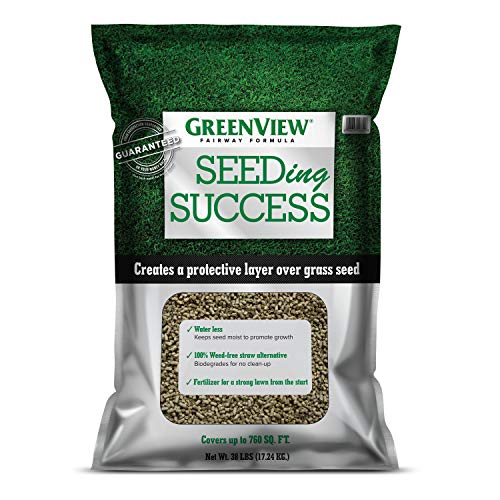
GreenView’s Seeding Success combines biodegradable mulch and starter fertilizer in a single 38-pound bag, which changes the workflow on sloped or windy patches. Rather than spreading seed, then fertilizer, then a separate mulch blanket, you get one application that holds moisture and feeds seedlings at the same time. The included tackifier (a sticking agent) keeps the mulch anchored through gusts that would normally blow plain seed off a hill.
The 38-pound bag covers about 760 square feet, which sounds modest, but the math changes when you factor in the missing mulch purchase. For most reseeding projects on tricky terrain, the all-in-one approach often beats buying the components separately.
Benefits That Matter
- Biodegradable mulch plus starter fertilizer in one bag
- Tackifier holds material in place on slopes and in wind
- Reduces the number of products needed for bare spot repair
- No cleanup required once the mulch breaks down
Where It Is Less Suited
- Coverage is lower than the analysis number alone suggests
- Heavier bag to move to the work area
- Mulch and seed application rates may not match every grass type
Quick Facts
Built With In Mind
Homeowners repairing bare patches on slopes, hillsides, or breezy open areas where loose seed and plain fertilizer tend to wash or blow away.
Not Your Match When
The Andersons Premium New Lawn Starter 20-27-5 handles larger flat-lawn installations where mulch anchoring is not a concern.
The Eco Solutions 25-5-10 lands in a different corner of the category, with 65% of its nitrogen in a slow-release granular form that feeds the lawn for up to 110 days. The 44-pound bag covers a large area and trades the high-phosphorus approach of a true starter for a long-tail feeding model. For most established lawns, that slow release is the practical benefit: one spring application carries color through the early summer without a follow-up visit.
That said, the 5% phosphorus is light for genuine seeding duty. Depending on your soil’s existing phosphorus levels, this can either be a smart match or a miss, so it earns its slot here as the maintenance-feed counterpart to the seeding-focused options above.
What Works In Its Favor
- Slow-release nitrogen feeds the lawn for up to 110 days
- 44-pound bag covers a large yard from a single purchase
- Safer around children and pets than fast-release nitrogen sources
- One spring application can carry color into early summer
Soft Spots
- Low phosphorus is not a true starter for fresh seedings
- Heaviest bag on the list, awkward to carry in a single trip
- Slower visible green-up than quick-release competitors
Who Should Grab It
Homeowners with established lawns who want one application to carry the grass through most of the season without rehandling bags in summer heat.
Look Elsewhere When
Jonathan Green Veri-Green (B0BGKRK421) 12-18-8 is the right call for any actual seeding or sodding project where phosphorus is the priority.
What To Weigh Before Choosing A Starter Fertilizer
The first decision is the N-P-K analysis, which stands for Nitrogen-Phosphorus-Potassium, the three macronutrients listed in that order on every bag. Phosphorus is the star during the establishment phase, since it drives root development in young grass. Mature lawns that are not being reseeded can usually get by with a low-phosphorus or slow-release nitrogen blend, since their root systems are already established and they need ongoing top growth and color more than new root mass.
The second decision is coverage and bag size. A 4-pound patch bag and a 44-pound maintenance bag are not interchangeable, and overbuying a 5,000-square-foot product for a 600-square-foot project just means storing fertilizer in a dry corner for months. Match the bag to the actual lawn square footage, then add a small buffer for spreader overlap and reapplication on stubborn spots.
The third decision is application method. Granular products need a calibrated drop or broadcast spreader, and the spreader setting matters more than most beginners realize: a setting that is too high causes burn streaks, and a setting that is too low wastes product without feeding the lawn. Liquid formats like Sunday’s hookup remove the calibration step but introduce pacing issues if you walk too fast or too slow across the lawn.
The fourth decision is local regulation. Some regions restrict phosphorus in lawn fertilizers to protect waterways, so a 12-18-8 or 20-27-5 product may not be available everywhere. A quick check of state or municipal rules before checkout prevents the surprise of an unsellable bag sitting in the garage.
Key Considerations Across These Picks
Mistakes Worth Dodging
The most common slip-up is reaching for a high-nitrogen maintenance blend, such as the Eco Solutions 25-5-10, at the actual seeding stage. The grass greens up fast, but the roots stay thin because phosphorus was never present in the right ratio. A second common error is skipping the soil test, which is the only way to know whether phosphorus is already abundant in the lawn, in which case a starter with 18% or 27% phosphorus can be overkill and even wasteful.
Where The Extra Money Goes
Higher-tier starters like The Andersons 20-27-5 cost more per bag because of the elevated phosphorus, added iron, and the dual-release nitrogen system. The upgrade pays off when the project is a full new-lawn installation on bare soil, where every seedling needs aggressive root support to survive its first summer. For a routine patch repair, the gentler Jonathan Green or Fertilome blends deliver similar establishment results at a noticeably lower cost.
Frequently Asked Questions
When should a starter fertilizer be applied to a new lawn?
A starter fertilizer is best applied just before or immediately after seeding, so the granules sit in the topsoil where the new roots can reach them. Watering the area lightly after application moves nutrients into the root zone without washing the seed away.
How long does starter fertilizer feed the lawn before a follow-up is needed?
Most granular starters feed for roughly 6 to 8 weeks, after which a balanced maintenance fertilizer takes over for the rest of the season. The slow-release products in this list stretch that window to several months, while traditional granular blends run their course faster.
Can starter fertilizer be used on an established lawn without seeding?
Starter fertilizer can be used on established lawns, but the high phosphorus content is often unnecessary once roots are mature, and local regulations may restrict phosphorus use outside of new-lawn projects. A regular maintenance fertilizer is usually the better fit for a lawn that is not being reseeded.
What is the difference between a starter fertilizer and a regular lawn fertilizer?
A starter fertilizer is built around higher phosphorus to drive root growth in young grass, while a regular lawn fertilizer leans on nitrogen to push blade growth and color in mature turf. The two serve different stages of the lawn’s life cycle and are not interchangeable without consequences.
Is a drop spreader or a broadcast spreader better for starter fertilizer?
A drop spreader gives more precise edge control near garden beds and walkways, while a broadcast spreader covers large open areas faster with some overlap. Either works on a starter, and the choice usually comes down to lawn shape and personal comfort with the equipment.
Closing Remarks
The right starter fertilizer depends less on the brand and more on the analysis, the bag size, and the project in front of you. Match the phosphorus level to the seeding stage, the bag weight to the square footage, and the format to the spreader already sitting in the shed, and the rest of the season tends to take care of itself.
