

Central Virginia throws a lot at a lawn. Hot, humid summers in Richmond. Mild shoulder seasons in Lynchburg. Shady lots under oaks and maples in Charlottesville. Clay-heavy soil that compacts fast. Picking seed without thinking about those conditions is how you end up with patchy turf by August.
The picks below cover the most realistic situations you face here. Cool-season blends that handle summer stress, warm-season options for full sun, quick-establishing rye for winter color, and shade-tolerant mixes for wooded lots. Each one fits a different yard profile, so start with what your lawn actually needs.
The Choices Worth Comparing

Jonathan Green Black Beauty Dense Shade Grass Seed

Jonathan Green Black Beauty Heat & Drought Resistant Grass Seed

Pennington Annual Ryegrass Grass Seed
Pennington Smart Patch Repair Mix

Pennington Bermudagrass Grass Seed

Pennington Clover & Grass Mix

Outsidepride Legacy Fine Fescue Grass Seed Mix

Scotts Kentucky 31 Grass Seed Mix
Pennington Smart Seed Northeast Mix
The Strengths Of Each Pick
Older neighborhoods in Richmond and Charlottesville come with mature tree canopies, and that’s exactly where this Black Beauty blend earns its keep. The mix targets limited sunlight, the kind you find under oaks, maples, or beside a tall privacy fence, and it pushes the seed toward filling in instead of thinning out.
For most shaded lots, germination runs 14 to 21 days, and the turf settles into a darker green than many bargain blends. Beneficial endophytes, a naturally occurring fungus that lives inside the grass and helps deter surface-feeding insects, are part of the package, which can reduce stress on the plant through the worst of summer.
Strong Points
- Built specifically for lawns with limited sun, including tree-shaded and structure-shaded areas
- Produces a darker green color that reads as fuller and healthier at a glance
- Includes endophytes for natural insect resistance
- Germinates in roughly two to three weeks under typical conditions
Points To Note
- Shade mixes grow more slowly than sun-and-heat blends, so patience matters in spring
- Heavy leaf litter left on top will smother new seedlings, so fall cleanup matters more than usual
Who It Suits Best
Homeowners with mature trees and partially shaded lawns who want turf that holds color where cheaper blends thin out.
Consider Something Else When
If your yard is mostly full sun and you battle summer heat, the Jonathan Green Black Beauty Heat & Drought Resistant Grass Seed is a better match for those open, baked conditions.
Central Virginia summers push past 90°F with regularity, and that’s where this heat-tolerant blend pulls ahead of the shade-focused Black Beauty above. The mix combines tall fescue with Texas bluegrass, two species that hold up under direct sun and limited rainfall. You may find the waxy leaf coating especially useful in July and August.
Each blade carries a thin waxy layer, similar to the skin of an apple, that slows moisture loss through evaporation. For most backyards that means the lawn stays greener longer between waterings, and you get a wider window before browning sets in during a dry stretch.
The Upside
- Stays green through summer heat up to roughly 100°F
- Waxy leaf coating reduces water loss between irrigation cycles
- Works in full sun and lightly shaded areas
- Tall fescue root depth helps with drought recovery later in the season
Honest Caveats
- Not suited to dense shade, so tree-covered lots will still struggle
- Texas bluegrass is a specialty species and may take longer to fill in than common fescue alone
Made For
Homeowners with open, sunny lawns and sloped yards that dry out fast and need a heat-tolerant cool-season option.
Where Another Pick Suits Better
For lots with mostly dappled shade, the Jonathan Green Black Beauty Dense Shade Grass Seed will out-perform this heat-focused blend under tree cover.
Ryegrass is the sprint option in the seed world, and Pennington’s annual rye is built for fast color when the calendar runs out on the rest of your lawn. In our view, this is the bag to grab in mid-October when the fescue has thinned and you want green coverage before the first frost.
You can see germination in roughly 3 to 7 days, far faster than the 14-plus day window of the Black Beauty shade blend above. The trade-off is that annual rye dies off in summer heat, so it works as a temporary cover or overseeding layer rather than a permanent lawn.
Well-Handled Touches
- Sprouts in under a week for fast fall and winter color
- Ideal for overseeding dormant warm-season lawns in southern zones
- Tolerates full sun in the 6-to-8-hour range
- Useful as a nurse crop, a quick-growing grass that shelters slower-germinating permanent seed, when establishing new lawns
Worth Noting
- Annual lifecycle means you will reseed each fall for continuous winter color
- Not a permanent lawn solution, so it pairs with a base grass, not a replacement for one
Best Suited To
Homeowners overseeding for winter color, patching thin spots fast, or using it as a temporary nurse crop while a slower blend establishes.
Not Your Match When
For a permanent year-round lawn, the Pennington Smart Seed Northeast Mix is the longer-term play compared to this temporary rye option.
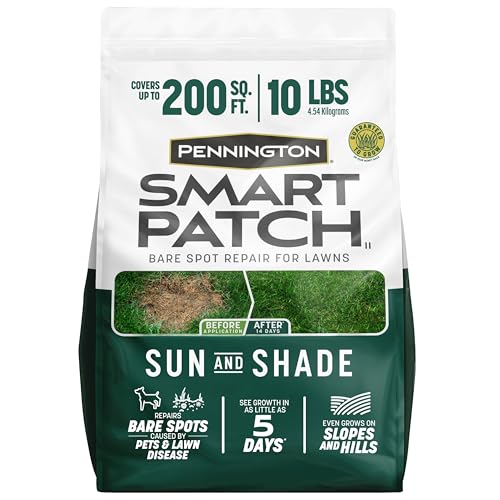
Dog runs, foot-wear paths along the fence, and shaded corners under the deck all turn bare faster than the rest of the lawn. Pennington’s Smart Patch is built for that specific job, and you may find the 10-pound bag covers a surprising number of trouble spots. The bag covers up to roughly 600 square feet at repair rates, so most yards get full coverage from a single bag.
Microbials in the mix help suppress disease while the seed establishes, which is useful in the damp stretches of late spring. You get a sun-and-shade formula that fills in alongside whatever permanent grass you already have, so patches blend instead of standing out.
Useful Highlights
- Built-in starter fertilizer feeds new seedlings through the early growth stage
- Microbials support disease resistance during establishment
- Sun-and-shade versatility for mixed-condition yards
- Works well as a dog-spot repair grass seed
Practical Considerations
- Repair mix, not a full-lawn solution, so it costs more per pound than bulk seed
- Best results require loose, prepared soil in the bare area, so raking and loosening is part of the process
Whose Shelf It Belongs On
Anyone with a mostly healthy lawn that has bare patches, pet damage, or worn traffic lanes to repair without re-seeding the whole yard.
Reach For A Different Pick When
For full-lawn overseeding, the Pennington Smart Seed Northeast Mix delivers more seed per dollar than this targeted repair bag.
Bermuda is the warm-season workhorse of the mid-Atlantic, and Pennington’s improved cold-tolerant blend pushes the northern edge of where Bermuda stays viable. For most backyards in the southern half of Central Virginia, you get aggressive spreading, deep roots, and serious wear tolerance that handles kids, dogs, and weekend soccer.
It grows low, so you mow less and bag less, and the deep root system digs into clay soils that shallow fescue struggles in. The honest read is that Bermuda goes fully dormant and brown from late fall through early spring, so it does not give you year-round color.
What It Does Well
- Aggressive self-spreading fills in damaged spots without reseeding
- Cold-tolerant varieties push the northern range into more of Virginia
- Handles heavy foot traffic and wear from play
- Low-growing habit reduces mowing and clipping volume
Trade Offs
- Goes dormant and brown in winter, so you lose color from roughly December through March
- Full sun only, so shaded portions of the yard will not establish this grass
Right Fit For
Homeowners with full-sun, high-traffic yards who want a durable warm-season lawn and accept the winter dormancy that comes with it.
Where A Sibling Pick Shines
For yards that need a year-round green appearance through winter, the Pennington Annual Ryegrass Grass Seed can be overseeded on top of this Bermuda base.
Clover-grass blends have moved from old-school to intentional, and Pennington’s Smart Seed version leans into the self-sustaining angle. The Durana white clover pulls nitrogen from the air and feeds it into the soil, so you spend less on fertilizer and the lawn essentially maintains its own nutrient cycle.
You may find this mix especially useful on slopes and hills, where traditional turf struggles to hold and erosion creeps in. The clover component stabilizes soil while the grass fills the visual gaps, and you get pollinator support as a side benefit during bloom.
What Earns Its Place
- Self-fertilizing clover reduces the need for nitrogen feeding
- Performs well on slopes and erosion-prone areas
- Lower water needs than traditional cool-season turf
- Supports pollinators during clover bloom
Smaller Limitations
- Clover flowers attract bees, so barefoot lawn use during bloom is a consideration
- Visual texture differs from a pure grass lawn, and the look is not for everyone
Who Should Grab It
Homeowners wanting a low-input lawn with built-in fertilization who are comfortable with clover as part of the turf.
Skip It When
For a traditional uniform-grass appearance, the Outsidepride Legacy Fine Fescue Grass Seed Mix delivers a more conventional lawn look.
Outsidepride’s Legacy mix is a three-species fine fescue blend, combining 20% hard fescue, 40% Chewings fescue, and 40% creeping red fescue, and it’s geared toward the fine-bladed, low-input lawn look. The OptiGrowth coating adds zinc, phosphorus, nitrogen, and kelp to the seed, which is meant to speed germination and improve seedling vigor in poor soils.
For most backyards, this is a versatile mix that handles both sun and dense shade, unlike the Bermuda option above that demands full sun. You may find the fine texture and slower growth appealing if you mow less often and prefer a softer visual underfoot.
Where It Helps
- Three-species blend handles sun, partial shade, and dense shade
- OptiGrowth coating supports germination in less-than-ideal soil
- Fine-bladed texture gives a softer, denser appearance
- Works for overseeding, new lawns, and patch repair
Room For Improvement
- Fine fescues do not hold up to heavy traffic as well as tall fescue or Bermuda
- Coated seed costs more per pound than uncoated blends
Perfect Match For
Homeowners and property managers who want a fine-textured, low-mow lawn that adapts to mixed sun-and-shade conditions across the property.
Look Elsewhere When
For heavy play areas and high-traffic lawns, the Pennington Bermudagrass Grass Seed is a tougher, more wear-resistant option.
Kentucky 31 tall fescue has been a Virginia lawn standard for decades, and Scotts builds a curated mix on top of that heritage variety. You get the durability of K31 with added species that fill in faster and push toward a greener, thicker stand than straight K31 typically produces.
The honest read is that this is a workhorse pick, not a showpiece. For most new-lawn projects and full-yard overseeding, it gives you a reliable base without the premium pricing of specialty blends, and you can adjust the rest of the lawn program around a familiar fescue foundation.
Everyday Perks
- Built on durable, time-tested Kentucky 31 tall fescue
- Curated blend aims for thicker, greener results than single-variety K31
- Heat-tolerant traits suited to Virginia summers
- Works for both new lawn installation and overseeding
A Few Limitations
- K31 has a coarser blade texture than modern tall fescue cultivars
- Color leans lighter green than some premium dark-blade blends
Who Will Love This
Homeowners starting a new lawn or overseeding a large yard who want a proven, durable tall fescue base at a practical price point.
A Better Fit Elsewhere
For darker color and finer texture, the Outsidepride Legacy Fine Fescue Grass Seed Mix offers a more refined look than this workhorse K31 base.
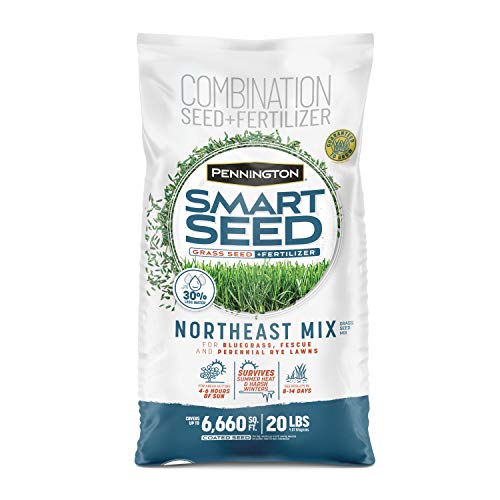
The Northeast Mix is Pennington’s regional play, a three-species blend of perennial ryegrass, Kentucky bluegrass, and tall fescue designed for areas getting 4 to 6 hours of sun. Central Virginia sits in the southern part of that zone, and you may find the mix gives you a balanced lawn that handles both cool shoulder seasons and hot summers.
Starter fertilizer comes blended in, so you skip a separate feeding pass at seeding time. The ryegrass germinates fast for early coverage, the bluegrass spreads to fill gaps, and the tall fescue anchors the deeper root system.
Where It Excels
- Three-species mix provides year-round resilience and faster fill-in
- Built-in starter fertilizer feeds seedlings through establishment
- Handles the 4-to-6-hour sun range common in partially shaded yards
- Survives both summer heat and winter cold in the region
Points To Note
- Needs at least 4 hours of direct sun, so deep shade lawns will still struggle
- 20-pound bag is heavy to handle and may be more than small yards need
Who Should Grab It
Homeowners with mixed sun-and-shade yards who want a balanced, regionally formulated blend with built-in starter feed for a new lawn or full overseed.
Where Another Pick Suits Better
For yards that sit in deep shade most of the day, the Jonathan Green Black Beauty Dense Shade Grass Seed outperforms this Northeast mix under low light.
What Matters Most When Choosing Grass Seed For Central Virginia
Match The Seed To Your Sun Exposure
The single biggest factor in seed success here is honest sun assessment. Count the hours of direct sunlight on a typical June day, not the brightest week in May. Tall fescue blends handle 4-plus hours; Bermuda wants full sun all day; fine fescues handle partial and dense shade. Picking the wrong category is the most common reason new seed fails by August.
Cool-Season Versus Warm-Season Trade-Offs
Central Virginia sits in the transition zone, the strip where both cool-season and warm-season grasses survive but neither thrives year-round. Cool-season fescues stay green through winter but struggle in July heat. Warm-season Bermuda survives the heat but goes brown in winter. Ryegrass overseeding bridges that winter gap if color matters to you through the cold months.
Soil Prep And Timing
Clay-heavy Central Virginia soil needs loosening and organic matter before seeding pays off. Fall seeding, from mid-September through mid-October, gives cool-season grass the cool, moist stretch it needs to establish before summer stress arrives. Spring seeding works but means watering through July, and most homeowners let that slip.
Realistic Traffic And Maintenance
Be honest about how you use the lawn. Kids, dogs, and weekend entertaining push you toward wear-tolerant Bermuda or tall fescue blends. A low-traffic showcase lawn opens up fine fescue and clover-grass mixes that look better but recover slower from damage.
Key Considerations Across These Picks
Common Slip Ups Shoppers Hit
Buying seed based on the picture of the bag rather than the species list is a fast way to end up with the wrong grass. Read the label for the actual cultivars, not the marketing language. Another trap is overseeding at the wrong time of year, spring seedings of cool-season grass often stall under summer stress, while fall seedings establish into strong root systems before the next heat wave.
Where The Extra Money Goes
Premium blends with coating technology, microbe packages, and built-in fertilizer cost more per pound, and the upgrade pays off in faster establishment and better survival rates on poor soils. For a small patch repair, the premium rarely matters. For a full-lawn seeding on clay or compacted ground, the coating and starter feed can be the difference between a full stand and a half-empty yard by midsummer.
Frequently Asked Questions
When Is The Best Time To Seed A Lawn In Central Virginia?
Mid-September through mid-October gives cool-season grass the cool, moist conditions it needs to establish strong roots before summer stress returns. Spring seeding works in a pinch but requires careful watering through July.
Can I Mix Warm-Season And Cool-Season Seed In The Same Yard?
You can overseed Bermuda with annual rye in fall for winter color, but you should not blend Bermuda and fescue seed at the same time. The two grasses compete aggressively and the result is uneven coverage and color mismatches across the lawn.
How Long Does New Grass Seed Take To Germinate Here?
Ryegrass sprouts in 3 to 7 days, while tall fescue and Kentucky bluegrass take 14 to 21 days under good moisture. Bermuda is slower, often 14 to 28 days, and the seedbed must stay consistently damp through that window.
Do I Need To Test My Soil Before Seeding?
A basic soil test through your local Virginia Cooperative Extension office tells you the pH and nutrient levels before you spend money on seed. Most Central Virginia clay soils run acidic, and lime adjustments before seeding make a measurable difference in establishment success.
How Much Seed Do I Need For A Typical Yard?
Most cool-season blends call for 6 to 8 pounds per 1,000 square feet for new lawns and half that rate for overseeding. Measure your lawn accurately, since under-seeding leaves thin stands and over-seeding wastes money and creates crowding problems.
Final Verdict
The right grass seed for your yard comes down to honest sun assessment, traffic expectations, and how much winter dormancy you can tolerate. Pick the species that matches your conditions, seed in the fall window when possible, and prepare the soil before the seed goes down. The lawn you want by next summer starts with the decision you make this season.
