

Sandy soil punishes lawns along Michigan lakeshores, inland sand ridges, and new construction lots. Water drains before roots drink, and the wrong seed mix germinates fast, then fades by August. The right cool-season blend digs deep, tolerates drought, and crowds out weeds on lean ground. This roundup covers ten grass seed options built for exactly those conditions, from dense shade under oaks to sun-baked front lawns and quick patch repairs.
A Quick View Of The Lineup

Jonathan Green Black Beauty Dense Shade Grass Seed (1 lb)

Jonathan Green Black Beauty Heat & Drought Resistant Grass Seed (3 lb)

Jonathan Green Black Beauty Ultra Grass Seed (7 lb)

Jonathan Green Black Beauty Tall Fescue Grass Seed Blend (15 lb)

Jonathan Green Black Beauty Tall Fescue Grass Seed Blend (50 lb)

Scotts Turf Builder Grass Seed Sunny Mix (2.4 lbs)
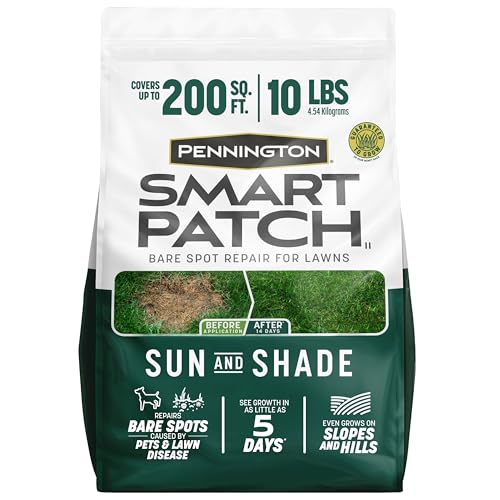
Pennington Smart Patch Grass Seed Mix (10 lb)

Pennington Bermudagrass Grass Seed (5 lb)

Outsidepride Legacy Fine Fescue Grass Seed Mix (5 lbs)

Outsidepride PC2.0 Creeping Bent Grass Seed (1 lb)
More Details On Our Top Picks
Shaded corners under mature maples or along north-facing foundations defeat most sandy-soil seed blends before they thicken. Jonathan Green’s Dense Shade mix is engineered for that exact condition, blending cool-season varieties that photosynthesize on limited light. Sandy soil under trees tends to stay dry, so pairing this mix with steady watering during the first three weeks helps the seed take hold.
Compared to the broader Ultra blend below, this one trades some sun tolerance for stronger performance where sunlight is filtered. You may find establishment slightly slower in deep shade, but the resulting turf holds its color through the season.
Everyday Advantages
- Formulated for areas with limited sun penetration, like spots under large trees or beside tall structures
- Produces dense, dark-green turf that improves curb appeal in tough-to-grow patches
- Germinates in roughly 14 to 21 days, a reasonable window for a shade mix
- Contains beneficial endophytes (a natural fungus that lives inside the grass and helps deter insects) for added resilience
Things To Consider
- One pound covers a small area, so larger shaded lawns will need multiple bags
- Germination pace can stretch longer in dense shade with cool spring soil
Who Should Grab It
Homeowners with tree-heavy lots where filtered light dominates and fine-textured cool-season turf is the goal.
Look Elsewhere When
The Jonathan Green Black Beauty Tall Fescue Grass Seed Blend (15 lb) suits open, sandy yards that get full sun far better than this shade-focused bag.
Michigan summers push sandy lots hard, and standard fescues brown out by mid-July. This heat-tolerant mix combines tall fescue with Texas bluegrass, rated to handle temperatures up to 100°F. A waxy leaf coating helps the plant hold moisture, much like a fruit skin slowing evaporation, which matters in fast-draining sand.
Where the Dense Shade pick above targets low-light areas, this one is built for the opposite: open, sun-baked front lawns. The trade-off shows up in deep shade, where this mix thins out.
The Case For It
- Tolerates heat up to 100°F, useful during Michigan heat waves
- Waxy leaf coating reduces moisture loss in sandy, fast-draining soil
- Cool-season blend (tall fescue plus Texas bluegrass) that holds color longer than standard fescue
- Performs well in full sun to lightly shaded conditions
Worth Noting
- Texas bluegrass can struggle in the coldest Upper Peninsula microclimates
- Not the strongest choice for heavily shaded lawns; the Dense Shade mix handles that better
- Owners commonly report needing consistent watering during the first month to get full establishment
Made For
Lower Michigan homeowners with sandy, full-sun lawns who want a cool-season look without constant irrigation.
Consider Something Else When
Shaded sandy spots call for the Jonathan Green Black Beauty Dense Shade Grass Seed (1 lb), which is built for filtered light rather than blazing sun.
Most Michigan lawns are not a single condition. A maple here, a sunny patio there, a sandy stretch by the driveway. Black Beauty Ultra blends tall fescues, Kentucky bluegrass, and perennial rye to cover that patchwork. On sandy soil the multi-species approach gives you a hedge, because if one species struggles in a microclimate, the others fill in.
This is the bag to grab when renovating a full yard rather than patching a corner. It establishes new turf and repairs bare spots from the same bag.
Where It Delivers
- Multi-species blend adapts to varied sun, shade, and soil pockets across one yard
- Quick germination speeds up both new lawns and patch repairs
- Produces a dense, dark-green turf that holds up to regular foot traffic
- Seven-pound bag covers a meaningful area for a mid-size Michigan lot
Trade Offs
- Not specialized, so it won’t outperform the shade-specific or drought-specific blends in their niche
- Kentucky bluegrass component needs more water to germinate than pure fescue
Feature Snapshot
Best Suited To
Homeowners starting a new lawn or renovating a tired one with mixed sun and sandy patches throughout the property.
Reach For A Different Pick When
Shaded sandy corners benefit more from the Outsidepride Legacy Fine Fescue Grass Seed Mix, which is designed specifically for low-light areas with lean soil.
Pure tall fescue has a quiet superpower on sandy Michigan ground: roots that chase moisture several feet below the surface. Black Beauty Original leans into that strength, and the waxy leaf coating slows moisture loss on top. For homeowners tired of watching seed germinate then wither, a single-species fescue blend removes the guesswork.
It doubles as a sunny and shady lawn seed, which removes the need to buy separate bags for different zones. Fifteen pounds covers a serious slice of a typical lot.
Practical Pluses
- 100% turf-type tall fescue, no filler species, so the lawn looks uniform after establishment
- Roots reach up to four feet deep, which means real drought tolerance on sandy soil
- Performs in both full sun and shaded areas, simplifying the buying decision
- Uniform leaf texture holds up well to regular mowing without shredding
Points To Keep In Mind
- Best planting window is mid-August through mid-October, so summer shoppers may need to wait
- Coarse blade texture compared to fine fescue or Kentucky bluegrass
- Sandy soil still benefits from added compost or topsoil to improve seedling survival
Key Product Details
Whose Shelf It Belongs On
Homeowners with larger sandy lawns who want a low-drama, deep-rooted fescue that survives dry summers without constant watering.
Swap It Out When
Full-sun yards with heavy use may get better wear tolerance from the Pennington Bermudagrass Grass Seed, which spreads aggressively and recovers fast.
Fifty pounds of seed is not a casual purchase, but for new-build lots, multi-acre yards, or full-property renovations it is the right scale. The formulation matches the 15-pound bag reviewed above, just sized for serious coverage. Sandy soil needs higher seeding rates than loam, and bulk bags keep the per-pound cost down while ensuring the whole lawn comes from one lot.
Same tall fescue, same waxy coating, same deep root potential, just more of it. The honest read is that this is the workhorse option for big sandy yards.
Why It Works Well
- Bulk 50-pound bag suits large sandy lawns, new construction, or full renovations
- Same drought-tolerant 100% tall fescue as the smaller bag in this lineup
- Deep roots handle Michigan’s wet springs and dry summers on lean soil
- Waxy leaf coating helps the lawn hold moisture between rain cycles
- Versatile in both sun and shade, simplifying the seeding plan
Honest Caveats
- Heavy to handle and store; a garage or shed is needed
- More seed than most small-lot homeowners will use in a single season
Right Fit For
Property owners with large sandy lawns, new builds, or rural lots where a single bag is not enough to finish the job.
Not Your Match When
Small urban yards under 2,000 square feet are better served by the Jonathan Green Black Beauty Ultra Grass Seed (7 lb), which avoids the storage hassle.
Scotts redesigned its Sunny Mix around a “Root-Building Nutrition” package, a blend of ingredients aimed at pushing deeper root growth during the critical establishment phase. On sandy soil, where seedlings can dry out before they anchor, that early root push matters. The mix is built for direct sun and tolerates light shade, covering most open Michigan yards.
Unlike the fescue-heavy Jonathan Green blends above, Scotts leans on a different cool-season recipe that includes fertilizer-style amendments baked into the seed coat. The result is a slightly easier first month for new gardeners.
A Few Highlights
- Root-Building Nutrition supports early root development in fast-draining sandy soil
- Formulated for full sun with some tolerance for light shade
- Medium to high drought resistance for a cool-season mix
- Coated seed is easier to spread evenly with a standard broadcast spreader
Soft Spots
- Smaller bag than most Jonathan Green options, so larger yards need multiple purchases
- Full-sun focus means shaded corners will struggle compared to a shade-specific mix
Perfect Match For
Beginner-friendly homeowners with small, sunny sandy lawns who want a straightforward seed-and-go product with built-in nutrition.
Skip It When
Shaded lots and tree-covered yards need the Jonathan Green Black Beauty Dense Shade Grass Seed (1 lb), which is built for low-light conditions.
Pennington’s Smart Patch is a different animal. Rather than seed only, it bundles grass seed with starter fertilizer and added microbials (beneficial microorganisms that support root health and disease resistance) in one bag. For bare patches on sandy ground, that all-in-one approach eliminates the usual trip to the store for a separate starter fertilizer.
It works in both sun and partial shade, so the same bag handles front-yard dog spots and side-yard bare strips. Coverage runs to about 600 square feet, which is a meaningful patch zone.
Standout Benefits
- Includes starter fertilizer and microbials in one bag, so no separate amendments are needed
- Works in both sunny and moderately shaded patches
- Well-suited to dog spot repair and small lawn renovation projects
- Ten-pound bag covers up to 600 square feet of repair area
Practical Considerations
- Not intended for full-lawn overseeding, so larger projects need a different bag
- Microbial content has a shelf life, so older bags may show reduced effectiveness
Feature Card
Who It Suits Best
Homeowners dealing with scattered bare patches, pet damage, or thin areas on a sandy lawn who want a single product instead of multiple bags.
Where Another Pick Suits Better
Full-lawn renovation on sandy soil is better handled by the Jonathan Green Black Beauty Tall Fescue Grass Seed Blend (15 lb), which is sized and formulated for that scale.
Bermuda is a warm-season grass, which sounds wrong for Michigan until you notice “improved cold-tolerant varieties” on the label. In southern Michigan, particularly along the Indiana border and in lakeside microclimates, Bermuda survives winters that would have killed older varieties. It spreads aggressively, repairs fast, and handles sandy, well-drained soil with ease.
Trade-off: Bermuda goes dormant and turns brown in winter. For homeowners who want a green year-round lawn, a cool-season fescue blend is the better fit.
Features That Help
- Aggressively self-spreading growth pattern fills in bare spots without reseeding
- Cold-tolerant Bermuda varieties extend usability into southern Michigan
- Wear-resistant turf holds up to kids, pets, and active yards
- Deep root system helps it thrive in sandy, fast-draining soil
- Low-growing blend produces fewer grass clippings during the season
Where It May Fall Short
- Goes dormant and browns out during Michigan winters
- Less cold-hardy than fescue in northern Lower Peninsula and Upper Peninsula zones
- Coarser leaf texture than fine fescue or Kentucky bluegrass
Built With In Mind
Southern Michigan homeowners with sandy soil who want a tough, wear-resistant lawn and don’t mind winter dormancy.
A Better Fit Elsewhere
Yards in colder Michigan zones stay greener year-round with the Jonathan Green Black Beauty Tall Fescue Grass Seed Blend (15 lb), a cool-season option that avoids dormancy.
Fine fescues have a reputation for looking delicate, but in lean, sandy soil they are some of the toughest cool-season options available. Outsidepride’s Legacy Mix combines Hard, Chewings, and Creeping Red fescue, with each species bringing something different to the blend. The OptiGrowth coating adds zinc, phosphorus, nitrogen, and kelp, giving seedlings a nutrient boost during the vulnerable establishment window.
Where the Jonathan Green Dense Shade mix uses one approach, this one layers three fine fescue species for a more nuanced performance in mixed light and poor-soil conditions.
The Practical Payoff
- Three-species fine fescue blend (Hard, Chewings, Creeping Red) creates resilient, fine-textured turf
- OptiGrowth coating improves seed-to-soil contact and germination reliability
- Performs in both full sun and dense shade
- Tolerates drought, heavy foot traffic, and poor soil conditions
- Coating includes essential nutrients and kelp for early seedling vigor
Small Caveats
- Fine fescues handle lower traffic than tall fescue or Bermuda
- Coated seed costs more per pound than uncoated blends
Quick Facts
Who Will Love This
Homeowners and property managers with mixed-light sandy lots who want a fine-textured, low-maintenance lawn with strong shade and drought tolerance.
Another Choice May Suit
Heavily trafficked family lawns may hold up better with the Jonathan Green Black Beauty Heat & Drought Resistant Grass Seed (3 lb), which has stronger wear tolerance.
Penncross creeping bentgrass is the stuff of putting greens, and Outsidepride’s PC2.0 version brings that manicured look to a home lawn if you are willing to put in the work. It forms a dense, upright turf that holds up under foot traffic and competes aggressively against Poa annua, a common lawn weed. On sandy soil, it establishes well as long as irrigation is steady.
This is a specialty pick, not an everyday lawn seed. Homeowners chasing a fairway look and ready to mow low and often will appreciate it; everyone else should look at the fescue options above.
Notable Gains
- Golf-course-grade bentgrass with dense, upright growth habit
- Strong wear tolerance for high-traffic home lawns
- Competes effectively against Poa annua, a common lawn invader
- Adapts to varied conditions for a specialty grass
Less Ideal Details
- Requires frequent low mowing to look its best, which means more maintenance time
- Higher maintenance needs than typical fescue-based home lawn mixes
- One-pound bag covers a small area, so larger projects need significant quantities
Best Suited To
Enthusiasts and homeowners who want a putting-green-quality lawn and are prepared to mow frequently and manage thatch (the layer of dead grass that builds up between soil and living blades).
Where A Sibling Pick Shines
Most Michigan homeowners get a more practical lawn with the Outsidepride Legacy Fine Fescue Grass Seed Mix, which trades the putting-green look for far less maintenance.
What To Weigh Before Buying Grass Seeds For Michigan Sandy Soil
Match The Seed To Your Light Conditions
Full sun, partial shade, and dense shade each call for different species. A blend that thrives under an oak canopy will struggle in an open front yard, and vice versa. Walk the lawn at midday and again in late afternoon to map which areas get direct sun, filtered light, or deep shade. Pick a blend that matches the dominant condition, or a multi-species mix if your yard mixes all three.
Prioritize Deep Root Systems For Sandy Ground
Sandy soil drains fast, which sounds like a benefit until you realize it leaches water below the root zone of shallow-rooted grasses. Tall fescue, with roots reaching several feet, handles that challenge naturally. Fine fescue species and Bermuda also perform well on sand. Shallow-rooted Kentucky bluegrass, by contrast, struggles without supplemental irrigation on truly sandy sites.
Mind The Planting Window
Cool-season grasses in Michigan establish best when sown in mid-August through mid-October, while the ground is still warm but the air is cooling. A spring window from mid-March through mid-May works as a second choice. Summer seeding on sandy soil is risky because heat and dry conditions stress new seedlings, and dormant winter seeding often fails because seed sits in cold ground without germinating.
Calculate Coverage Before You Buy
Seed bags list coverage in square feet, and sandy soil typically needs higher seeding rates than loam to reach full establishment. Measure your lawn roughly, then add 10 to 15 percent to account for edges, overseeding thin areas, and any rework. A 15-pound bag is a common sweet spot for a typical suburban Michigan lot, while larger rural yards benefit from bulk 50-pound bags.
Key Considerations Across These Picks
Common Slip Ups When Seeding Sandy Lawns
The most common mistake is underestimating how fast sandy soil dries out. Even drought-tolerant blends need consistent moisture during the first three to four weeks, with light watering once or twice daily until seedlings anchor. Skipping that step leads to patchy germination and wasted seed. A second slip is applying starter fertilizer at the wrong rate. Coated seed products like Pennington Smart Patch or Outsidepride Legacy already include nutrients, so adding more on top can burn young seedlings.
Where The Higher Tier Actually Pays Off
Premium blends cost more per pound, but the upgrade usually shows up in three places: germination reliability, drought tolerance, and endophyte content (a natural fungus inside the grass that helps deter insects and improves stress tolerance). Jonathan Green’s waxy-leaf fescue and Outsidepride’s OptiGrowth-coated fine fescue both deliver stronger establishment on sandy ground than budget blends. For homeowners with large sandy lawns or tough conditions, that premium translates into fewer reseeding cycles and a thicker lawn in year one.
Frequently Asked Questions
When is the best time to seed a Michigan lawn on sandy soil?
The prime window is mid-August through mid-October, when soil temperatures are still warm enough for germination but the air is cooling. A secondary window runs mid-March through mid-May, though spring seed faces more weed competition.
How often should I water new grass seed on sandy ground?
Sandy soil drains quickly, so light watering once or twice daily for the first three to four weeks keeps the top inch moist without drowning seedlings. After establishment, taper to deeper, less frequent watering to encourage roots to chase moisture downward.
Can I mix different grass seed blends together?
Combining two compatible blends is possible, but most homeowners get cleaner results by picking one well-matched product. Mixing tall fescue with fine fescue typically works because both are cool-season species with similar maintenance needs.
Will Kentucky bluegrass grow on sandy Michigan soil?
Kentucky bluegrass can grow on sand, but it needs more irrigation than tall fescue or fine fescue to stay green through summer. On truly lean sandy sites, a fescue-dominant blend is usually the lower-maintenance choice.
How long does grass seed take to germinate on sandy soil?
Most cool-season blends germinate in 7 to 21 days, with ryegrass at the fast end and Kentucky bluegrass at the slow end. Sandy soil warms quickly in spring, which speeds germination, but it also dries out fast, so consistent moisture is critical during that window.
Closing Remarks
Sandy Michigan soil rewards grass seed that digs deep, holds moisture, and tolerates the lean conditions. Tall fescue and fine fescue blends lead the pack for most yards, while Bermuda works in the warmest corners and specialty bentgrass serves golf-green ambitions. Match the seed to your light, soil, and maintenance reality, and water consistently through establishment. The right choice this fall sets up a thicker, greener lawn for every season that follows.
