

Picking the right pasture seed comes down to what you raise, where you live, and how much rain your land actually sees. A cool-season mix thrives in the Northeast, while a warm-season blend like Bermudagrass pulls its weight across the South. Endophyte-free formulas matter for horses, while dryland mixes save struggling acreage in the Plains and Mountain West.
This list breaks down ten solid options across climates, livestock types, and acreage goals. You’ll find cool-season staples, warm-season heavy hitters, legume-rich blends, and dryland specialists, with honest notes on trade-offs and fit.
The Lineup, Simplified

Jonathan Green Pasture Grass Mixture 25 lb

Jonathan Green Blue Panther Bermudagrass Seed 4 lb

Jonathan Green Black Beauty Ultra Grass Seed 25 lb

Outsidepride Perennial Alfalfa Seeds 5 lb

X-Seed Land Over-Seeder Pasture Mix 25 lb

O.M. Scott & Sons Tall Fescue Blend 8 lb

Seeds2Go Climax Timothy Grass 1 lb

X-Seed Dry-Land Forage Mix 25 lb

Barenbrug Pasture Seed 25 lb (23094)
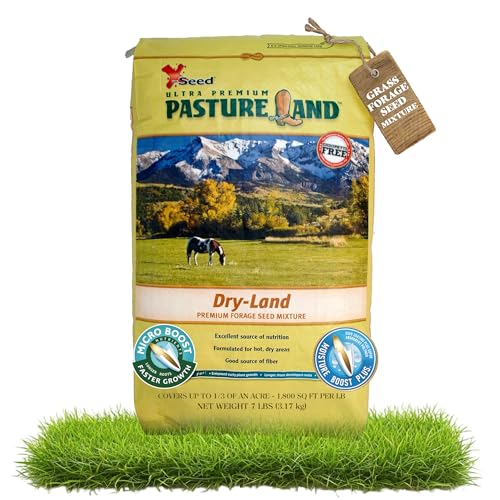
X-Seed Dry-Land Forage Mix 7 lb
More Details On Our Top Picks
A solid starter bag for a small farm laying down its first cool-season pasture. Jonathan Green’s mix leans on elite forage grasses, the kind bred for digestibility and palatability, so horses, cattle, and sheep tend to graze it willingly. The 25-pound bag covers a meaningful slice of acreage without becoming a back-breaking project to spread.
For most paddock setups in the Northeast, Mid-Atlantic, and upper Midwest, the cool-season profile lines up well with the regional climate. It works in full sun and tolerates partial shade, which matters when older fence lines cast long shadows. Endophyte-free grasses reduce the risk of the fescue toxicosis (a livestock illness linked to a fungal organism in some grass) that worries horse owners with broodmares.
Points In Its Favor
- Endophyte-free formula, safer for horses and breeding stock
- Cool-season blend handles full sun to partial shade
- Forage profile designed for easy livestock digestion
- 25-pound bag fits small-to-medium pasture projects
- Suitable for horses, cattle, sheep, and mixed herds
Worth Noting
- Cool-season blend struggles in southern heat and long summers
- Lighter seeding rate means patience is required during establishment
Key Specs
Right Fit For
Small-farm owners in northern climates raising horses, cattle, or sheep on a few acres of mixed-sun paddocks.
Look Elsewhere When
Pastures below the transition zone heat up fast, so the X-Seed Dry-Land Forage Mix handles southern summers more reliably.
Southern and transition-zone yards get a workout from heat, humidity, and heavy summer foot traffic. Blue Panther is Jonathan Green’s Bermudagrass answer to all three. The aggressive root system pushes deep quickly, knitting together a tough turf that shrugs off the punishing sun where cool-season blends simply bake out.
Pasture use is a stretch here; this seed is engineered as lawn-grade Bermudagrass, not a grazing blend. It works well in a large yard, a barn apron, or anywhere livestock cross a grassy lane on the way to water. The 4-pound bag is small enough to handle solo but enough to cover a few thousand square feet at overseeding rates.
The Good Stuff
- Warm-season Bermudagrass bred for southern climates
- Aggressive vertical and lateral root growth for fast fill-in
- Durable under heat, sun, and heavy foot traffic
- Compact 4-pound bag for smaller lawn projects
Points To Keep In Mind
- Lawn formulation, not designed as primary grazing forage
- Goes dormant and browns during cool winter months
- Only suits southern and lower transition-zone regions
Best Suited To
Homeowners in the Deep South and transition zone who want a tough, heat-loving lawn for high-traffic yard areas.
Reach For A Different Pick When
Genuine livestock forage is the goal, so the Barenbrug Pasture Seed handles paddocks with heavy grazing pressure.
Black Beauty Ultra leans on tall fescues and dark-green elite varieties to produce a lawn that looks as good as it holds up. The deep root system is the real story: it reaches into moisture reserves further down the soil profile, keeping turf green through dry stretches that wipe out shallower blends. It also germinates quickly, which is a relief when staring at a bare patch for weeks on end.
For homeowners seeding a new yard or filling in damaged sections, the 25-pound bag is a sensible mid-size buy. The mix tolerates a wide range of conditions, including partial shade, and it produces that rich, dark color homeowners associate with magazine-cover turf. Pasture managers with a small holding paddock can use it, though it isn’t a dedicated grazing blend like the Barenbrug or X-Seed options further down.
Notable Gains
- Fast germination for quick establishment and patch repair
- Dark-green tall fescue blend with deep roots
- Performs well in both full sun and partial shade
- Drought tolerance through deep root access
Honest Caveats
- Optimized for lawn use rather than rotational grazing
- Cool-season profile fades in southern heat
- Higher seed rate required for full coverage of new yards
Feature Snapshot
Who It Suits Best
Homeowners establishing a new northern lawn or repairing widespread thin spots in an existing tall fescue yard.
Not Your Match When
Heavy livestock grazing is the priority, so the X-Seed Land Over-Seeder Pasture Mix is built specifically for that workload.
Alfalfa brings something grass can’t: protein. Outsidepride’s Vernal alfalfa is a classic winter-hardy variety that’s been in commercial hay fields for decades, and the nitrocoated, inoculated seed comes ready to fix nitrogen in the soil. That last part matters: the coating (a fine layer of nutrients and beneficial bacteria) helps young seedlings establish faster and pulls atmospheric nitrogen into the root zone, enriching the stand over time.
For a hay operation or a pasture manager looking to lift protein levels in a grass stand, this is a sensible add-in. The 5-pound bag is sized for smaller plots, blending into existing pasture or starting a dedicated hay patch. Bloat (a dangerous gas buildup in the rumen) is the real watch-out with alfalfa, so cattle and sheep should be managed carefully during lush growth windows.
Real Benefits
- High-protein forage boosts hay and grazing nutrition
- Nitrocoated and inoculated for faster establishment
- Winter-hardy Vernal variety for northern climates
- Perennial stand returns for multiple seasons
- Fixes nitrogen to improve soil health over time
Some Limits To Know
- Bloat risk in cattle and sheep during lush growth periods
- Doesn’t suit poorly drained or acidic soils
- Stand longevity depends on rotation and cutting schedule
Quick Facts
Made For
Hay producers and pasture managers in northern states looking to lift protein content and enrich soil fertility.
Swap It Out When
Grass-only grazing is the goal, so the Jonathan Green Pasture Grass Mixture delivers solid cool-season forage without the management demands of a legume.
Older pastures tend to thin out, and full renovation is expensive. X-Seed’s Land Over-Seeder is built for the middle path: reviving tired paddocks without starting from scratch. The Micro-Boost nutrient package (a starter fertilizer blend coating the seed) gives seedlings a head start, while the mix itself combines intermediate ryegrass, orchardgrass, annual ryegrass, and clover for layered ground coverage.
Across cool and warm climates in central and northern regions, this blend holds up in full sun and dense shade alike. The endophyte-free label keeps horse managers comfortable, and the species mix keeps the stand productive across most of the growing season. For most established paddocks that need a refresh, this 25-pound bag spreads easily over a few acres.
Reasons It Performs
- Micro-Boost nutrients improve germination and root depth
- Endophyte-free formula safe for horses and breeding stock
- Multi-species blend handles sun, shade, and varied soils
- Includes clover for natural nitrogen contribution
- 25-pound bag suits multi-acre overseeding projects
Potential Drawbacks
- Annual ryegrass component requires reseeding for permanent stand
- Not formulated for hot, arid western climates
Feature Card
Who Will Love This
Pasture managers across central and northern states reviving worn paddocks with mixed livestock and partial shade.
A Better Fit Elsewhere
Dry western acreage needs a different approach, so the X-Seed Dry-Land Forage Mix handles arid conditions more reliably.
O.M. Scott & Sons brings more than a century and a half of lawn pedigree to a bag homeowners can actually use without a turf science degree. The tall fescue blend leans on natural ingredients, no added synthetic coatings, which appeals to anyone watching what goes onto a yard where kids and pets play. The 8-pound size lands in a comfortable middle ground for typical suburban lots.
For curb-appeal-focused reseeding or patching a tired front yard, this blend produces a reliable, deep-green turf. It’s not a pasture mix, so the livestock angle is off the table, but for a homeowner who wants a tidy lawn without complexity, the brand’s heritage and straightforward formulation make this an easy recommendation.
Positive Takeaways
- Tall fescue blend for durable cool-season turf
- Natural ingredients with no synthetic coatings
- 8-pound bag sized for typical home reseeding
- Backed by a long-established lawn care brand
Where It Is Less Suited
- Lawn formulation, not intended for livestock grazing
- Cool-season grass struggles through long southern summers
Perfect Match For
DIY homeowners in northern and transition-zone neighborhoods aiming for a clean, deep-green lawn with simple inputs.
Consider Something Else When
A working pasture is the goal, so the Jonathan Green Pasture Grass Mixture is bred for grazing from the ground up.
Timothy grass has a long history in horse hay, and Climax is one of the most winter-hardy varieties around. The bunchgrass (a clumping growth habit rather than spreading rhizomes) tolerates frost heaving (soil movement caused by repeated freeze-thaw cycles) better than most cool-season forages, which is why it’s a staple in the upper Northeast, the Pacific Northwest, and parts of the Midwest.
A 1-pound bag suits a small plot or a blend into an existing cool-season pasture. Timothy is most productive in its first cut of the season, so hay producers who want a high-quality first cutting appreciate the species. It’s not a complete pasture solution on its own, but it pairs well with legumes like the Outsidepride alfalfa in pick 4.
What It Does Well
- Winter-hardy variety for cold northern climates
- Classic horse hay species with strong palatability
- Tolerates frost heaving better than many cool-season grasses
- Compact 1-pound bag for small plots or blending
A Few Limitations
- Single-species seed, not a complete pasture blend
- Productivity drops sharply in hot, dry summers
- Limited bag size means it suits small acreage only
Built With In Mind
Small-acreage hay growers in cold northern regions producing horse-quality forage or supplementing an existing pasture mix.
Skip It When
Large-scale pasture renovation is the plan, so the X-Seed Land Over-Seeder Pasture Mix offers a multi-species approach in a bigger bag.
Western rangelands and high-elevation pastures don’t play by cool-season rules. X-Seed’s Dry-Land Forage Mix is engineered for exactly those conditions, with a blend of meadow brome, slender wheatgrass, forage tall fescue, and Paiute orchardgrass selected to handle low moisture and thin air up to 8,000 feet. Micro-Boost nutrient coating helps seedlings push through tough establishment.
The endophyte-free formula keeps livestock safe across cattle, horses, and sheep, and the multi-species approach gives the stand resilience if one component struggles in a given year. For anyone in the Intermountain West, the high plains, or mountain valleys struggling to keep forage alive through July and August, this is one of the more dependable dryland options on the market.
Advantages To Know
- Formulated for hot, dry climates up to 8,000 feet elevation
- Micro-Boost nutrients improve germination in tough soils
- Endophyte-free blend safe for cattle, horses, and sheep
- Multi-species mix delivers drought resilience
- 25-pound bag covers meaningful acreage
Trade-Offs To Consider
- Cool, wet climates will waste this specialized blend
- Establishment may require irrigation in the driest regions
Whose Shelf It Belongs On
Ranchers and pasture managers in the Intermountain West, high plains, and mountain regions battling arid summers and thin soils.
Where Another Pick Suits Better
Humid, cool-season country rewards a different approach, so the X-Seed Land Over-Seeder Pasture Mix in pick 5 thrives where moisture is plentiful.
Barenbrug has spent decades breeding forage grasses for serious commercial pasture systems, and the 23094 mix reflects that background. The blend is built for high traffic and grazing pressure, the kind that turns most pasture mixes into muddy sacrifice areas by midsummer. Highly digestible fiber keeps forage nutrition strong, and rapid establishment helps new stands fill in before weeds take over.
Adapted to temperate regions of the U.S., this seed lines up with the transition zone and northern pasture belt. The 25-pound bag covers a meaningful paddock and the formula is safe and palatable for horses plus all classes of livestock. For a working farm where paddocks take real punishment, this is a sturdy pick.
Notable Upsides
- Handles high traffic and intensive grazing pressure
- Highly digestible fiber for strong livestock nutrition
- Rapid establishment beats back weed competition
- Safe and palatable across all livestock classes
Where It May Fall Short
- Not specialized for arid or southern subtropical climates
- Performance drops if not rotationally grazed on a sensible schedule
Who Should Grab It
Pasture managers in temperate U.S. regions running rotational grazing systems with horses, cattle, or mixed livestock.
Another Choice May Suit
Arid western operations need a drought-tuned blend, so the X-Seed Dry-Land Forage Mix handles those punishing summers more reliably.
The smaller sibling of the 25-pound dryland pick earlier in the list, this 7-pound bag brings the same high-elevation, drought-tuned blend down to a manageable size. For small acreage owners in the Mountain West or high plains, buying a full 25-pound bag is overkill, and a 7-pounder covers a quarter-acre or so without wasting seed in the shed.
The Micro-Boost nutrient coating still helps seedlings establish, and the endophyte-free formula keeps livestock safe. It carries the same tall fescue, orchard grass, and ryegrass species as the larger bag, just in a quantity that fits smaller operations. Same blend, smaller footprint.
What Stands Out
- Smaller 7-pound bag sized for small acreage
- Same drought-tuned blend as the larger 25-pound version
- Micro-Boost nutrients support tough establishment
- Endophyte-free formula for safe livestock grazing
Things To Weigh
- Limited bag size means a poor fit for larger ranches
- Specialty blend underperforms in humid cool-season regions
The Right Fit
Small-acreage owners in arid western regions who need dryland forage without committing to a full 25-pound bag.
Wrong Turns To Avoid In Sizing
Larger operations should size up to the 25-pound X-Seed Dry-Land Forage Mix, since spreading multiple small bags becomes costly fast.
Picking the Right Pasture Seed for Your Land
Choosing grass seeds for pasture works best when you start with three honest questions: what livestock will graze it, what climate zone the land sits in, and what kind of soil and sun exposure the paddock has. A cool-season mix in the South burns out by July, and a Bermudagrass lawn seed in a northern paddock gives up by October. Matching seed to region is the single biggest predictor of how a stand will perform.
Climate and Season Match
Cool-season grasses (tall fescue, orchardgrass, ryegrass, timothy) thrive where summers are mild and winters are cold, roughly the upper half of the U.S. Warm-season grasses (Bermudagrass and similar) take over south of the transition zone. The Jonathan Green Pasture Grass Mixture and X-Seed Land Over-Seeder are northern picks, while Blue Panther Bermudagrass is the southern answer. Picking across that line almost always disappoints.
Livestock and Endophyte Safety
Horses, especially pregnant mares, can react badly to endophyte-infected fescue, a fungal organism that lives inside some grass plants and produces compounds toxic to livestock. The Jonathan Green, X-Seed, and Outsidepride blends on this list are all endophyte-free, which is worth prioritizing for equine operations. Cattle and sheep are generally more tolerant but still benefit from endophyte-free stands for steady nutrition.
Grazing Pressure and Traffic
Paddocks that see heavy rotational grazing need tougher species than a lightly used backyard. The Barenbrug 23094 and X-Seed mixes are designed for traffic and rapid recovery. For light or occasional use, the Jonathan Green blends hold up fine. Also consider whether you’ll overseed an existing stand or start fresh, because that changes whether you need a renovation mix like X-Seed’s Over-Seeder or a complete establishment blend.
Key Considerations Across These Picks
Pitfalls Shoppers Hit
The most common mistake is buying a warm-season lawn seed and expecting grazing forage, or grabbing a pasture blend and expecting a magazine-cover lawn. Blue Panther Bermudagrass is a turf product, not a grazing stand, and the Barenbrug 23094 is the opposite. Match the product’s purpose to the job. Skipping a soil test is the next pitfall; pH and nutrient levels can make a premium blend struggle while a basic one thrives.
What The Higher Tier Buys
Endophyte-free certification, multi-species blends, and nutrient seed coatings all add cost but pay off in livestock safety, stand resilience, and faster establishment. The X-Seed Micro-Boost products sit in that premium tier, as does the Barenbrug 23094. For a high-value herd or a fragile environment, the upgrade typically earns itself in the first season through better germination and fewer re-seedings.
Frequently Asked Questions
How much pasture seed do I need per acre?
Most pasture blends recommend 20 to 40 pounds per acre for new stands, with overseeding rates running lower, around 10 to 20 pounds. Bag size in this list ranges from 1 pound to 25 pounds to match different plot sizes.
Can I mix grass seed with alfalfa?
Yes, blending a legume like Outsidepride alfalfa with a grass stand lifts protein content and adds nitrogen fixation. Just watch bloat risk in cattle and sheep during peak growth.
When is the best time to plant pasture seed?
Cool-season blends establish best in early fall or early spring when soil temperatures sit between 50 and 65 degrees Fahrenheit. Warm-season Bermudagrass waits for late spring when soil warms above 65 degrees.
How long does pasture seed take to germinate?
Most cool-season grasses show growth in 7 to 14 days under good conditions, while Bermudagrass and other warm-season species can take 14 to 21 days. Micro-Boost coatings tend to shave a few days off typical windows.
Do I need to fertilize after seeding?
A starter fertilizer at seeding helps, and a soil test will tell you exactly what the plot needs. Most pasture stands benefit from a nitrogen application once seedlings are established and actively growing.
Wrap Up
The right grass seeds for pasture come down to matching your climate, your livestock, and your acreage to a seed built for that exact combination. Cool-season blends serve northern operations, dryland mixes handle arid western acreage, and Bermudagrass takes over in the South. For most small-farm and homestead situations, the Jonathan Green and X-Seed options on this list offer the broadest utility. Pick based on your region first, then narrow by livestock and acreage size.
