

Texas lawns live a hard life. Long summers, shallow soil, and stretch after stretch of dry weeks push cool-season blends past their limits, which is why the seed you scatter in October matters as much as the watering you do in July. This list focuses on grass seeds that genuinely handle Texas conditions: heat tolerance, deep roots, and the ability to stay green through stretches that would crisp a Kentucky bluegrass lawn. A few of the picks are cool-season blends better suited to the Panhandle or North Texas, while others lean warm-season for Central and South Texas. Most homeowners fall somewhere in the middle, so the list is organized to help you match the bag to your region, your sun exposure, and how much foot traffic the yard actually sees.
A Snapshot Of The Selections
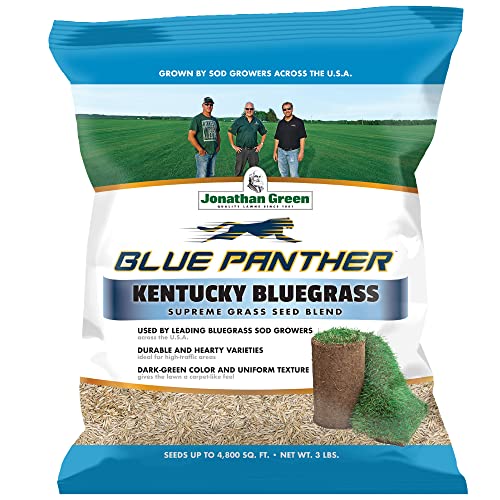
Jonathan Green Blue Panther Kentucky Bluegrass Seed 3 lb

Jonathan Green Black Beauty Heavy Traffic Seed 3 lb

Jonathan Green Black Beauty Sunny Grass Seed 1 lb

Jonathan Green Fast Grow Grass Seed 7 lb

Jonathan Green Black Beauty Rocky Mountain Mix 7 lb

Jonathan Green Black Beauty Tall Fescue Blend 15 lb

Scotts Turf Builder All-Purpose Mix 20 lb

Scotts Classic Heat and Drought Mix 3 lb

Scotts Turf Builder Rapid Grass Bermudagrass 1 lb

Gulf Annual Rye Grass Seed 50 lb
A Deeper Look At The Lineup
This is a pure 100% Kentucky bluegrass blend, the variety used by sod growers across the country. For North Texas and the Panhandle, where summers are hot but not brutal, a KBG lawn delivers the deep color and self-repairing rhizome spread that fills in bare spots naturally.
Unlike the traffic-tolerant mix you’ll see later, Blue Panther is built for lawn quality over durability. If your goal is a thick, dark-green carpet that looks like a golf course fairway, this bag fits. South Texas homeowners in zone 9 should probably skip it and look at the Bermudagrass pick instead.
Positive Points
- Pure KBG means consistent color and texture across the entire lawn
- Spreads via rhizomes, so minor damage fills in without reseeding
- Used by professional sod growers, which suggests strong establishment when timed right
- Handles overseeding of thinning cool-season lawns without clashing colors
Trade Offs
- Kentucky bluegrass struggles in deep South Texas heat and may go dormant early
- Only 3 pounds covers a small area, so larger yards need multiple bags
Key Specs
Who Will Love This
Homeowners in North Texas who want a classic cool-season lawn and are willing to water consistently through July and August.
Where A Sibling Pick Shines
For South and Central Texas where summer heat rules, Scotts Turf Builder Rapid Grass Bermudagrass is a far better match.
Where the Blue Panther is a beauty-first Kentucky bluegrass, this Black Beauty mix is a workhorse. It blends tall fescues with perennial rye to build a lawn that takes a beating from kids, dogs, and weekend soccer without thinning out.
The uniform leaf texture matters more than you might think. Bouncy-ball sports, bare feet, and outdoor dinner parties all feel different on a smooth, even turf than on a patchy mix. This bag aims at that consistent surface, and in most Texas transitional zones, the cool-season grasses hold up better than the all-KBG option above.
Useful Highlights
- Designed specifically for high-traffic zones, including sports fields and curb strips
- Uniform leaf texture gives the lawn a clean, finished look
- Tall fescues handle drought better than pure KBG in Texas summers
Minor Gripes
- Not a warm-season grass, so South Texas lawns may still struggle past July
- 3-pound bag is small for full-yard projects, so plan on multiple purchases
Built With In Mind
Families with active kids, dogs that run the same paths daily, or anyone who uses the backyard like a rec room.
Look Elsewhere When
South Texas homeowners in deep-warm zones get a better match from Scotts Turf Builder Rapid Grass Bermudagrass.
Texas sun is unforgiving, and this blend leans into that reality. It mixes perennial rye, Kentucky bluegrass, and tall fescue with a waxy leaf coating, a natural moisture-preserving cuticle (the outer waxy skin of a grass blade) that slows evaporation during the hottest weeks.
Think of it as the drought-aware cousin of the heavy-traffic mix. Where the previous bag optimizes for wear, this one optimizes for full-sun exposure and water rationing. In most Texas lawns that get six or more hours of direct sun, that waxy coating is the difference between a lawn that browns out by mid-July and one that holds color into August.
Strong Points
- Waxy leaf coating helps grass hold moisture during heat waves
- Three-species blend adapts to variable sun and light shade patches
- Perennial rye germinates fast, so you see green sooner
- Heat tolerance makes it a smarter pick than pure KBG for full-sun Texas yards
Small Caveats
- Only 1 pound, sized for patching small areas or thin sections rather than full renovations
- Still a cool-season blend, so the hottest South Texas zones may see summer dormancy
Best Suited To
Homeowners with full-sun yards in North and Central Texas who want a water-wise cool-season lawn.
Consider Something Else When
Anyone in deep South Texas where Bermudagrass is more practical should consider Scotts Turf Builder Rapid Grass Bermudagrass instead.
Sometimes the lawn doesn’t need a philosophy, it needs a patch. Fast Grow germinates in 7 to 10 days, blends annual rye, tall fescue, and fine fescue, and produces a dark-green turf that holds color through the season.
The honest read is that this is a temporary solution. It carries you through one growing season, then you’re expected to overseed with a Black Beauty blend for long-term persistence. For Texas homeowners staring at a dog-torn backyard in October, that tradeoff is usually fine, the speed matters more than the long-term plan.
Advantages To Know
- Germinates in 7 to 10 days, so bare spots fill in fast
- Works in full sun to medium shade, covering most lawn conditions
- 7-pound bag handles medium-sized repairs without buying multiple small bags
Points To Keep In Mind
- Annual rye means it’s a one-season solution, not a permanent lawn
- Best results require follow-up overseeding with a Black Beauty blend for persistence
Made For
Homeowners with thin or damaged patches who need fast cover before overseeding with a longer-lasting blend.
Not Your Match When
Anyone wanting a permanent lawn in one step should choose Jonathan Green Black Beauty Tall Fescue Blend instead.
West Texas and the Panhandle share more climate with Colorado than with Houston, and this bag is built for that exact crossover. It blends turf-type tall fescues, Blue Panther Kentucky bluegrass, and elite perennial rye, the same three-species approach that handles variable sun and the cool, semi-arid stretches of the high plains.
For Amarillo, Lubbock, and El Paso lawns at 3,000 feet and up, this mix generally outperforms the warmer-climate blends further down the list. Lower-elevation Texas yards will get a better fit from the Bermudagrass pick.
What Pays Off
- Specifically formulated for high-altitude, semi-arid conditions
- Three-species blend adapts to both sun and shade in variable terrain
- Works across Colorado, Montana, Utah, Wyoming, and West Texas
Less Ideal Details
- Not a warm-season grass, so deep South Texas heat will push it into dormancy
- 7-pound bag suits medium yards, so larger properties need multiple bags
Whose Shelf It Belongs On
Homeowners in the Texas Panhandle and high-elevation West Texas who need a cool-season blend tuned to dry, variable conditions.
Skip It When
Central and South Texas homeowners get a more practical warm-season match from Scotts Turf Builder Rapid Grass Bermudagrass.
The standout feature of this blend is below the surface. Tall fescue roots can reach 4 feet deep, which sounds like a marketing claim until you see how the lawn holds up after a dry August. The waxy leaf coating slows moisture loss on top, while those deep roots tap subsoil moisture below.
It’s a 100% tall fescue blend with uniform leaf texture that won’t shred when mown, and it handles both sun and shade without thinning out. For most Texas transitional-zone lawns, this is the most forgiving cool-season option on the list. The 15-pound bag is generous, so it covers full-yard renovations without piecing together smaller bags.
Where It Excels
- Roots up to 4 feet deep provide real drought tolerance in Texas summers
- Waxy leaf coating reduces moisture loss during heat waves
- Uniform dark-green color and texture across the full lawn
- Works in both sun and shade without needing different seed for each area
Where It May Fall Short
- Still a cool-season grass, so South Texas zones may see summer stress
- 15-pound bag is heavy, so plan ahead for transport and storage
Feature Card
Perfect Match For
Texas transitional-zone homeowners who want one bag that handles the full lawn, sun and shade alike, with strong drought tolerance.
A Better Fit Elsewhere
Anyone in deep South Texas who needs a true warm-season lawn should pick Scotts Turf Builder Rapid Grass Bermudagrass instead.
Scotts coats this seed to absorb twice as much water as uncoated seed, which is a meaningful edge in Texas, where missed watering days during germination can wipe out a seeding. The mix targets both sun and shade, repairs bare areas quickly, and runs 99.9% weed-free.
It produces a coarse-bladed turf with medium drought resistance, so don’t expect the fine-bladed KBG look from Pick 1. For most homeowners who want a single bag that handles the whole yard, this is the practical middle path. The 20-pound size covers substantial ground.
The Upside
- Water-absorbing seed coating improves germination in dry conditions
- 99.9% weed-free, so you start with a cleaner lawn
- Repairs bare spots quickly, a plus for patchy Texas lawns
Honest Caveats
- Coarse-bladed texture, finer KBG blends look more refined
- Only medium drought resistance, so deep South Texas may still see summer stress
Right Fit For
Texas transitional-zone homeowners who want one bag that handles both repair and full-yard coverage with water-wise seed coating.
Reach For A Different Pick When
Anyone wanting a finer-bladed, more refined look should consider Jonathan Green Blue Panther Kentucky Bluegrass Seed instead.
This is the heat-and-drought specialist in the Scotts lineup, a fescue-and-bluegrass blend built for the brutal parts of the Texas summer. The mix spreads aggressively to fill bare spots, which helps it recover from the patchy thinning that hits lawns in late July.
For most Texas lawns where July and August are the rough months, this blend usually outperforms standard cool-season mixes. The 3-pound bag is sized for spot repairs and smaller yards, so plan accordingly if you’re tackling a full renovation.
Why It Works Well
- Specifically engineered for extreme summer heat and dry conditions
- Aggressive spreading helps fill in bare patches naturally
- 99.9% weed-free seed for a cleaner start
Things To Consider
- Only 3 pounds, so larger yards need multiple bags
- Still a cool-season blend, so South Texas zones may push it past its limits
Who Should Grab It
Homeowners in Central and North Texas who battle the worst of summer heat and need a seed mix that won’t quit by August.
Swap It Out When
Deep South Texas lawns will see better results from a true warm-season Bermudagrass like Scotts Turf Builder Rapid Grass Bermudagrass.
Everything else on this list is a cool-season blend except this one. Bermudagrass is the workhorse of Central and South Texas lawns, and Scotts pairs the seed with a built-in starter fertilizer in a single product. The combo is designed to grow grass twice as fast as seed alone at the new-lawn rate.
For most homeowners in zones 8 and 9, this is the practical choice. Bermudagrass loves the heat, recovers from heavy foot traffic, and stays green through the worst of Texas summers. The trade-off is winter dormancy, the lawn browns out when temperatures drop, and that’s just how Bermudagrass works.
Notable Upsides
- True warm-season grass that thrives in Texas heat
- Seed-and-fertilizer combo delivers faster establishment than seed alone
- Tolerates tough conditions and heavy use once established
Possible Compromises
- Goes dormant and browns out in winter, expected for Bermudagrass
- Only 1 pound, so full-yard projects need multiple bags
- Spreaders are recommended, so broadcast by hand gives uneven results
The Right Fit
Central and South Texas homeowners who want a heat-loving warm-season lawn and don’t mind the winter dormancy period.
Another Choice May Suit
North Texas or Panhandle lawns in cooler zones get a longer growing season from a cool-season tall fescue like Jonathan Green Black Beauty Tall Fescue Blend.
Annual rye has one job, and it does it well. South Texas homeowners overseed dormant Bermudagrass every fall with Gulf annual rye to keep a green lawn all winter, and a 50-pound bag covers up to 10,000 square feet.
It germinates fast, grows wide blades, and lasts the cool season before fading out as temperatures climb. For most large Texas lawns, this is the budget-friendly way to hold winter color without reseeding Bermudagrass itself.
A Favorable Mix
- 50-pound bag covers up to 10,000 square feet, ideal for large properties
- Fast growth makes it perfect for short-term seasonal color
- Suitable for hardiness zones 1 through 7, flexible across regions
Trade-Offs To Consider
- Annual rye dies back in summer heat, so it needs replanting each fall
- Wide-bladed texture looks coarser than permanent turf-type grasses
Who It Suits Best
South Texas homeowners with large Bermudagrass lawns who want reliable winter color without expensive perennial alternatives.
A Better Fit Elsewhere
Anyone wanting a permanent lawn rather than seasonal overseeding should look at Jonathan Green Black Beauty Tall Fescue Blend instead.
Matching Seed To Your Texas Growing Zone
Texas is not one lawn climate, it’s at least three. The Panhandle and North Texas lean cool-season, with fescues and Kentucky bluegrass handling winter fine and struggling in August. Central Texas sits in the transitional zone, where both cool-season and warm-season grasses can work, depending on how much you’re willing to water. South Texas is firmly warm-season, where Bermudagrass, St. Augustine, and Zoysia dominate, and cool-season blends go dormant early.
Root depth matters more than most people realize. The Jonathan Green Black Beauty Tall Fescue Blend, with its 4-foot roots, taps subsoil moisture that shallow-rooted grasses can’t reach. In a state where July and August rainfall is unpredictable, that depth is the difference between a lawn that survives and one that turns to straw.
Sun exposure shapes the choice too. Full-sun yards benefit from heat-tolerant blends with waxy leaf coatings, like the Black Beauty Sunny Grass Seed. Mixed sun-and-shade lawns do better with versatile blends, like the Scotts All-Purpose Mix, that handle both without thinning. Pure shade under live oaks in San Antonio is a different problem entirely, and most of these bags aren’t built for it.
Finally, timing matters as much as seed choice. Cool-season blends establish best in mid-August through mid-October, when soil is warm but air is cooling. Warm-season Bermudagrass waits until late spring. Seeding out of season usually wastes the bag.
What To Watch Before You Buy
Wrong Turns To Avoid
The most common mistake is buying a cool-season blend for a South Texas yard. Kentucky bluegrass and most fescues will germinate fine but go dormant by June, leaving a brown lawn until fall. Match the seed to your USDA Hardiness Zone (the official regional zone map that rates average minimum winter temperatures, where Zone 6a in Amarillo differs sharply from Zone 9a in Houston), not to what looks best in the bag photo. The second mistake is underestimating coverage. A 3-pound bag covers a small patch, not a full yard. Most homeowners need 15 to 50 pounds for a typical Texas lawn, depending on whether they’re starting fresh or overseeding.
When Paying More Pays Off
Premium blends cost more per pound for clear reasons. Coated seed absorbs more water and germinates more reliably in dry conditions. Multi-species blends adapt to whatever your specific yard throws at them, full sun one corner, shade the next. Deep-root varieties like the Black Beauty Tall Fescue reach moisture that shallow roots can’t, which means lower water bills and a lawn that holds color through dry spells. For most Texas homeowners, the upgrade from a basic single-species bag to a coated, multi-species blend pays for itself within a year of lower water use and fewer reseeding attempts.
Frequently Asked Questions
When Is The Best Time To Plant Grass Seed In Texas?
Mid-August through mid-October is the sweet spot for cool-season blends, while warm-season Bermudagrass does best with late-spring planting. Soil temperature drives germination more than air temperature, so a soil thermometer helps.
How Much Seed Do I Need For A Typical Texas Lawn?
Most Texas lawns run 5,000 to 10,000 square feet, which requires 15 to 50 pounds of seed depending on the blend and seeding rate. Always check the bag’s coverage chart before buying, since rye covers more square footage per pound than fescue.
Can I Mix Cool-Season And Warm-Season Grass Seed?
Most lawn-care guides recommend against it, since the two types have different water and mowing needs. A common approach is overseeding dormant Bermudagrass with annual rye each fall for winter color, then letting the rye fade as the Bermuda greens up in spring.
How Long Does Grass Seed Take To Grow In Texas Heat?
Fast-growing blends like Jonathan Green Fast Grow germinate in 7 to 10 days in ideal conditions. Heat-tolerant blends generally take 10 to 21 days, while slower-establishing Kentucky bluegrass can take 30 days or more. Consistent watering during the germination window is critical.
Will Grass Seed Survive A Texas Summer If Planted In Spring?
Spring-planted cool-season seed often struggles once July hits, going dormant or dying back. Fall planting gives cool-season grass two mild seasons, fall and spring, to establish before facing its first full Texas summer.
Wrap Up
The right grass seed for a Texas lawn comes down to your region, your sun exposure, and how much summer watering you’re willing to commit to. North Texas and the Panhandle do well with cool-season tall fescue and Kentucky bluegrass blends, Central Texas can run either camp with proper care, and South Texas belongs to warm-season Bermudagrass. Pick the bag that matches your zone, plant in the right window, and water consistently through germination. Your lawn will thank you by August.
