

Connecticut sits in USDA zones 5 through 7, with cold winters, humid summers, and the kind of freeze-thaw cycles that punish weak turf. Cool-season grasses handle those conditions far better than warm-season blends, which tend to brown out by October. The seed you scatter in late summer or early fall sets the tone for the next several growing seasons, so the choice matters more than the spreader you use.
Your yard also drives the decision. Dense tree cover, full sun, sandy soil near the coast, kids on the lawn, or slopes that wash out in spring rain all push you toward different mixes. This roundup covers ten strong options for Connecticut lawns, plus a couple of specialty picks for ornamental beds and erosion-prone hills. Each entry has a real-world use case, a fair list of trade-offs, and a pointer to a better fit for a different kind of yard.
The Shortlist At A Glance

Jonathan Green Fast Grow Grass Seed (7 lb)

Jonathan Green Black Beauty Dense Shade Grass Seed (1 lb)

Jonathan Green Black Beauty Heat & Drought Resistant Grass Seed (3 lb)

Jonathan Green Black Beauty Ultra Grass Seed (7 lb)

Pennington Annual Ryegrass Grass Seed (10 lb)

Pennington Bermudagrass Grass Seed (5 lb)

Outsidepride Legacy Fine Fescue Grass Seed Mix (10 lb)

Outsidepride PC2.0 (Penncross) Creeping Bent Grass Seed (1 lb)

Perennial Farm Marketplace Karl Foerster Feather Reed Grass
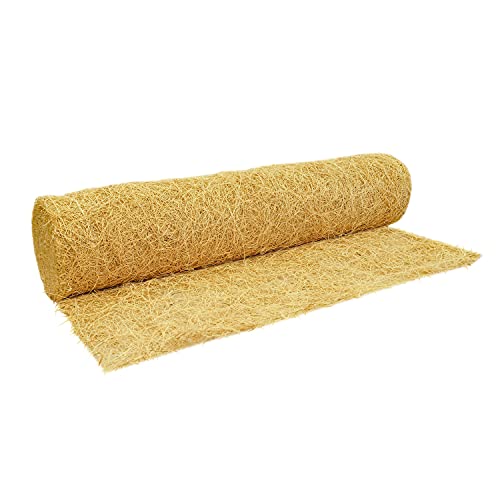
American Excelsior QuickGrass Pro Erosion Control Blanket (2.5’x50′)
Inside Each Recommended Option
When a Connecticut lawn shows up with a bare patch after a long winter or a rough stretch of dog traffic, waiting three weeks for a slow blend to fill in isn’t realistic. Jonathan Green Fast Grow is built for exactly that moment, pairing annual ryegrass with tall and fine fescues so germination takes about a week in warm soil. The mix germinates fastest in late summer or early fall, which conveniently lines up with the best seeding window for most of the state.
The honest read is that this is a temporary lawn, not a permanent one. It carries you through the season while you plan a longer-term overseeding with a more durable cultivar. It’s a repair product first, and a finishing touch second.
Useful Highlights
- Rapid germination in roughly 7 to 10 days when soil is warm
- Blend of annual ryegrass with tall and fine fescues for quick cover
- Tolerates full sun and medium shade, which covers most yard zones
- Produces a deep green color in the weeks after germination
Things To Consider
- Annual ryegrass fades after one season, so plan to overseed
- Not designed to be the long-term backbone of a Connecticut lawn
- Watering must stay consistent until seedlings establish
Feature Snapshot
Made For
Homeowners who need fast cover for bare patches or a thin lawn while planning a longer-term overseeding the following season.
Look Elsewhere When
You want a permanent, full-yard stand, in which case the Jonathan Green Black Beauty Ultra Grass Seed (7 lb) is a sturdier long-term backbone.
Older Connecticut neighborhoods come with mature maples, oaks, and hemlocks, and a regular sun-loving blend thins out fast under that canopy. Black Beauty Dense Shade leans on shade-tolerant cultivars with endophytes, which are beneficial fungi living inside the grass that improve stress tolerance and pest resistance. The mix germinates in two to three weeks, so it’s not the fastest option, but it holds where brighter sun mixes surrender.
For homeowners with a mostly sunny yard and one stubborn shaded corner, this also works as a small targeted patch. For full-tree coverage, you may end up needing more than a one-pound bag, depending on area.
Positive Points
- Engineered for areas with limited sunlight from trees or structures
- Endophyte-enhanced cultivars for better pest and stress tolerance
- Produces a deep green color once established
Worth Noting
- Slower germination at 14 to 21 days
- One-pound bag covers a small area, larger yards may need several
- Still needs some filtered light to truly thrive
Technical Sheet
Best Suited To
Yards with heavy tree cover or shaded edges where sun mixes routinely fail in the first summer.
Consider Something Else When
Your site gets wide-open sun for most of the day, in which case the Jonathan Green Black Beauty Ultra Grass Seed (7 lb) is a smarter all-purpose choice.
Connecticut summers have been trending hotter and drier, and the southwest-facing strip along a driveway or the lawn strip near a south wall can fry in July. This blend pairs tall fescue with Texas bluegrass, and the waxy leaf coating, similar to the skin of an apple, slows moisture loss. The stated heat tolerance runs up to about 100°F, which covers the roughest stretch of a typical CT summer.
The trade-off is that this is a full-sun-leaning blend, and dense shade will hold it back. For most Connecticut lawns that face south or west with little canopy, that’s a fine match.
Well-Handled Touches
- Tall fescue paired with Texas bluegrass for heat resilience
- Waxy leaf coating that reduces evaporation
- Handles full sun and light shade
- Listed heat tolerance up to roughly 100°F
Trade Offs
- Less suitable for heavily shaded or tree-covered sites
- Smaller three-pound bag may not cover a full large yard
Whose Shelf It Belongs On
Homeowners in sun-exposed Connecticut lawns, especially south-facing or wind-swept sites, who want a cool-season blend that holds through July and August.
Where Another Pick Suits Better
Most of your lawn is shaded by trees or buildings, in which case the Jonathan Green Black Beauty Dense Shade Grass Seed (1 lb) will stay green where this one struggles.
For a new full-yard seeding or a wholesale renovation, this is the most balanced cool-season blend in the Jonathan Green family. It mixes tall fescue, Kentucky bluegrass, and perennial ryegrass, which together handle Connecticut’s mix of cold winters, hot July afternoons, and heavy spring rains. The deep root system that comes from the fescue component is what gives the lawn its bounce-back after dry spells.
It’s heavier on the bag, seven pounds, so you’re not constantly reordering for an average suburban yard. The honest trade-off is that no single mix is great at everything, so the deepest shade corners will still want a separate shade blend.
Reasons It Performs
- Three-species blend suited to cool-season climates
- Suitable for both new lawns and overseeding thin or damaged turf
- Seven-pound bag covers a meaningful area
- Deep green color once established
Honest Caveats
- Not optimized for dense, deep shade
- Needs consistent watering during germination and early establishment
Feature Overview
Perfect Match For
Homeowners starting a new Connecticut lawn or rebuilding a tired one who want a single dependable blend without juggling multiple products.
Skip It When
Your site is dominated by old trees with heavy root competition, in which case the Outsidepride Legacy Fine Fescue Grass Seed Mix (10 lb) is a better low-input alternative.
Annual ryegrass is the workhorse of quick green-up, and Pennington’s ten-pound bag is sized for a meaningful overseeding or a temporary winter cover. The seed germinates in roughly 3 to 7 days, so a thin patch that looked tired on Saturday can look like a real lawn by the following weekend. The mix wants full sun, six to eight hours a day, which is fine for most open Connecticut yards.
The catch is what the name hints at: this is annual ryegrass, so it won’t come back reliably next year. Use it for quick cover, then plan a permanent overseed with a fescue or bluegrass mix once the season settles.
A Strong Showing
- Very fast germination in 3 to 7 days
- Ten-pound bag covers larger overseeding jobs
- Brings quick color to thin or worn lawns
- Useful for filling in while a permanent lawn establishes
Soft Spots
- Annual, so it won’t return next season
- Needs six to eight hours of full sun
- Best treated as a temporary solution, not a long-term lawn
Feature Rundown
Who Will Love This
Homeowners who want a quick seasonal fix, especially before a graduation party or a real-estate listing photo, and don’t mind reseeding next year.
Not Your Match When
You want a single seed application to carry your lawn for years, in which case the Jonathan Green Black Beauty Ultra Grass Seed (7 lb) is the stronger backbone choice.
Bermudagrass is not a typical Connecticut lawn, but coastal pockets, especially along the shoreline, have milder winters that let warm-season blends survive. Pennington’s Bermudagrass blend claims improved cold tolerance, which is the one factor that makes it borderline viable in southern CT. The deep root system and aggressive self-spreading habit give it strong wear resistance for high-traffic yards.
The honest reality is that this grass goes dormant and browns out during Connecticut winters, so the lawn looks dead for several months. That’s a real trade-off, and not everyone is willing to accept a tan yard from November through March.
A Few Strong Suits
- Aggressively self-spreading for thick coverage
- Improved cold tolerance relative to older Bermuda varieties
- Wear-resistant with a deep root system
- Lower-growing blend that produces fewer clippings
Room For Improvement
- Goes dormant and brown in winter across most of CT
- Best confined to USDA zone 7 coastal pockets
- Long winter dormancy can bother homeowners expecting a year-round green lawn
Right Fit For
Coastal Connecticut homeowners in zone 7 microclimates who want a tough, wear-resistant warm-season lawn and don’t mind winter dormancy.
Reach For A Different Pick When
You want a green lawn through most of the year, in which case the Jonathan Green Black Beauty Ultra Grass Seed (7 lb) stays green far longer into the cold months.
Fine fescue blends have a soft, almost needle-like texture that looks more like a meadow than a traditional lawn, and they thrive on less water and less fertilizer than bluegrass-heavy mixes. Outsidepride’s Legacy blend uses 20% hard fescue, 40% chewings fescue, and 40% creeping red fescue, with the OptiGrowth coating that carries zinc, phosphorus, nitrogen, and kelp nutrients. That coating helps the seed push through early establishment, which is the trickiest window for any new seeding.
The blend handles both dense shade and full sun, which is unusual, and it tolerates drought better than most cool-season options once established. Compared to the Jonathan Green Black Beauty Ultra, this is a lower-input, finer-textured alternative for homeowners who want a less manicured look.
Real-World Strengths
- Three fine fescue types combined for adaptability
- OptiGrowth coating for better seed-to-soil contact and faster establishment
- Works in both dense shade and full sun
- Lower water and fertilizer needs than bluegrass blends
Points To Note
- Doesn’t bounce back from heavy wear as well as tall fescue
- Slower to fill in than ryegrass-heavy mixes
Feature Snapshot
Who Should Grab It
Homeowners who want a soft, low-input lawn that handles mixed light and don’t mind a slightly more natural look over a putting-green finish.
A Better Fit Elsewhere
You have a high-traffic yard with active kids or dogs, in which case the Jonathan Green Black Beauty Ultra Grass Seed (7 lb) will hold up better to wear.
Creeping bentgrass is the grass you see on golf greens, and Outsidepride’s PC2.0 (Penncross) is the same lineage that professionals use for tournament-quality turf. The upright, dense growth pushes out Poa annua, an opportunistic weed grass that often sneaks into cool-season lawns. For a serious home putting green or a fairway-style patch, it’s hard to beat.
For an ordinary family lawn, this is the wrong tool. It demands more frequent mowing, more fertility management, and more frequent watering than typical cool-season turf, and a one-pound bag won’t cover a regular yard. This is a specialist’s pick.
Everyday Wins
- Dense, upright growth pattern that suppresses Poa annua
- Excellent wear tolerance for high-traffic turf
- Premium golf-course-grade seed stock
Trade-Offs To Consider
- Demands frequent mowing and more fertility than typical lawns
- One-pound bag is sized for specialty projects
- Not a sensible choice for a standard Connecticut backyard
Built With In Mind
Homeowners building a backyard putting green, a fairway-style patch, or a small high-traffic specialty area who want a true golf-grade surface.
Swap It Out When
You want a normal family lawn, in which case the Jonathan Green Black Beauty Ultra Grass Seed (7 lb) handles traffic with far less fuss.
Switching tracks from lawn seed, Karl Foerster is the workhorse ornamental grass for New England landscapes. It grows in a tight, arching clump about 18 to 24 inches tall, and the upright golden flower spikes rise another four to five feet in early summer. The vertical habit is what makes it a designer favorite: it adds structure to a border without sprawling.
Hardy in USDA zones 4 through 9, it shrugs off Connecticut winters, and the foliage stays tidy through most of the cold months. Note that the seller doesn’t ship to a long list of western states, which is fine for a Connecticut order, but worth knowing if you’re forwarding a gift. Deer also tend to leave it alone, which matters in many CT neighborhoods.
Positive Takeaways
- Upright vertical accent that suits modern and traditional borders
- Hardy across USDA zones 4 through 9, well within CT’s range
- Highly deer resistant, useful in wooded-edge yards
- Arrives in a #1 container, fully rooted and ready to plant
Small Caveats
- Not a lawn grass, and not a substitute for turf seed
- Prefers moist, well-drained soil in full sun for best spike production
Who It Suits Best
Homeowners designing a landscape bed, a foundation border, or a naturalized edge who want a tall, low-maintenance vertical accent.
Another Choice May Suit When
You’re establishing a usable lawn area, in which case any of the turf blends above will be a more appropriate starting point.
Not a seed at all, this erosion control blanket is what you lay over freshly seeded slopes to keep the soil and seed in place until germination. Connecticut gets heavy spring and fall rains, and a bare slope after a seeding can wash out in a single storm. The QuickGrass Pro mat holds seed and soil contact, shields seeds from birds and direct sun, and biodegrades once the grass takes over.
The role here is supporting, not replacing, a turf seed. Pair it with any cool-season blend above on any slope, swale, or drainage channel that runs water during storms. The roll size works well for a typical residential project.
Everyday Advantages
- Holds seed and soil in place on slopes and channels
- Protects germinating seed from birds and sun
- Degrades on its own once the lawn is established
- Useful for stormwater compliance on disturbed soil
Considerations
- Not a substitute for seed, works alongside it
- Roll is sized for typical residential projects, very large sites need multiple rolls
Made For
Homeowners reseeding any slope, swale, or wash-prone area who want to keep seed and soil in place through Connecticut’s heavy spring rains.
Not Your Match When
Your lawn is flat and your seed has nowhere to wash away, in which case you can skip the blanket and use a straw mulch or none at all.
Matching Seed To Your Connecticut Site
Start with your light conditions, because that narrows the field fastest. A yard dominated by mature trees needs a shade-tolerant blend like the Black Beauty Dense Shade or the Legacy Fine Fescue, while a south-facing open yard needs heat and drought resilience from the Black Beauty Heat & Drought. Mixed light with several zones is the case where a flexible blend like the Legacy Fine Fescue or Black Beauty Ultra tends to perform best across the whole property.
Foot traffic is the second filter. Active kids, dogs, or a path to a frequently used gate wear a lawn down fast, and a fine fescue mix, while soft, won’t bounce back the way a tall fescue and bluegrass blend will. The Pennington Annual Ryegrass belongs in the toolbox for quick fixes, not for a permanent stand, and the creeping bentgrass is reserved for putting-green enthusiasts rather than a family lawn.
Timing matters more than most people expect. Late summer to mid-fall, roughly mid-August through mid-October, is the strongest seeding window in Connecticut, because the soil is warm enough for fast germination and the air is cool enough to reduce stress on young seedlings. A spring seeding works in a pinch, but it forces young grass to survive summer stress in its first year.
For slopes and drainage channels, the erosion blanket makes any of the seed blends above far more reliable. Lay the seed, rake lightly, then pin the blanket over the top and walk away. The blanket does the daily watering and weather protection job for you until the seedlings root through it.
Common Slip Ups And When A Premium Bag Pays Off
Pitfalls Shoppers Hit
The most common mistake is buying a warm-season Bermuda or zoysia bag for a Connecticut yard and then wondering why the lawn browns out in October. Cool-season blends, fescue, bluegrass, ryegrass, are the right category for the state. A close second is overseeding a full-sun blend under a heavy maple and blaming the seed when it thins out, when really the light conditions were the problem from the start.
Seeding at the wrong time also burns a lot of bags. A mid-summer seeding, when the soil is hot and the air is dry, forces you to water constantly just to keep seedlings alive, and germination is patchy at best. Late August through mid-October gives you a far better return on the same seed.
When Paying More Pays Off
Premium blends earn their higher cost in a few specific ways: better cultivar selection, endophyte enhancement for pest resistance, and seed coatings that carry nutrients. For a yard you’ve already fought to establish, paying a bit more for endophyte-enhanced seed reduces summer grub stress and fungal pressure. For a slope that washes out, a coated seed plus an erosion blanket saves you from reseeding the same patch every spring, which is where the real cost hides.
