

You know the scene: a freshly raked pea gravel path, three weeks of bliss, then the first hard rain sends stones skating into the lawn. Gravel binders exist to stop that drift, and the ten below cover every common case. They span ready-to-spray bottles for small weekend patches through concentrated concentrates built for whole driveways. The mix matters more than the marketing, so each pick gets weighed on viscosity, dilution requirements, drainage, and how forgiving the formula is when your prep work runs short.
The Lineup, Simplified

Teexpert 1 Gallon Rock Glue for Landscaping

Shabebe 1 Gallon Gravel Binder for Pea Gravel
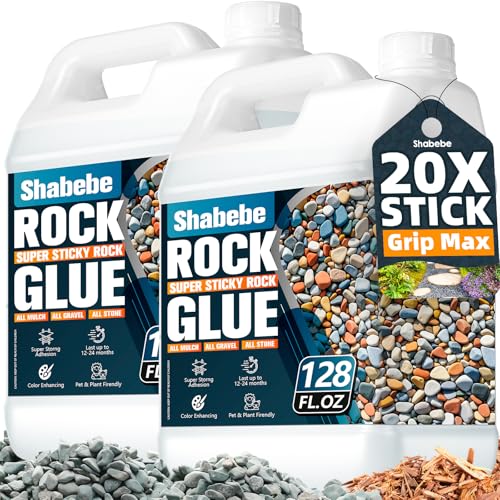
Shabebe 2 Gallon Gravel Glue (Makes 4 Gallons)

PetraMax Lockscape Ready to Use Rock Glue 1 Gallon

Dominator Rock Anchor 64oz Gravel & Stone Glue

Shabebe 27oz Rock Glue with Built-In Sprayer

Paistely 35oz Rock and Gravel Glue

Shabebe 1 Gallon Ready-to-Use Gravel Binder

Sevgili 5 Gallon Ready-to-Use Rock Glue

Shabebe 1 Gallon Contractor Grade Gravel Binder
More On The Choices That Made The List
Thick, syrupy binders behave differently than spray-on types, and Teexpert leans hard into that. Its formula is built around a 10,000 mPas viscosity, which is roughly honey-thick, so it pours more than it sprays and sinks into the stone bed rather than sitting on top. For homeowners stabilizing pea gravel along walkway edges or decorative driveway borders, that depth of penetration tends to deliver a noticeably firmer surface than a thin mist can. The trade-off is application: you’ll likely need a watering can, roller, or pump sprayer rated for thicker liquids, and you’ll want to work in sections before it starts to skin over.
Compared to the ready-to-use options later in this list, this one assumes a bit more confidence from the user. Dilution math enters the picture, and a sloppy mix can leave you with a tacky surface or a weak bond, depending on which way the error goes. For most weekend projects on flat, well-drained ground, though, the heavier body pays off in long-term hold.
Everyday Advantages
- High-viscosity body grips pea gravel more firmly than thin spray formulas
- Still dilutable, so a single gallon can stretch across multiple smaller projects
- Works on walkway edges, patio borders, and decorative driveway trim in one formula
- Pours cleanly from the jug, making controlled application along borders easier
Things To Consider
- Requires careful dilution measuring; guesswork weakens the bond
- Standard pump sprayers may clog with the thick mix; use a roller or wide-nozzle sprayer
- Not the easiest first choice for a brand-new DIYer
Key Specs
Who It Suits Best
Confident DIYers with a defined walkway or border project who don’t mind measuring and want a stiffer final surface underfoot.
Consider Something Else When
Shabebe’s 1 Gallon Gravel Binder for Pea Gravel is the easier path for first-timers who’d rather skip the dilution step entirely.
Safety is usually the first question when dogs, kids, and garden beds share a yard with a chemical treatment. Shabebe’s 1 Gallon Gravel Binder answers that with a non-toxic, odorless, water-based formula that’s tested by Intertek for safety and environmental compliance. Once cured, it’s marketed as pet-safe, which matters if your golden retriever treats the pea gravel path as a shortcut to the neighbor’s fence. Its permeable structure lets rainwater pass through the cured surface, so you don’t end up with a sealed, ponding layer after a storm.
Application tends to be straightforward, though you’ll want to confirm the bottle is sold as a ready-to-use formula or a concentrate before you start pouring. Compared to Teexpert’s heavy-viscosity honey pour, this one reads as a more forgiving, general-purpose pick. For a typical suburban yard where the priorities are family safety, drainage, and clean lines, it’s a sensible middle path.
Advantages To Know
- Non-toxic, odorless, and pet-safe once fully cured
- Intertek-tested for safety and environmental standards
- Permeable cured layer keeps rainwater draining through the bed
- Gentle learning curve for homeowners new to gravel binding
Worth Noting
- Always confirm pet-safety timing before letting animals back onto the cured surface
- Not as viscous as Teexpert, so very loose or steep pea gravel may need a second coat
Right Fit For
Families with pets or small children who want a tested, low-odor formula and care about drainage through the gravel bed.
Skip It When
Shabebe’s 2 Gallon Gravel Glue (Makes 4 Gallons) is the better match for larger properties where you’d burn through a single gallon quickly.
Concentrate-versus-ready-to-use is the quietest cost decision in this category, and the Shabebe 2 Gallon Gravel Glue pushes the math hard. The bottle is sold as a 2-gallon concentrate that dilutes to 4 gallons of finished binder, so the per-gallon cost of treated surface drops sharply. For larger projects like a full front-yard rock garden, a long pea gravel side yard, or pine straw beds that need annual re-binding, the math usually works out in your favor.
The Grip Max formula is also designed to cover up to roughly three times the area of a standard gravel binder at the same dilution ratio, which compounds the savings. The honest trade-off is preparation: you’re committing to mixing containers, measuring carefully, and storing the remainder properly. For crews or homeowners comfortable with that workflow, this is the most coverage per dollar on the list.
Useful Highlights
- 2-gallon concentrate makes 4 gallons of finished binder
- Coverage up to roughly 3X the area of standard gravel binders at use dilution
- Works on gravel, decorative stone, mulch, and pine straw
- Fast-drying and weather-resistant once cured
Honest Caveats
- Requires accurate measuring and mixing before each use
- Leftover concentrate needs cool, sealed storage to stay usable
Feature Snapshot
Made For
Homeowners and small crews with multi-bed projects who’d rather dilute a concentrate than stack four ready-to-use jugs in the garage.
Reach For A Different Pick When
PetraMax Lockscape Ready to Use Rock Glue is the friendlier single-project option if you only need one or two gallons and don’t want any mixing.
USA-made and bottled as a no-dilution, ready-to-spray formula, PetraMax Lockscape skips the measuring step entirely. The workflow is basically shake, pour into a sprayer, and apply. For a homeowner tackling their first gravel-binding project, that low-fuss design removes the single biggest source of failure: bad mix ratios. You get consistent viscosity every time, which translates into more predictable coverage across pea gravel and small decorative stone.
The cured layer is fully permeable, so water drains through the bed rather than pooling on top. The manufacturer cites coverage of up to 200 square feet per gallon, which lines up with the medium-density application most weekend projects call for. Where it loses ground is on slope and high-traffic edges; you’ll likely need a second pass for steep or heavily used sections.
Useful Strengths
- Ready-to-use formula eliminates measuring and mixing
- Permeable cured surface keeps rainwater draining through the bed
- Consistent viscosity for predictable coverage across small stone
- USA-made for shoppers prioritizing domestic production
Trade-Offs
- Steep slopes or high-traffic edges may need a second coat
- Per-gallon cost is higher than concentrate alternatives
The Right Fit
First-time DIYers and homeowners who want a no-mix, predictable result on a single small-to-medium landscape project.
Look Elsewhere When
Shabebe’s 2 Gallon Gravel Glue (Makes 4 Gallons) makes more sense for larger properties where concentrate savings add up.
Generic mulch glues tend to disappoint on heavier stone, which is where the Dominator Rock Anchor 64oz is engineered to step in. It’s formulated specifically for rock, gravel, and stone rather than adapted from a wood mulch stabilizer, and the brand leans into the wind, rain, and leaf-blower resistance story. On river rock beds and pea gravel driveways that take real punishment from weather and foot traffic, that targeted formulation reads as the most defensible pick in the lineup.
The 64-ounce ready-to-spray bottle keeps the prep work down to shaking and pouring. The honest read is that this is a specialist: homeowners with light decorative beds may be overbuying, while anyone dealing with chronic washout on a sloped driveway will likely appreciate the formulation choices. It’s the one most worth reaching for when standard gravel binders keep failing your specific conditions.
Everyday Perks
- Engineered specifically for rock and stone, not adapted from mulch formulas
- Resists wind, rain, leaf blowers, and washout on slopes
- Ready-to-spray 64oz format avoids mixing steps
- Water-based cleanup before curing
Room For Improvement
- Specialist formula may be overkill for light decorative beds
- 64oz size sits between the small touch-up bottles and the full 1-gallon jugs
Quick Facts
Best Suited To
Homeowners with sloped driveways, river rock beds, or chronically washing pea gravel who need a stone-specific formulation.
A Better Fit Elsewhere
Shabebe’s 27oz Rock Glue with Built-In Sprayer is the easier small-job option for garden bed touch-ups.
Some jobs don’t need a gallon jug, and the Shabebe 27oz Rock Glue with Built-In Sprayer is built for exactly that scale. The trigger sprayer is integrated into the bottle, so you skip buying or cleaning a separate sprayer. That’s a small thing until you’re doing a quick touch-up on a small garden bed or a section of pea gravel border that’s started to drift. Fast-dry chemistry shortens the no-foot-traffic window, which matters on tight weekend timelines.
The 27-ounce size is the obvious trade-off: a long path or full driveway project will run out before you finish. But for a single bed, a side-yard patch, or a season of small repairs, it sits in the sweet spot between a household spray bottle and a contractor-grade gallon. It’s also a sensible way to test whether gravel binding works for your conditions before committing to a larger jug.
What Makes Sense
- Built-in sprayer removes the need for a separate pump or bottle
- Fast-drying formula shortens cure time on weekend projects
- Compact size stores easily on a shelf between uses
- Good fit for small garden beds and border touch-ups
Practical Considerations
- 27oz runs out quickly on full-path or driveway projects
- Trigger sprayers can clog if not rinsed after each use
Perfect Match For
Homeowners with a small garden bed or a few border touch-ups who want a grab-and-spray bottle without extra equipment.
Swap It Out When
Sevgili’s 5 Gallon Ready-to-Use Rock Glue is the better choice for anyone coating a large property in a single weekend.
Longevity claims are easy to throw around in this category, so a 12-24 month rated lifespan on a cured bed stands out. The Paistely 35oz Rock and Gravel Glue is positioned as a lockdown-style binder that aims to extend the interval between seasonal reapplications. For homeowners who’d rather not plan a re-bind every spring, that longer window can shift the total workload over a couple of years.
The 35-ounce bottle is also a non-toxic formulation, which keeps it competitive with the safer-cured options in this roundup. It’s a balanced middle-tier pick: bigger than a touch-up spray, smaller than a 1-gallon jug, and built around maintenance reduction rather than raw coverage. For a single garden path with mixed mulches and gravel, the size and longevity story tend to line up well.
Well-Handled Touches
- Manufacturer-stated 12-24 month cure lifespan reduces seasonal reapplication
- Non-toxic formula suits yards with kids and pets
- Works across rock, wood chips, sand, and gravel
- 35oz size fits a single path or mid-size bed comfortably
Points To Keep In Mind
- Actual lifespan depends on weather, foot traffic, and stone type
- Smaller bottle than full 1-gallon options for large projects
Who Should Grab It
Homeowners maintaining a single garden path who want a longer interval between reapplications and a non-toxic formula.
Not Your Match When
Shabebe’s 1 Gallon Contractor Grade Gravel Binder fits better for high-traffic walkways that need a heavier hold.
Sometimes a “default” pick is a default for a reason. The Shabebe 1 Gallon Ready-to-Use Gravel Binder is a general-purpose, no-dilution formula aimed at the most common residential use cases: pea gravel paths, small stone borders, and patio ground cover. Fast-drying, weather-resistant, and ready to pour into a sprayer, it hits the middle of the road without obvious weaknesses. For a typical suburban landscape project, it’s a safe, low-friction choice.
The 1-gallon volume is the standard benchmark, so it’s easy to estimate coverage without learning a new formula’s quirks. Where it falls short is on heavy stone or high-traffic walkways; the contractor-grade version in this list is built for that. For the average garden path with light-to-moderate use, though, this is a quietly reliable option.
Good Reasons To Consider
- Ready-to-use formula avoids measuring and mixing
- Fast-drying chemistry shortens the no-traffic window
- Weather-resistant cured layer for standard outdoor conditions
- Familiar 1-gallon size for easy coverage planning
Where It May Fall Short
- Not formulated for high-traffic walkways or heavy river rock
- No specific pet-safety or longevity certifications highlighted
Built With In Mind
Homeowners with a standard garden path or patio border who want a straightforward, no-mix 1-gallon option.
Where Another Pick Suits Better
Dominator Rock Anchor 64oz is the more focused choice for sloped driveways and heavy stone washouts.
Bulk sizes are about workflow, not just volume. The Sevgili 5 Gallon Ready-to-Use Rock Glue covers wide swaths in a single session, which matters on multi-bed estates, commercial properties, or long driveways where stopping to refill mid-project interrupts the work. Sold as a ready-to-use formula, it pours directly into a sprayer or roller tray, so even at this scale there’s no concentrate math to manage.
The trade-off is storage and handling. A 5-gallon jug is heavy to lift once filled, and you’ll want a plan for using it within its usable window rather than letting it sit across multiple seasons. For property managers, landscape contractors, and homeowners with a long to-do list, that trade usually pays off in time saved per square foot.
What Earns Its Place
- 5-gallon bulk size reduces refills on large properties
- Ready-to-use formula keeps workflow simple even at scale
- Works on wood chips, gravel, sand, shells, and pine straw
- Reduces washout on slopes and high-leaf-blow areas
Soft Spots
- Heavy and bulky to move and store between projects
- More product than a single small project needs
Feature Card
Whose Shelf It Belongs On
Property managers, landscape crews, and homeowners with a long to-bind list who want fewer refill stops.
Where A Sibling Pick Shines
Shabebe’s 27oz Rock Glue with Built-In Sprayer is the better fit for one small garden bed.
Contractor-grade claims usually mean heavier formulation, and the Shabebe 1 Gallon Contractor Grade Gravel Binder leans into the Superior Grip positioning. Built for landscapers, groundskeepers, and property maintenance crews, it’s aimed at high-traffic walkways where the standard ready-to-use formulas start to break down. The all-weather, longer-lasting design suggests fewer callbacks for re-binding, which matters when you’re billing by the job rather than the hour.
For homeowners, this is the “buy once, cry once” option on the list. You may not need its full hold rating on a quiet garden path, but if your walkway sees daily foot traffic, dog runs, or stroller wheels, the upgraded grip is more than marketing fluff. The honest read is that the per-gallon cost is higher than the everyday alternatives, and you’ll only get the value if your conditions actually call for the extra strength.
Notable Gains
- Superior Grip formulation targets high-traffic walkways
- All-weather resistant cured layer
- Positioned for longer-lasting hold than standard formulas
- Works on gravel, mulch, decorative stone, and pine straw
Some Limits To Know
- Per-gallon cost runs higher than standard ready-to-use options
- Overkill on light-use decorative beds
Who Will Love This
Landscape contractors and homeowners with high-traffic walkways who need a longer interval between reapplications.
Another Choice May Suit
Shabebe’s 1 Gallon Ready-to-Use Gravel Binder is the more efficient pick for an average garden path with light use.
What Matters Most Before Choosing Gravel Binders
Viscosity And Application Style
Gravel binders range from thin spray liquids to honey-thick pours, and that single attribute drives almost everything else. Thin formulas go into a standard pump sprayer and cover wide areas quickly, but they sit closer to the surface of the stone bed. Thicker viscosities penetrate deeper, which usually means a firmer cured feel underfoot, at the cost of needing a roller, watering can, or specialty sprayer. For a small weekend project, a ready-to-spray bottle tends to be the friendliest entry point. For a long path or driveway, the depth of a thicker formula can pay back in fewer re-applications.
Ready-To-Use Versus Concentrate
Concentrates lower the per-gallon cost of finished binder significantly, but they shift the labor onto you. Each application requires measuring, mixing, and storing leftovers correctly. Ready-to-use formulas cost more per gallon but eliminate that workflow entirely. Concentrates make sense when you have multiple beds, large areas, or an annual rebinding routine. Ready-to-use wins when you have a single small project and want a predictable result without math.
Drainage And Permeability
A fully sealed stone bed can turn into a puddle after a hard rain, so most modern gravel binders are formulated to remain permeable after curing. Water drains through the binder instead of pooling on top, which protects plant roots in adjacent beds and prevents slick surfaces on pathways. If your project sits in a low spot or receives runoff from a downspout, permeability is worth prioritizing over raw bond strength.
Safety, Odor, And Cured-State Pet Friendliness
Water-based formulas dominate this category now, and the safer-cured options are typically non-toxic, low-odor, and pet-safe once fully cured. The honest read is that “pet-safe once cured” still requires keeping animals off the surface until that cure window closes, which is usually a day or two depending on weather. For households with dogs, kids, or edible garden beds nearby, a tested formulation from a known brand is worth the small premium.
Key Considerations Across These Picks
Where Shoppers Go Wrong
The most common slip-up is treating gravel binder like spray paint and applying one thin coat over dry stone. In practice, the bed usually needs to be clean, slightly damp, and sometimes pre-compacted for the binder to grip properly. Skipping prep is the single biggest reason a “failed” project feels like a product problem when it was actually a process problem. Always read the application steps on the specific bottle before you start, because cure times and dilution ratios vary more than the marketing suggests.
When Paying More Pays Off
Higher-tier gravel binders typically cost more for three reasons: thicker viscosity, longer cure life, and tighter quality control. On a quiet backyard garden path, that extra spend often goes unnoticed. On a sloped driveway, a high-traffic walkway, or a large estate with multiple beds, the upgrade usually pays back through fewer reapplications, less washout repair, and a more stable surface across the seasons. The trick is matching the tier to the conditions rather than the other way around.
Frequently Asked Questions
How long does gravel binder typically last once applied?
Most ready-to-use gravel binders are rated for roughly 12 to 24 months on a typical residential path, though actual lifespan depends on weather, stone type, and foot traffic. Steep slopes and high-traffic areas usually need reapplication sooner than flat decorative beds.
Can gravel binder be applied over existing stone without removing it first?
In most cases, yes, and that’s the point. The bed should be clean, free of leaves and debris, and lightly dampened before application. Removing and re-laying the stone is usually only necessary if the bed has shifted significantly or weeds have taken over.
Is gravel binder safe to use around vegetable gardens?
Water-based formulas are the standard now, and many are non-toxic once cured. For edible beds, it’s still smart to keep the binder on the stone side of any border rather than letting it leach into the soil where food is grown.
Do I need a special sprayer for gravel binder?
It depends on the viscosity. Thin ready-to-spray formulas work in a standard pump sprayer, while thicker concentrates often need a roller, watering can, or wide-nozzle sprayer rated for higher viscosity. The product label usually specifies the recommended application method.
What happens if it rains shortly after application?
Most modern gravel binders are designed to be weather-resistant once cured, but a heavy rain within the first few hours can wash away uncured material. Checking the forecast and allowing the full cure window before any rain is the safest approach.
