

A single torn panel or one unexpected cold snap can undo a season of seedlings. The right covering turns a backyard frame into a season-extending microclimate, while the wrong one cooks plants in July or shreds itself in February. This roundup focuses on practical covers, replacements, and shade cloths that solve specific problems gardeners actually face, from rebuilding a four-tier shelf greenhouse to shading a sun-baked patio.
The Essentials At A Glance

FuBegi Garden Hoops for Raised Beds (36pcs 8ft)
UWIOFF 4-Tier Greenhouse Replacement Cover (Clear)

DGSL 10x20ft 40% Shade Cloth with Grommets

Ohuhu Portable Mini Greenhouse 71″x36″x36″

Glieskir 90% Blackish Green Shade Cloth 6.5x10ft

chicarry 12x25ft 6 mil Clear Greenhouse Film

chicarry 24x25ft 6 mil Clear Greenhouse Film

Ansgery 16 Mil Clear Greenhouse Cover 16x20ft

Ansgery 16 Mil Clear Greenhouse Cover 10x20ft

DGSL Polycarbonate Twin-Wall Panels (6 Pack)
The Picks, Examined More Closely
Most raised beds don’t need a full greenhouse; they need a quick way to throw a cover over leafy greens when the weather turns. The FuBegi kit supplies 36 flexible fiberglass hoops, each 8 feet long, along with 24 clips to grip fabric or plastic in place. The fiberglass bends easily into a low tunnel without snapping and stores flat against a shed wall during summer.
For most home gardeners running three or four raised beds, the hoop count is generous, so you can leave a few spares for replacement next season. Compared with the rigid mini greenhouses below, this approach gives you the freedom to swap cover weights by season. You may find the clips a touch tight on thicker frost fabric, so test-fit before stretching the row cover fully.
What Helps Most
- 36 fiberglass hoops at 8 feet cover multiple beds in one purchase
- Flexible construction bends without cracking in cold weather
- Clips hold row cover or plastic in place without staples
- Hoops store flat between seasons, taking minimal shed space
- Works with pest netting, frost cloth, or clear poly for season extension
Worth Noting
- No cover material included, so the kit alone won’t shield plants from frost
- Clips can loosen in heavy rain, requiring occasional readjustment
Who Will Love This
Backyard vegetable gardeners managing multiple raised beds who want a reusable frame for pest netting and frost cloth without committing to a permanent structure.
Look Elsewhere When
Seed-starting on a small patio suits the Ohuhu Portable Mini Greenhouse better, since it gives you four enclosed walls and zipper access in one ready-made unit.
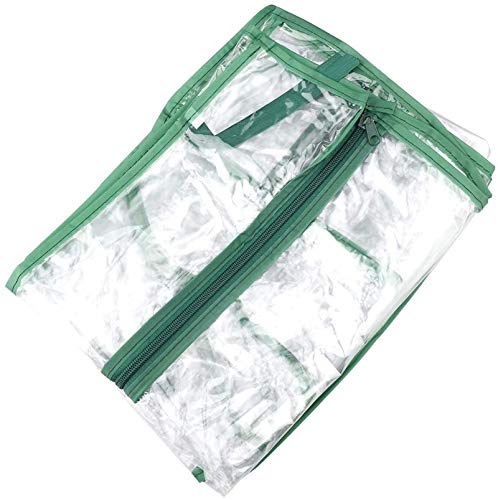
Replacing a torn shelf cover usually means tossing the whole mini greenhouse, which feels wasteful when the metal frame still has years left. The UWIOFF replacement arrives as a single clear PVC (polyvinyl chloride) cover sized roughly 27″ L x 19″ W x 61″ H to fit common four-tier shelf units from multiple brands. You slide it over the existing frame and zip it up, no tools required.
The clear material lets in full light for seedlings on lower shelves, which matters when you’re starting tomatoes under LEDs. Owners commonly report that the cover is easier to install with a helper holding the zipper pull, especially in windy weather. PVC tends to stiffen in cold snaps, so plan to re-fit on a calm day above 50°F.
Useful Strengths
- Drops over existing four-tier frame without disassembly
- Clear PVC transmits full light to seedlings on every shelf
- Waterproof material keeps rain off young transplants
- Cross-brand sizing fits common shelf greenhouse frames
Points To Note
- Frame is not included, so this only works if you already own a shelf unit
- PVC can stiffen in cold weather, making winter installation trickier
- Zipper durability depends on careful use around corners
Best Suited To
Seed starters who already own a four-tier shelf greenhouse and just need to refresh a cracked or cloudy cover without buying a complete unit.
Consider Something Else When
Gardeners without an existing frame should consider the Ohuhu Portable Mini Greenhouse, which ships with the cover and frame together for a first-time setup.
When midday sun scorches lettuce and peppers, full blackout cloth is overkill. The DGSL 10x20ft mesh blocks 40% of sunlight, the sweet spot for vegetables, flowers, and patio seating that need relief without going cave-dark. Reinforced grommets run along the edges so you can tie the cloth to a pergola, hoop frame, or fence post in minutes.
HDPE (high-density polyethylene) knit construction resists tearing better than cheap woven tarps, and it breathes, so wind passes through instead of catching it like a sail. The 10x20ft size covers a full raised bed row or a small patio table area. You may find that afternoon sun angles shift through the weave, so rotating plant placement can fine-tune exposure.
Where It Delivers
- 40% shade rating protects vegetables without starving them of light
- 10x20ft size covers a full bed row or a patio section
- Grommets simplify tying to posts, frames, or fences
- HDPE knit breathes in wind, reducing sail effect in storms
Honest Caveats
- 40% shade may feel too light for full-sun patios in desert climates
- Knit material can stretch over years of sun exposure, requiring retightening
Right Fit For
Vegetable gardeners and patio growers in temperate climates who need filtered afternoon sun rather than full blackout shading.
A Better Fit Elsewhere
Garden owners in extreme-sun regions should consider the Glieskir 90% Blackish Green Shade Cloth, which blocks far more light for sensitive ferns and shaded herb beds.
First-time greenhouse owners often want something they can assemble in an afternoon without power tools or a hardware store run. The Ohuhu 71″x36″x36″ walk-in covers that exact need: a house-shape steel frame, a waterproof UV-protected plastic cover, dual zippered doors, and ground stakes. The vertical walls let you actually walk inside to water or harvest.
The footprint fits neatly against a fence line, and the dual doors roll up for ventilation on warm days. Owners commonly report that staking all four corners matters in breezy yards, since the lightweight frame catches wind otherwise. The cover is a thin PE (polyethylene) film, so it will need replacement sooner than the rigid panels covered below.
Features That Help
- Walk-in height lets you tend plants without crouching
- Dual zippered doors roll up for adjustable airflow
- Tool-free assembly suits renters and first-time owners
- Ground stakes included for anchoring in light wind
Some Limits To Know
- PE plastic cover has a shorter lifespan than rigid panels
- Lightweight frame can lift in strong gusts if not staked thoroughly
Key Specs
Made For
Beginners and renters who want a movable, no-commitment greenhouse that sets up in an hour and stores flat at season’s end.
Swap It Out When
Anyone planning a permanent backyard build will find the DGSL Polycarbonate Twin-Wall Panels a more durable long-term cover option.
Not every plant wants the same sunlight as a tomato. Ferns, hostas, and shade-loving herbs need serious light reduction, and that’s where the Glieskir 90% shade cloth earns its keep. The HDPE knit blocks 90% of incoming rays while still allowing air circulation, which prevents the heat trap that kills plants under solid tarps.
Six-needle reinforced binding runs along all four edges, which is the kind of detail that separates a one-season tarp from something that lasts five years outdoors. Grommets are spaced for standard tie-down points, so you can rig it between posts or drape it over a pergola. You may find the dark green color absorbs heat on still summer days, so pairing it with airflow helps sensitive plants thrive.
Good Reasons To Consider
- 90% shade rating supports ferns, hostas, and shade herbs
- Reinforced six-needle binding resists edge fraying
- Grommets allow fast installation on posts or pergolas
- HDPE knit breathes, preventing heat buildup under cover
Less Ideal Details
- Dark color absorbs heat in still air, so airflow is important
- 6.5x10ft size suits smaller pergola sections, not large yards
Whose Shelf It Belongs On
Patio growers in hot climates who need to drop a section of light dramatically for shade-loving ornamentals or to keep a seating area usable through August.
Where Another Pick Suits Better
Vegetable gardeners wanting gentle afternoon relief should consider the DGSL 40% Shade Cloth, which filters light without going into deep shade.
Building a small cold frame or low tunnel often means a trip to the hardware store for oddly-sized plastic, and the leftovers rarely store well. The chicarry 12x25ft 6 mil clear film solves that with a standard width that drapes cleanly over a 10ft hoop house with extra on the ground for anchoring. Six mil thickness holds up to wind flapping far better than the 4 mil films common in big-box rolls.
UV resistance extends useful life past a single season, and the clear material keeps light transmission high for overwintering greens. A 5-layer co-extrusion (bonding multiple plastic layers in one process) gives the film surprising tear resistance for the price. For most small frames, the 12ft width means you may need to seam panels together for wider builds.
Everyday Wins
- 6 mil thickness resists tearing better than 4 mil budget films
- UV treatment extends useful life through multiple seasons
- Clear film keeps light transmission high for overwintering crops
- 5-layer co-extrusion balances flexibility and strength
Things To Consider
- 12ft width requires seaming for wider walk-in frames
- Polyethylene film eventually clouds, so plan on replacement every few years
Perfect Match For
DIYers wrapping small cold frames, low tunnels, and 10ft-wide hoop houses who want a tougher-than-average film without paying for a 24ft-wide roll.
Skip It When
Builders with full walk-in frames should consider the chicarry 24x25ft 6 mil film, which drapes a 20ft-wide structure without seaming.
Walk-in greenhouse frames need a single sheet wide enough to drape over the entire roof without seams catching water. The chicarry 24x25ft version solves the seam problem at the cost of a bit more material. The 6 mil polyethylene and 5-layer co-extrusion construction mirror the smaller 12ft film, so durability stays consistent across the line.
For most backyards with a 12ft-wide hoop house, the 24ft width provides generous overhang to anchor or bury the edges, which dramatically improves wind resistance. UV treatment helps the film survive full-sun exposure without clouding for several seasons. You may find a helper worthwhile when pulling the sheet over a tall frame, since 25 feet of plastic flapping in a breeze is unwieldy solo.
Where It Excels
- 24ft width drapes a full walk-in frame without seaming
- Generous 25ft length allows ground anchoring or burial
- 5-layer co-extrusion matches the smaller chicarry film for consistency
- UV resistance supports multi-season use in direct sun
Potential Drawbacks
- Wide roll is heavy and awkward for one person to install
- Overkill for narrow raised bed tunnels where 12ft film suffices
Key Specs
Who Should Grab It
Home builders wrapping full-size walk-in greenhouses who want a single, seam-free cover rather than taping narrower sheets together.
Another Choice May Suit
Owners with smaller 10ft hoop houses will save material and weight with the chicarry 12x25ft 6 mil film, which leaves less excess to trim.
Standard 6 mil films shred in the first real windstorm of fall, leaving gardeners scrambling to recover plants mid-season. The Ansgery 16 mil tarp is a different animal: a woven polyethylene core sandwiched between coated layers, the kind of construction that handles hailstorms and heavy snow loads without tearing. The 16x20ft footprint covers a large backyard frame with material to spare for ground anchoring.
Light transmission stays high thanks to the clear coating, even with the added thickness. UV inhibitors are built into the coating rather than added as a surface treatment, so they don’t wear off the way they can on thinner films. For most storm-prone regions, the weight is the trade-off: a 16 mil sheet is heavy, so a helper during install saves real frustration.
The Case For It
- 16 mil thickness survives hailstorms and snow loads that shred 6 mil film
- Woven and coated polyethylene construction resists punctures
- UV inhibitors integrated into coating for long-term clarity
- Clear surface maintains high light transmission despite thickness
A Few Limitations
- Heavier than standard film, so installation typically needs two people
- Premium thickness costs more per square foot than 6 mil options
Key Specs
Built With In Mind
Garden owners in wind-prone or snowy regions who want a multi-season cover that won’t need replacing after the first big storm.
Reach For A Different Pick When
Budget-focused builders with milder climates should consider the chicarry 6 mil films, which handle normal conditions at a lower cost.
The same 16 mil toughness, sized for a more typical backyard. The Ansgery 10x20ft tarp fits standard 8ft-wide hoop houses with overhang on both sides for ground anchoring or weight bags. Woven polyethylene with double coating carries the same construction as the larger 16×20 sibling, so storm performance stays consistent.
Owners commonly report that the 10ft width is easier to handle solo than a 16ft sheet, even though the material is just as heavy per square foot. UV inhibitors are baked into the coating, so clarity holds up across multiple seasons without yellowing. You may find the price premium harder to justify for a small herb bed, but for a serious vegetable frame it’s a sensible upgrade.
Notable Upsides
- 10x20ft size fits typical 8ft hoop houses with anchoring overlap
- 16 mil thickness handles wind and snow far better than 6 mil film
- Woven core prevents small tears from spreading across the sheet
- Easier solo handling than the wider 16×20 sibling
Trade-Offs To Consider
- Heavier than standard film, so plan for a careful install
- Higher upfront cost than 6 mil alternatives for the same footprint
The Right Fit
Backyard vegetable growers with standard hoop houses who live in regions with strong wind or heavy snow and want a cover that outlasts the season.
Where A Sibling Pick Shines
Garden owners with wider walk-in frames should consider the Ansgery 16x20ft 16 mil cover, which drapes larger structures without seaming.
Polycarbonate panels turn a backyard build into a structure that lasts a decade rather than a season. The DGSL pack includes six twin-wall sheets, each 4ft x 2ft at 0.16″ thick. The twin-wall design means two flat layers separated by internal ribs, which traps insulating air and diffuses light at the same time. Around 80% of light reaches plants underneath, but it’s softened so seedlings don’t scorch.
Rigid panels handle hail, snow loads, and stray basketballs without the constant worry of puncturing a film cover. The 0.16″ thickness is a sensible middle ground: lighter than the 0.31″ commercial panels but far tougher than plastic film. For most DIY builders, the trick is cutting panels cleanly with a fine-tooth blade, since rough edges crack under stress.
What Makes Sense
- Twin-wall design insulates while diffusing light to prevent scorch
- Rigid panels resist hail and impact damage that destroy film
- 80% light transmission supports strong plant growth
- 0.16″ thickness balances weight and durability for DIY builds
Factors To Consider
- Panels require a wood or metal frame to mount, which is an extra project
- Cutting needs a fine-tooth blade to avoid cracking the edges
Key Specs
Not Your Match When
Anyone needing a quick, no-build cover should consider the Ohuhu Portable Mini Greenhouse, which arrives ready to assemble without carpentry work.
Who It Suits Best
DIY builders planning a permanent backyard greenhouse who want panels that outlast multiple seasons of film replacement and shrug off weather extremes.
Matching Covers to Your Frame, Climate, and Goals
Choosing a greenhouse cover really comes down to three questions: what frame you have, what weather you fight, and how long you want the cover to last. Film at 6 mil is the budget workhorse, fine for calm climates and short seasons, while 16 mil woven tarps earn their keep wherever winter brings wind or wet snow. Polycarbonate panels sit at the top of the durability ladder and reward permanent builds with decade-long service, though they need a real frame to mount to.
Shade cloth operates in a different lane entirely. A 40% mesh suits most vegetable gardens that just need midday relief, while 90% cloth is the right call for ferns, hostas, and shaded seating areas under brutal afternoon sun. Grommet spacing matters more than people expect, since tighter grommets let you anchor a smaller cloth to irregular structures without sag.
Replacement covers for shelf greenhouses are worth their own category. Throwing away a perfectly good metal frame because the cover clouded or tore is wasteful, and a $30 PVC cover refreshes the whole unit. For most shelf owners, the smarter move is to keep a spare cover on hand rather than scrambling when the first one finally gives out.
Fiberglass Hoops vs Rigid Frames
Fiberglass hoops win on flexibility and storage: you can throw them up in spring and collapse them in fall without taking up shed space. Rigid frames, whether steel-tube or wood-built, lock in year-round and support heavier covers like polycarbonate or thick film, but they require a real site commitment. Renters and tinkerers usually prefer hoops; long-term property owners usually prefer rigid.
Light Transmission and Plant Health
Clear film passes roughly 90% of light, twin-wall polycarbonate around 80%, and shade cloth anywhere from 10% to 60% depending on weave density. Most fruiting vegetables want maximum light during the growing season, so clear covers dominate for tomatoes and peppers. Leafy greens and seedlings handle diffused light better, which is why polycarbonate is popular for nursery greenhouses.
Thickness and Lifespan
4 mil film often lasts a single season, 6 mil pushes two to three seasons, and 16 mil reinforced tarps can run five years or more. Polycarbonate panels routinely cross a decade. Lifespan matters most where replacement is hard: tall frames, rooftop setups, or remote gardens. For low tunnels you can re-cover in fifteen minutes, thinner film makes economic sense.
What Often Trips Shoppers Up
Pitfalls Shoppers Hit
The most common mistake is buying film sized to the frame rather than the frame plus anchor overlap. A 10ft hoop house needs a 12ft film to allow ground burial, otherwise the first wind lifts the cover like a sail. Another recurring error is ignoring mil thickness on the assumption that all clear plastic is similar; a 4 mil budget film tears at the first branch rub, while 6 mil shrugs off the same contact.
Where The Extra Money Goes
Higher-tier covers earn their price through three things: thicker material, UV treatment integrated into the plastic rather than coated on, and reinforced edges. A 16 mil woven tarp costs more because the construction itself takes longer and uses more raw material. Polycarbonate tops the list because the extrusion process and twin-wall geometry are genuinely more complex than flat film. The upgrade pays off when replacement labor, lost plants, and storm damage outweigh the upfront difference, which usually happens by year two in any climate with real weather.
