

Wind can shred a flimsy greenhouse in a single afternoon, which is why the right frame, cover, and anchoring matter more than raw size. Coastal gardeners, open-lot growers, and anyone living in gusty inland regions all share the same frustration: a greenhouse that looks fine in a calm forecast and turns into a sail the moment a real storm rolls through.
This roundup focuses on structures and accessories that earn their keep in blustery conditions, from rigid aluminum and polycarbonate builds to fiberglass hoop kits and clear PVC tarps you can strap over a vulnerable frame. Each pick addresses a different wind scenario, so you can match the structure to your site, your crops, and your tolerance for re-tying tarps every time the forecast turns.
Your Options, Compared
ShelterLogic 70658 Greenhouse-in-a-Box Flow Peak Roof

Garden Hoops Grow Tunnel 6-Set Kit

Grezone Walk-in Greenhouse 10x7x7 FT
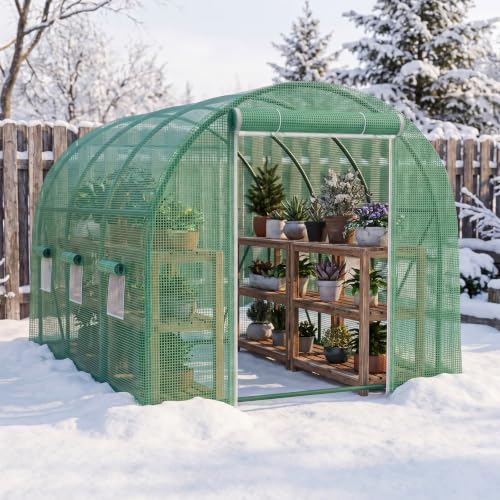
gaildon 10x7x7 FT Heavy Duty Walk-in Greenhouse

CROWN SHADES 8×6 Pop-Up Greenhouse

Greengro 28x57x76 Inch Walk-in Greenhouse

Outsunny 15x6x7 Walk-in Tunnel Greenhouse

Sylviera 12×12 FT T-Shape Polycarbonate Greenhouse
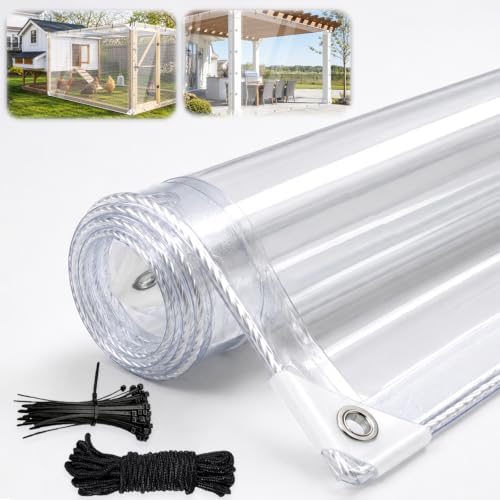
LC&QS 8×10 Clear PVC Tarp
A Closer Look At Each Pick
The ShelterLogic 70658 leans on a peak-roof profile (a triangular roof shape that deflects gusts upward rather than catching them flat) and a 1-3/8″ tubular steel frame, the kind of geometry you see on serious carport-style structures. Compared with the soft-sided tunnel options later in this list, this one behaves more like a permanent shed: the roof sheds wind and rain, and the translucent cover diffuses light without letting plants cook under midday sun.
At 10 by 20 feet, the footprint fits two long raised beds with a working aisle down the middle. In a typical suburban yard with a hedge break, you may find it stays put through most storms, though it still needs solid ground anchors and a taut cover to avoid flapping damage.
What Stands Out
- Peak roof profile actively deflects gusts instead of catching them.
- Translucent waterproof cover balances light diffusion and rain runoff.
- Walk-in height lets you tend plants upright without crouching.
- Frame dimensions match standard fittings, simplifying repairs down the road.
Honest Caveats
- Cover tension matters: a loose cover flaps and abrades quickly in steady wind.
- Steel tubing will eventually need a touch-up coat to prevent surface rust in coastal zones.
Key Specs
Right Fit For
Suburban growers with a sheltered backyard who want a full walk-in structure that holds up through shoulder-season storms.
Consider Something Else When
Greengro Greenhouse suits you better if you only have a small patio and need a compact 28-inch-deep footprint instead of a full shed.
Where the ShelterLogic is a structure, this Garden Hoops kit is a system. Six sets of 7-foot fiberglass hoops (flexible rods that bend into a half-circle over a bed) give you the bones of a low tunnel, and you supply the row cover, insect netting, or shade cloth. The fiberglass flexes with gusts instead of snapping, which is a quiet form of insurance you don’t get from rigid PVC pipes.
For raised bed growers dealing with spring wind shear, the low profile is the real win. The tunnel hugs the soil, presents a small sail area, and the hoops themselves can be pinned or weighted without elaborate hardware. If you garden on a windy balcony or rooftop bed, this format may outperform taller walk-ins.
What Works In Its Favor
- Fiberglass construction flexes under gusts rather than cracking.
- Low tunnel profile keeps the wind footprint minimal.
- Modular 6-set design adapts to single beds or a continuous row.
- Pairs with row cover, insect netting, or shade cloth as the season changes.
Some Limits To Know
- No cover included, so your total cost depends on the fabric you pair with it.
- Fabric tension is up to you; loose fabric is the most common cause of mid-storm failure in hoop tunnels.
Best Suited To
Raised bed and kitchen-garden growers who want season extension without a permanent structure taking up yard space.
Look Elsewhere When
The Grezone Walk-in Greenhouse fits better if you want full standing height for trellising tomatoes or working with flats on a bench.
The Grezone Walk-in trades the ShelterLogic’s rigid frame for a galvanized steel skeleton wrapped in heavy-duty PE plastic (a polyethylene film that holds warmth and resists tearing). The clever bit is the dual-door system: a zippered screen door for summer ventilation and a separate PE cover door for cold nights, so you can balance airflow without unzipping the whole front.
Six mesh windows along the sides prevent the heat buildup that cooks seedlings in still-air tunnels. In a real backyard, that means you can leave the greenhouse closed on a windy afternoon without roasting your starts. You may find the 10-foot length gives you room for both a tomato row and a seedling bench, which the lower-profile Outsunny tunnel can’t quite match.
Notable Upsides
- Dual-door design lets you ventilate without exposing the whole interior.
- Six mesh windows reduce summer heat without inviting insects.
- Reinforced crossbars (horizontal supports between vertical posts) add diagonal stability against racking winds.
- Walk-in height supports tall crops like indeterminate tomatoes.
Practical Considerations
- PE cover seams benefit from a bead of clear repair tape on any stress points after a month of use.
- Plastic skin has a shorter lifespan than polycarbonate and will likely need replacement in a few seasons.
Who It Suits Best
Backyard vegetable gardeners who want standing room, multiple access points, and active airflow control on gusty days.
Where Another Pick Suits Better
The Outsunny 15-foot tunnel fits you better if you grow one very long row and need a footprint that follows a fence line.
At first glance the gaildon 10x7x7 looks like a sibling to the Grezone above, and the dimensions match. The differences show up in the framing: four reinforced diagonal bars at the corners, paired with crossbars at the roof and base, create a triangulated structure that resists racking (the side-to-side wobble that flattens cheap tunnels in a sideways gust).
The 140 g/m² PE grid cover is heavier than the standard 110-gram covers on most budget tunnels. In a coastal or open-prairie yard, that extra weight translates to a calmer skin during steady wind, less noise, and fewer stress cracks where the fabric meets the door zipper. You may find the assembly slower than claimed, but the extra bolts earn their keep when the forecast turns ugly.
What Pays Off
- Diagonal corner bracing resists the racking that flattens standard tunnels.
- Heavier 140 g/m² cover holds tension better and flaps less.
- Galvanized finish (a zinc coating that slows corrosion) extends frame life in damp climates.
- Roll-up zippered door with mesh layer supports flexible airflow.
Small Caveats
- More bolts and braces mean a longer initial build than the average pop-up.
- Heavier cover is harder to remove for off-season storage.
Made For
Open-lot gardeners and windy-zone homeowners who want the most structurally braced walk-in tunnel in this price tier.
Skip It When
CROWN SHADES 8×6 Pop-Up Greenhouse fits your situation better if you want tool-free setup and don’t need a full 10-foot footprint.
The CROWN SHADES 8×6 is the only pop-up in this roundup, and that single feature changes who it suits. The patented one-push CENTERLOK hub (a central locking mechanism that locks the frame into shape with one motion) and the internal support pole under the hub let you go from storage bag to walk-in shelter in seconds, no tools, no loose hardware, no crossed wires.
For renters, weekend gardeners, and anyone who needs to take the greenhouse down before a storm warning, that convenience is genuinely useful. The honest trade-off is wind capacity: a flexible pop-up frame, in our view, is best reserved for breezy sites with a windbreak rather than fully exposed ridgelines. Stake it well and you’ll get good service; expect it to behave like a rigid metal kit and you’ll be disappointed.
Where It Helps
- One-push setup removes the typical build-day frustration.
- Internal hub support pole improves stability over basic pop-ups.
- Tool-free design travels well to a second property or community garden plot.
- Walk-in 8×6 footprint fits standard patio dimensions.
Trade Offs
- Lightweight pop-up frame needs extra staking and a windbreak to handle serious gusts.
- Cover tension can loosen over multiple setup cycles, which speeds up flapping wear.
Perfect Match For
Renters and casual gardeners who prioritize fast setup and portability over absolute maximum wind tolerance.
Not Your Match When
You live on a fully exposed lot, in which case the gaildon 10x7x7 with its diagonal bracing is a stronger bet.
The Greengro shrinks the walk-in greenhouse idea down to 28 inches deep, 57 inches wide, and 76 inches tall. That footprint is closer to a bookshelf than a building, which makes it a real option for a small patio, a side yard with a concrete slab, or even a screened porch in shoulder seasons.
For wind, the small size works in two directions. There’s less surface to push around, but the cover also has less fabric tension, so you can tie it down tight against railings or a wall. You may find the screened windows a little small for serious summer ventilation, but as a season-extender for herbs and salad greens, the dimensions genuinely earn their space.
Where It Delivers
- Compact footprint fits patios and balconies where larger tunnels won’t go.
- Walk-in height accommodates standard shelving units.
- Small sail area handles breezy sites that would punish a 10-foot tunnel.
- Thick polyethylene cover balances light and insulation.
A Few Limitations
- Limited interior volume restricts root depth for large tomato or pepper plants.
- Smaller windows mean summer heat can build up faster than in a 6-window walk-in.
Right Fit For
Apartment and small-yard growers who want greenhouse conditions for herbs, starts, and leafy greens without surrendering the whole patio.
Swap It Out When
ShelterLogic 70658 makes more sense if you have a true backyard and need a 200-square-foot working footprint.
The Outsunny 15-foot tunnel is the long-and-narrow option, the same shape you see on small market farms where one row of tomatoes runs down the middle. The two-layer 140 GSM PE cover (a fabric weight of 140 grams per square meter) has a reinforcement grid baked into the middle, which is the most common source of wind damage on cheap tunnels: a single tear in the wrong spot unzips the whole cover.
Side roll-up doors on both ends give you cross-ventilation, the kind of airflow that keeps powdery mildew at bay in humid weather. The narrow 6-foot width means less sail area from a side gust than a 10-foot square tunnel, which is a quiet but real wind benefit. You may find that 15 feet of length asks for two pairs of hands during assembly, so plan ahead.
Key Advantages
- Reinforcement grid in the cover stops small tears from spreading.
- Two end doors create cross-ventilation without an electric fan.
- Long footprint follows fence lines and side-yard plots efficiently.
- Narrow width keeps the side profile manageable in steady wind.
Worth Bearing In Mind
- Length requires careful ratchet-strap anchoring along the base, especially at the ends.
- PE cover seams near the door zippers commonly need reinforcing tape after the first season.
Who Will Love This
Single-row market gardeners and homeowners with a long, narrow side yard who want one efficient growing line.
Another Choice May Suit
Greengro is a better match if you need something under 5 feet in any dimension for a small patio.
The Sylviera 12×12 is the only rigid-panel structure in this list, and the only one that feels like a real building. The reinforced aluminum frame (a lightweight metal that won’t rust) carries twin-wall polycarbonate panels (rigid plastic sheets with hollow channels inside that trap insulating air) that filter UV and shrug off hail in ways PE film never will. The T-shape roof profile splits the footprint into a taller central nave and shorter side walls, which is great for tall crops and good for wind shedding.
This is the right pick for someone who has decided to grow seriously through winter. You may find the assembly demands a full weekend and a second pair of hands, but the panels lock in place and the frame does not depend on fabric tension to stay upright. For year-round use, sealing panel gaps with silicone (not included) is the kind of detail that pays off in storm-driven rain.
Where It Excels
- Rigid aluminum frame and panels are immune to the flapping wear that ends PE covers.
- Twin-wall polycarbonate adds insulation for cool-season growing.
- UV protection extends the life of plant foliage under strong sun.
- Available in 6×4, 6×6, 6×8, and 6×10 sizes with included thermometers for fit flexibility.
Worth Noting
- Heavier and slower to assemble than any tunnel in this roundup.
- Needs a level base, ideally a perimeter foundation, to keep panel joints aligned.
Key Specs
Built With In Mind
Serious hobbyists and small-scale growers who want a year-round structure and are willing to invest a weekend in assembly.
A Better Fit Elsewhere
ShelterLogic 70658 is the right call if you need 200 square feet of working space and don’t want to commit to a rigid build.
The LC&QS Clear Tarp isn’t a greenhouse, it’s the patch kit and reinforcement layer you strap over a vulnerable one. Made from heavy PVC (a thick, flexible plastic) with grommets (metal reinforced holes) every few feet and tie ropes included, it lets you overlay a tired PE cover, seal a torn panel, or even build a quick cold frame on a wooden frame.
The clear plastic passes light through, which is the whole point for a greenhouse context. You may find the 8×10 size useful for end-wall coverage on a tunnel like the Outsunny, where the door zip area takes the most wind abuse. It’s also a sensible emergency layer to keep on hand before storm season.
The Case For It
- Grommeted edges allow secure tie-down over existing covers or frames.
- Clear PVC preserves light transmission while adding a wind layer.
- Waterproof and dustproof surface doubles as a rain barrier.
- Useful as a patch, an overlay, or a DIY cold frame skin.
Points To Note
- PVC cold-creases in sub-freezing weather, so it stores best rolled, never folded.
- Not a standalone greenhouse, you’ll need a frame to support it.
Whose Shelf It Belongs On
Anyone with an existing tunnel greenhouse who wants a storm-ready reinforcement layer in the shed for next season.
Reach For A Different Pick When
CROWN SHADES 8×6 Pop-Up Greenhouse is the better answer if you need a complete structure, not an accessory.
What To Weigh Before Choosing A Wind-Resistant Greenhouse
Frame Geometry Over Frame Weight
A heavier tube isn’t automatically stronger. The peak-roof ShelterLogic and the T-shape Sylviera both use geometry to shed wind, while the gaildon tunnel uses triangulation (a pattern of triangles in the frame) for racking resistance. Square and rectangular frames with no diagonals are the most common failure mode, no matter how thick the tubing. Choose shape first, then material gauge, then cover weight.
Cover Material And Its Trade-Offs
Polyethylene film is the cheapest, lightest, and most replaceable. Polycarbonate panels are the most durable and the best insulator but require a real frame. PVC tarps sit in between, useful for reinforcement but rarely ideal as a primary skin. For high-wind sites, the cover must hold tension without tearing, which usually means heavier film or rigid panels, never thin single-layer plastic.
Anchoring And Base Preparation
Every greenhouse in this roundup will fail in a serious storm if it isn’t anchored. Ground stakes work for soft soil, but concrete footings or ratchet straps to a wooden base frame are the realistic answer on exposed lots. The ShelterLogic, Grezone, and gaildon all benefit from a perimeter base, and the Sylviera effectively requires one. Plan for anchoring before you plan for cover.
Size And Sail Area
A 10×20 greenhouse catches a lot of wind. A 28-inch-deep Greengro catches very little. There is no shame in picking a smaller structure for an exposed site. The Outsunny 15-foot tunnel is a smart compromise: long enough to be productive, narrow enough to stay manageable in steady wind.
Mistakes Worth Dodging And Where The Upgrade Pays
Common Shopping Slip Ups
The most common buying mistake is choosing by footprint alone and ignoring frame design. A 10×10 tunnel with no diagonal bracing and thin film will fail in conditions where a smaller, well-braced structure thrives. Buyers also tend to underestimate anchoring, expecting stakes to hold in clay that turns to mud after a rain. Plan a real base, or pick a small structure your anchors can actually grip.
When Paying More Pays Off
The jump from a budget tunnel to a reinforced walk-in or a rigid polycarbonate greenhouse buys two things: frame rigidity and cover lifespan. A reinforced gaildon or a Sylviera panel kit survives wind events that shred a basic PE cover, and they hold their resale value if you ever move. The honest read is that the upgrade is worth it for year-round growers, while seasonal herb gardeners on a sheltered patio can skip the premium tier without regret.
Frequently Asked Questions
What Makes A Greenhouse Good In High Winds?
Frame shape, anchoring method, and cover weight all matter more than raw size. A peak or T-shape roof sheds gusts, diagonal bracing resists racking, and a heavier cover or rigid panels prevent flapping tears.
Are Polycarbonate Greenhouses Better Than PE Film For Wind?
Polycarbonate panels handle hail, wind, and UV far longer than PE film, but they require a rigid frame and a more careful build. PE film is cheaper and easier to replace, which makes sense for seasonal growers.
How Do I Anchor A Greenhouse In Windy Conditions?
Use ground anchors rated for your soil type, paired with ratchet straps to a perimeter base frame. In exposed sites, concrete footings or a wooden base attached to anchors give the best long-term grip.
Can Pop-Up Greenhouses Handle High Winds?
Pop-up greenhouses are best reserved for breezy sites with a windbreak such as a fence or hedge. On fully exposed lots, a reinforced walk-in or a rigid greenhouse is a more reliable choice.
How Often Should I Replace The Cover?
PE film covers typically last two to four seasons depending on UV exposure. Polycarbonate panels can last a decade or more with basic cleaning. Inspect seams and zippers each spring and patch early to avoid mid-season blowouts.
Closing Remarks
Wind doesn’t care how attractive your greenhouse looks on a calm day, so match the structure to the worst forecast you actually expect. The picks above cover a wide range of wind scenarios, from a sheltered patio herb garden to a year-round polycarbonate build, and pairing the right frame with the right cover is what keeps plants standing through the next storm. Your best choice is the one that fits your site, your crops, and the time you can spend on anchoring and upkeep.
