

A few seasons of pulling crabgrass by hand is enough to convince anyone that ground cover fabric is worth the effort. The right woven sheet cuts sunlight to weed seeds, holds mulch in place, and keeps soil moisture from evaporating on hot July afternoons. Choosing among the options comes down to weight, weave density, and the footprint your project actually needs, which is where the picks below earn their place.
A Closer Look At The Lineup

UWIOFF 4ft x 50ft Weed Barrier Landscape Fabric
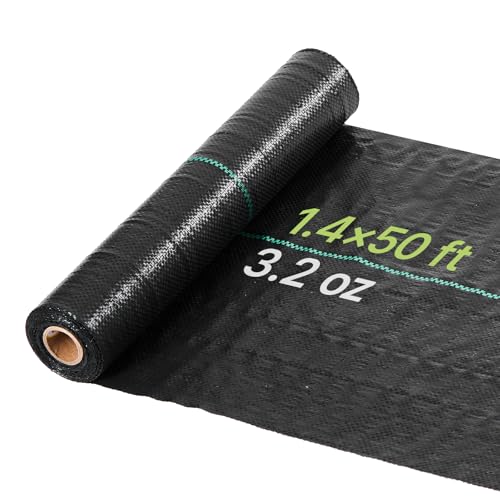
VEVOR 1.4x50FT 3.2oz Weed Barrier Fabric
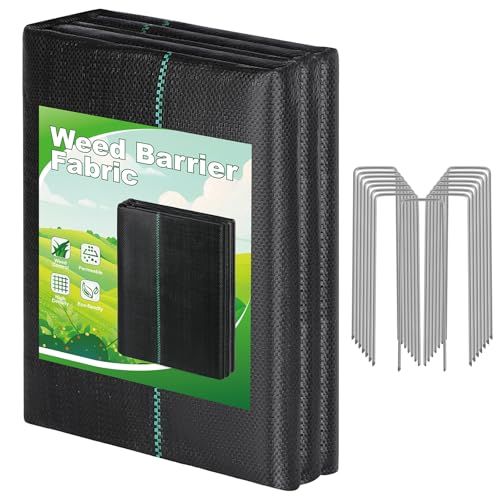
FEED GARDEN 4FT x 50FT Weed Barrier with 15 Staples

CFTEL 3x50FT 3.2oz Weed Barrier Geotextile

Vanver 2.8FT x 50FT Weed Barrier Landscape Fabric

Snail 3FTx100FT 5oz Pro Ground Cover Mat
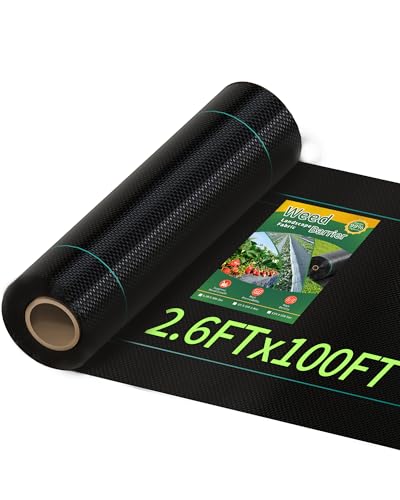
Pterying 2.6ftx100ft Heavy Duty Geotextile

JOYSWAN 3x50FT Weed Barrier Woven Ground Cover

Rintea 4 x 300ft 3.2oz Landscape Fabric
More Details On Our Top Picks
The UWIOFF roll lands at a familiar 4 by 50-foot size, which makes it a straightforward starting point for rectangular beds and the kind of straight runs you find alongside a fence. Setup is mostly unrolling, cutting to length with utility scissors, and pinning the edges with staples or rocks. Compared with the narrower VEVOR strip that follows, this sheet covers a full bed in fewer seams.
For most home gardeners, the four-foot width lines up nicely with raised bed dimensions, so a single pass often handles the whole top. The polypropylene weave is woven rather than spun, meaning air, water, and liquid fertilizer still move down into the root zone. That permeability is the real reason to use a fabric barrier instead of plastic sheeting.
Bright Spots
- Four-foot width matches common raised bed dimensions, reducing the number of seams.
- Woven polypropylene allows water and air to pass through to plant roots.
- Cuts cleanly with household scissors for irregular shapes and curves.
- Light enough for one person to roll out and reposition during setup.
Honest Caveats
- Owners commonly report that the roll arrives with creases that take a day in the sun to relax flat.
- Without mulch on top, exposed sections can degrade faster under direct UV.
Right Fit For
First-time users with a couple of standard raised beds who want a forgiving, easy-to-cut roll.
Look Elsewhere When
You need French drain performance; the CFTEL 3x50FT 3.2oz Weed Barrier Geotextile is the stronger fit for drainage projects.
VEVOR’s narrow strip takes the opposite approach from the UWIOFF roll, trading width for length in a 1.4 by 50-foot package. That footprint suits tight zones like the seam between a walkway and a foundation, the strip behind a vegetable row, or the edging along a flower border. A high-density 3.2-ounce polypropylene weave gives it reasonable puncture resistance under gravel.
For narrow paths and detail work, you may find the 1.4-foot width more useful than full-size rolls because there is less trimming waste. Setup follows the same pattern as the UWIOFF sheet, unroll, cut, and pin. The denser weave also tends to hold up better under foot traffic when used as an underlayment beneath stepping stones.
Well-Handled Touches
- Narrow 1.4-foot width fits walkway edges and foundation strips without overlap waste.
- 3.2-ounce woven density offers a stiffer, more puncture-resistant feel than lighter fabrics.
- Cuts without fraying, which keeps the edge clean around curved borders.
Points To Note
- You will need multiple parallel runs to cover a full raised bed, which adds seam work.
- Storing leftover roll ends requires a dry spot, since damp folds can encourage mildew.
Key Product Details
Whose Shelf It Belongs On
Detail-oriented landscapers laying gravel strips, stepping-stone paths, or narrow foundation borders.
Swap It Out When
You need full-bed coverage in one piece; the FEED GARDEN 4FT x 50FT Weed Barrier handles that footprint with included staples.
FEED GARDEN’s roll shares the four-foot width of the UWIOFF sheet, but adds fifteen landscape staples to the package. That small inclusion matters more than it sounds, because pinning fabric edges is the part of installation most beginners forget to budget for. The woven geotextile (a permeable fabric engineered for soil separation) is breathable, so water reaches the root zone instead of pooling on top.
The honest read is that bundled staples are useful for a single bed but will run out fast on bigger projects. Raised bed gardeners will probably appreciate the matching footprint, while anyone covering a long path may need to buy extra staples separately.
Where It Delivers
- Fifteen included staples remove a separate supply run for a small project.
- Breathable woven geotextile lets water and air reach plant roots.
- Four-foot width matches standard raised bed frames for clean coverage.
Trade-Offs
- Fifteen staples cover only a couple of small beds, so larger projects require extras.
- Staples tend to loosen in loose or sandy soil over a full season.
Made For
Beginners tackling a single raised bed who want staples included rather than sourced separately.
A Better Fit Elsewhere
You need a wider coverage footprint; the Rintea 4 x 300ft 3.2oz Landscape Fabric handles much larger layouts.
CFTEL leans into the structural side of the category, marketing its 3.2-ounce polypropylene as a geotextile-grade barrier. Geotextile means the fabric is engineered for soil separation and drainage work, not just weed blocking, which is why it shows up under French drains, gravel driveways, and erosion-prone slopes. A 3 by 50-foot sheet covers a walkway or a narrow driveway strip without much waste.
For homeowners laying a French drain, the fabric wraps the gravel bed to keep soil from migrating into the stone. That is a different use case from garden bed weed control, and the CFTEL handles both reasonably well. Compared to the UWIOFF roll, the weave here is denser and a bit stiffer under hand.
A Favorable Mix
- Geotextile-grade construction supports drainage and soil separation projects.
- 3.2-ounce weight feels sturdier than lighter garden fabrics under foot traffic.
- Suitable for French drains, gravel paths, and yard driveways.
- Resists tearing when wrapped around sharp drain rock.
Worth Bearing In Mind
- Stiffer feel makes tight curves harder to shape than lighter fabrics.
- Requires landscape staples or pins at closer intervals on slopes.
Best Suited To
DIYers installing a French drain, gravel path, or driveway edge who need soil separation in addition to weed control.
Where Another Pick Suits Better
Your project is purely a planting bed; the FEED GARDEN 4FT x 50FT Weed Barrier is friendlier for raised bed layouts.
Vanver’s 2.8-foot width sits between the narrow VEVOR strip and the wider UWIOFF roll, landing as a flexible middle option. The 50-foot run length is enough to cover a modest flower bed or a vegetable garden strip. The woven construction keeps water moving downward rather than puddling on the surface.
For shoppers watching the budget, the Vanver offers a sensible balance of coverage and price. It does not have the geotextile density of the CFTEL sheet, but for typical flower bed use that is rarely necessary. The 2.8-foot width also fits a wider variety of bed dimensions without producing the excess material a four-foot roll might leave over.
Useful Strengths
- Mid-width 2.8-foot roll fits a wider range of bed sizes with less waste.
- Woven weave supports water infiltration into the root zone.
- Lightweight enough to reposition during setup.
Less-Strong Areas
- Lacks the heavier 3.2-ounce density found in premium picks.
- Exposed sections may need mulch cover to maximize lifespan.
Feature Snapshot
Perfect Match For
Budget-conscious gardeners refreshing a flower bed who want a basic, dependable weed blocker.
Not Your Match When
You need professional-grade density; the Snail 3FTx100FT 5oz Pro Ground Cover Mat is the upgrade path.
The Snail mat is the heaviest option in the lineup at 5 ounces per square yard, which puts it in a different weight class from the typical 3-ounce landscape fabric. That density shows up in the hand feel and in the way it resists puncture from rocks or shoe heels. A 3 by 100-foot run covers serious ground, often enough to handle a long side yard or multiple beds from a single roll.
For commercial-style projects and heavily used paths, the 5-ounce weight is the real story. Compare that to the UWIOFF roll earlier, and you get noticeably more material to work with per foot. Setup still only takes a utility knife and staples, though you may want a helper for the larger roll.
The Good Stuff
- 5-ounce professional-grade density stands up to foot traffic and gravel.
- 100-foot run length minimizes seams on long garden installations.
- High-density weave resists tearing during installation and over time.
- Permeable to water while still blocking sunlight to weed seeds.
- Multiple size options available for different layout needs.
Honest Caveats
- Heavier weight is stiffer to fold around tight curves.
- Larger roll may be awkward for one person to carry and unroll.
Who Will Love This
Property owners with long garden runs or commercial-scale landscaping who want the heaviest duty option.
Reach For A Different Pick When
Your project is small and budget matters more than weight; the Vanver 2.8FT x 50FT Weed Barrier is the lighter alternative.
Pterying focuses on longevity, weaving its 2.6-foot roll with UV-stabilized polypropylene designed to take multiple seasons of sun. The 100-foot length gives a serious linear run, which is useful for fence lines, foundation plantings, and long border beds. Woven construction also means water and air still reach the soil below.
For sun-drenched yards, the UV-stabilized claim is the headline feature, since unprotected fabric tends to become brittle after a year of exposure. The Pterying’s narrower width works well as a perimeter barrier around the edge of an existing bed.
The Value In It
- UV-stabilized construction targets longer service life in direct sun.
- 100-foot length handles long fence lines and foundation beds.
- Woven polypropylene physically blocks sunlight to weed seeds.
Softer Spots
- Narrow 2.6-foot width means more parallel runs on wide beds.
- UV protection extends life, but covering with mulch is still recommended for longest service.
Feature Rundown
Best Suited To
Gardeners in sunny climates laying long perimeter borders who want the fabric to last multiple seasons.
Consider Something Else When
You need a wider single sheet; the UWIOFF 4ft x 50ft Weed Barrier gives a broader footprint per seam.
JOYSWAN’s woven sheet cuts easily into custom shapes, which is the main reason it earns a spot on the list. Garden beds in real yards are rarely perfect rectangles, and the ability to slice around existing plants, curves, and stepping stones makes installation smoother. The high-density polypropylene is also marketed for driveway use, so it tolerates being laid under gravel.
For irregular layouts, the JOYSWAN’s flexibility in cutting is genuinely useful. Compare that to the Pterying’s narrower UV-stabilized roll, and you trade longevity for shape adaptability.
The Practical Payoff
- Easy to cut to fit around curves, stepping stones, and existing plants.
- Woven high-density polypropylene holds up under gravel in driveway use.
- Three-foot width covers most standard garden beds with one pass.
Some Limits To Know
- Cut edges can fray slightly without a quick pass of a lighter or hem.
- Not specifically UV-stabilized, so covering with mulch is wise.
Who Should Grab It
Gardeners with curved or irregular bed layouts who need to cut around existing plantings.
Where A Sibling Pick Shines
You prioritize long sun exposure; the Pterying 2.6ftx100ft Heavy Duty Geotextile’s UV stabilization is the upgrade.
Rintea takes the largest swing in the category, offering a 4 by 300-foot roll aimed at estate-sized properties and commercial landscaping. At 3.2 ounces of woven polypropylene, the construction sits in the middle of the weight range, sturdy enough for general garden use without being the heaviest option. The four-foot width also matches the bed dimensions used elsewhere in this roundup.
For large projects, you may find the single-roll format saves the headache of overlapping multiple smaller sheets. Smaller yards, on the other hand, will be swimming in leftover material.
What Helps Most
- 300-foot run length suits large properties, farms, or commercial sites.
- 3.2-ounce woven density balances flexibility and tear resistance.
- Four-foot width reduces seam count on standard garden beds.
- Polypropylene weave allows water and air to penetrate to soil.
Practical Considerations
- Bulk packaging is heavy to transport and awkward for small storage sheds.
- Excess material waste is likely on small residential projects.
Built With In Mind
Property managers and homeowners with extensive landscaping who want one roll to cover the whole job.
Skip It When
You only have a small backyard bed; the UWIOFF 4ft x 50ft Weed Barrier is sized for that scale.
What Matters Most Before Choosing Ground Cover To Prevent Weeds
Material and Weight
The weight of landscape fabric, measured in ounces per square yard, tells you most of what you need to know about its durability. Lighter fabrics around 2 to 3 ounces work fine for flower beds with light foot traffic, while heavier 3.2 to 5-ounce rolls handle gravel paths, driveways, and French drains. For most residential gardens, a 3-ounce woven polypropylene hits the sweet spot between flexibility and toughness.
Width and Length Fit
Roll dimensions matter more than people expect. A 4-foot width matches most raised beds, so a single pass covers the top, while a 1.4-foot strip like the VEVOR suits walkway edges. Measure the total square footage of your project before choosing, and remember that seams are the weak point where weeds eventually push through.
Permeability
Woven fabrics let water and air pass into the soil, while non-woven options block more completely but can cause runoff. For planting beds, permeability is the key feature, since roots need moisture and gas exchange to thrive. For drainage projects, the same permeability is what stops soil from clogging the gravel.
Installation and Long-Term Care
Pinning edges with staples every few feet, covering exposed fabric with mulch, and overlapping seams by at least six inches are the small habits that determine whether a fabric barrier lasts one season or five. Storage matters too, since damp folds can develop mildew in a closed shed.
Key Considerations Across These Picks
Mistakes Worth Dodging
A common misstep is choosing the cheapest roll for a project that needs heavier weight, then watching it tear within a season under gravel. Another is leaving fabric exposed to direct sun, which degrades even UV-stabilized weaves faster than covering with mulch. Finally, skipping seam overlap creates a clear path for weeds to find the gap, so plan for at least a six-inch overlap wherever two pieces meet.
The Upgrade Payoff
Stepping up to a 3.2 or 5-ounce fabric costs more per roll but typically pays back in lifespan, fewer replacements, and better resistance under foot traffic. For large projects or commercial use, the heavier weight also reduces labor by avoiding the patchwork repairs lighter fabrics demand. For small flower beds refreshed every few years, the basic weight is usually enough.
