

A compacted lawn tells on itself slowly: water runs off instead of soaking in, fertilizer sits on the surface, and grass thins out where it should be thickest. Hand aerators fix that without dragging a machine across the yard, opening small channels that let air, water, and nutrients actually reach the roots. The picks below cover spike shoes for casual weekend work, push-style rollers for small lawns, and hollow tine corers for soil that needs a more aggressive reset.
The Lineup, Simplified

Opmeiro Lawn Aerator Shoes, Pre-Assembled Pair

Jardineer 36″ Spike Aerator, Pre-Assembled

BARAYSTUS Rotary Cultivator, Adjustable 29.7-57in

Walensee Rolling Lawn Aerator, 42 Spikes

Landzie 42″ Hollow Tine Core Aerator

Grenebo Manual Aerator, 16 Spikes, Black/Green
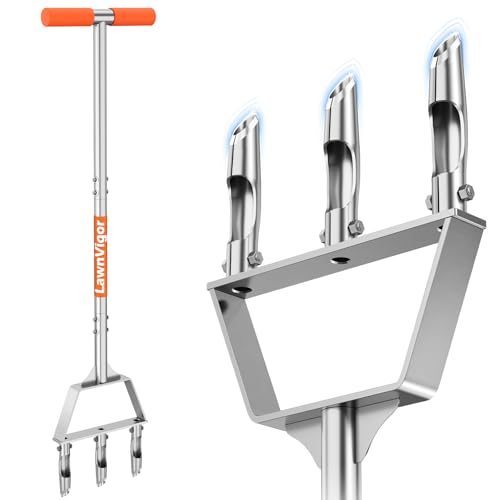
LawnVigor Core Aerator, Non-Clogging Tines

Colwelt Manual Aerator, Rugged Wide Spike

Bluesea 16-Spike Aerator, T-Handle, Orange
Why These Options Stand Out
Strap-on aerator shoes are the lowest-friction way to try spike aeration, and this pair shows up ready to walk on. The 11.5 by 5 inch base is sized for women’s 6-10 and men’s 6-9, secured by three adjustable hook-and-loop straps at the heel so the platform tracks your foot without sliding mid-stride.
Where the Opmeiro pair stands apart is the dual aluminum alloy and plastic sole base, which gives the spikes a more rigid foundation than single-material knock-offs. For most casual homeowners mowing a small front lawn each week, that’s enough to break through the surface crust and let rainfall soak in instead of sheeting off.
Everyday Perks
- Ships fully assembled, so you strap them on and start walking the yard
- Wide hook-and-loop strap layout keeps the platform centered on your foot
- Aluminum-reinforced base adds stiffness compared to all-plastic alternatives
- Walking motion doubles as light exercise during a long Saturday yard session
- Compact footprint stores flat in a garage corner or shed shelf
Worth Noting
- Spike depth is shallow, so heavily compacted clay may need multiple passes
- Straps can loosen on wet grass and require occasional re-tensioning
- Not ideal for steep slopes where each step needs full body weight behind it
Key Product Details
Made For
Homeowners with a small to mid-size yard who want a no-tool, walk-the-lawn approach to surface aeration.
Look Elsewhere When
Severe compaction calls for the Landzie 42″ Hollow Tine Core Aerator, which actually pulls plugs instead of poking holes.
The Jardineer spike aerator trades shoe-strap effort for a long-handled push that covers ground faster. It arrives pre-assembled, so you skip the bolt-together step that frustrates first-time users of similar rollers. The 36-inch handle keeps your back mostly upright while a row of heat-treated steel spikes punctures the lawn on each pass.
For typical suburban lawns with a clay or loam base, the longer spike reach helps punch through the thatch layer that shallow shoe spikes leave behind. You step, push, lift, repeat, and the wheel does the spacing for you.
What Works In Its Favor
- Pre-assembled out of the box means no hunting for tools or sorting hardware
- Heat-treated steel spikes resist bending on harder soil patches
- 36-inch handle length reduces stooping during long sessions
- Works in clay, sand, or loam without spike changes
Some Limits To Know
- Hard, dry ground benefits from pre-watering or the spikes skate instead of bite
- Bulkier than spike shoes, so storage needs a garage wall hook or corner
Right Fit For
Backyard caretakers with a small yard who want consistent spike depth without bending over for every step.
Consider Something Else When
The Walensee Rolling Lawn Aerator covers wider swaths per pass and suits a medium yard better.
The BARAYSTUS rotary cultivator earns its place in this roundup as a tilling tool that doubles as a soil-loosener for tight garden beds. The star-shaped rolling head breaks up clods and preps earth for seeding, and the telescoping handle adjusts from 29.7 to 57 inches to match your height and task.
It’s worth framing expectations clearly: this is a hand tiller first, with aeration as a side effect. On established lawns it doesn’t quite replace a dedicated spike tool, but on vegetable plots and freshly turned beds, the rolling action does what a fork would do, just faster.
Good Reasons To Consider
- Four-blade star head handles both breaking soil and shallow cultivation
- Telescoping shaft fits a range of user heights and bed depths
- Stainless construction resists rust during damp-season storage
- Useful for pre-seeding prep, not just seasonal aeration
Possible Compromises
- Not designed for full-lawn coverage the way spike rollers are
- Best on loose or recently worked soil, not hard-packed turf
- Smaller head means more passes on a wide garden plot
Quick Facts
Best Suited To
Vegetable gardeners and bed-prep enthusiasts who want a hand tool that aerates and cultivates in one motion.
Swap It Out When
You mainly want lawn aeration; the Jardineer 36″ Spike Aerator is a more direct fit for grassy areas.
The Walensee rolling aerator is the broad-shouldered option in this group, with 42 spikes arranged across its roller drum to cover more square footage per pass. The heavy-duty frame gives the tool enough momentum to keep the spikes biting as you push, which matters when the lawn has gone a season or two without attention.
Pre-watering the lawn the day before aerating is the commonly shared tip, since damp soil gives the spikes a cleaner entry and reduces the skating you see on rock-hard turf. The trade-off is weight: this roller leans on gravity to do the work, so longer pushes take more effort than the lighter Jardineer option above.
Notable Upsides
- 42-spike drum reduces the number of passes needed on a medium yard
- Heavy-duty frame supplies the down-pressure spikes need on firmer soil
- Rolling action is more back-friendly than repetitive foot-stomping
- Works on a range of soil types when ground is properly moistened first
Trade-Offs
- Heavier than smaller push rollers, which adds fatigue on long runs
- Spike cleanup is needed periodically as soil builds up between passes
Feature Snapshot
Whose Shelf It Belongs On
Mid-yard homeowners dealing with visible compaction who want a rolling tool that covers a wide swath per pass.
Another Choice May Suit
If your lawn needs actual core removal, the Landzie 42″ Hollow Tine Core Aerator pulls plugs instead of just poking.
The Landzie core aerator is a different category of tool than the spike rollers earlier in this list, because hollow tines actually pull small plugs of soil out of the lawn rather than just compressing the ground. Those cores then sit on the surface, where rain and mowing break them back down as a natural top-dressing.
The beveled tine design is the detail that separates it from cheaper hollow tine copies, since the angled cut reduces clogging as you work. For a lawn that’s been compacted by foot traffic, kids, or a heavy mower, core removal opens up the root zone in a way that spike-only tools can’t match.
Real Benefits
- Beveled hollow tines reduce clogging mid-pass
- Stainless steel construction handles moisture without quick corrosion
- Removes actual soil cores, the method golf courses use for severe compaction
- 42-inch handle keeps the working posture mostly upright
What To Weigh
- Cores left on the lawn need a rake or mower pass to break down cleanly
- Hard ground requires thorough pre-watering for clean plug removal
- Heavier than spike rollers, so plan rest breaks on larger yards
Feature Overview
Perfect Match For
Homeowners with a visibly compacted lawn or thin patches who want the same category of aeration a professional service would provide.
Skip It When
You only need a light surface refresh; the Bluesea 16-Spike Aerator covers routine maintenance with less effort.
The Grenebo foot-aerator is the kind of tool you reach for when the problem lawn is small but specific, like a high-traffic strip between the sidewalk and the driveway. Sixteen sharp spikes in a 4-by-4 layout punch multiple holes per step, and a self-cleaning rebound spring clears soil off the tines between presses.
It’s a manual, foot-driven design, so the work is yours, but for spot treatments on a 200-square-foot patch the focused approach beats dragging out a full roller. Storage is minimal since the whole tool stands upright in a shed corner.
Real-World Strengths
- 16-spike grid creates more holes per footstep than single-spike tools
- Self-cleaning mechanism keeps tines from packing with soil mid-task
- Compact footprint stores easily against a wall or in a small bin
- Reaches 3.1 inches into the soil, deeper than many casual spike options
Less-Strong Areas
- Step pressure limits use to smaller zones, not whole-lawn coverage
- Hard clay needs pre-watering to keep spikes from skimming the surface
Who Will Love This
Targeted-zone gardeners fixing a thin patch near a walkway without dragging out a full roller.
Reach For A Different Pick When
Your whole lawn needs aeration; the Walensee Rolling Lawn Aerator covers more ground per session.
The LawnVigor hollow tine aerator brings core removal to a smaller, foot-driven format, with non-clogging tines designed to release soil plugs cleanly. The metal construction aims at gardeners who push the same tool through damp soil season after season and need it to hold up.
Worth noting from the manufacturer guidance: the tool is meant to go straight in and out, not rock side to side, and pre-watering dry soil is required for clean plugs. Skip those two steps and the tines bend or shear.
Why It Works Well
- Hollow tines extract real soil plugs rather than just compressing the surface
- Non-clogging geometry reduces the stop-and-clear frustration of basic corers
- Sturdy metal body handles damp, heavy soil without flexing
- Compact size suits a small lawn or a few targeted problem areas
A Few Limitations
- Foot-driven design requires body weight and steady footwork
- Pre-watering dry ground is essentially mandatory for clean plug removal
- Not the right scale for a multi-thousand-square-foot lawn in one session
Built With In Mind
Owners of small yards with one or two compacted zones who want a dedicated coring tool, not a spike.
Where A Sibling Pick Shines
The Landzie 42″ Hollow Tine Core Aerator adds a long handle for whole-lawn coring if you scale up.
The Colwelt aerator is built around a rugged wide spike, which means each push moves more dirt than a narrow-tine tool on the same patch. The design targets the type of hard, dry topsoil that defeats thinner spike plates after a few seasons.
Colwelt includes the hardware and instructions for assembly, so the first use takes a few minutes, not a frustrating afternoon. Once put together, the tool becomes a straightforward step-and-lift routine that delivers noticeably deeper punctures than casual alternatives.
Useful Highlights
- Wide spike plate moves more soil per push than narrow-tine options
- Rugged construction handles firmer, drier ground without bending
- Simple assembly with included hardware and instructions
- Targeted design suits repetitive use on a single compacted zone
Where It Is Less Suited
- Manual foot work takes longer than rolling options for whole-lawn coverage
- Pre-watering dry soil is still needed for the deepest bite
Who Should Grab It
Homeowners with a hard-packed patch that lighter spike shoes can’t break through.
A Better Fit Elsewhere
For a full-lawn pass, the Jardineer 36″ Spike Aerator handles wider coverage with less effort.
The Bluesea aerator is the stand-up option in this lineup, with a T-handle that takes the stoop out of foot-driven aeration. Sixteen iron spikes handle the puncturing, and an automatic dirt-cleaning mechanism knocks soil off the tines between presses, which is the small detail that keeps the work moving.
The manufacturer’s prep guidance is sensible and worth following: mow first, then water dry soil a day or two ahead, and wait if the ground is too wet. Following that sequence gives the spikes a clean bite and a clean exit, which is the difference between a productive session and a frustrating one.
A Favorable Mix
- T-handle keeps you standing upright through a full aeration session
- Self-cleaning spike plate minimizes pauses to clear packed soil
- Iron spikes handle tougher, drier ground than casual plastic-tined tools
- Bright orange finish is easy to spot in a busy garden shed
Practical Considerations
- Not designed for whole-lawn rolling; best for measured, step-by-step coverage
- Spike plate benefits from a quick wipe-down after use to prevent surface rust
The Right Fit
Anyone with a creaky back or knees who wants the aeration results of a foot tool without the bending.
Not Your Match When
You want plug removal rather than spike aeration; the Landzie 42″ Hollow Tine Core Aerator pulls cores.
What To Weigh Before Choosing Hand Aerators
Spike vs Hollow Tine: The Core Decision
The first real fork in the road is whether you need spike aeration, which pokes holes and compresses soil sideways, or hollow tine core aeration, which pulls small plugs of soil out of the lawn. Spike tools like the Bluesea 16-Spike Aerator or the Walensee Rolling Lawn Aerator work well for routine maintenance, light thatch, and lawns that aren’t severely compacted. Hollow tine tools, including the Landzie 42″ Hollow Tine Core Aerator, are the right call when water runs off the surface, when the ground feels rock-hard underfoot, or when grass is thinning despite regular feeding. If you’re unsure where your lawn falls, a screwdriver test helps: push a screwdriver into damp soil. If it slides in easily, spike tools are enough. If you really have to lean on it, go hollow tine.
Form Factor: Shoes, Push Rollers, or Stand-Up Tools
Format changes the feel of the work more than people expect. Aerator shoes like the Opmeiro pair are the lowest-effort entry point, but you carry your full body weight on each step, and shallow spike depth limits them to maintenance passes. Push rollers like the Jardineer 36″ Spike Aerator cover ground faster and use the roller’s weight to drive the spikes, but they need storage space and pre-watering on hard ground. Stand-up tools with T-handles, such as the Bluesea, split the difference by keeping you upright while still using foot pressure on the spike plate. Pick the format that matches your storage space, your back, and how much area you’re covering in a single session.
Soil Prep Is Half the Job
Every tool on this list works better when the ground is slightly moist, not soaking, not bone-dry. Pre-watering a day or two ahead, then letting the surface dry enough to walk on without sinking, gives the spikes or tines a clean entry. The manufacturer guidance for the LawnVigor and Bluesea tools spells this out, and the same rule applies to rollers and shoes. Skipping the prep turns aeration into a workout with little result, and on heavy clay it can bend tines that would’ve cut clean into dampened ground. The honest read is that the best hand aerator is the one you’ll actually prep for, so factor in a watering routine, not just the tool itself.
Key Considerations Across These Picks
Common Shopping Slip Ups
The first trap is choosing a spike tool for a lawn that needs core removal, then wondering why the grass keeps thinning. Spike aeration opens the surface, but it doesn’t fix deep compaction, and no amount of extra passes will substitute for a hollow tine tool on that kind of ground. A second misstep is buying a long-handled roller for a small, fenced yard where storage becomes a daily annoyance. Match the tool’s footprint to your shed, not just your lawn. A third is skipping the soil moisture step; dry ground defeats even well-built spikes, and a quick pre-watering the day before is what separates a productive session from wasted effort.
What The Higher Tier Buys
Stepping up to a tool like the Landzie 42″ Hollow Tine Core Aerator moves you from spike aeration to true core removal, which is the same category of work a professional service would do. The beveled tines and stainless build are the visible upgrades, and they show up in fewer clogs, less rust, and longer tool life. The trade-off is weight and effort, so the upgrade pays off most on lawns that genuinely need it. For a small yard with light traffic, a mid-tier spike roller is plenty, and the extra weight of a hollow tine tool becomes a burden rather than a benefit.
Frequently Asked Questions
How Often Should You Use a Hand Aerator?
Most lawns benefit from aeration once a year, typically in early fall or early spring when grass is actively growing. Heavily used lawns with visible compaction may need a second pass in the opposite growing season.
Should You Water the Lawn Before Aerating?
Yes. Watering a day or two before aerating softens the soil enough for spikes or tines to enter cleanly. Soil that is bone-dry causes spikes to skate, while waterlogged ground packs the tines and leaves a mess.
What Is the Difference Between Spike and Hollow Tine Aeration?
Spike aeration pushes holes into the soil by compressing the surrounding dirt sideways. Hollow tine aeration removes small plugs of soil entirely, opening up the root zone more aggressively and reducing compaction more effectively.
Can You Aerate a Lawn by Hand?
Yes, which is the whole point of this category. Hand aerators cover small to mid-size lawns well, and they cost less and store more easily than powered or tow-behind machines. For larger properties, a powered aerator saves time, but for most suburban yards, a hand tool is enough.
Do Aerator Shoes Actually Work?
Aerator shoes work for light, routine maintenance on softer soils. They have shallow spike depth and rely on your body weight, so for heavily compacted lawns, a push roller or hollow tine tool will deliver better results in fewer passes.
Bottom Line
The right hand aerator comes down to lawn size, soil condition, and how much bending your back can handle. For casual maintenance, a strap-on pair or a stand-up T-handle tool covers the basics without much fuss. For real compaction, a hollow tine corer pulls plugs that spike tools simply can’t match. Match the tool to your ground, prep the soil the day before, and the work pays off across the next growing season.
