

Turning over a bed by hand grows old fast, and a full-size gas rototiller is overkill for most backyard plots. The best hand electric tillers trade raw power for portability, letting you work a raised bed, a flower border, or a tight side yard without dragging out extension cords or mixing fuel. This roundup focuses on cordless and compact corded options that genuinely suit small-to-medium garden work, with notes on what each one handles well and where it taps out.
The Choices Worth Comparing

TaskStar Cordless Tiller Cultivator, Battery Powered

Saker 22V Cordless Garden Tiller Cultivator

Muylux 20V Cordless Tiller with 2 Batteries

Muylux 20V Cordless Tiller with 1 Battery
POGGT 21V Cordless Tiller with 4.0Ah Batteries
IncwBo 12-Inch 10.5-Amp Corded Tiller

Seesii Mini Cordless Tiller Cultivator 20V
SOARFLY Cordless Tiller Cultivator, 9-Inch

GELIDALITE Tiller for DeWalt 20V MAX

Muylux 20V Tiller with 2 Batteries
More On The Choices That Made The List
Where the Saker leans toward tidy raised beds, the TaskStar positions itself as a generalist for mixed soil work. You get a battery-powered cultivator aimed at loosening, aerating, and mixing amendments without dragging a cord across the lawn. In our view, this is the kind of tool that quietly becomes the default for weekend gardeners with a couple of beds and a compost bin.
For most suburban plots, the cordless format removes the single biggest annoyance of electric garden tools: the outlet hunt. You can start at one end of a border and finish at the other without pausing to unwind more cable.
Notable Gains
- Cordless format means you can reach the back fence line without an extension cord.
- Suited to mixing compost into existing beds, not just breaking new ground.
- Light enough to carry down steps to a lower garden without dread.
- Cuts down on the manual turning a spade fork would normally demand.
Trade Offs
- Battery runtime is the practical limit, so a second pack is a smart add-on for bigger jobs.
- Owners commonly note that tilling through thick, root-bound sod takes patience and a second pass.
- Coated metal parts still need a wipe-down after each session to slow surface wear.
Made For
Suburban gardeners tending two or three mid-size beds who want one tool that handles soil prep and amendment mixing.
Where Another Pick Suits Better
The IncwBo 12-Inch 10.5-Amp Corded Tiller is a smarter pick when your beds sit close to an outdoor outlet and you prefer unlimited runtime.
The Saker 22V Cordless Garden Tiller Cultivator sits in the comfortable middle of this list, offering the kind of flexibility that suits most home gardeners. Its 22V platform gives you a touch more headroom than the common 20V options, and the cordless setup means no extension cord is required. It is the type of tool that works in raised beds, narrow side yards, and freshly cleared plot sections without complaint.
If your weekend alternates between prepping soil and tidying up around existing plants, the Saker handles both without forcing a tool change. Compared to the TaskStar that opened this list, the Saker feels a bit more purpose-built for cultivator work, with a stance that suggests steady forward motion rather than digging in.
Positive Takeaways
- 22V battery gives a bit more sustained torque than typical 20V garden cultivators.
- Compact frame navigates between established plants in tight rows.
- Reaches areas a full-size tiller cannot, like narrow paths and corner beds.
Worth Noting
- Heavy clay or first-time-broken ground may demand slower, deliberate passes.
- You will want to brush tines clean after each session to prevent soil buildup.
Feature Snapshot
Right Fit For
Home gardeners balancing a mix of raised beds and in-ground borders who want one tool flexible enough for both.
Look Elsewhere When
The Seesii Mini Cordless Tiller Cultivator is a better match when you mostly weed around flower boxes and need a single-hand tool, not a mid-frame cultivator.
Anyone who has run out of battery mid-bed knows the value of a second pack. The Muylux 20V Cordless Tiller ships with two 2.0Ah batteries and a charger, so you can swap and keep working through a longer session. Its two steel tines spin at up to 240 RPM, loosening soil roughly 4 inches deep, which is enough for most annual beds and prep work before transplanting.
Versus the single-battery Muylux listed next, the difference is purely about endurance. The dual-battery version is the practical choice when you tend more than one bed per outing or your soil is dense enough that the first pack alone would not finish the job.
The Helpful Details
- Two included batteries effectively double your working window without a wall outlet.
- 240 RPM tine speed handles routine loosening without bogging in average garden loam.
- 4-inch working depth suits seedbed prep and shallow amendment mixing.
- Steel tines resist bending better than softer alloys in rocky patches.
Honest Caveats
- Continuous heavy use drains batteries faster than the box suggests, so charging between beds becomes routine.
- Storage is easier with a dedicated shelf spot, since two packs and a dock take more room than a single-battery setup.
Whose Shelf It Belongs On
Regular gardeners who tackle two or more beds per session and dislike stopping to recharge halfway through.
Skip It When
The Muylux 20V Tiller with 1 Battery is plenty for casual users with a single small bed, and the savings can go toward a soil amendment instead.
Strip out the second battery and the core machine here is the same as the dual-pack Muylux just above: 20V power, two steel tines, 240 RPM top speed, and 4 inches of working depth. The single-battery configuration is the kind of stripped-down kit that fits a gardener who only needs to refresh one small bed each weekend and is happy to charge between sessions.
If your garden plot is on the modest side, the cost savings of a one-battery kit can be redirected toward a bag of compost or a new set of gardening gloves. Compared to the more rugged POGGT coming up next, this Muylux feels lighter and more of a cultivator than a ground-breaker.
A Strong Showing
- Same tine speed and working depth as the dual-battery sibling at a lower entry cost.
- Steel tines handle routine seedbed preparation without complaint.
- Compact enough for storage in a small shed or garage corner.
Some Limits To Know
- Single battery caps the working session; a second pack is the obvious upgrade path.
- Not the right tool for breaking genuinely compacted or rocky ground.
Best Suited To
Casual gardeners with a single raised bed or modest in-ground plot who only till once or twice a season.
Reach For A Different Pick When
The POGGT 21V Cordless Tiller with 4.0Ah Batteries makes more sense for larger prep jobs where you want a wider working path and longer runtime per charge.
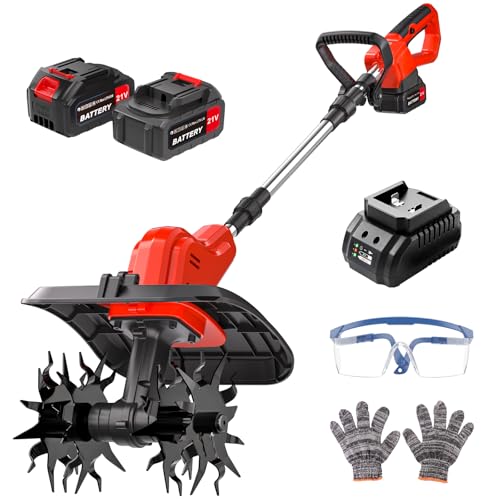
The POGGT widens the brief. Its 11.8-inch tilling width, 6.6-inch depth, and dual 4.0Ah batteries cover more ground in fewer passes, and a built-in power display lets you watch remaining charge while you work. The 360 RPM tine speed sits above the typical 240 RPM class, which is the kind of spec difference that shows up when you push through heavier loam.
For most backyards, the POGGT lands in that sweet spot between a quick cultivator and a real tilling machine. Compared to the IncwBo corded unit you will see next, the POGGT trades unlimited runtime for the freedom to work far from any outlet.
Noteworthy Benefits
- 11.8-inch width means fewer passes across a wide bed, saving real time.
- Dual 4.0Ah batteries outlast smaller packs under load, depending on your soil density.
- Onboard power display removes the guesswork mid-session.
- 360 RPM tines slice through weeds and roots more confidently than 240 RPM units.
Less Ideal Details
- Larger working width makes it less maneuverable in narrow raised beds than the Seesii mini.
- Heavier battery platform can wear on wrists during long sessions.
- Charging two large packs takes longer, so the dock earns a permanent spot on the workbench.
Feature Card
Perfect Match For
Gardeners prepping large vegetable plots or multiple beds in one session who want genuine tiller capacity, not just surface cultivation.
A Better Fit Elsewhere
The Seesii Mini Cordless Tiller Cultivator is a smarter pick when your work is mostly in tight flower boxes and around perennials where an 11.8-inch head would be too wide.
The IncwBo is the outlier here, and that is exactly why it earns a spot. A 10.5-amp corded motor drives a 12-inch rotor to a depth of roughly 8 inches, which is the kind of ground engagement the battery-only picks cannot match. If your soil is heavy, neglected, or full of old roots, a corded tiller is often the more honest answer.
Versus the POGGT cordless model, the IncwBo trades mobility for endurance. You give up the freedom to wander, but you gain continuous power that does not fade as the battery drains. Assuming a standard outdoor outlet within reach, this is the workhorse option.
Strong Points
- 10.5-amp motor delivers sustained power that battery units cannot match hour after hour.
- 12-inch tilling width covers ground faster than any cordless pick in this list.
- 8-inch working depth reaches well below typical 4-inch cultivator range.
- Reliable runtime with no battery degradation over the years.
Worth Bearing In Mind
- Cord limits reach, so far garden corners may need a heavy-duty outdoor extension cord.
- Heavier than the cordless options and tiring to maneuver for some gardeners.
- Cord management becomes a real chore in plots with shrubs or paths crossing the work area.
Built With In Mind
Gardeners with compacted or clay-heavy soil and a nearby outdoor outlet who prioritize raw tilling capability over portability.
Swap It Out When
The POGGT 21V Cordless Tiller is the better call when your beds sit far from any outlet or you need to cross a lawn to reach the work area.
At roughly 2.6 pounds, the Seesii Mini Cordless Tiller is closer to a powered hand tool than a garden tiller in the traditional sense. The appeal is not power; it is the ability to operate with one hand, work a flower box without kneeling on concrete, or refresh a small herb bed in a few minutes. For seniors, apartment gardeners, or anyone tired of dragging heavier cultivators out of the shed, this is the friendliest tool on the list.
Compared to the wider POGGT and IncwBo options, the Seesii is not trying to compete on raw capacity. It wins on accessibility, which is a real category in this market.
Practical Pluses
- Lightweight frame makes one-handed operation realistic for extended sessions.
- Ideal for tight spaces like flower boxes, herb gardens, and container soil refreshes.
- Cordless design with included batteries removes the cable dance around patio furniture.
Some Limits To Know
- Working width and depth are modest, so preparing a full vegetable bed would take many passes.
- Not designed to break ground, only to cultivate and refresh loose soil.
Who Should Grab It
Container gardeners, seniors, and anyone with a small patio plot who values comfort and quick tasks over deep tilling.
Where Another Pick Suits Better
The POGGT 21V Cordless Tiller is a better fit when you need to work an in-ground vegetable bed and want a wider, more aggressive tilling path.
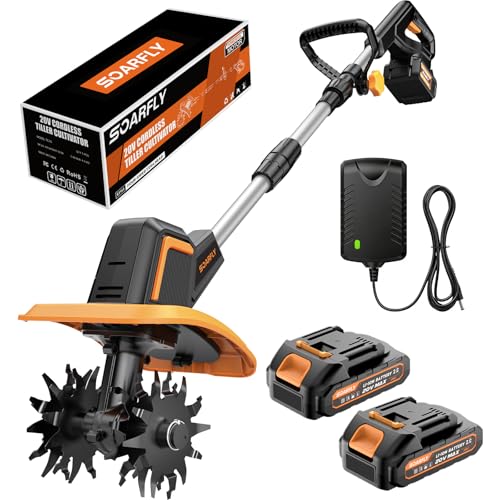
The SOARFLY trades a bit of width for a more comfortable working posture. Its 9-inch tilling width, 6.6-inch depth, and dual 2.0Ah batteries land it between the Seesii mini and the wider POGGT. The standout feature is the adjustable handle height and customizable auxiliary handle, which matters more than spec sheets suggest during a real afternoon of tilling.
Versus the Muylux dual-battery model, the SOARFLY feels more like a cultivator designed around the gardener’s body than a tiller designed around raw output. For taller users, that difference is not subtle.
A Favorable Mix
- Adjustable handle setup accommodates different heights without hunching.
- 9-inch width suits mid-size beds without feeling oversized.
- Two included batteries support a reasonable working session.
Practical Considerations
- Not as wide as the POGGT, so larger plots need more passes.
- Owners commonly suggest tightening fasteners after the first few uses, as vibration can settle them.
Who Will Love This
Gardeners of varied heights who want a cultivator that fits their frame and reduces back strain during longer sessions.
Another Choice May Suit
The Muylux 20V Cordless Tiller with 2 Batteries is a more direct value pick when ergonomic adjustments are not a priority.
The GELIDALITE ships as a bare tool, meaning no battery and no charger in the box. That detail is the entire point: if you already own DeWalt 20V MAX batteries from other tools, this tiller slots into your existing ecosystem without adding another charger to the workbench. The unit locks onto standard 20V MAX packs (DCB200, DCB204, DCB205, DCB206 and similar).
Versus the Saker and Muylux options, this is not a like-for-like comparison. It is the right pick only if you have the batteries already. You may find the value equation is excellent in that case and poor if you would need to buy batteries separately.
What Stands Out
- Reuses existing DeWalt 20V MAX batteries, which lowers the real cost for current owners.
- Bare-tool pricing avoids paying for batteries and a charger you do not need.
- Compatible with common DeWalt 20V MAX pack models already in many sheds.
Room For Improvement
- No battery or charger included, which makes it a poor choice for first-time tool shoppers.
- Performance depends on the amp-hour rating of the battery you already own; smaller packs will run shorter.
Right Fit For
DeWalt 20V MAX owners with spare batteries and a charger who want to extend their existing tool system into the garden.
Not Your Match When
The TaskStar Cordless Tiller Cultivator is the better starting point for gardeners who do not already own a compatible battery platform.
Closing the list is the most approachable Muylux of the three: a 20V cordless tiller, two batteries included, and an ergonomic grip that does not punish first-time users. The steel tines spin at 240 RPM and loosen soil around 4 inches deep, which is the comfortable zone for someone learning what tilling actually feels like without overcommitting to a heavy machine.
If you are a first-time gardener or handing a tool to a partner who has never used one, this is the safest starting point on the list. Compared to the heavier IncwBo corded tiller, the learning curve is much friendlier, and the cordless format removes the tangle risk that often frustrates new users.
Advantages To Know
- Two included batteries remove the first-session dead-pack surprise common with single-battery kits.
- Ergonomic grip reduces strain for gardeners new to powered tools.
- 4-inch working depth suits beginner-friendly seedbed prep.
- Light enough to learn proper stance and pacing without fatigue.
Points To Keep In Mind
- Not the right tool for breaking new ground or heavy clay on a first attempt.
- A wipe-down after each use keeps the grip and tines in good shape, especially after damp soil work.
Made For
First-time gardeners and casual weekend users who want a forgiving, complete kit with no extra purchases required.
Where Another Pick Suits Better
The IncwBo 12-Inch 10.5-Amp Corded Tiller is the smarter upgrade once you are comfortable with a smaller cultivator and want to tackle heavier soil.
Matching The Right Tiller To Your Garden
Choosing among hand electric tillers comes down to three honest questions. How much ground do you actually till each season, how far is that ground from an outlet, and how tough is the soil you are working with. Battery-powered cultivators like the Muylux, Saker, and POGGT shine for portability and ease of starting, but their runtime is finite and their depth is generally shallower. The corded IncwBo trades that freedom for sustained torque and a deeper working pass, which is the right trade when soil is heavy and an outlet is close.
Tine speed and tine material matter more than raw voltage. Steel tines hold up against rocks and roots far better than softer alloys, and a higher RPM (rotations per minute, a measure of how fast the tines spin) lets the tines slice rather than drag. Tilling width decides how many passes you make: an 11.8-inch head like the POGGT or 12-inch IncwBo covers wide beds faster, while a 9-inch SOARFLY or a mini Seesii keeps you nimble in tight spaces.
Weight and ergonomics are not optional details. Cultivators are walked, not pushed, and a tool that is one pound too heavy feels like five pounds by the end of an hour. Adjustable handles, padded grips, and balanced battery placement reduce the kind of strain that turns a Saturday chore into a Sunday recovery day.
If you already own a 20V MAX battery platform, the GELIDALITE bare tool is the most economical entry into this category. First-time tool shoppers should look at complete kits with batteries and chargers included, like the dual-battery Muylux or the POGGT.
Key Considerations Across These Picks
Common Buying Traps
The most common mistake is shopping for voltage instead of use case. A 21V motor on a flimsy frame with cheap tines will not outwork a well-built 20V unit in real soil. Equally common is underestimating cord management. A corded 10.5-amp tiller sounds powerful on paper, but if your beds sit behind a hedge, an extension cord becomes a daily obstacle.
When Paying More Pays Off
Higher-tier tillers in this category typically earn their keep through better tine materials, more efficient motors, and longer battery capacity. The POGGT dual 4.0Ah setup and the IncwBo corded motor are good examples: the upgrade cost buys sustained performance rather than just a higher number on a label. For most gardeners, the extra spend is justified once tilling becomes a regular part of the season rather than a one-off project.
Frequently Asked Questions
How deep can a hand electric tiller dig?
Most cultivators in this category reach 4 to 6.6 inches, which is enough for annual beds and seedbed prep. Corded heavy-duty units like the IncwBo can reach roughly 8 inches for tougher ground.
How long does the battery last on a cordless tiller?
Runtime depends on battery capacity and soil density. A 2.0Ah pack typically runs around 30 to 60 minutes under light use, while 4.0Ah packs like the POGGT extend that window. Heavy clay and thick roots shorten the session.
Can a small tiller break new ground?
Mini cultivators refresh and aerate loose soil but are not designed to break sod or compacted earth. For first-time ground work, a corded heavy-duty tiller or a dedicated ground-breaking tool is the honest choice.
Are corded tillers more powerful than cordless ones?
Generally yes, because corded motors draw continuous power from the outlet without battery limitations. The trade-off is mobility, since the cord limits how far you can roam from an outdoor power source.
Do I need two batteries for a cordless tiller?
A second battery is helpful but not essential for small plots. For multi-bed sessions or denser soil, dual batteries prevent mid-project recharging breaks.
Wrap Up
The right hand electric tiller depends less on spec sheets and more on your actual soil, plot size, and proximity to an outlet. Cordless cultivators like the Muylux, Saker, and POGGT cover most home gardens comfortably, while the IncwBo corded unit handles the heavier work. Pick the tool that matches the job you already have, and the rest of the season tends to take care of itself.
