

A hand lens is one of those quiet tools every botanist ends up relying on. Whether you’re keying out a tricky species in the field, checking trichome patterns on a specimen at home, or showing a student the difference between a pinnate and palmate vein, the right magnifier turns guesswork into a clear answer. The ten options below cover pocket-friendly basics, triplet optics for sharper work, and illuminated models for low-light corners, so you can match the tool to the way you actually observe plants.
The Picks In Brief
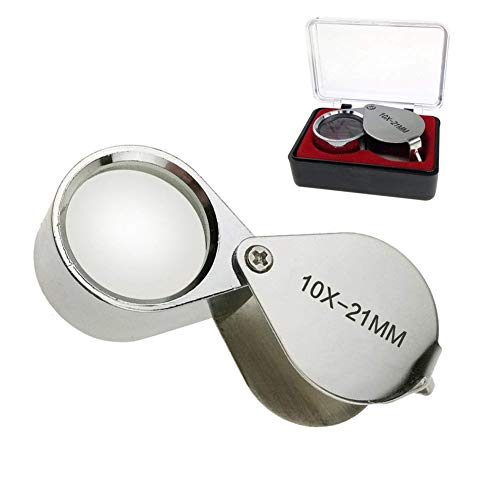
FHzytg 10x Glass Jeweler Loupe (Silver)

Frienda 3 Pcs Jeweler Loupe Set 10X 20X 30X (Silver)

Frienda 3 Pcs Jeweler Loupe Set 10X 20X 30X (Black)

Pineapple 40X Jewelers Loupe with LED & UV Light

HTS 202A0 10x 21mm Stainless Steel Singlet Loupe

Kare & Kind Illuminated 60X 12mm + 30X 22mm Loupe

Kare & Kind 2-Piece 60X and 30X LED Loupe Set

Beileshi 40x LED Magnifying Glass with UV Detection

SE Professional 10X Illuminated Loupe MJ3622L-10X

Ade Advanced Optics 10x21TB-A Triplet Loupe with Leather Case
Meet The Standout Selections
This 10x21mm folding loupe is the kind of starter tool you can toss in a field bag without a second thought. The metal body folds flat, slides into a pocket, and pulls out quickly when you spot something worth a closer look on a leaf or stem. For most backyard botanists and students, the 10x magnification hits the sweet spot between revealing useful detail and staying easy to hold steady.
The construction leans simple on purpose, which keeps the weight low during long walks. You’ll find the hinge smooth enough for one-handed use, and the lens is large enough to actually frame a small flower or vein pattern. Compared to the larger triplet sets coming up, this trades image complexity for portability, and for many people that’s a worthwhile swap.
Practical Advantages
- Folding body protects the lens in a pocket or pack
- 10x power suits common leaf-vein and pistil checks
- Metal shell feels solid in cold or damp weather
- Compact size works well for younger students
Things To Consider
- Singlet lens design shows slight edge distortion on flat subjects
- No illumination, so shaded specimens can be tricky to read
Who It Suits Best
This pick fits a beginner botanist, casual gardener, or student who wants a low-fuss magnifier for occasional outdoor use.
Where Another Pick Suits Better
Step up to the Ade Advanced Optics 10x21TB-A Triplet Loupe with Leather Case if you need sharper color accuracy and a corrected triplet lens for serious identification work.
Frienda’s three-loupe set gives you a range of magnifications in one tidy package. The triplet-style construction (a triplet uses three bonded glass elements to cut distortion) helps keep colors and edges honest, which matters when you’re comparing subtle traits like hair types on a stem. Carrying 10X, 20X, and 30X means you can move from a quick overview to fine detail without swapping tools.
Each loupe has its own small storage case, and the bodies include a loop so you can tether one to a lanyard or pack zipper. For the field, that versatility tends to outweigh the slightly larger size of carrying three pieces. Compared to the single-lens FHzytg 10x Glass Jeweler Loupe, you trade pocket minimalism for a fuller magnification ladder.
Notable Upsides
- Three magnification steps cover most identification tasks
- Triplet design reduces color fringing on thin structures
- Individual cases keep each lens safe in transit
- Plated metal body handles daily handling well
Worth Noting
- At 30X, focus depth gets very shallow and steady hands are required
- Carrying all three adds bulk compared to a single loupe
Key Specs
Made For
This set is a strong match for serious hobbyists and amateur botanists who want flexibility without buying multiple single loupes.
Consider Something Else When
Pick the SE Professional 10X Illuminated Loupe MJ3622L-10X instead when low-light conditions or a single, well-lit magnification is more important than having three strengths.
The black-finish sibling of the previous set keeps the same triplet optical design but changes the surface to a darker, less reflective coat. For field botanists working in bright sun, that matters more than it sounds; a black housing cuts glare on the metal so you can frame a leaf without the body throwing reflections onto your specimen. The magnification trio stays the same: 10X, 20X, and 30X.
Each piece still ships with its own case and a small loop for tethering. Functionally it sits shoulder-to-shoulder with the silver version, so the choice is mostly about grip feel and how it looks clipped to your pack. You may find the matte surface easier to keep hold of in damp or muddy conditions.
Everyday Advantages
- Black finish reduces glare during bright field sessions
- Triplet glass keeps fine details from smearing at the edges
- Three loupes cover general survey and close inspection
Trade Offs
- Same shallow focus at 30X as the silver version
- Slightly harder to spot if dropped in leaf litter
Right Fit For
Field botanists who work in sunny conditions and prefer a non-reflective surface will find this colorway easier on the eyes.
Not Your Match When
Reach for the Pineapple 40X Jewelers Loupe with LED & UV Light when you need a single, illuminated loupe with both regular and UV lighting options.
When the lighting is bad, the Pineapple 40X loupe becomes genuinely useful. It runs at 40X magnification, well past the 10X most people start with, and pairs that with two white LEDs plus a UV lamp so you can switch between standard illumination and a blacklight view in seconds. The UV mode is handy for spotting fluorescent features on petals, fungal growth, or mineral traces in soil.
The metal body feels substantial in hand, and the pull-apart design lets you reach the batteries when they finally run down. Compared to the simpler FHzytg 10x Glass Jeweler Loupe, this trades pocket weight for a feature set that solves specific lighting problems. For shaded forest understory work, it’s the kind of tool that earns its spot in your bag quickly.
The Case For It
- UV lamp adds fluorescence checks beyond regular magnification
- Dual LEDs brighten shaded specimens without extra gear
- 40X power reveals fine surface texture and cell patterns
- Metal shell survives rough handling on field trips
Points To Keep In Mind
- 40X focus is extremely shallow and benefits from a steady rest
- Batteries need replacing eventually, so spares are worth carrying
Feature Snapshot
Best Suited To
Field researchers and naturalists who frequently work in low light, under canopy, or need UV inspection on plant surfaces.
Look Elsewhere When
The Frienda 3 Pcs Jeweler Loupe Set 10X 20X 30X (Silver) is a better match when you want a range of magnifications rather than a single high-power, illuminated tool.
The HTS 202A0 leans into the long-haul aspect of fieldwork. Its stainless steel body shrugs off drops, scrapes, and rain in a way that lighter loupes simply do not. The 10X magnification with a 21mm lens opening is a familiar spec, big enough to frame a single leaf or a small flower without hunting around for the sweet spot. This is a singlet lens, so you’ll see a touch of edge distortion on flat, high-contrast subjects, but for general plant study the trade is fair.
What makes it a quiet favorite is the hinge and the weight. It opens smoothly with one hand, the steel adds just enough heft to feel stable during long observation sessions, and it slips into a pocket or belt pouch without ceremony. If you tend to baby your gear, you may not need the extra toughness, but for rough field use the body holds up where painted metal finishes tend to wear.
What Earns Its Place
- Stainless body resists corrosion and impact damage
- 21mm lens gives a usable field of view for leaves and flowers
- 10X power matches what most identification keys assume
- One-handed fold-out works well on the trail
Honest Caveats
- Singlet design shows mild edge distortion compared to triplet optics
- Heavier than aluminum or plated loupes of similar size
Quick Facts
Who Should Grab It
Regular field botanists and instructors who need a single durable loupe that survives constant outdoor use.
Swap It Out When
Switch to the Kare & Kind Illuminated 60X 12mm + 30X 22mm Loupe if higher magnification and built-in lighting are more useful than sheer durability.
Kare & Kind’s dual-lens design packs two magnifications into one housing, which is rare at this size. You get a 30X window with a 22mm lens for general detail and a 60X window with a 12mm lens for the smallest features on a specimen. The two built-in LEDs aim at whichever lens is in use, so you don’t have to hold a flashlight while balancing the loupe against a plant.
The aluminum and plastic build keeps the weight reasonable, and the switchgear is simple enough to operate with cold or wet hands. For most people, this lands in the sweet spot between the basic FHzytg 10x Glass Jeweler Loupe and a more specialized tool. The 60X end is genuinely high, so a stable hand or a resting surface will help you actually use that power.
Bright Spots
- Two magnifications in one tool covers a wide range of tasks
- Built-in LEDs light the subject without extra gear
- Aluminum body is light enough for long outings
- Useful for examining small trichomes and surface hairs
Some Limits To Know
- 60X focus is so shallow that even small movements blur the image
- Plastic components may show wear sooner than all-metal loupes
Perfect Match For
Detail-oriented botanists and hobbyists who want one tool that handles both medium and very fine close-up work.
Another Choice May Suit
The Frienda 3 Pcs Jeweler Loupe Set 10X 20X 30X (Black) works better when you prefer a triplet lens at each magnification and don’t need built-in lighting.
This set bundles two of Kare & Kind’s dual-lens loupes, so you effectively get a 30X/60X tool for yourself and another for a student, a partner, or a second kit. The core spec stays the same as the single version: a 30X 22mm lens, a 60X 12mm lens, and built-in LEDs aimed at the working lens. For teaching or shared fieldwork, having a backup ready to hand is quietly useful.
Each unit runs on its own batteries, so you’ll want to keep spares for both. Compared to the single Kare & Kind 60X and 30X Loupe, this is essentially a practical duplication of the same tool, and the appeal is less about new features and more about logistics. For most solo botanists the single version is plenty; this two-pack earns its keep in classrooms and group outings.
Everyday Perks
- Two loupes cover a shared field session without swapping
- Each unit has the same 30X/60X flexibility
- LEDs support work in low light or indoors
Practical Considerations
- Requires batteries in two units instead of one
- Plastic parts need gentle handling to last as long as the optics
Who Will Love This
Educators, nature walk leaders, and parent-child duos who want matching tools with built-in lighting and a high-magnification option.
Reach For A Different Pick When
The Ade Advanced Optics 10x21TB-A Triplet Loupe with Leather Case is a smarter grab for a solo user who values optical clarity over a second unit.
The Beileshi 40X sits in a similar power band to the Pineapple 40X Jewelers Loupe but with a few practical differences. The 25mm lens opening is a touch wider, which makes framing small subjects easier at the cost of a slightly larger body. The push-button LED is a simple on-off affair, and the UV mode lets you spot fluorescence on petals, lichens, or mineral traces without buying a second tool.
It comes with the LR1130 batteries already installed, so you can start using it the day it arrives. For a hobbyist who bounces between plants, stamps, and coins, the multi-purpose angle is the real draw. Against the more single-purpose HTS 202A0 Stainless Steel Singlet Loupe, this trades toughness for an illuminated, UV-capable design that fits a wider hobby shelf.
Notable Gains
- UV mode adds fluorescence checks beyond standard magnification
- 25mm lens opening frames subjects more comfortably
- Includes batteries so you can use it right away
- Push-button switch is simple to operate
Things To Weigh
- 40X focus depth is razor thin and a steady rest helps
- Coin-style batteries need replacement when the LEDs dim
Technical Highlights
Built With In Mind
Multi-discipline hobbyists who want a single magnifier they can use on plants one day and stamps or coins the next.
Where A Sibling Pick Shines
The Ade Advanced Optics 10x21TB-A Triplet Loupe with Leather Case is a better fit for botanists who care more about corrected optics at 10X than about a 40X illuminated tool.
SE’s MJ3622L-10X is the closest thing on this list to a clinical-grade hand lens. The 18mm glass element delivers 10X magnification with strong clarity, and the two bright white LEDs flank the lens to throw even light across the specimen. The metal body feels balanced in hand, and the included storage case keeps the optics safe between sessions. For professional botanists, this is the kind of loupe you keep on your desk.
Where the FHzytg 10x Glass Jeweler Loupe is a folding pocket tool, the SE is more of a stationary or workbench companion. The trade-off is weight, but the gain is illumination, build quality, and consistent optics. If you identify plants at a lab bench or in a dim herbarium, the lighting alone justifies the slightly larger footprint.
What Stands Out
- Glass lens element keeps color and edge detail honest
- Dual LEDs provide even, shadow-free lighting on the subject
- Metal body and case suit professional and lab use
- 10X magnification matches most identification key standards
Worth Bearing In Mind
- Bigger and heavier than folding pocket loupes
- Needs batteries, so plan ahead for long field days
Whose Shelf It Belongs On
Herbarium staff, lab researchers, and serious naturalists who need reliable lighting and a glass lens for accurate work.
Skip It When
The HTS 202A0 Stainless Steel Singlet Loupe is the better match for trail botanists who prioritize a rugged, no-battery tool over illumination.
Ade Advanced Optics’ 10x21TB-A is the loupe that quietly anchors this list. The triplet glass construction corrects for the color fringing and edge distortion that plague simpler singlet designs, so trichomes, vein patterns, and small floral parts look the way they actually are. The 10X power and 21mm lens opening are familiar numbers, but the corrected optics make a noticeable difference when you’re working through a key that hinges on subtle features.
The leather case with a snap closure is a small but meaningful upgrade: it keeps the lens pocket-safe and dust-free, which matters for the kind of fieldwork where a loupe spends more time in your jacket than in your hand. Compared to the SE Professional 10X Illuminated Loupe MJ3622L-10X, this one gives up lighting for sharper, distortion-free viewing in daylight. For most botanists, that trade is worth making on outdoor days.
Where It Helps
- Triplet optics deliver sharp, color-accurate images
- Leather case protects the lens in a pocket or pack
- 10X power suits the majority of plant identification work
- Bonded lens design reduces distortion at the edges
Factors To Consider
- No built-in lighting, so shaded specimens can be hard to read
- Higher cost than basic singlet loupes
Spec Overview
The Right Fit
Field botanists, students, and researchers who want a single, well-corrected loupe that delivers trustworthy images on every outing.
A Better Fit Elsewhere
Choose the SE Professional 10X Illuminated Loupe MJ3622L-10X when you mostly work indoors or in dim conditions where built-in lighting is more useful than corrected optics.
Choosing The Right Magnification And Build For Field Botany
Picking a hand lens for botany comes down to how you actually use it, not just the magnification number on the box. Most identification keys assume 10X, and the FHzytg 10x Glass Jeweler Loupe, the HTS 202A0, and the Ade Advanced Optics 10x21TB-A Triplet Loupe all sit at that level. Higher powers like 30X and 40X shine for trichomes and pollen, but they demand a steady hand or a resting surface to be useful.
Optics Quality And Glass Type
A triplet lens uses three bonded glass elements to cut the chromatic aberration (color fringing) and edge distortion that single-element singlet lenses show on high-contrast subjects. For color-critical work like checking petal patterns, the Frienda sets and the Ade Advanced Optics 10x21TB-A are the safer picks. For casual field checks, a singlet lens is lighter and more affordable.
Lighting And Power Source
Built-in LEDs are genuinely useful in shaded forest understory, dense canopies, or indoor herbarium work. The Pineapple 40X, the Beileshi 40X, the Kare & Kind 60X/30X, and the SE Professional 10X all include lights. Each of those runs on batteries, so for long trips without spares, the unlit HTS 202A0 or FHzytg 10x Glass Jeweler Loupe is the simpler tool.
Body And Portability
If your loupe lives in a backpack, weight and bulk matter. Folding pocket loupes like the FHzytg 10x and the HTS 202A0 collapse flat and ride comfortably. Heavier units like the SE Professional 10X trade pocket comfort for stability and illumination. Most botanists end up with at least one compact tool and one well-lit bench companion.
Smart Buying Angles For This Category
Where Shoppers Go Wrong
The most common slip is chasing high magnification numbers without thinking about focus depth. A 60X or 40X loupe is genuinely hard to use at arm’s length, and many first-timers end up frustrated because they can’t hold the lens steady enough. A second trap is ignoring lighting; in dense shade, a 10X loupe without a lamp will reveal less than a 30X loupe with built-in LEDs. The third is buying a singlet lens and expecting the same edge clarity as a triplet; they really do look different on flat, detailed subjects.
What The Higher Tier Buys
Stepping up to a corrected triplet lens or an illuminated professional model adds real capability, not just polish. The Ade Advanced Optics 10x21TB-A shows you trichome structure without color fringing. The SE Professional 10X Illuminated Loupe brings bench-level lighting into the field. The cost difference is meaningful, but for anyone identifying plants professionally or running a teaching program, the jump in optical honesty and consistent illumination is usually money well spent. For casual weekend use, the budget end of this list still does the job.
